
ᐅ Very Poor Parquet Flooring Installation – Is Rectification Impossible?
Created on: 19 Jan 2023 10:55
P
pim1985
Hello,
unfortunately, we are having problems again with our parquet installer (a small family business in NRW). The work on the transitions and the baseboards was done very poorly.
A brief summary of the situation: After a long wait due to residual moisture in the screed, the parquet was installed (oak, 18.5cm (7.3 inches) wide, fully glued).
As you can see in the photos, the gaps at the transitions are about 1cm (0.4 inches) wide and filled with a cork material that does not match the color.
The baseboards (1.8cm (0.7 inches) wide, about 5.8cm (2.3 inches) high) at the floor-to-ceiling windows do not look good, the smaller baseboards/profiles are odd, and the work was very untidy. The reason for the unusual small baseboards/profiles: the window reveals are too narrow (1cm (0.4 inches) wide baseboards would fit; this is the case with our neighbors in an identical semi-detached house). There are nicer solutions for this, but there was no communication that the baseboards would not fit. The parquet installer is unable to accept criticism and is old-fashioned, just doing things as he learned 30 years ago. He refuses to make any corrections.
Regarding the cork filling, we probably have no legal chance for corrections, even though the boards at the transitions were cut unevenly. (I saw examples from other providers, unfortunately too late, and spoke with specialists from a large parquet company (Parkett Dietrich) who said that transitions without joints or with very small joints about 4mm (0.16 inches) are possible. These could be filled with parquet joint filler in a similar color and would look a thousand times better). Baseboards before the step in the staircase area???
The small baseboards in the window area are impossible, though. I am a member of the property owners’ protection association (legal insurance is also available) and I am considering taking legal action with a specialist lawyer and construction consultant, although I would prefer not to. But this job cost a lot of money, and now I will probably have to hire a second company to fix it.
I would appreciate any tips on how to salvage one or the other issue.
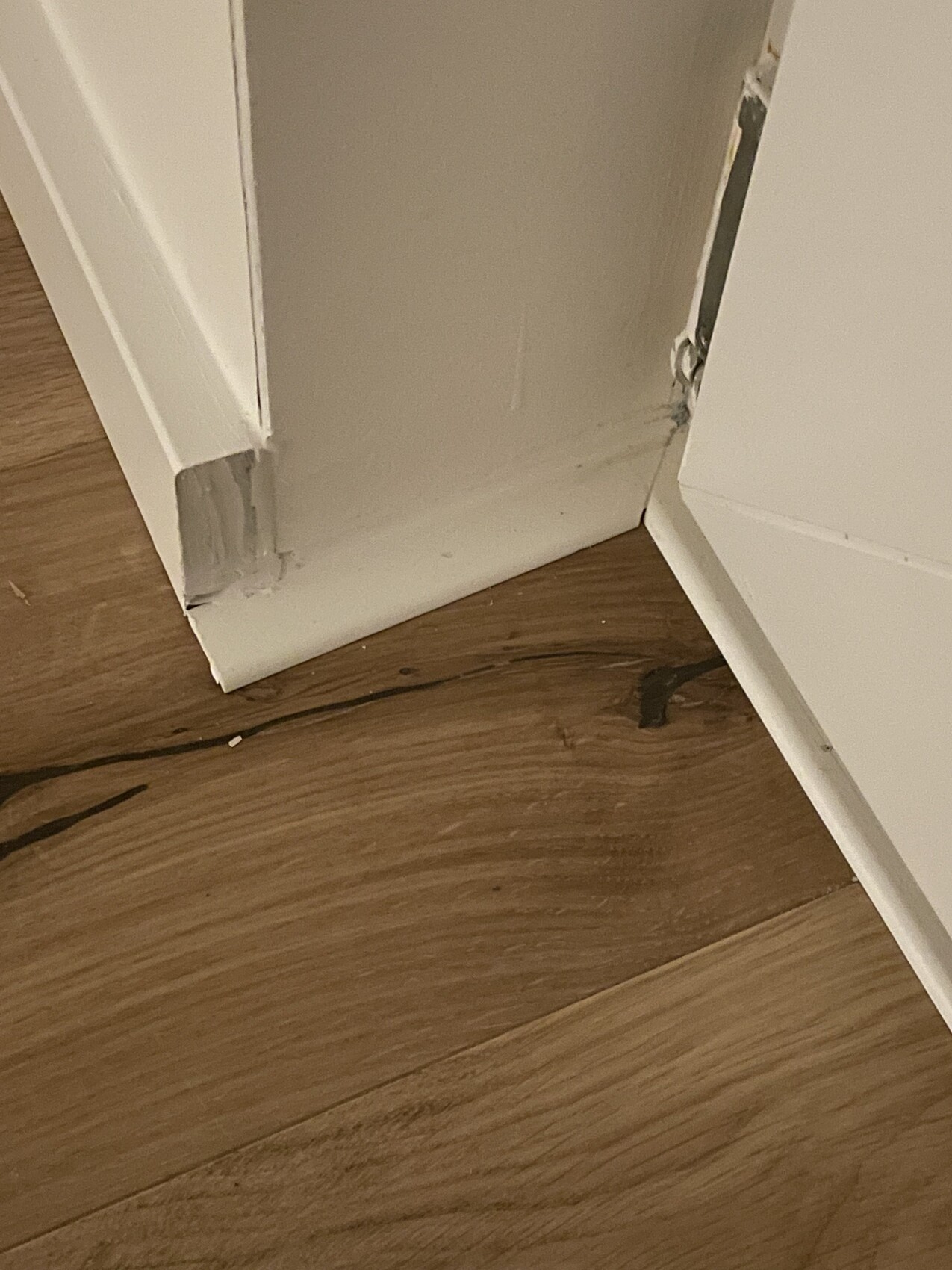
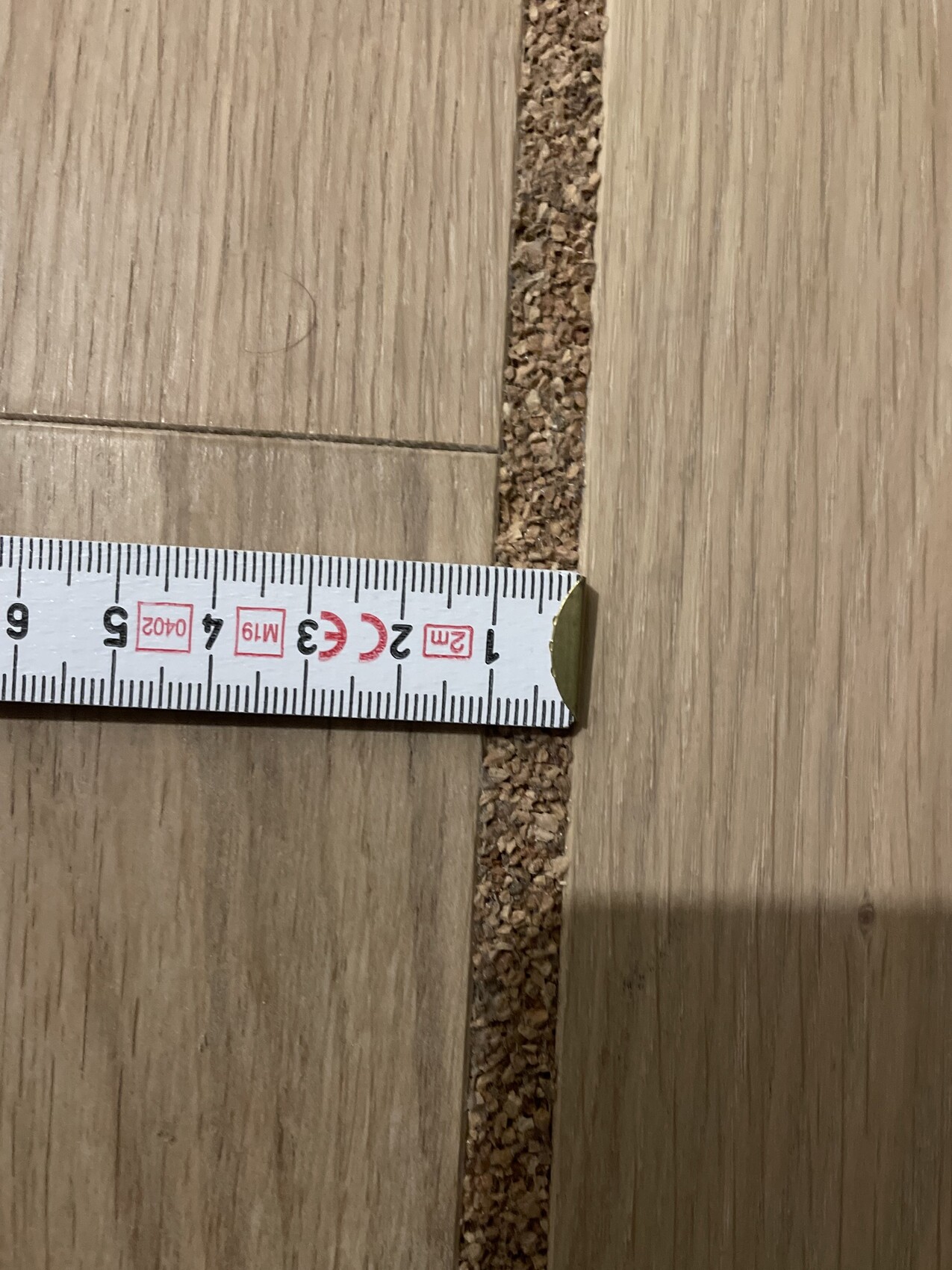
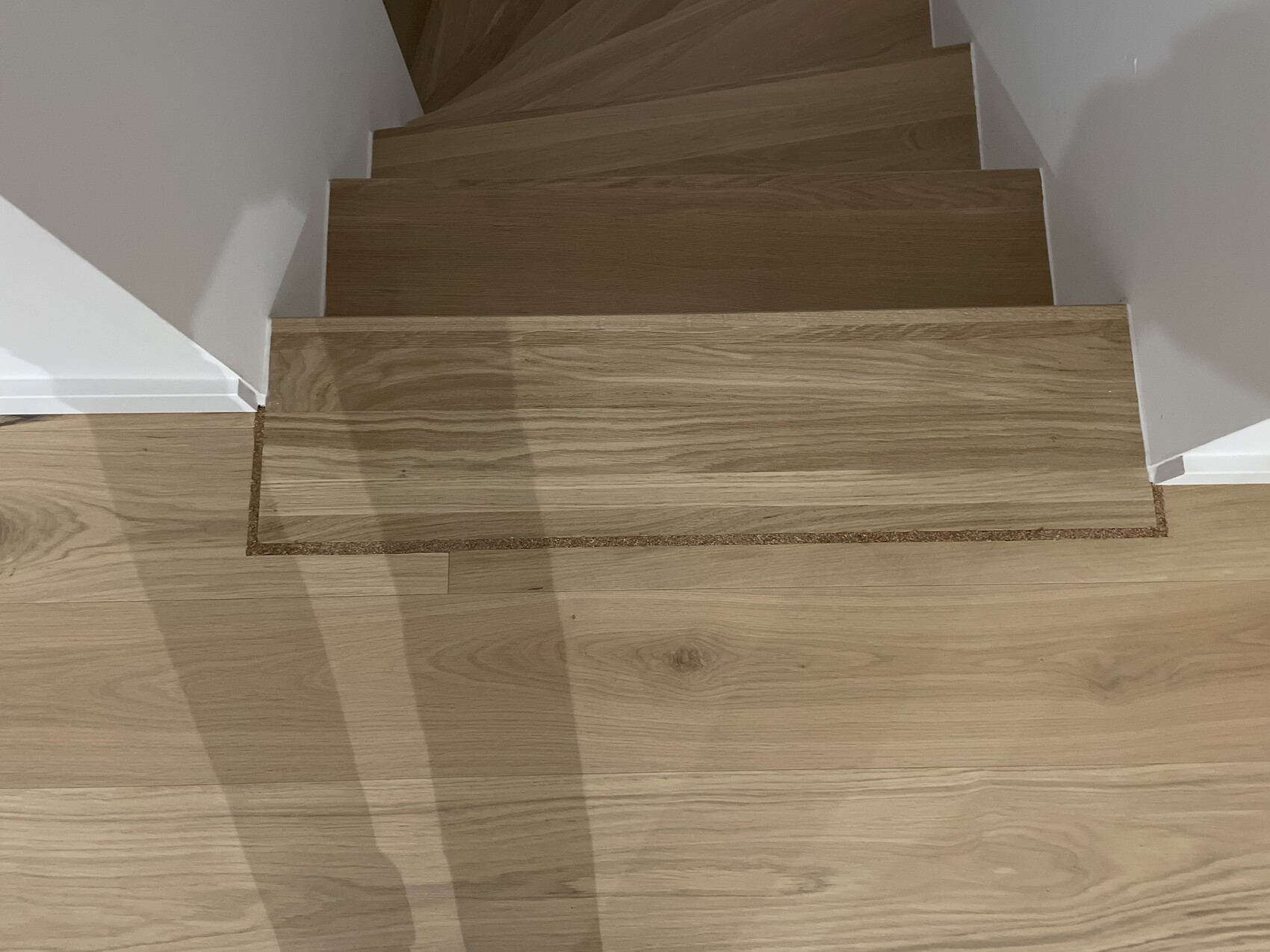
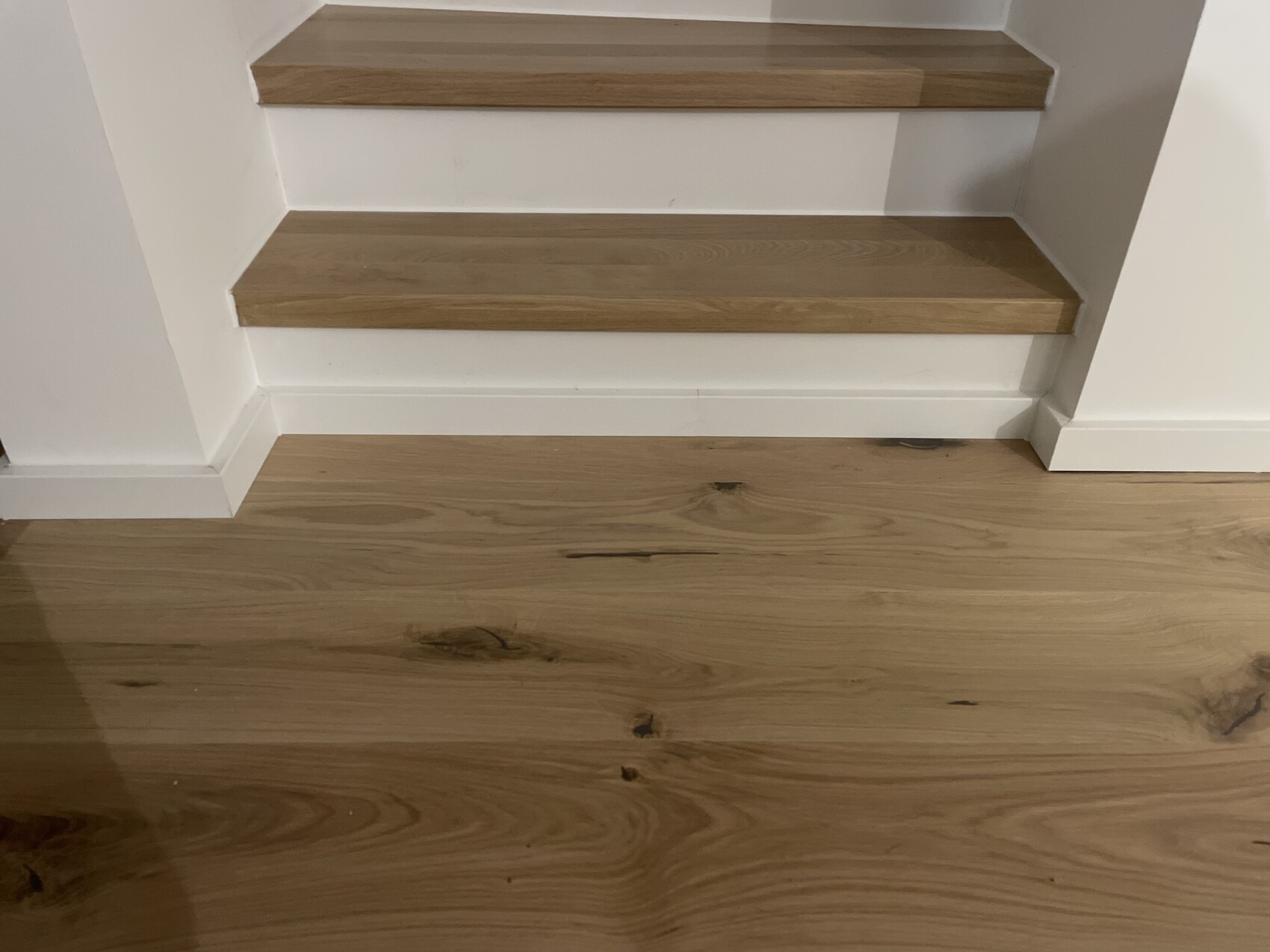
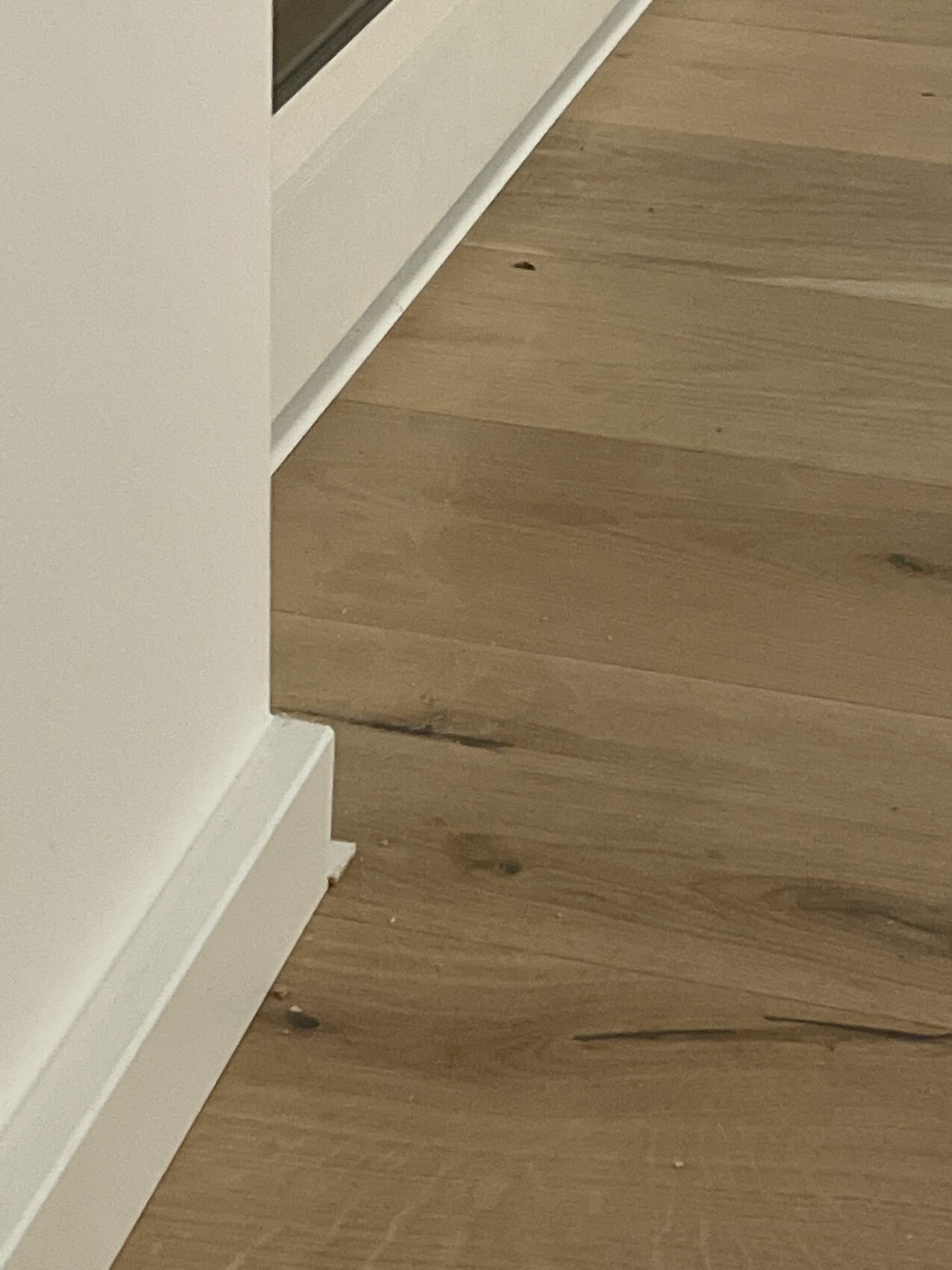
unfortunately, we are having problems again with our parquet installer (a small family business in NRW). The work on the transitions and the baseboards was done very poorly.
A brief summary of the situation: After a long wait due to residual moisture in the screed, the parquet was installed (oak, 18.5cm (7.3 inches) wide, fully glued).
As you can see in the photos, the gaps at the transitions are about 1cm (0.4 inches) wide and filled with a cork material that does not match the color.
The baseboards (1.8cm (0.7 inches) wide, about 5.8cm (2.3 inches) high) at the floor-to-ceiling windows do not look good, the smaller baseboards/profiles are odd, and the work was very untidy. The reason for the unusual small baseboards/profiles: the window reveals are too narrow (1cm (0.4 inches) wide baseboards would fit; this is the case with our neighbors in an identical semi-detached house). There are nicer solutions for this, but there was no communication that the baseboards would not fit. The parquet installer is unable to accept criticism and is old-fashioned, just doing things as he learned 30 years ago. He refuses to make any corrections.
Regarding the cork filling, we probably have no legal chance for corrections, even though the boards at the transitions were cut unevenly. (I saw examples from other providers, unfortunately too late, and spoke with specialists from a large parquet company (Parkett Dietrich) who said that transitions without joints or with very small joints about 4mm (0.16 inches) are possible. These could be filled with parquet joint filler in a similar color and would look a thousand times better). Baseboards before the step in the staircase area???
The small baseboards in the window area are impossible, though. I am a member of the property owners’ protection association (legal insurance is also available) and I am considering taking legal action with a specialist lawyer and construction consultant, although I would prefer not to. But this job cost a lot of money, and now I will probably have to hire a second company to fix it.
I would appreciate any tips on how to salvage one or the other issue.
OWLer schrieb:
And you’re only sharing this picture now? I feel like I’ve been fooled. What have we been discussing at length here – the edge of the baseboard?
This is obviously terrible workmanship, and as a DIYer, I installed parquet flooring myself for the first time in my own house. Even my first attempt didn’t look like this. This is complete botching! The earlier photos were probably of lower quality, so the uneven joints couldn’t be seen. I apologize for that.
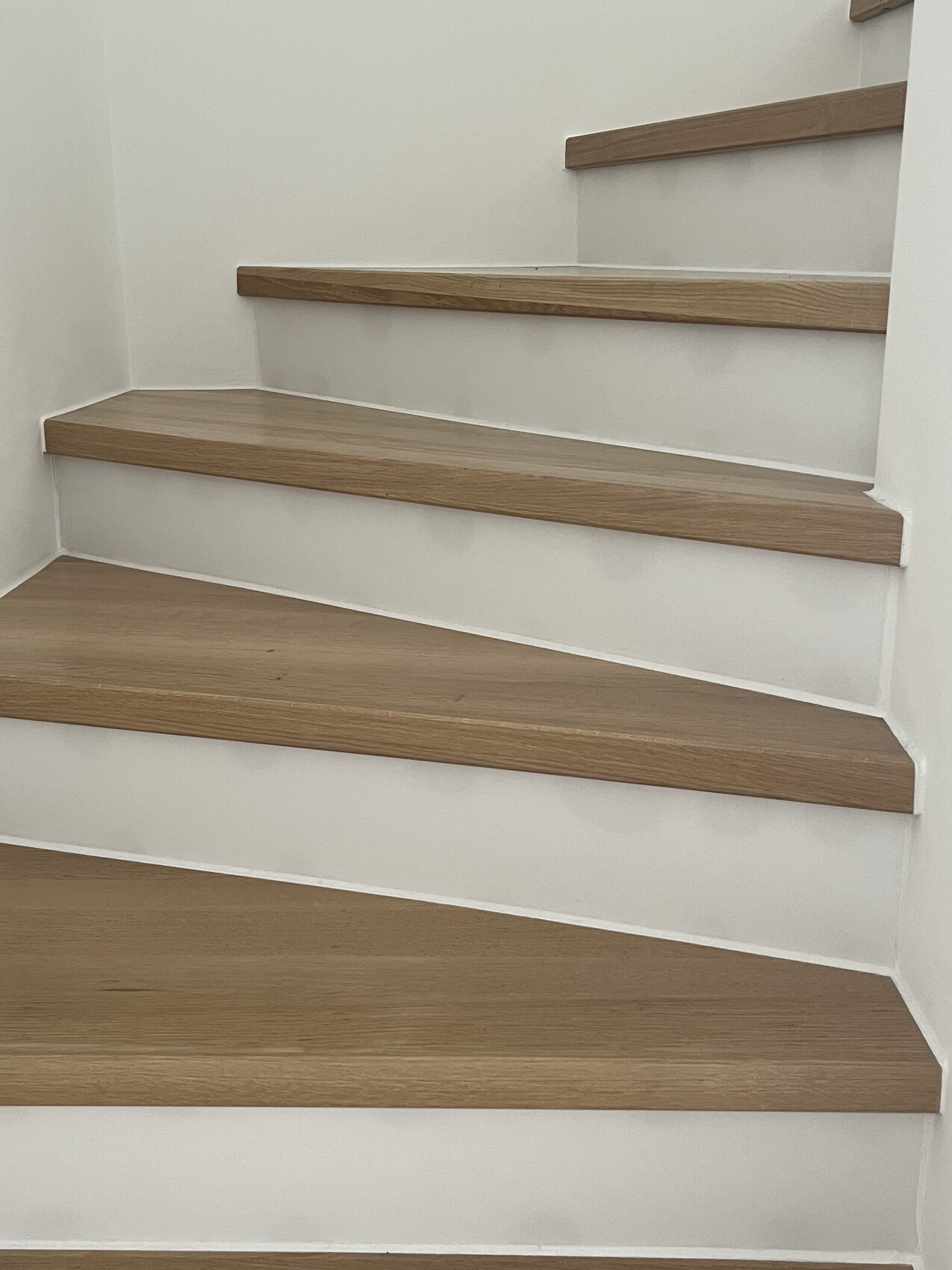
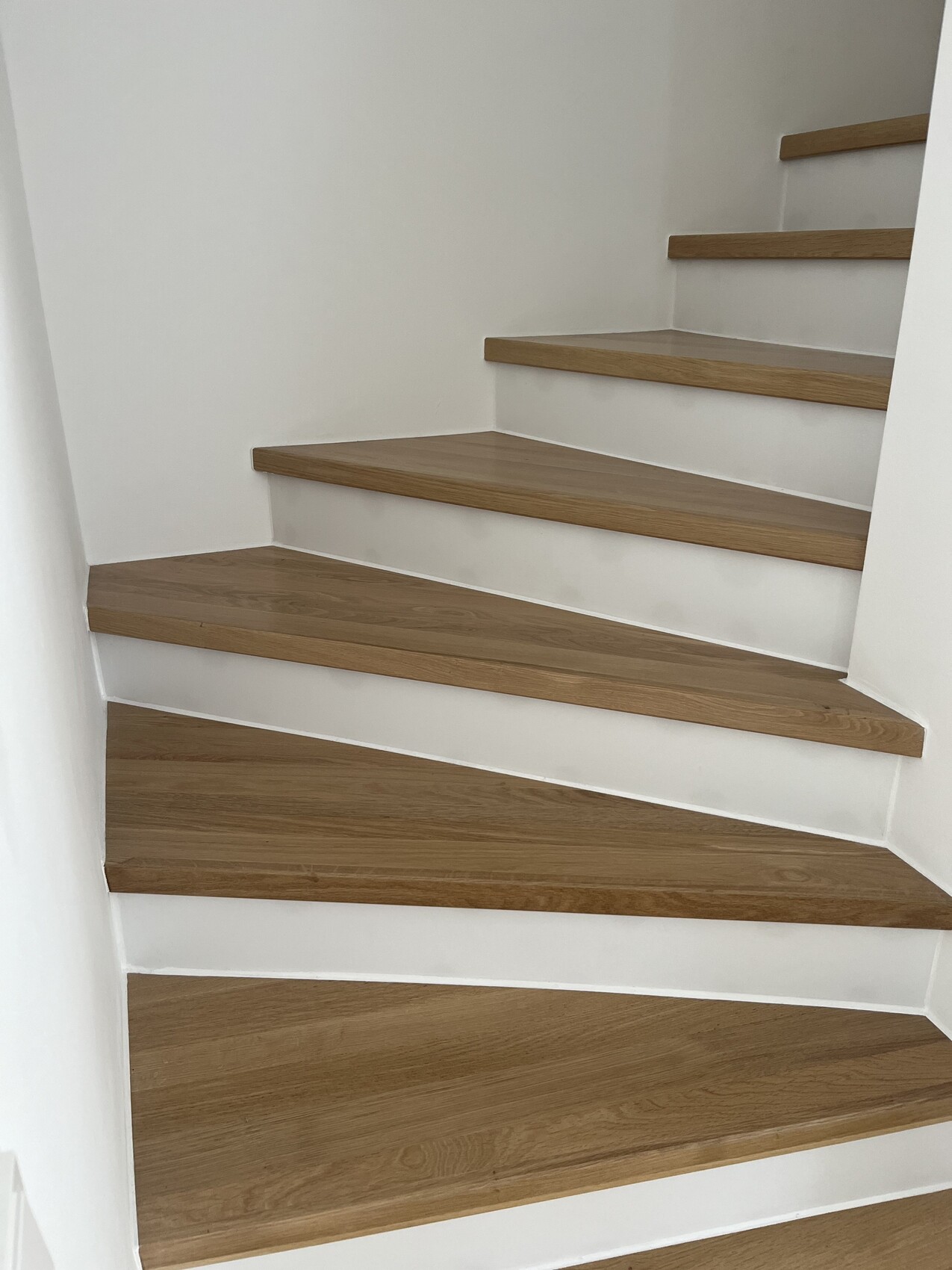
More trouble again with this flooring installer. Now the staircase is the issue. Yesterday, it suddenly looked like this. According to our builder’s assessment, the stains were caused by the adhesive. The installer admits this but claims that after his work, the stair nosings needed to be painted. "After all, these are only 'pre-coated' stair nosings, so the painter only needs to apply one coat and doesn’t have to prime them first." Both the builder and our building inspector were very surprised by this statement, as such stair nosings are generally finished, coated components in various designs that are not meant to be painted. It is still a new build, not a renovated house. The flooring installer refuses to do any repairs, which would already be the second time.
S
Schorsch_baut21 Jun 2023 17:23The man apparently also likes pronounced acrylic sealant joints.
H
hanghaus202321 Jun 2023 18:06Stains are not visible in the pictures, but the risers stand out.
OK, I have seen it now. You mean the riser steps? They probably need to be repainted. In my opinion, this is a defect.
Have you tried drying the stains with a hairdryer? They might just be moisture spots.
When the stair contractor delivers and installs the risers, they are also responsible for proper completion, including the final coat of paint if necessary.
OK, I have seen it now. You mean the riser steps? They probably need to be repainted. In my opinion, this is a defect.
Have you tried drying the stains with a hairdryer? They might just be moisture spots.
When the stair contractor delivers and installs the risers, they are also responsible for proper completion, including the final coat of paint if necessary.
hanghaus2023 schrieb:
If the stair manufacturer supplies and installs the risers, they are also responsible for the proper completion. This includes the final painting if necessary. Even if another trade follows up later. I find that questionable.
At least as questionable as the fact that the risers and treads are supplied by different trades. This almost guarantees disputes over warranty and responsibilities.
So, our general contractor is not responsible for the covering of the stair treads. It was agreed that the staircase would be handed over to us in an unfinished state. Several measurements were taken before the house was handed over. The flooring installer completed the stair treads entirely: the final concrete layer, the adhesive, the white components, and the wooden cladding of the steps. The staircase and the entire job were completed in January. In my opinion, the stains appeared due to the heat last month. The white nosings are probably of inferior quality, and the adhesive is showing through. The flooring installer claims that the white nosings must be painted over by the painter. What is the point of these white components if they have to be painted over? Our construction manager and the building inspector are stunned. They have never seen anything like this in a new build. Normally, such white components are installed as finished parts without requiring painting. Does anyone paint the back panel of a cabinet or any part of it? They recommend that we consult a lawyer. The flooring installer is not responding to my email. I have set a final deadline for remediation.
Similar topics