
ᐅ Very large holes in the hardwood floor due to the removal of old heating pipes
Created on: 26 Oct 2024 20:26
M
MaschaMillaM
MaschaMilla26 Oct 2024 20:26Hello everyone,
In the attached photo, you can see the extent of the damage. It was taken on the first floor (second floor in US terms). Below is the living room, where the plasterer/painter has already replastered and painted the ceiling.
My idea is to completely fill this hole with expanding foam up to the subfloor and then level it using wood filler before sanding it smooth.
What would be your suggestion?
Regards
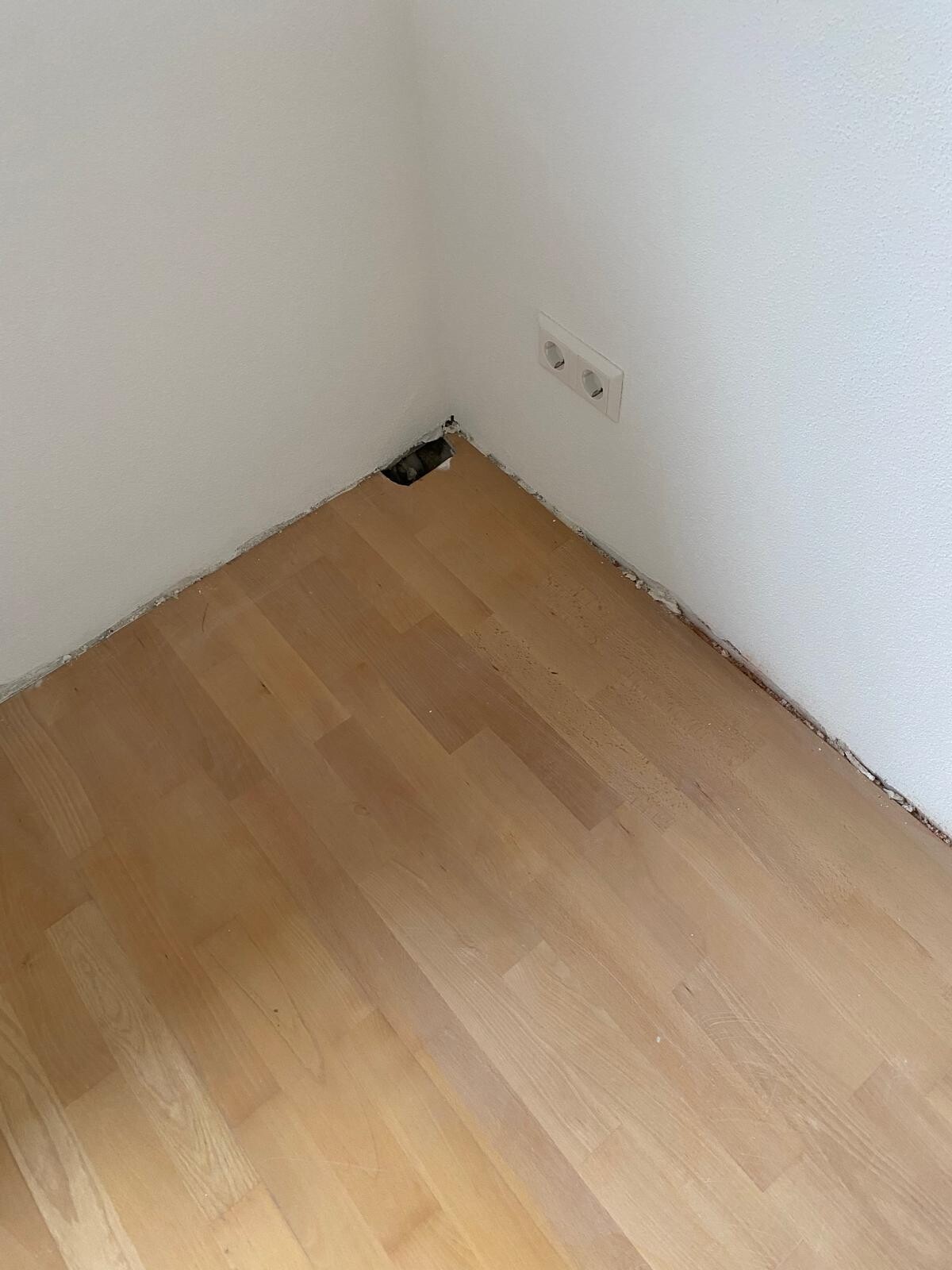
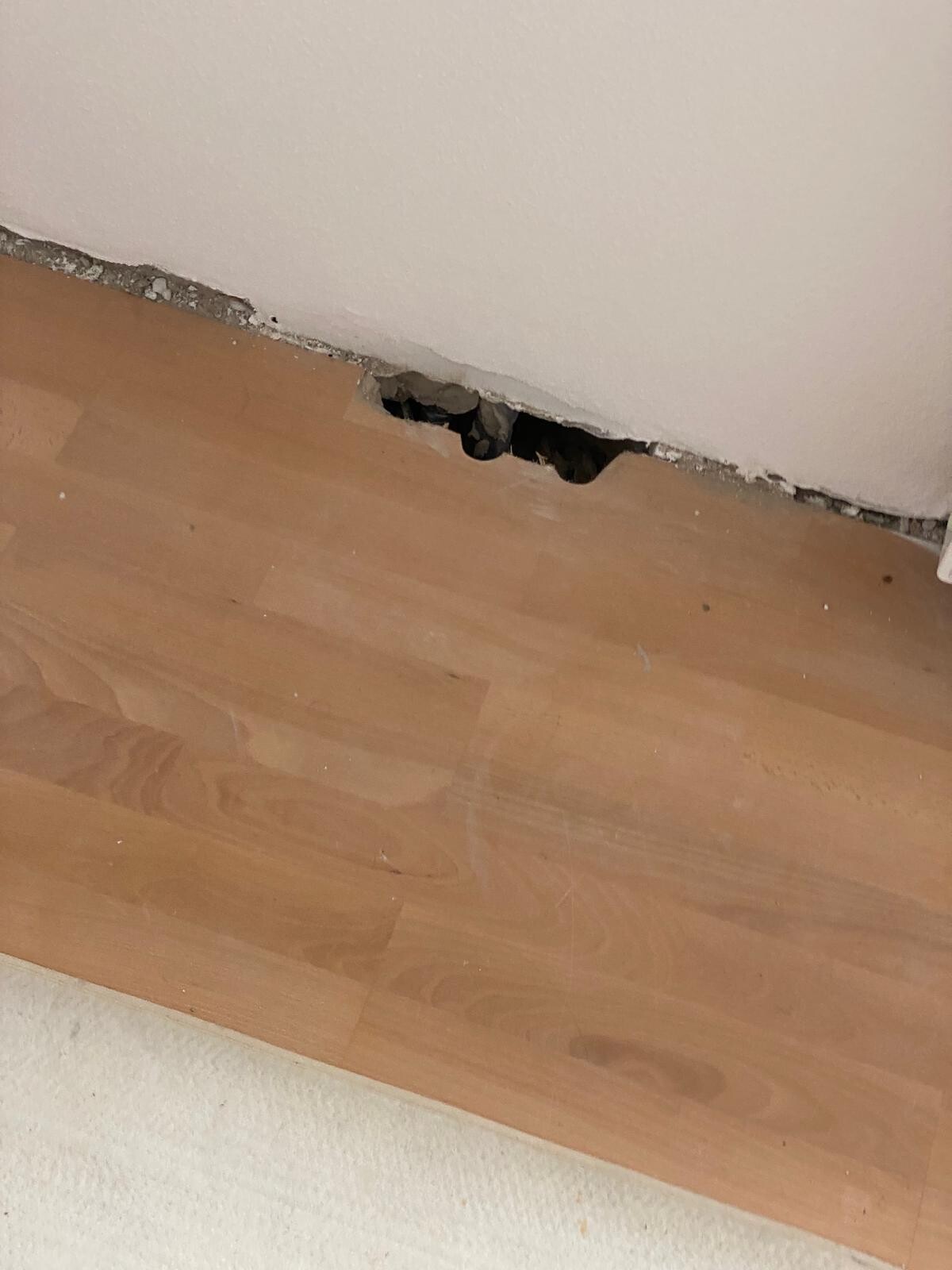
In the attached photo, you can see the extent of the damage. It was taken on the first floor (second floor in US terms). Below is the living room, where the plasterer/painter has already replastered and painted the ceiling.
My idea is to completely fill this hole with expanding foam up to the subfloor and then level it using wood filler before sanding it smooth.
What would be your suggestion?
Regards
 HausiKlausi26 Oct 2024 22:33
I would probably carefully cut out a rectangle, fill the recess with filler or mortar, then cut and glue a piece of wood that matches as closely as possible. Expanding foam is too flexible and not suitable material-wise, and applying filler on such a surface is too difficult to achieve a good appearance.
M
MaschaMilla27 Oct 2024 12:19Thanks for the idea.
It is a fully drilled concrete ceiling with about 18cm (7 inches) thickness.
The underside of the concrete slab (the living room ceiling) has been completely plastered and also painted (no wallpaper).
If I fill the holes with mortar, moisture and cement slurry will almost certainly penetrate through and cause ugly stains.
I can probably trace the hole outlines onto paper and cut and file a similar parquet accordingly.
But the question is about the substrate: how can I make it stable enough without causing moisture to penetrate the underside?
It is a fully drilled concrete ceiling with about 18cm (7 inches) thickness.
The underside of the concrete slab (the living room ceiling) has been completely plastered and also painted (no wallpaper).
If I fill the holes with mortar, moisture and cement slurry will almost certainly penetrate through and cause ugly stains.
I can probably trace the hole outlines onto paper and cut and file a similar parquet accordingly.
But the question is about the substrate: how can I make it stable enough without causing moisture to penetrate the underside?
HausiKlausi27 Oct 2024 22:51Okay, moisture is a concern with such an opening. For example, there are perlite loose fills, a natural product that is also used for insulation. You could use it to fill generously, and then proceed as described above.
B
Buchsbaum06628 Oct 2024 06:26What about the baseboards?
Are there none? If there are any, most of them will be covered anyway. Otherwise, you can fill the gaps with expanding foam and then use repair filler or a similar product to fill any remaining openings.
Are there none? If there are any, most of them will be covered anyway. Otherwise, you can fill the gaps with expanding foam and then use repair filler or a similar product to fill any remaining openings.
M
MaschaMilla16 Nov 2024 19:38Hello, I found a solution.
I loosely place a sturdy and waterproof plastic bag into the concrete floor opening, which on the ceiling side was only skim-coated during plastering.
Now I fill the hole daily with a not too thick layer of a filler made from styrofoam adhesive (which is available in small kilogram containers), using a spatula. After a few days, the hole is solidly filled. Then, I cut away the excess plastic bag all around and fill the hole up to about 2mm (0.08 inches) below the top edge of the parquet. The remaining 2mm (0.08 inches) are smoothed and sanded with wood filler, possibly mixed with some beech wood flour.
Once the baseboards are screwed to the wall, this spot will hardly be noticeable.
I loosely place a sturdy and waterproof plastic bag into the concrete floor opening, which on the ceiling side was only skim-coated during plastering.
Now I fill the hole daily with a not too thick layer of a filler made from styrofoam adhesive (which is available in small kilogram containers), using a spatula. After a few days, the hole is solidly filled. Then, I cut away the excess plastic bag all around and fill the hole up to about 2mm (0.08 inches) below the top edge of the parquet. The remaining 2mm (0.08 inches) are smoothed and sanded with wood filler, possibly mixed with some beech wood flour.
Once the baseboards are screwed to the wall, this spot will hardly be noticeable.
Similar topics