
ᐅ Ventilation System in a Single-Family Home Not Working – Planning Mistake?
Created on: 1 Feb 2021 19:35
J
jeti79
Hello everyone,
We have now been living for 2 years (since November 2018) in our detached house with a pitched roof, built according to the 2016 energy saving regulations, equipped with a central ventilation system (Wolf CWL300). Unfortunately, we have not been satisfied with the "performance" of the ventilation system from the start. We repeatedly called our installer in the beginning, but after about the eighth visit, he gave up and simply said, "The building is full of moisture at the beginning, so it’s normal for the air quality to be poor for two years." We consider this a poor excuse.
Our dissatisfaction mainly comes from the fact that we have had the chance to compare with neighboring houses (all in the same development with similar new build standards), where the air quality is usually significantly better than in our house. This means: despite the ventilation system running continuously (on occupancy mode at about 190 m³/h [190 cubic meters per hour]), the air in our house is almost always stuffy, whether we are home or not. Although the installer advised against it, we have actually been leaving the windows open every night lately because the air in the bedroom feels used up after 3-4 hours. It’s the same situation in the children's rooms.
Even when we come to the ground floor in the morning (where nobody has been all night), the air quality is anything but good. So, as we did before, we immediately open the windows in the morning.
Of course, I assume that we might be making some mistakes ourselves, but I would like to find out if there might also be (major?) planning errors in our system? Is it even possible to determine that remotely? What information would you need from us?
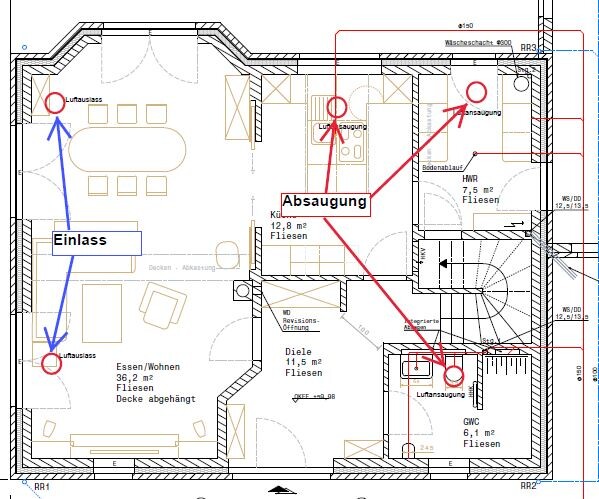
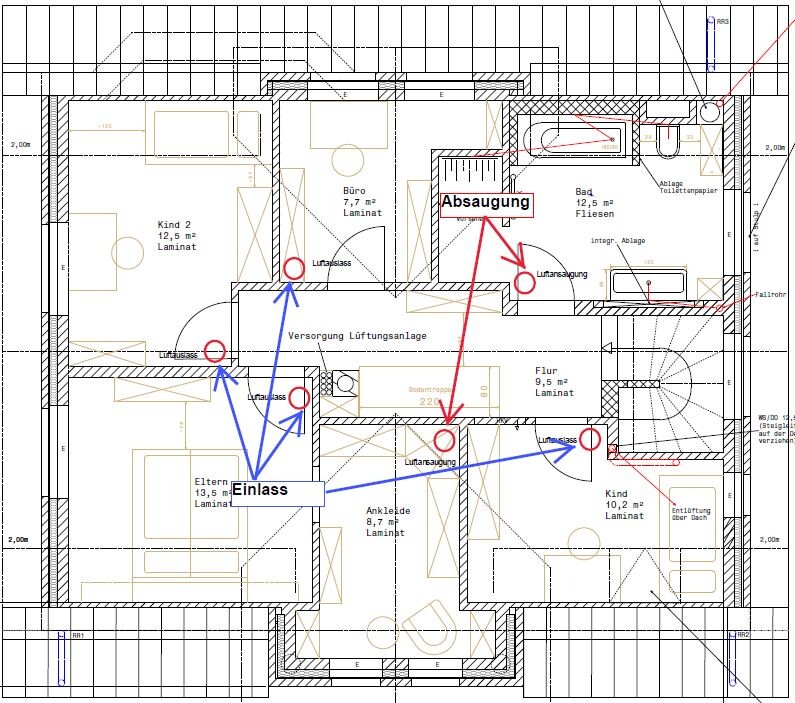
I have attached a layout showing how the supply and exhaust valves are installed on the upper and ground floors. The system is installed in the attic. I change the filters regularly every month (because it’s a new development), and the chimneys on the roof are the required >2.5 m (over 8 feet) apart from each other.
We have now been living for 2 years (since November 2018) in our detached house with a pitched roof, built according to the 2016 energy saving regulations, equipped with a central ventilation system (Wolf CWL300). Unfortunately, we have not been satisfied with the "performance" of the ventilation system from the start. We repeatedly called our installer in the beginning, but after about the eighth visit, he gave up and simply said, "The building is full of moisture at the beginning, so it’s normal for the air quality to be poor for two years." We consider this a poor excuse.
Our dissatisfaction mainly comes from the fact that we have had the chance to compare with neighboring houses (all in the same development with similar new build standards), where the air quality is usually significantly better than in our house. This means: despite the ventilation system running continuously (on occupancy mode at about 190 m³/h [190 cubic meters per hour]), the air in our house is almost always stuffy, whether we are home or not. Although the installer advised against it, we have actually been leaving the windows open every night lately because the air in the bedroom feels used up after 3-4 hours. It’s the same situation in the children's rooms.
Even when we come to the ground floor in the morning (where nobody has been all night), the air quality is anything but good. So, as we did before, we immediately open the windows in the morning.
Of course, I assume that we might be making some mistakes ourselves, but I would like to find out if there might also be (major?) planning errors in our system? Is it even possible to determine that remotely? What information would you need from us?
I have attached a layout showing how the supply and exhaust valves are installed on the upper and ground floors. The system is installed in the attic. I change the filters regularly every month (because it’s a new development), and the chimneys on the roof are the required >2.5 m (over 8 feet) apart from each other.
Now that you mention it, I just realized. Actually, we replaced all the furniture in the house in 2018/2019. There are only very few pieces left that made it from our apartment to the house.
In the bathroom, we also ventilate immediately afterward (shock ventilation with the window fully open for about 5-10 minutes) to clear the mirror.
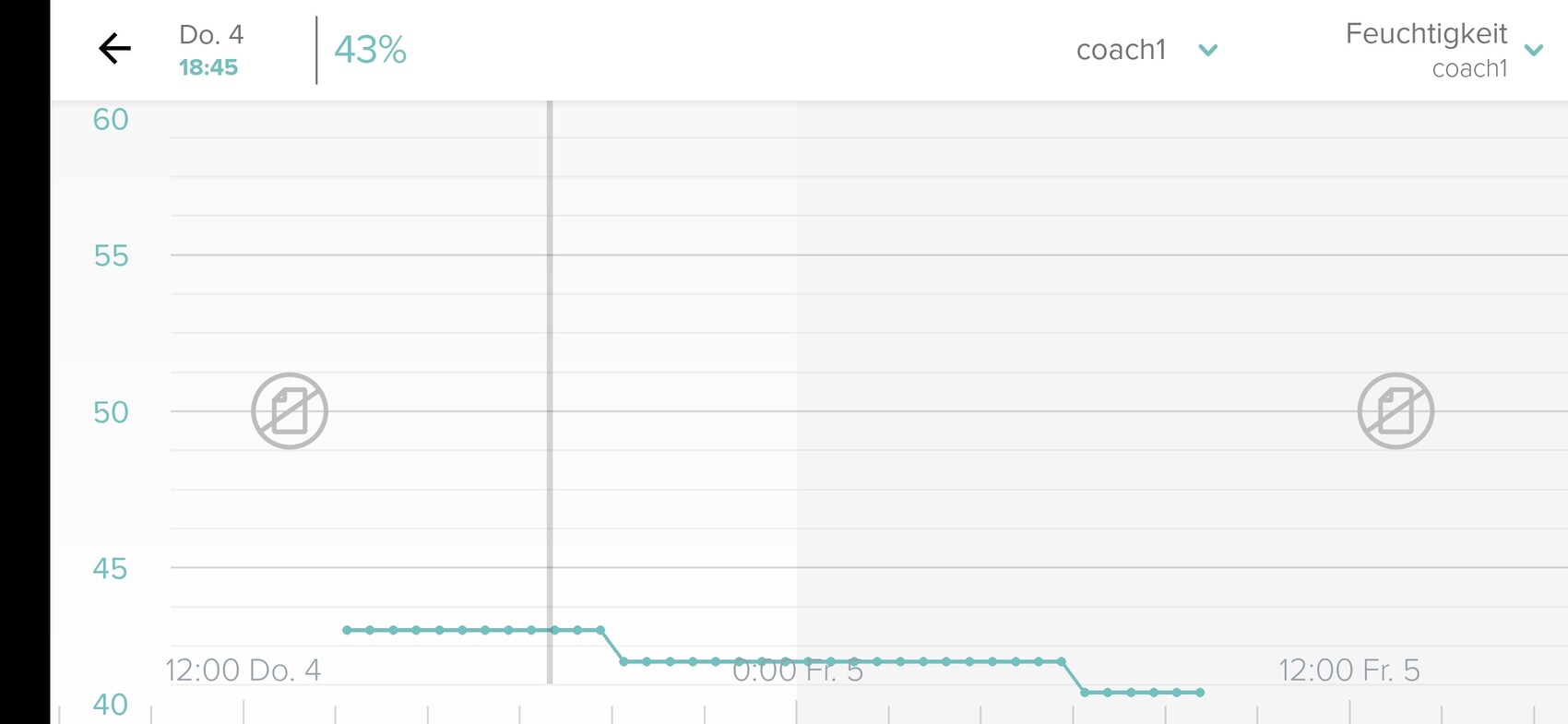
The device also measures the humidity. I’m attaching a screenshot – supposedly it’s excellent. But in summer, we had very high humidity levels; I don’t remember the exact values.
Yes, unfortunately, repairs are really on our to-do list. 🙁
In the bathroom, we also ventilate immediately afterward (shock ventilation with the window fully open for about 5-10 minutes) to clear the mirror.
The device also measures the humidity. I’m attaching a screenshot – supposedly it’s excellent. But in summer, we had very high humidity levels; I don’t remember the exact values.
Yes, unfortunately, repairs are really on our to-do list. 🙁
B
BBaumeister5 Feb 2021 10:25There are many materials in new buildings that off-gas. Do you have water-based paint on the walls? Flooring made of vinyl or carpet? These can cause quite a strong smell. Especially in summer, indoor humidity can rise if it’s warm and humid outside, while the inside—due to good insulation—remains relatively cool. This leads to more condensation. In our sleeping area, we have a window with an insect screen that stays open at night during summer. I’ve also made it a habit to create a cross breeze through almost the entire house early in the morning around 6 a.m. on hot days. This cools down the house quite well and reduces the humidity effect. Otherwise, the off-gassing will also decrease over time. May I ask what your exterior walls are made of?
Now you need to turn off the system for one night and then take measurements. This way, we can determine whether the device is measuring correctly and if the house is really airtight (in case no blower door test was done).
Only then can we say whether the system is working properly.
The issue with the odors is indeed a real concern. No system can fully address that; you are expecting too much.
Only then can we say whether the system is working properly.
The issue with the odors is indeed a real concern. No system can fully address that; you are expecting too much.
I can’t say exactly what color we have on the walls; however, on the upper floor, everything except the hallway is wallpapered and painted, yes.
The flooring is entirely laminate, except the bathroom, which is tiled and wallpapered. We do not have any carpet.
I seem to recall that the humidity during summer was very high for us, and the temperatures were extremely high as well (I once recorded 28°C (82°F) in the bedroom at 8 a.m.).
Our wall construction is as follows:
Brick exterior wall
2cm (0.8 inch) air gap
14cm (5.5 inch) insulation, material with thermal conductivity 0.035 W/(m·K) (glass wool)
17.5cm (6.9 inch) Ytong (aerated concrete)
Gypsum plaster
The flooring is entirely laminate, except the bathroom, which is tiled and wallpapered. We do not have any carpet.
I seem to recall that the humidity during summer was very high for us, and the temperatures were extremely high as well (I once recorded 28°C (82°F) in the bedroom at 8 a.m.).
Our wall construction is as follows:
Brick exterior wall
2cm (0.8 inch) air gap
14cm (5.5 inch) insulation, material with thermal conductivity 0.035 W/(m·K) (glass wool)
17.5cm (6.9 inch) Ytong (aerated concrete)
Gypsum plaster
Bookstar schrieb:
You should turn off the system for one night and then take measurements. That way, we can actually tell if the device is measuring correctly and if the house is truly airtight (assuming no blower door test was done).
Only then can we say whether the system is working properly.
The issue with odors is indeed a separate matter. No system can handle that, so your expectations might be too high. The blower door test (?) was actually not done. I can also turn off the system during the day – then the values should go up, right?
matte1987 schrieb:
Could you please tell me which device you are using? I’m curious for my own purposes. Thanks! We got a Wolf CWL300 – my neighbors have the same system and it seems to work very well for them.
Similar topics