
ᐅ Ventilation: How to Route the Ducts Through the Vapor Barrier?
Created on: 14 Mar 2018 19:24
B
BaselHello,
I have a few questions. We have planned our ventilation system to be installed in the attic, but now all these many ducts need to be routed up to the attic and through the vapor barrier.
Since it was clear that achieving airtightness would not be easy, the site manager proposed a masonry shaft.
What do you think of this idea? The ducts now pass from the concrete precast ceiling into the shaft and continue up into the attic. The shaft is to be bricked up and then plastered afterwards.
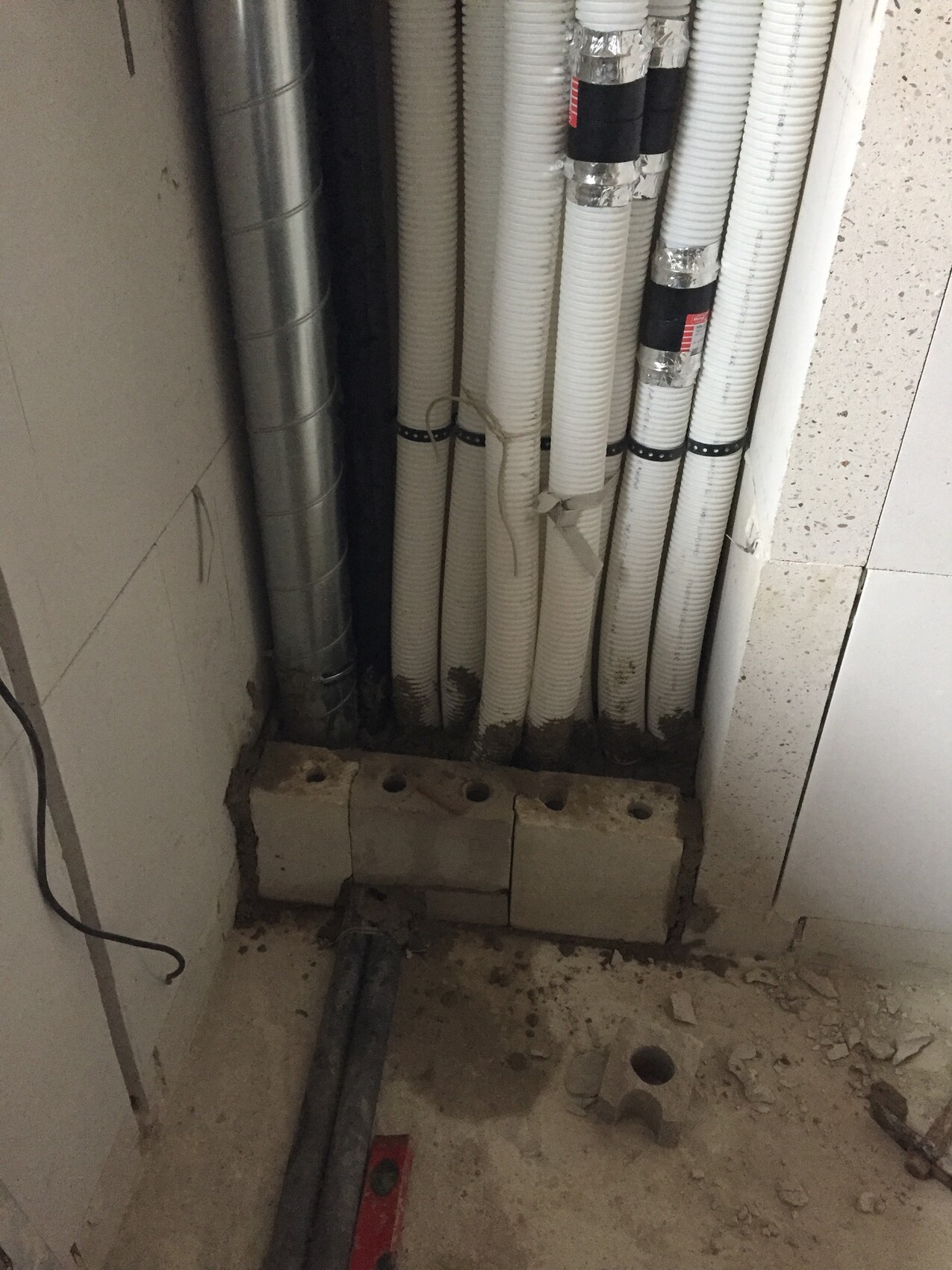
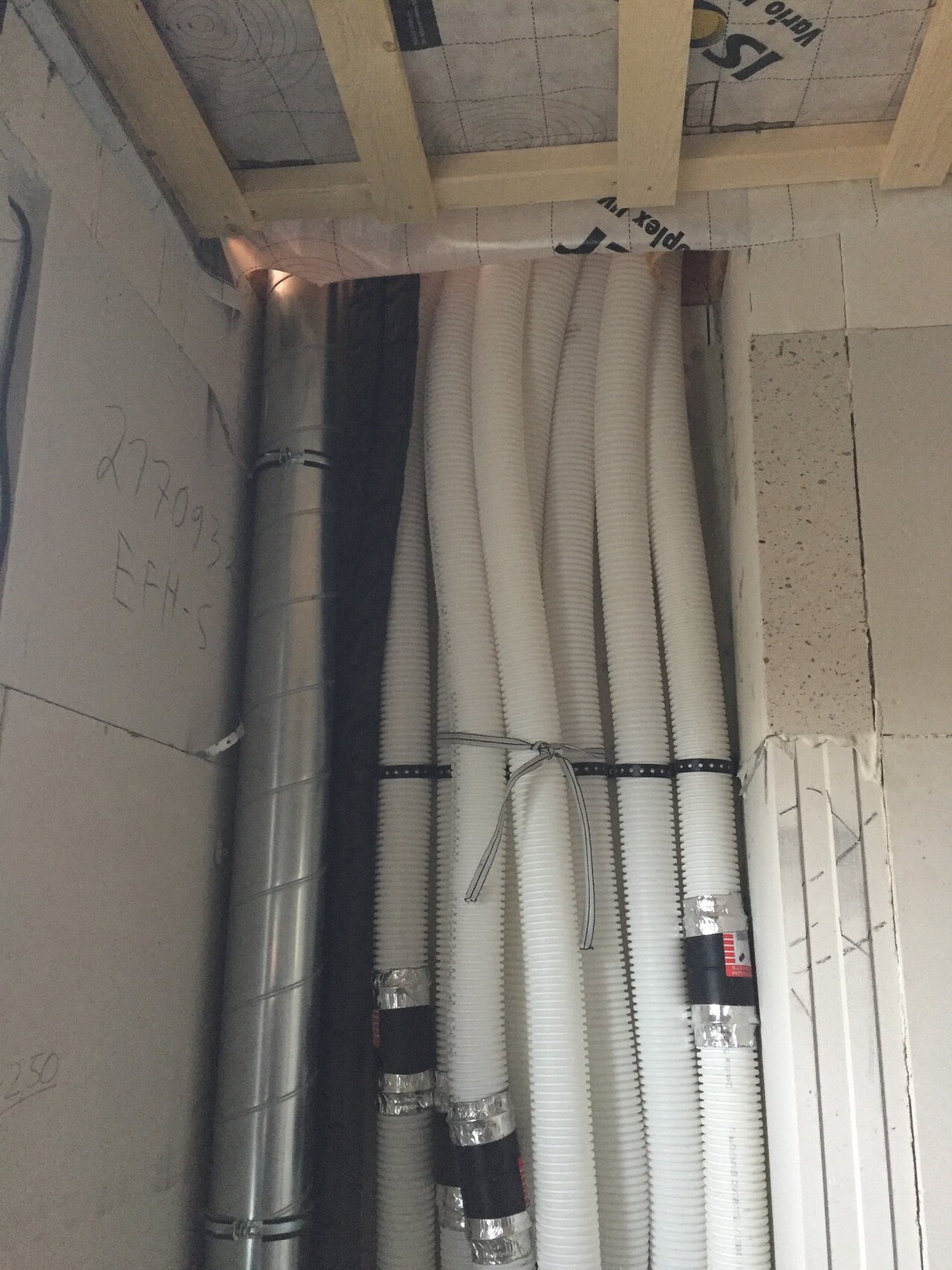
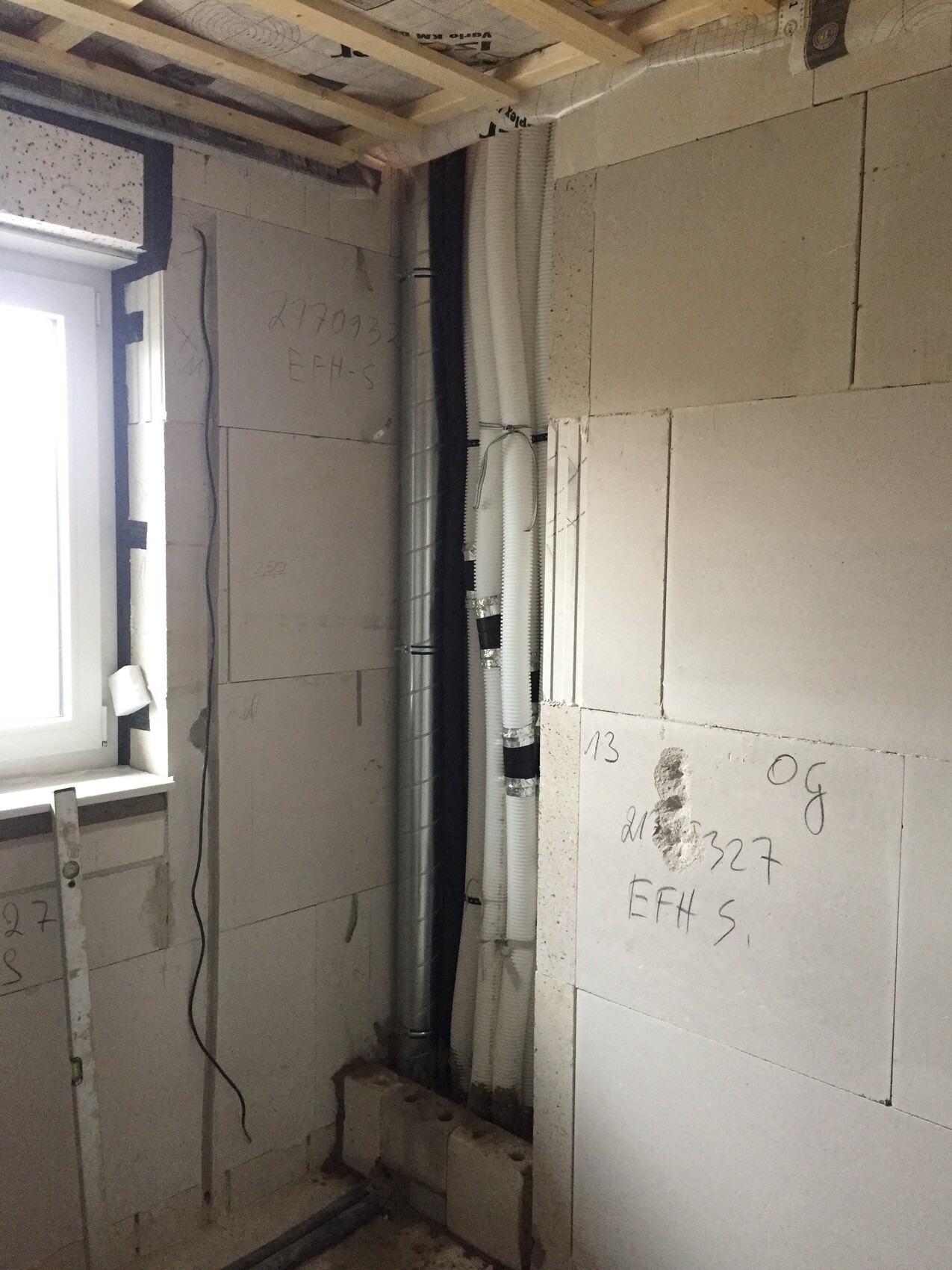
I have a few questions. We have planned our ventilation system to be installed in the attic, but now all these many ducts need to be routed up to the attic and through the vapor barrier.
Since it was clear that achieving airtightness would not be easy, the site manager proposed a masonry shaft.
What do you think of this idea? The ducts now pass from the concrete precast ceiling into the shaft and continue up into the attic. The shaft is to be bricked up and then plastered afterwards.

K
Knallkörper14 Mar 2018 21:41Either the shaft at the top must be sealed so that no air from the living area rises into the attic. This would certainly not be very simple, as all the pipes would then need to be cast in place. Perhaps there are also special pipe sleeves with annular seals for each pipe.
Alternatively, the exits of the individual pipes from the shaft must each be airtight, and at the same time, the shaft must be airtight all around towards the living area.
Alternatively, the exits of the individual pipes from the shaft must each be airtight, and at the same time, the shaft must be airtight all around towards the living area.
The first option you suggested is the usual approach, with pipes passing through the vapor barrier. Since it is assumed that sealing may fail, this shaft is built airtight at the bottom and around the living area with masonry and plaster. This way, it is sealed off from the living space. From my understanding, although it is technically inside, it can be considered similar to a cold floor area.
Similar topics