
ᐅ Ventilation / Air Exhaust in Passive Houses – Duct Odors / Musty Laundry Smell
Created on: 18 Mar 2018 12:27
T
tiramizuHello everyone,
we are really at our wit’s end and looking for expert advice regarding our wastewater problem:
We live in a passive house. Our washing machine (new) is located in the attic. It is therefore connected at the highest point of the house – the pros and cons can be debated, but please just assume that there was no other option to install the machine in this room.
For some time now, we have had the issue that the laundry sometimes smells musty, especially when washing at temperatures above 40°C (104°F). I installed a trap before the wastewater connection and raised the final attachment of the drain hose to the top edge of the washing machine. This should provide enough water seal to prevent the trap from being siphoned dry.
Since there was no ventilation on the wastewater pipe, a sanitary professional installed an air admittance valve on the same connection. This helped improve the situation, but we still have sewer odor in the bathroom, and the laundry continues to smell musty. Therefore, we cannot use washing temperatures above 40°C (104°F). We find this not only unhygienic – in our opinion, it shouldn’t be this way.
Background: The lower part of the house is divided as an independent apartment, separate from the ground and first floors where we live. The ground floor layout does not include a washing machine connection. We are therefore dependent on the space and this connection in the upper floor.
Good advice is now expensive. Does anyone have any suggestions?
we are really at our wit’s end and looking for expert advice regarding our wastewater problem:
We live in a passive house. Our washing machine (new) is located in the attic. It is therefore connected at the highest point of the house – the pros and cons can be debated, but please just assume that there was no other option to install the machine in this room.
For some time now, we have had the issue that the laundry sometimes smells musty, especially when washing at temperatures above 40°C (104°F). I installed a trap before the wastewater connection and raised the final attachment of the drain hose to the top edge of the washing machine. This should provide enough water seal to prevent the trap from being siphoned dry.
Since there was no ventilation on the wastewater pipe, a sanitary professional installed an air admittance valve on the same connection. This helped improve the situation, but we still have sewer odor in the bathroom, and the laundry continues to smell musty. Therefore, we cannot use washing temperatures above 40°C (104°F). We find this not only unhygienic – in our opinion, it shouldn’t be this way.
Background: The lower part of the house is divided as an independent apartment, separate from the ground and first floors where we live. The ground floor layout does not include a washing machine connection. We are therefore dependent on the space and this connection in the upper floor.
Good advice is now expensive. Does anyone have any suggestions?

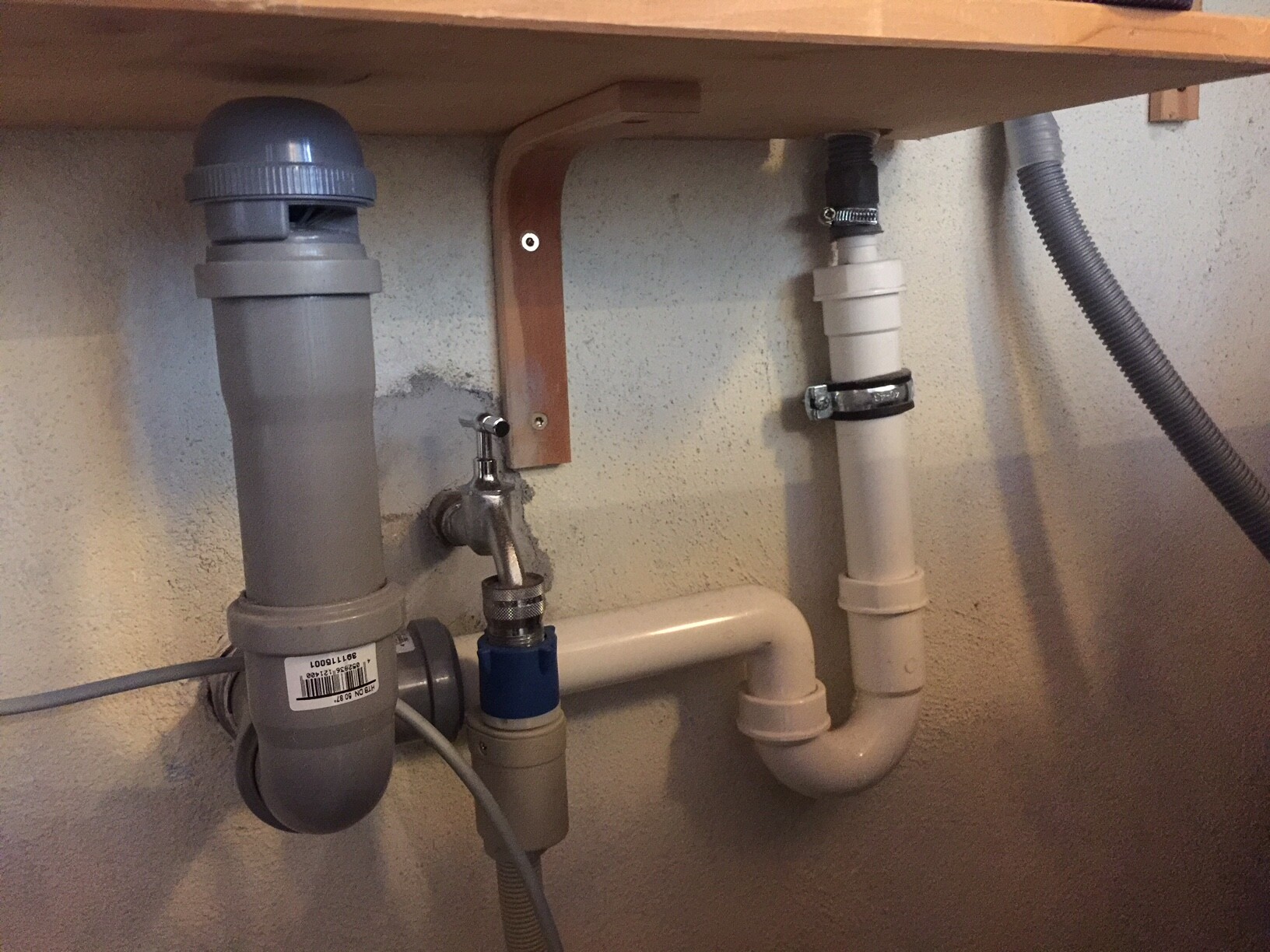
We initially suspected the washing machine, but a brand-new, high-quality washing machine has the same issue. As mentioned earlier, the unique aspect is likely that we don’t have any wastewater pipes vented to the outside—meaning there is no external venting or air intake. We only have this unsightly stub pipe installed in the bathroom, and it’s the only one in the entire house. To help visualize this better, I took a photo… see attachment.
C
Caspar202018 Mar 2018 21:31tiramizu schrieb:
We have been experiencing for some time now that the laundry sometimes smells quite musty, especially when washing temperatures above 40°C (104°F) are used.Is the laundry smelling musty right out of the machine or when it is stored in the room?
Also, I’m not entirely clear about the temperature issue; after all, the amount of water used shouldn’t change much because of that.
Is there a bathtub in the bathroom?
Similar topics