
M
MarcomitZeh13 Sep 2025 06:47Hello everyone,
this concerns the windows in a single-family house built in 2004/2005: tilt-and-turn wooden windows (Meranti) by Weru.
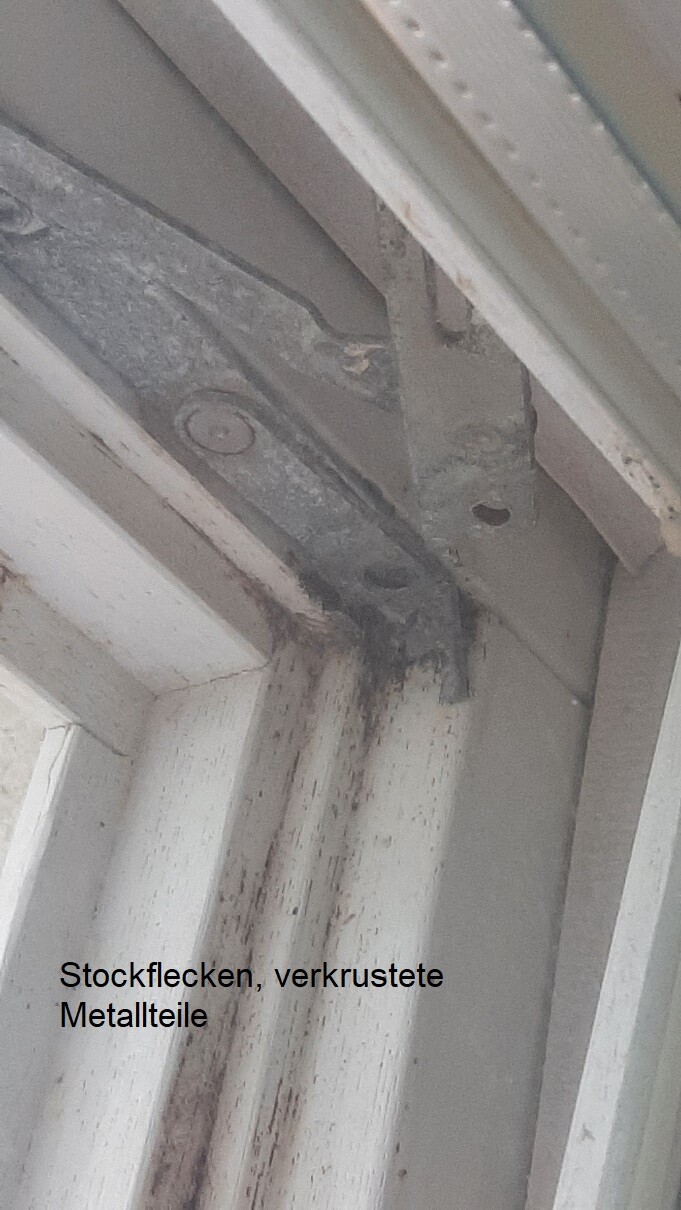
1. Several windows have noticeably corroded metal parts. What could be the causes? Moisture? Cleaning attempts with aggressive chemicals by previous occupants? Worn-out sealing gaskets? What is the most likely cause, and why are the others less probable?
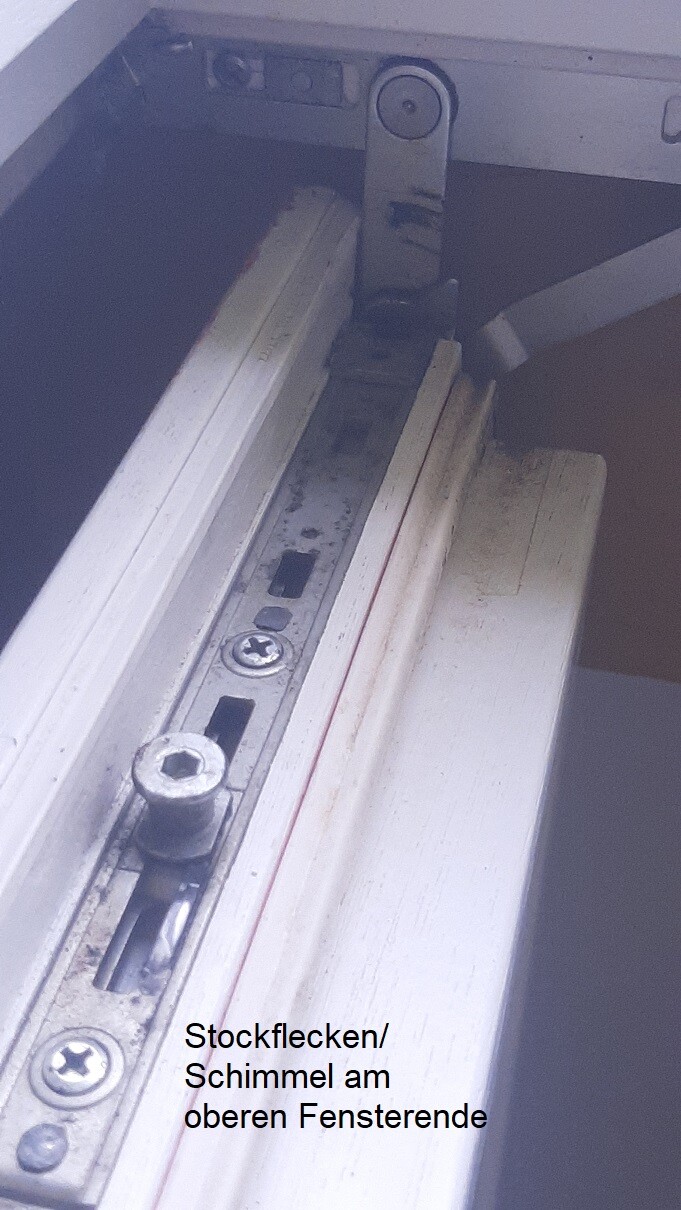
2. There are mildew stains or mold on several windows. What could be the reasons? Poor cleaning by previous occupants, dust accumulation, dust retaining moisture, dust starting to mold? Again: What is the most likely cause, and why are the others less likely?
3. All windows have a noticeably large play on the hinges. If you stand in front of the opened window sash and push at the top toward the hinge or pull at the bottom away from the hinge, the sash can wobble about 8-10 mm (0.3-0.4 inches) back and forth. This is also the case with windows that are hardly ever opened, e.g., a very small window in the utility room wobbles the same way. However, the windows open and close properly without sticking or jamming. Does anyone have specific experience with Weru windows and know if this is normal? Does anything need to be adjusted here? Or are the window mechanisms worn out and need replacing – which, after 20 years of service life, actually shouldn’t be the case yet?
4. On some windows, the sealing gaskets are noticeably worn – while all other windows’ gaskets still look completely fine. Specifically, two windows are affected here, which are opened and closed frequently (kitchen-garden and living room-terrace; these are floor-to-ceiling windows used like doors). Can the gasket deteriorate so much just from frequent use, or could something else have caused this? What is the most likely cause?
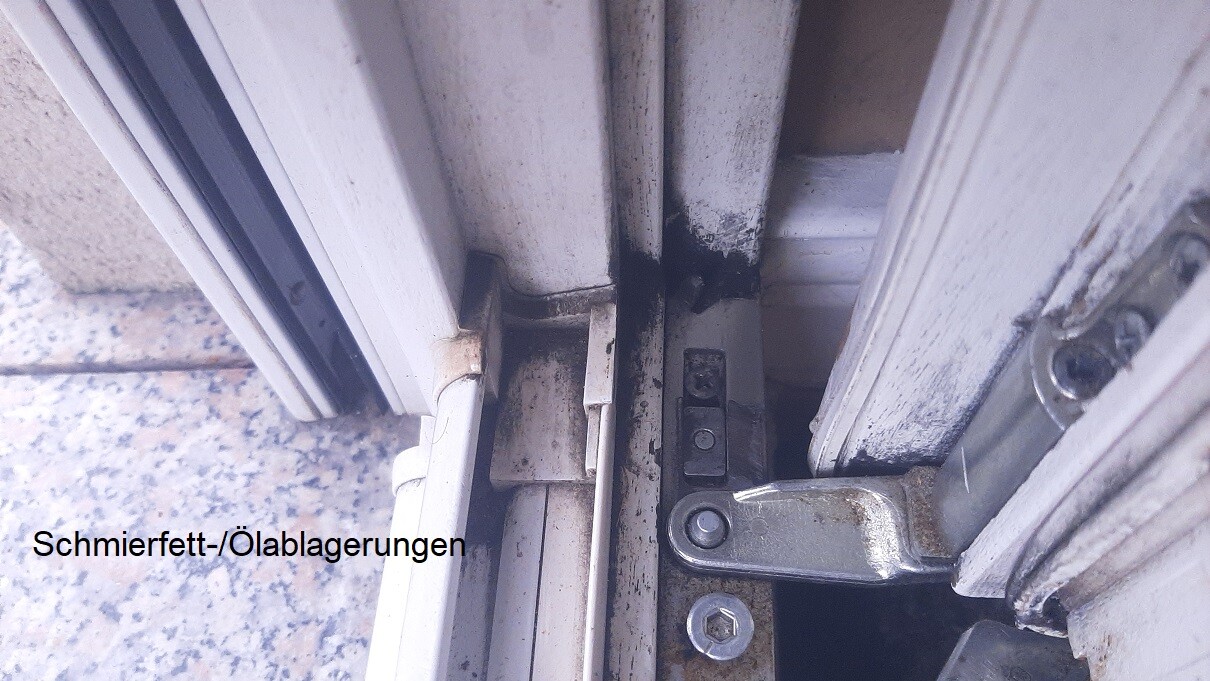
5. Does anyone have any idea about the oil and grease deposits? To me, it looks like someone sprayed something over a large area. Can it be identified more precisely from the pictures? The brownish layer in the first image is quite thick – could that be yellow grease? The substance in the second picture, which is also smeared into the corner, could it be graphite spray?
Thank you very much, and best regards,
Marco
[ATTACH alt="Sealing gasket mildew stains grease oil.jpg"]92899[/ATTACH]

this concerns the windows in a single-family house built in 2004/2005: tilt-and-turn wooden windows (Meranti) by Weru.
1. Several windows have noticeably corroded metal parts. What could be the causes? Moisture? Cleaning attempts with aggressive chemicals by previous occupants? Worn-out sealing gaskets? What is the most likely cause, and why are the others less probable?
2. There are mildew stains or mold on several windows. What could be the reasons? Poor cleaning by previous occupants, dust accumulation, dust retaining moisture, dust starting to mold? Again: What is the most likely cause, and why are the others less likely?
3. All windows have a noticeably large play on the hinges. If you stand in front of the opened window sash and push at the top toward the hinge or pull at the bottom away from the hinge, the sash can wobble about 8-10 mm (0.3-0.4 inches) back and forth. This is also the case with windows that are hardly ever opened, e.g., a very small window in the utility room wobbles the same way. However, the windows open and close properly without sticking or jamming. Does anyone have specific experience with Weru windows and know if this is normal? Does anything need to be adjusted here? Or are the window mechanisms worn out and need replacing – which, after 20 years of service life, actually shouldn’t be the case yet?
4. On some windows, the sealing gaskets are noticeably worn – while all other windows’ gaskets still look completely fine. Specifically, two windows are affected here, which are opened and closed frequently (kitchen-garden and living room-terrace; these are floor-to-ceiling windows used like doors). Can the gasket deteriorate so much just from frequent use, or could something else have caused this? What is the most likely cause?
5. Does anyone have any idea about the oil and grease deposits? To me, it looks like someone sprayed something over a large area. Can it be identified more precisely from the pictures? The brownish layer in the first image is quite thick – could that be yellow grease? The substance in the second picture, which is also smeared into the corner, could it be graphite spray?
Thank you very much, and best regards,
Marco
[ATTACH alt="Sealing gasket mildew stains grease oil.jpg"]92899[/ATTACH]
 schubert7913 Sep 2025 07:43
I'll keep it short and to the point. According to various threads, you have a completely normal house. It's 20 years old and the plaster is crumbling.
M
MarcomitZeh13 Sep 2025 13:16ypg schrieb:
First, it needs to be cleaned.Of course, when renovation starts, the windows and frames will be cleaned first – that makes sense. But wouldn’t it be better to take the photos in their original condition if you want to find out what actually happened here?- “Stockflecken (mold spots) can be caused by faulty seals.” Okay, that’s one possibility. But the question was: Are there other possibilities? Or are leaking seals the only or most likely cause?
- “Play in the windows indicates poor maintenance.” That’s theoretically possible, but it completely ignores my previous points that ALL the windows have this play, even those rarely or never opened, and that all windows still close properly despite the movement. Wouldn’t severely worn hinges or hardware cause sticking when opening or closing? Are you sure that such play is not normal for windows from Weru? This question remains completely open.
- “Oil and grease stains rather point to poorly maintained windows. Metal rubbing on metal spreads together with old grease during normal use of the window.” How should I understand this: Does “poor maintenance” here mean “too much grease”? That’s more of a side question.
- No one has yet commented on the corroded metal parts. Seals? Chemical reactions? Leaving the windows open when it rained multiple times? Has anyone seen metal parts like this before and what was the cause?
- Also still unclear (though I’m not sure if I asked this in the other forum) is whether a sealing gasket can break down just from opening and closing the window as shown in image 1. Or could it also look like that if someone sprayed oil on it and didn’t wipe it off?
- Meanwhile, there have been many comments about how to properly select tenants and whether wooden windows are the wrong choice anyway.
I think I’m asking reasonable questions here, and I still hope that someone will seriously look more deeply into this. If it helps, I can provide additional photos – just let me know what you need. Also, please tell me if my questions are unclear in any way; I will happily rephrase them.
M
MarcomitZeh22 Sep 2025 16:15Hello everyone,
after meeting with our window installer and having the windows inspected, I would like to summarize the findings here—with many thanks to everyone who contributed helpful comments:
1. Tarnished metal parts: This is a normal occurrence, especially on windows that are regularly used for ventilation. Warm, moist air rises outward and condenses. This has no effect on functionality, it is purely an aesthetic issue. If needed, clean with a mixture of white vinegar and water: let it sit, rinse, and polish.
2. Mold stains: Caused by the same conditions as the metal tarnishing. Surface mold can be washed off with soapy water, then apply a vinegar/water mixture or baking soda solution, let sit, rinse, and if necessary, repaint the affected areas after mold remediation.
3. Play in the window hardware—and this might interest some of you, my small gift back to the community here: The phenomenon I described, where the open sash can be pushed by several millimeters toward the hinge at the top and pulled by several millimeters away from the hinge at the bottom, is COMPLETELY NORMAL for concealed tilt-and-turn fittings made by Roto and has nothing to do with “windows needing adjustment.” Functionally, when unlocking the window, the rubber seal is meant to allow the sash to move slightly away from the frame to prevent damage to the seal when the sash swings open.
4. Damaged seals: Also normal on windows that are frequently opened. Terraces and balconies are typical examples. The seals have—this one is on me—gone years without maintenance, especially cleaning and lubricating with grease sticks or silicone spray.
A trivial but very important connection only became clear to me much later: my tenants always use the same few windows to ventilate. This explains why the described issues (mold stains, tarnished metal parts) only appear on some windows but not others, which puzzled me for a long time. This realization came late since I personally open ALL available windows for ventilation.
I will now have the immediate repairs carried out by our window installer. Next summer, when I will be on site with scaffolding anyway, I plan to do a major window renovation. The tenants are completely relieved of all the above points.
The only complaint I still have about the tenants—which I still disagree with some forum posts about—is the oil and grease smears on two of the windows: While I’m glad when tenants take care of things themselves, it needs to be done properly or it’s better to leave it alone and call me—as I have repeatedly offered them. I will ask the tenants to clean up the mess themselves.
Best regards from Havelland,
Marco
after meeting with our window installer and having the windows inspected, I would like to summarize the findings here—with many thanks to everyone who contributed helpful comments:
1. Tarnished metal parts: This is a normal occurrence, especially on windows that are regularly used for ventilation. Warm, moist air rises outward and condenses. This has no effect on functionality, it is purely an aesthetic issue. If needed, clean with a mixture of white vinegar and water: let it sit, rinse, and polish.
2. Mold stains: Caused by the same conditions as the metal tarnishing. Surface mold can be washed off with soapy water, then apply a vinegar/water mixture or baking soda solution, let sit, rinse, and if necessary, repaint the affected areas after mold remediation.
3. Play in the window hardware—and this might interest some of you, my small gift back to the community here: The phenomenon I described, where the open sash can be pushed by several millimeters toward the hinge at the top and pulled by several millimeters away from the hinge at the bottom, is COMPLETELY NORMAL for concealed tilt-and-turn fittings made by Roto and has nothing to do with “windows needing adjustment.” Functionally, when unlocking the window, the rubber seal is meant to allow the sash to move slightly away from the frame to prevent damage to the seal when the sash swings open.
4. Damaged seals: Also normal on windows that are frequently opened. Terraces and balconies are typical examples. The seals have—this one is on me—gone years without maintenance, especially cleaning and lubricating with grease sticks or silicone spray.
A trivial but very important connection only became clear to me much later: my tenants always use the same few windows to ventilate. This explains why the described issues (mold stains, tarnished metal parts) only appear on some windows but not others, which puzzled me for a long time. This realization came late since I personally open ALL available windows for ventilation.
I will now have the immediate repairs carried out by our window installer. Next summer, when I will be on site with scaffolding anyway, I plan to do a major window renovation. The tenants are completely relieved of all the above points.
The only complaint I still have about the tenants—which I still disagree with some forum posts about—is the oil and grease smears on two of the windows: While I’m glad when tenants take care of things themselves, it needs to be done properly or it’s better to leave it alone and call me—as I have repeatedly offered them. I will ask the tenants to clean up the mess themselves.
Best regards from Havelland,
Marco
Similar topics