
ᐅ Vapor-tight connection between the exterior wall and the foundation slab
Created on: 4 Feb 2024 18:35
P
parallelsymP
parallelsym4 Feb 2024 18:35Hello everyone,
According to our building expert, the vapor-tight connection to the concrete slab is not properly done.
Our site manager has made some adjustments but not all areas are fixed yet.
The screed will be installed soon. How important is a completely vapor-tight connection, and do I need to insist on a full seal at this point?
Could problems arise in a few years, or is it like a small hole in the vapor barrier that doesn’t cause much damage?
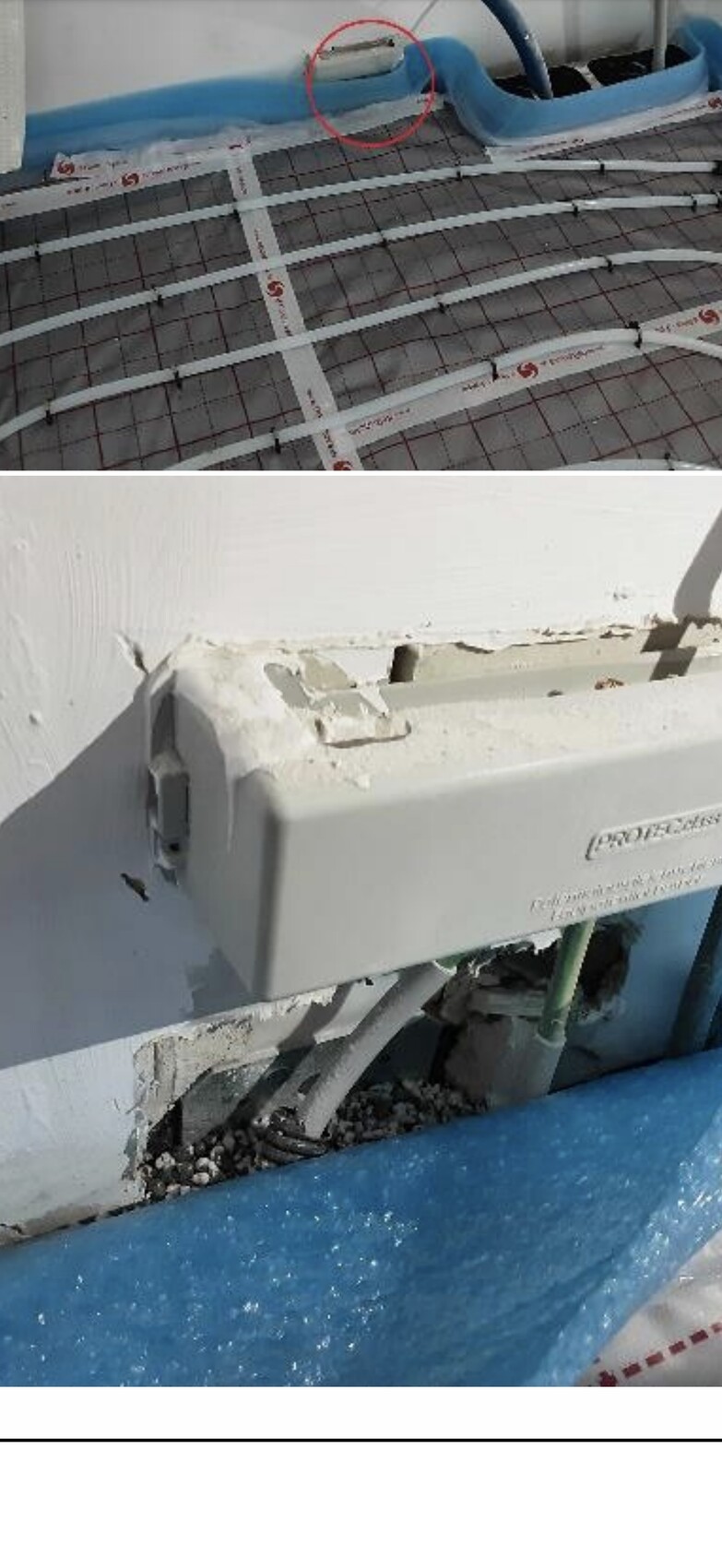
According to our building expert, the vapor-tight connection to the concrete slab is not properly done.
Our site manager has made some adjustments but not all areas are fixed yet.
The screed will be installed soon. How important is a completely vapor-tight connection, and do I need to insist on a full seal at this point?
Could problems arise in a few years, or is it like a small hole in the vapor barrier that doesn’t cause much damage?
A
Allthewayup4 Feb 2024 21:47I see a potential equalization busbar, underfloor heating, and a wall in the photo. Please explain the situation in more detail; a sketch might also help. I assume you don’t have a basement and the ground slab is the building element in contact with the soil. You will likely have a vapor diffusion barrier, for example Bauder or a similar aluminum-based product. The issue is probably related to the connection detail concerning the empty conduits/cables visible in the pictures.
J
jens.knoedel4 Feb 2024 22:17parallelsym schrieb:
Hello everyone,
according to our building inspector, the vapor-tight connection to the floor slab is not properly done.
Our site manager has made some adjustments but not to all areas yet.
The screed will be installed soon. How important is a completely vapor-tight connection, and do I need to insist on a full seal at this point?
Can problems be expected in a few years, or is it more like a small hole in the vapor barrier that doesn’t cause much damage? I also see only a standard preparation for the screed here. There is no vapor-tight seal at this stage (such a thing doesn’t exist at this point anyway, and I wouldn’t know what it would even be). This is how every subfloor looks before the screed is applied.
Please explain your problem in more detail.
P
parallelsym5 Feb 2024 05:49The problem, besides the anchor, is that the wood is not fully covered by the membrane.
Usually, an aluminum foil-laminated waterproofing membrane is applied to the concrete slab and heat-welded. If there are pipe penetrations or similar elements that cannot be perfectly sealed with the aluminum membrane, bitumen-based liquid waterproofing is used to ensure the entire floor is fully sealed.
Similar topics