
ᐅ Vapor barrier or vapor retarder for insulation of top floor ceiling: to use or not?
Created on: 13 Jan 2025 14:07
G
gonzinhoHello everyone,
I want to insulate the ceiling of the top floor. I have already read some posts, but my question unfortunately hasn’t been answered. At least, I haven’t found anything about it.
First of all, the situation: It’s a house built around 1870 in the Vordereifel region. The walls are typical for the area, made of lava rubble stone, filled with a clay/straw mixture, but there are also some slate stones here and there. The ceilings are wooden beam ceilings filled with a clay/straw mixture. The ceiling of the top floor, however, has an additional very hard layer. It looks like concrete but is some kind of screed(?). Maybe the pictures provide a clue. The roof structure is not insulated and should not be insulated. The room is only used as storage. Therefore, I wanted to install insulation on the floor, preferably 140mm (5.5 inches) polystyrene boards, and then a walkable layer on top. OSB boards, if that is possible…
To even out the unevenness of the floor, I planned to install battens and fill the gaps with polystyrene beads or something similar.
My actual question is: Should I place a vapor retarder or even a vapor barrier on top of the screed?
Case a) There is diffusion through the screed layer. Although I find it hard to imagine how warm, moist air could pass through this layer, it apparently has, otherwise there would already be a moisture problem in the ceiling(?). In this case, a vapor barrier would be counterproductive, as it would prevent this diffusion and cause exactly this moisture problem. Or is this assumption wrong? If it is correct, I would only need to ensure that the moist/warm air can also pass through the insulation into the attic space. So definitely no OSB boards on top, but a “breathable” walkable surface (tongue-and-groove boards?). And would polystyrene still be suitable? There are conflicting statements on this.
Case b) There is no diffusion through the screed layer, and my house just never had a moisture problem in the ceiling. Then a vapour-open insulation would not be necessary; I could use polystyrene plus OSB boards.
How can I determine which case applies to my situation? Are there any measurement methods for something like this?
Best regards,
Markus
P.S.: Picture 1 shows the attic, picture 2 shows the screed construction (at this point, a no longer used ventilation pipe comes out of the floor), picture 3 is a close-up of a small piece of screed
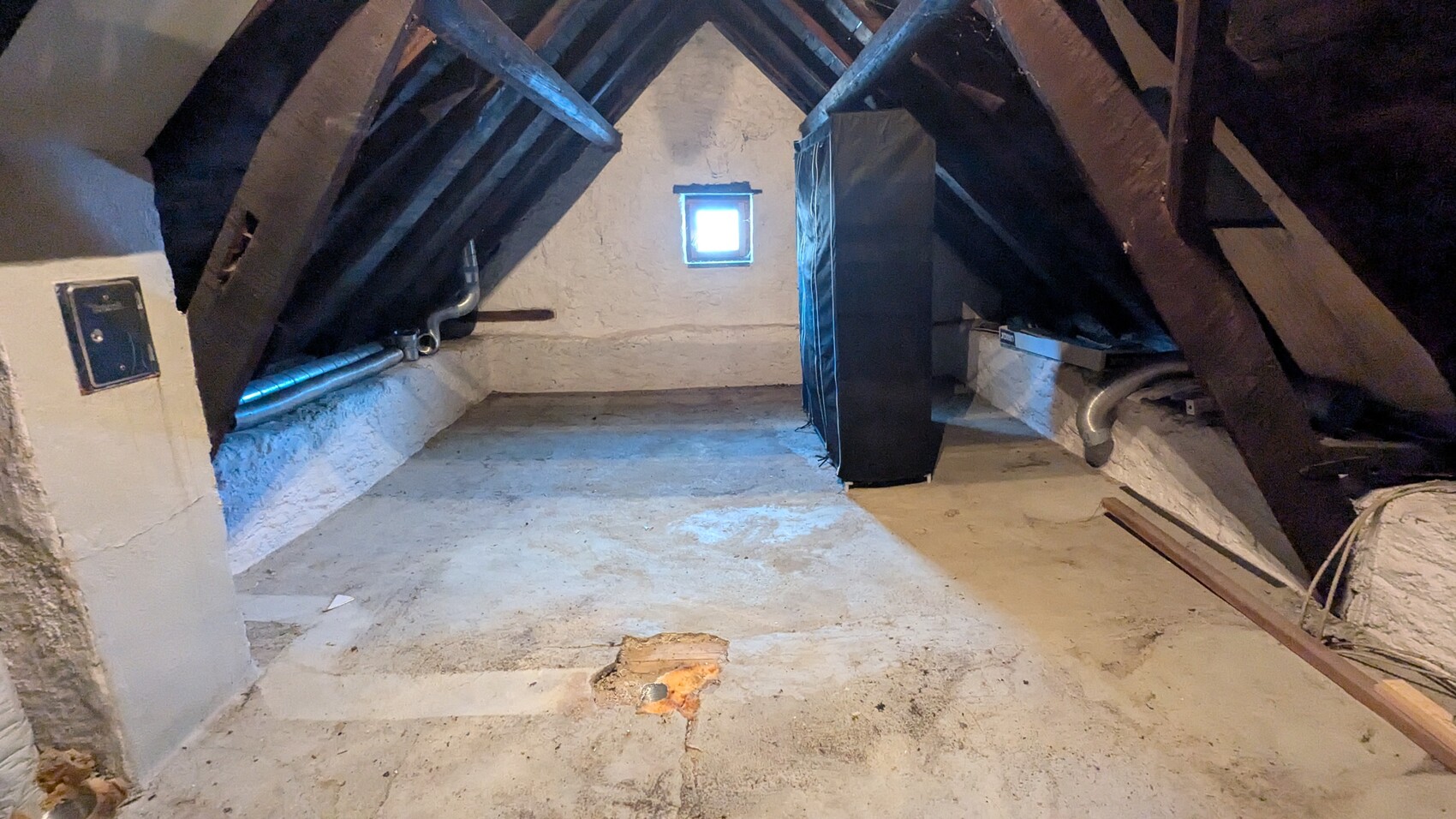
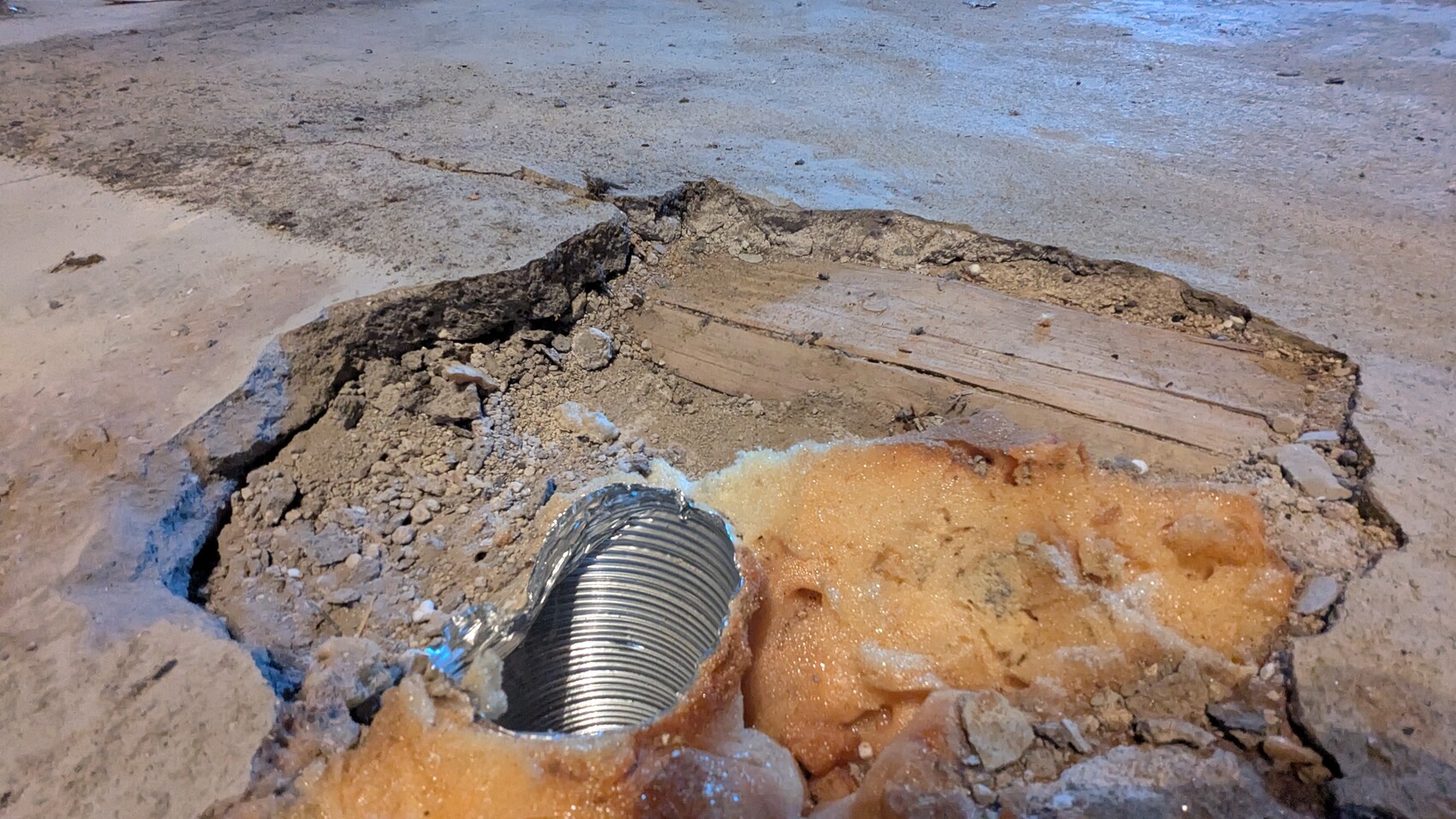
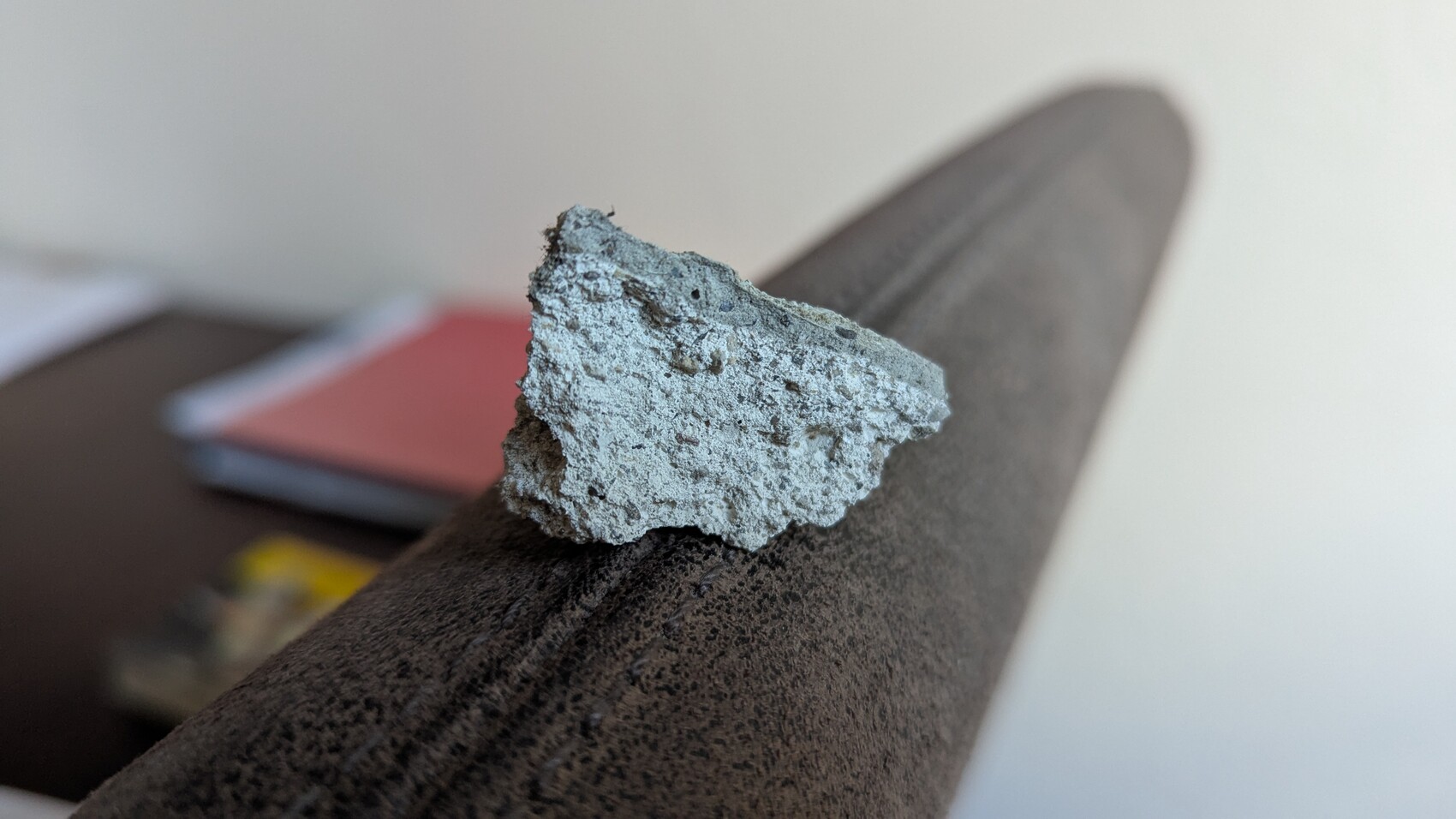
I want to insulate the ceiling of the top floor. I have already read some posts, but my question unfortunately hasn’t been answered. At least, I haven’t found anything about it.
First of all, the situation: It’s a house built around 1870 in the Vordereifel region. The walls are typical for the area, made of lava rubble stone, filled with a clay/straw mixture, but there are also some slate stones here and there. The ceilings are wooden beam ceilings filled with a clay/straw mixture. The ceiling of the top floor, however, has an additional very hard layer. It looks like concrete but is some kind of screed(?). Maybe the pictures provide a clue. The roof structure is not insulated and should not be insulated. The room is only used as storage. Therefore, I wanted to install insulation on the floor, preferably 140mm (5.5 inches) polystyrene boards, and then a walkable layer on top. OSB boards, if that is possible…
To even out the unevenness of the floor, I planned to install battens and fill the gaps with polystyrene beads or something similar.
My actual question is: Should I place a vapor retarder or even a vapor barrier on top of the screed?
Case a) There is diffusion through the screed layer. Although I find it hard to imagine how warm, moist air could pass through this layer, it apparently has, otherwise there would already be a moisture problem in the ceiling(?). In this case, a vapor barrier would be counterproductive, as it would prevent this diffusion and cause exactly this moisture problem. Or is this assumption wrong? If it is correct, I would only need to ensure that the moist/warm air can also pass through the insulation into the attic space. So definitely no OSB boards on top, but a “breathable” walkable surface (tongue-and-groove boards?). And would polystyrene still be suitable? There are conflicting statements on this.
Case b) There is no diffusion through the screed layer, and my house just never had a moisture problem in the ceiling. Then a vapour-open insulation would not be necessary; I could use polystyrene plus OSB boards.
How can I determine which case applies to my situation? Are there any measurement methods for something like this?
Best regards,
Markus
P.S.: Picture 1 shows the attic, picture 2 shows the screed construction (at this point, a no longer used ventilation pipe comes out of the floor), picture 3 is a close-up of a small piece of screed
Similar topics