
Hello,
Our outdoor faucet is connected through a ½-inch (1.27 cm) wall sleeve, and behind it is a Grundfos MQ 3-45 pump that draws water from a well outside the house. Since the ½ inch (1.27 cm) size is not ideal, I am considering upgrading the wall sleeve from ½ inch (1.27 cm) to ¾ inch (1.91 cm). However, I am not sure how the outdoor faucet is mounted and how to replace it along with the pipe of the wall sleeve without damaging the exterior wall. The wall is a timber frame construction with Fermacell boards, polystyrene insulation, and silicone resin plaster.
Could you possibly give me some advice on how I, as a layperson, can carry out this upgrade without damaging the exterior wall, especially the visible plaster?
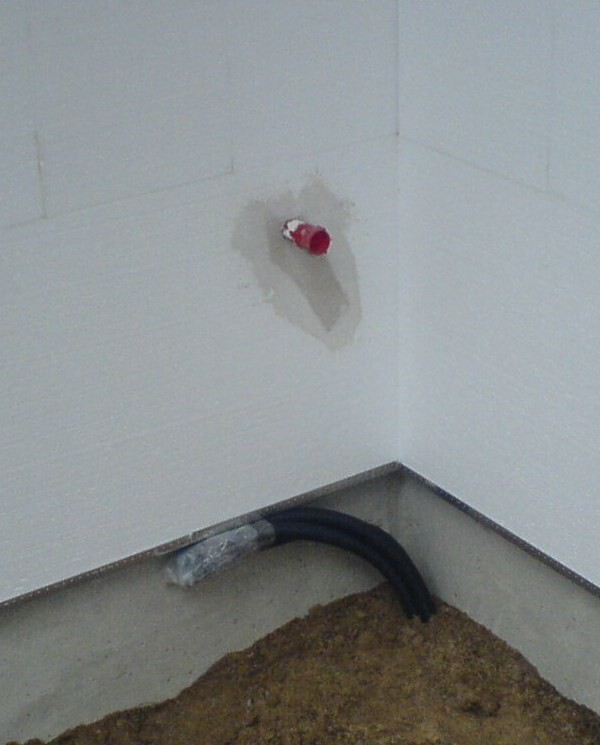
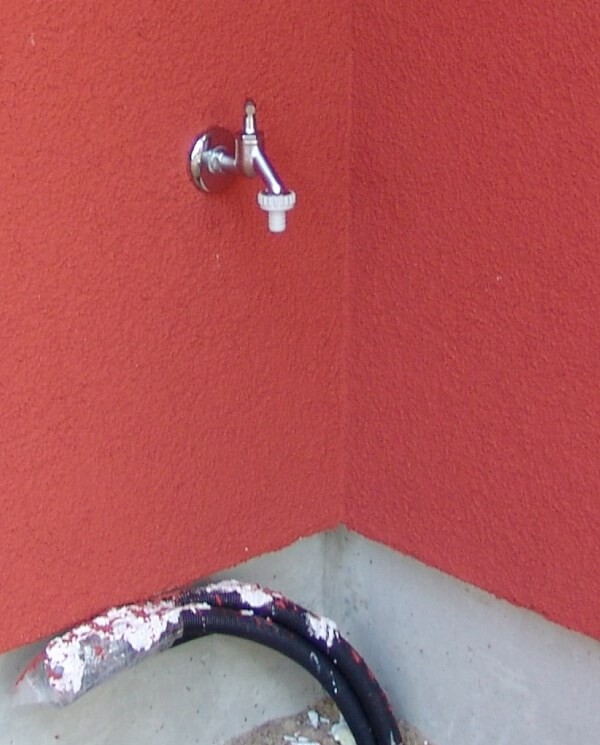
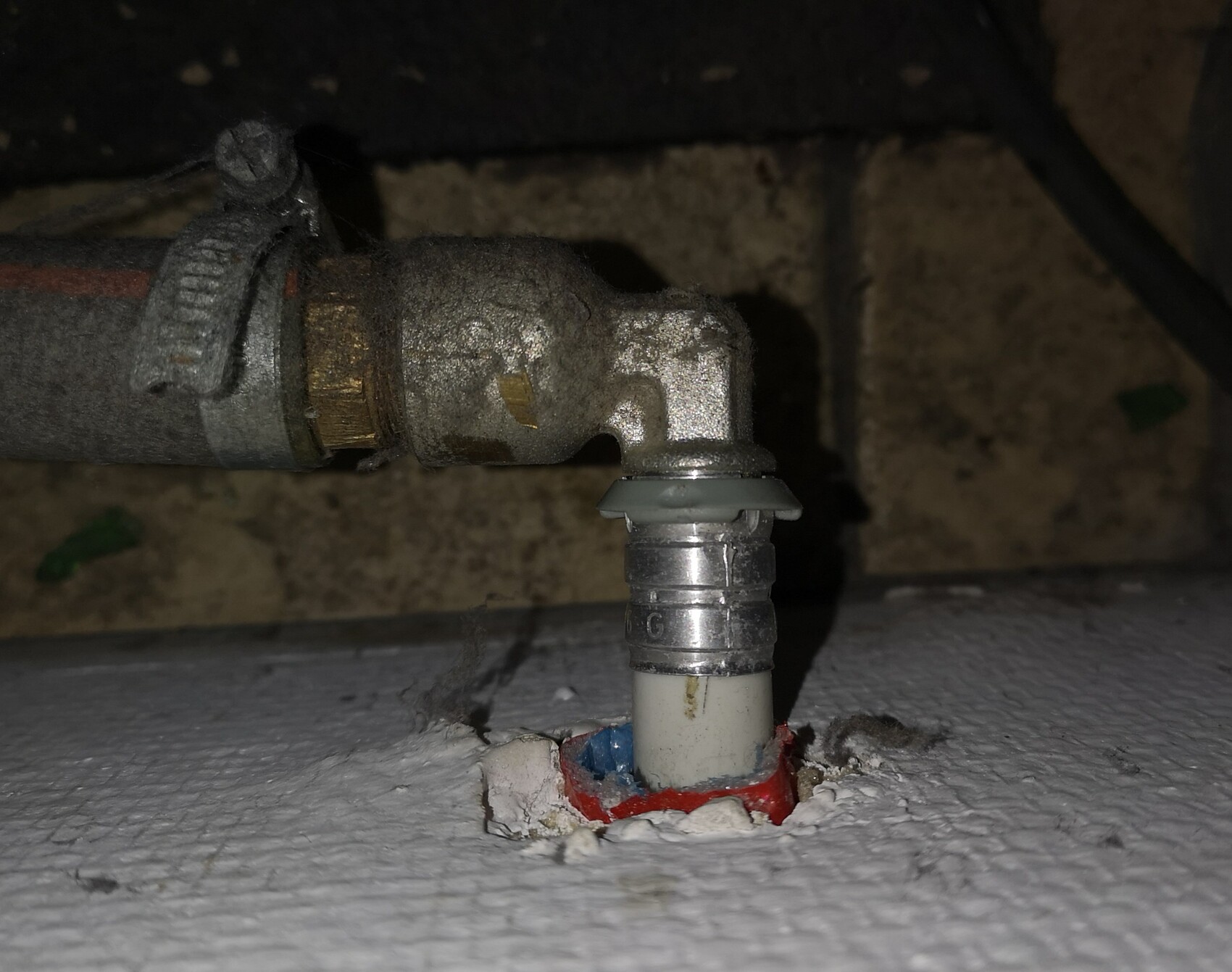
Here are a few pictures of the situation.
Best regards,
jochen35
Our outdoor faucet is connected through a ½-inch (1.27 cm) wall sleeve, and behind it is a Grundfos MQ 3-45 pump that draws water from a well outside the house. Since the ½ inch (1.27 cm) size is not ideal, I am considering upgrading the wall sleeve from ½ inch (1.27 cm) to ¾ inch (1.91 cm). However, I am not sure how the outdoor faucet is mounted and how to replace it along with the pipe of the wall sleeve without damaging the exterior wall. The wall is a timber frame construction with Fermacell boards, polystyrene insulation, and silicone resin plaster.
Could you possibly give me some advice on how I, as a layperson, can carry out this upgrade without damaging the exterior wall, especially the visible plaster?
Here are a few pictures of the situation.
Best regards,
jochen35

The well is outside, the pump is frost-proof inside the house, and the water connection runs through the exterior wall with a 1/2 inch pipe. Now I want to connect an irrigation system there, and 3/4 inch would obviously be much better. So I want to eliminate the 1/2 inch bottleneck, but I don’t know how the old installation is fixed in place or how to remove it from the wall.
Then you will likely have a problem; it probably won’t happen without visible damage.
The pipe is certainly fixed somewhere within the building envelope.
Otherwise, it would move and wobble every time the tap is operated.
For a three-quarter-inch tap valve, the hose connection would then be one inch.
The pipe is certainly fixed somewhere within the building envelope.
Otherwise, it would move and wobble every time the tap is operated.
For a three-quarter-inch tap valve, the hose connection would then be one inch.
If there is only one type of flange that is screwed onto the insulation, so behind the plaster, it wouldn’t be too critical. But if it is attached to the Fermacell wall behind the insulation, then I really have a problem. I might be able to slightly increase the flow rate if I replace the fitting inside the house (see picture 3) with a different version. The one currently installed seems to be smaller than 1/2 inch at the 90-degree angle. Would that possibly help, and is it easy to replace it there?
Similar topics