
Hello everyone,
I am currently renovating an old building from 1931 and would like some professional advice on a planned floor construction on the ground floor (above an unheated basement).
Existing condition ground floor:
The goal is to install underfloor heating with minimal buildup height and structural load.
Thank you very much for your input!
I am currently renovating an old building from 1931 and would like some professional advice on a planned floor construction on the ground floor (above an unheated basement).
Existing condition ground floor:
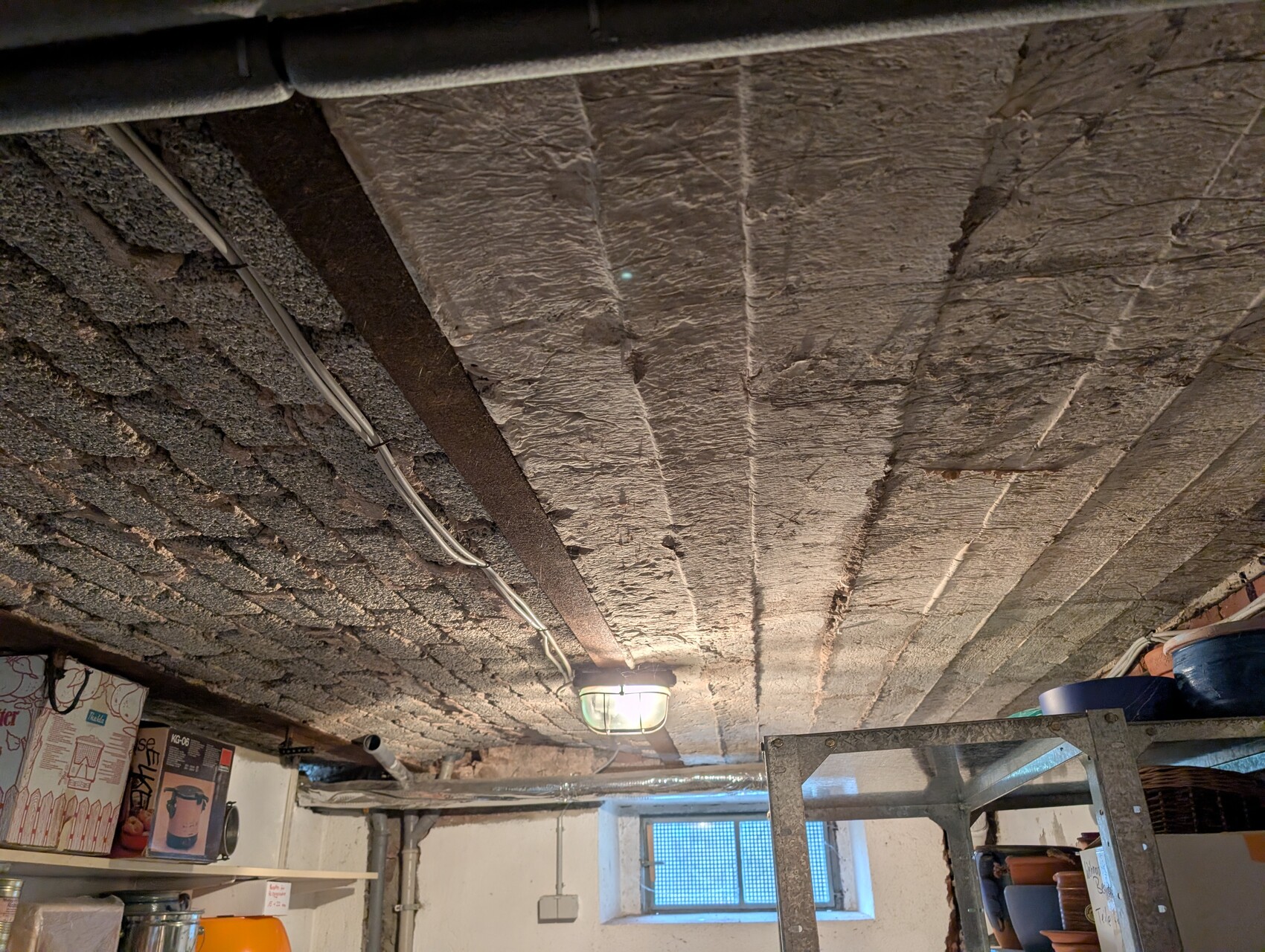
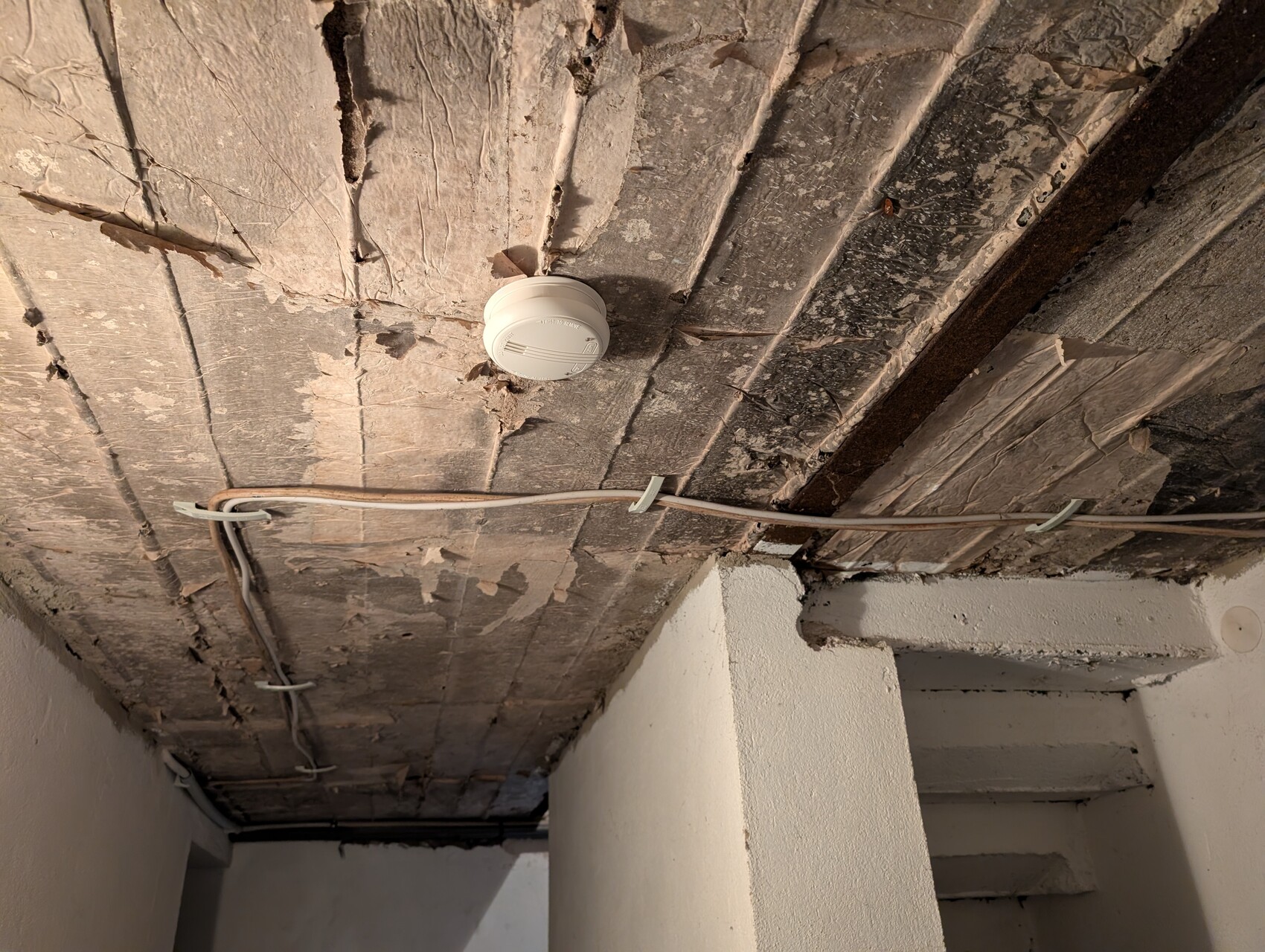
- Ceiling: Vaulted ceiling (Prussian vault)
- Beams: Steel I-beams, 16 cm high (condition appears good, no significant rust visible). I am currently sanding and repainting them all. The beams rest on about 40 cm sandstone blocks above the ground, so no direct ground moisture.
- Spacing: approximately 80-100 cm between steel beams. Span roughly 4-5 m to the interior wall and about another 4 m to the opposite exterior wall.
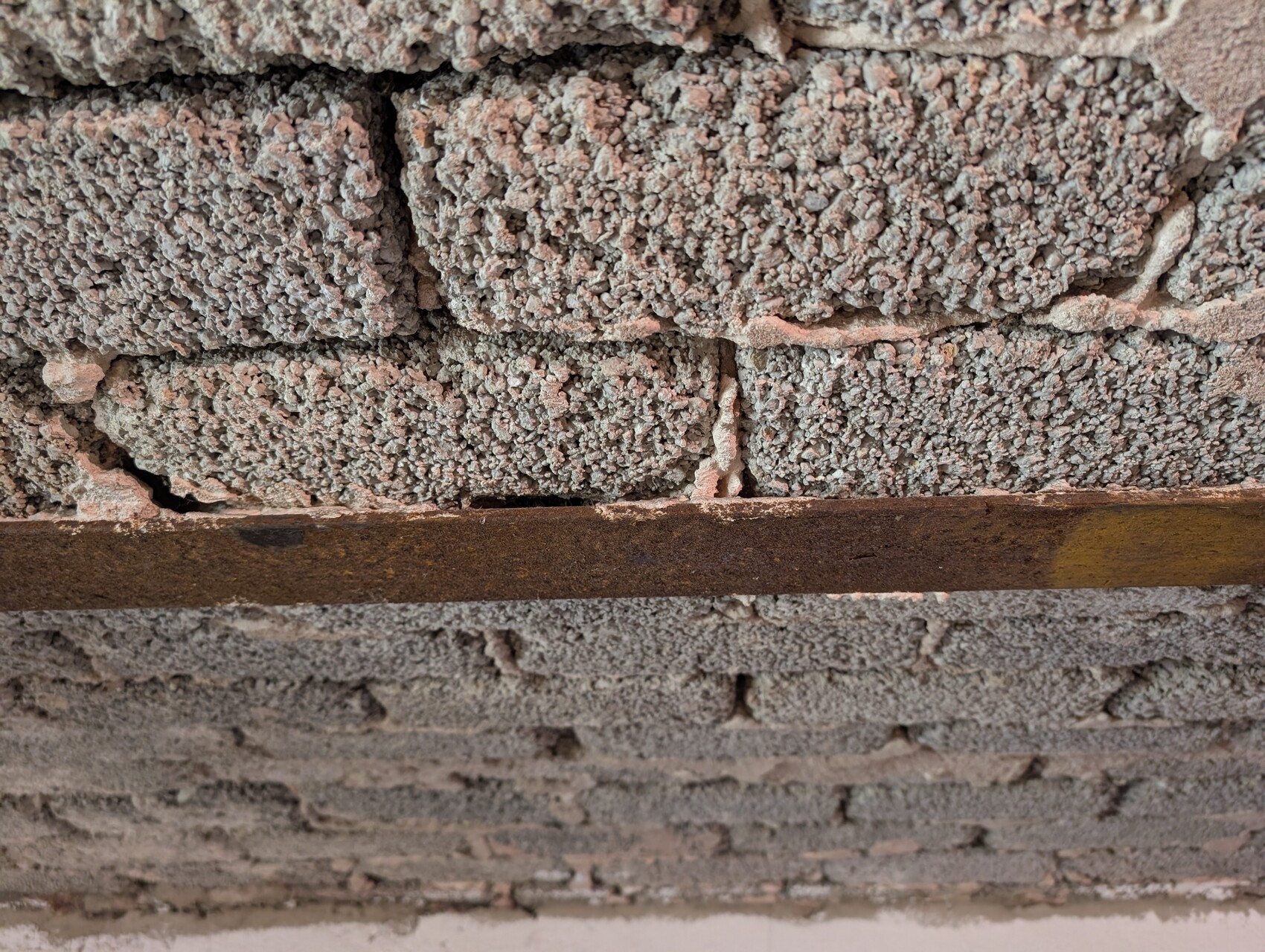
- Infill: Masonry vault made of pumice stone. The hallway area is cast with reinforced concrete.
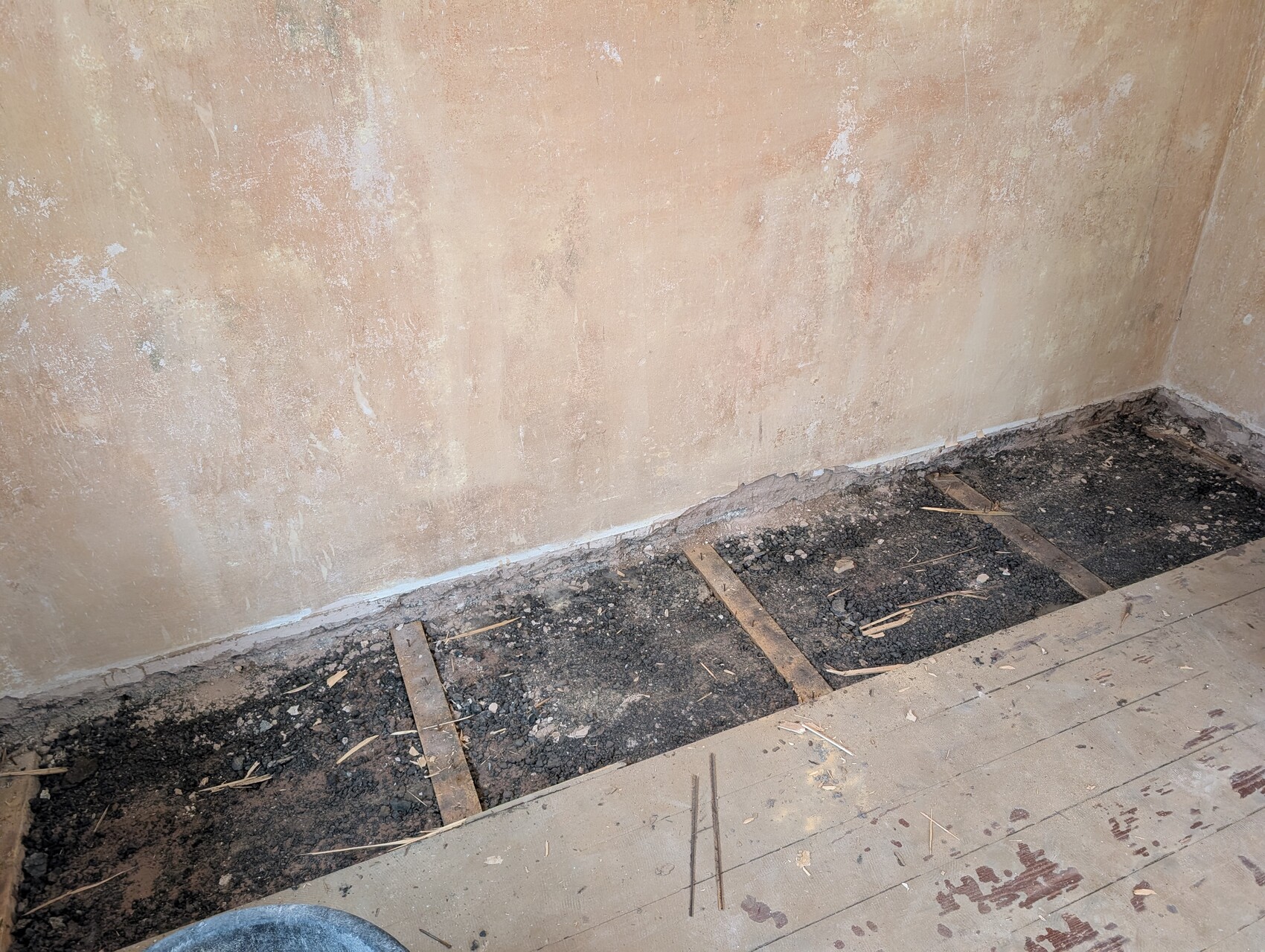
- Original structure: 8 cm wooden joists (resting on the steel beams and fixed with steel clamps), gaps filled with clinker slag fill, with 25 mm floorboards on top. We removed the slag in a test area of about 2.5 m² and found the weight to be approximately 150 kg.
The goal is to install underfloor heating with minimal buildup height and structural load.
- The existing wooden joists will remain on the beams (serving as height adjustment/supports) and continue to distribute loads.
- Remove old clinker slag fill.
- Fill: cavity up to the top edge of the joists with Airpor 3.0 (liquid poured leveling insulating fill, approx. 130 kg/m³ dry density). For 8 cm filling, this corresponds to about 11 kg per m².
- System build-up: on top of the joists and fill will be the Schlüter-BEKOTEC-EN 23 F system.
- I am a bit concerned about leveling the floor along the wooden joists, since if the Airpor fill is applied above the top edge, then direct load distribution over the joists may no longer be guaranteed.
- Load distribution: calcium sulfate screed overlay of only about 15 mm (overall very thin layer). This adds maybe another 35 kg per m².
- In total, excluding the self-weight of the ceiling itself, the load would be about 50 kg/m².
- Intermediate floor / wooden joist ceiling, currently with some fill in between the joists.
- 2.5 cm floorboards with a standard floor covering on top (laminate, tile, vinyl).
- Many transitions to stairs (build-up height is critical).
- Remove floor covering, wooden boards, and fill.
- Install perlite fill.
- Lay pressure-distributing plates approximately 0.5 mm thick.
- Install Zewotherm EPS dry underfloor heating system.
- 18 mm Knauf Brio dry screed panels.
- The total build-up here seems a bit too high to me.
- On the perlite fill, lay the pressure-distributing plates.
- Install Zewotherm XPS 500 panels (very pressure-resistant) and omit dry screed panels, as they are not absolutely necessary under laminate and tiles.
- The Bekotec system works with a very thin surface layer. Do you see any problems with load distribution on the pumice stone vault, especially since the Airpor layer is between the joists? Is the floor system sufficiently load-distributing, or am I risking point loads puncturing the thin screed? What would be an alternative construction?
- Can the build-ups on the upper floor work with the wooden joist ceiling? Can the dry fill be used for leveling, or should the joists be doubled up and leveled accordingly?
Thank you very much for your input!
One more addition for the ground floor:
- A wood stove will be installed in the hallway and a waterbed (about 800kg (1,760 lbs)) will be placed in the bedroom.
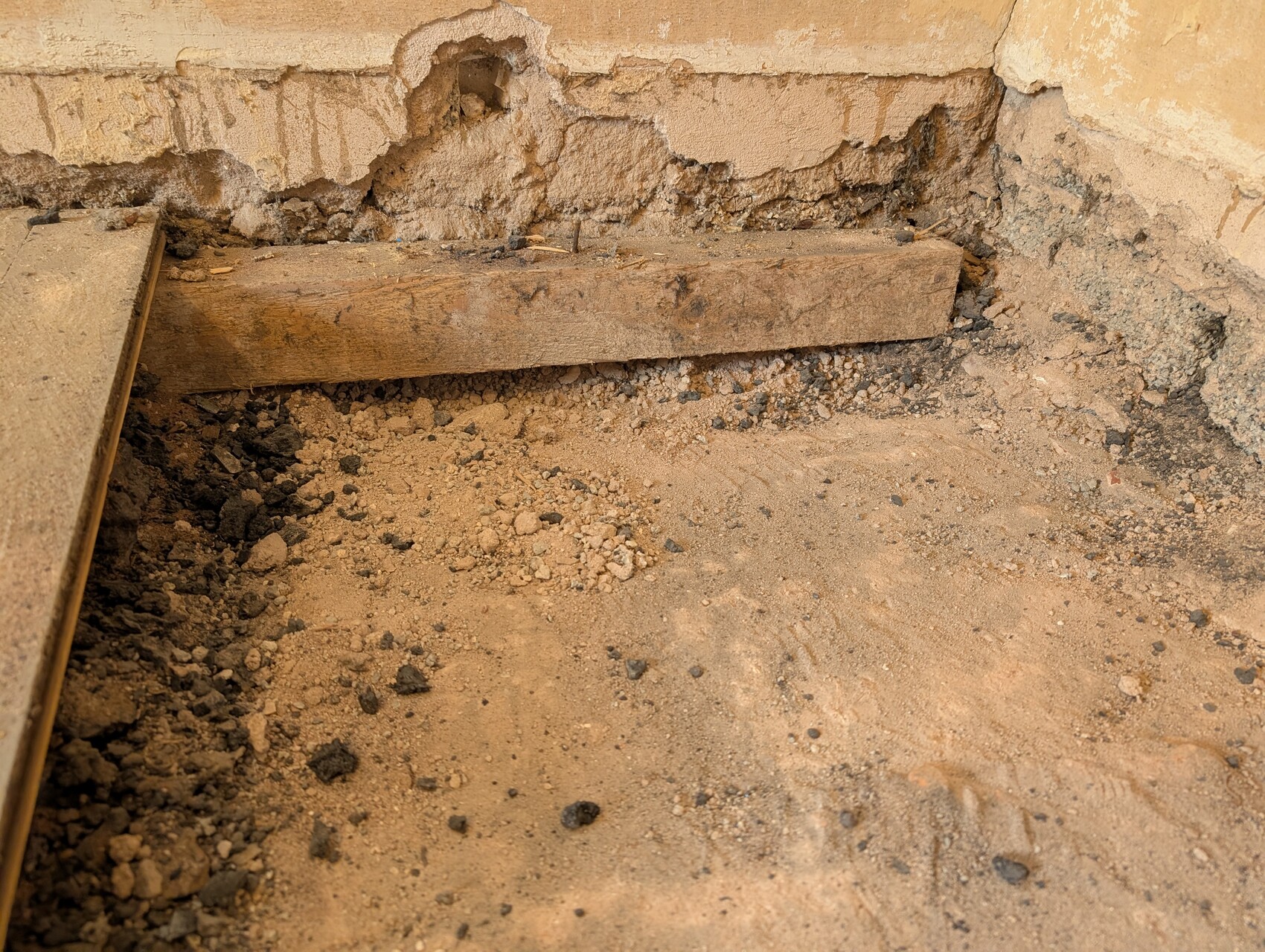
- On one side of the house, the wooden beams are laid floating on the floor, meaning there is no steel beam underneath. This was done to prevent the floor from sagging naturally. You can see this in the picture.
- A wood stove will be installed in the hallway and a waterbed (about 800kg (1,760 lbs)) will be placed in the bedroom.
- On one side of the house, the wooden beams are laid floating on the floor, meaning there is no steel beam underneath. This was done to prevent the floor from sagging naturally. You can see this in the picture.

Similar topics