
ᐅ Underfloor heating supply temperature 20 degrees? Return temperature? Solar support?
Created on: 18 Oct 2016 12:25
R
rudiherbert
Hello.
Maybe someone can give me some advice.
My new underfloor heating system raises a few questions.
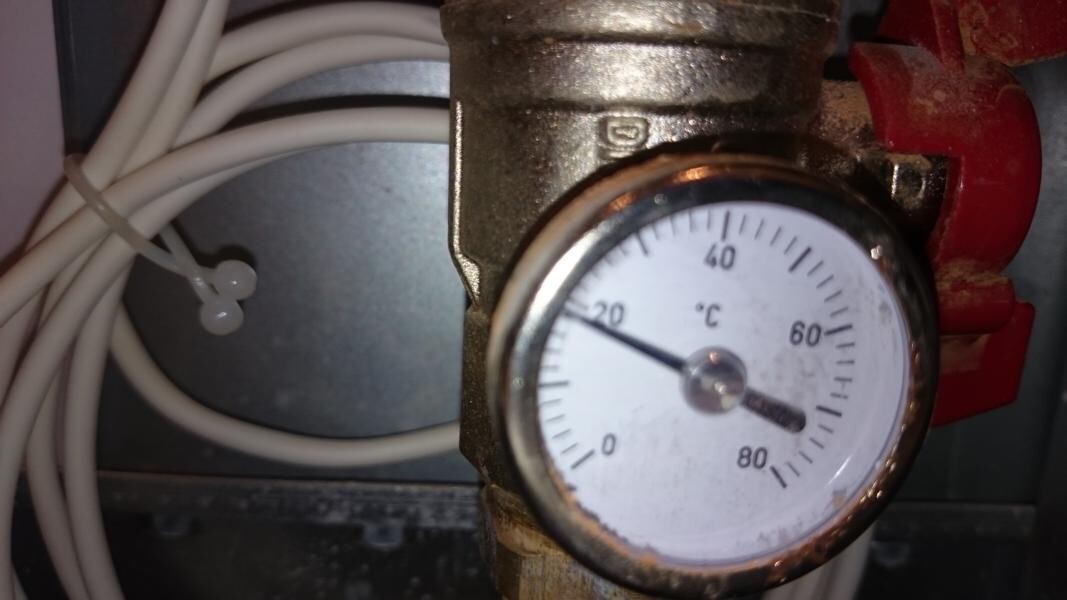
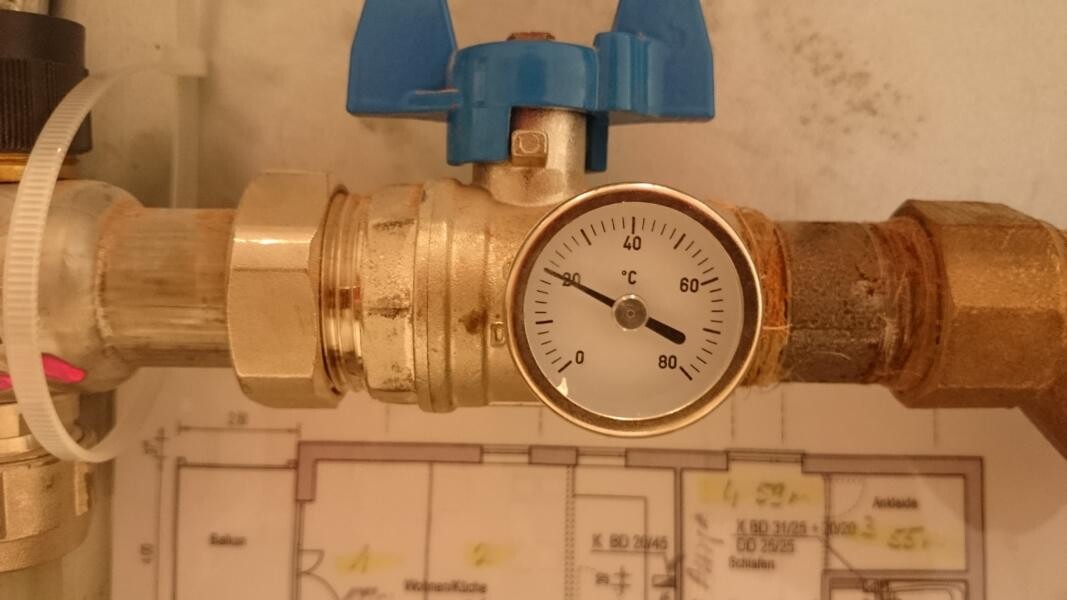
- Flow temperature only 20°C (68°F)??? KfW 70 new build with solar support. Return temperature also 20°C (68°F)?
The surface temperature (laminate) is between 23 and 21°C (73 and 70°F)!
The heat meter shows consumption.
The thermostatic valves are set to 20°C (68°F).
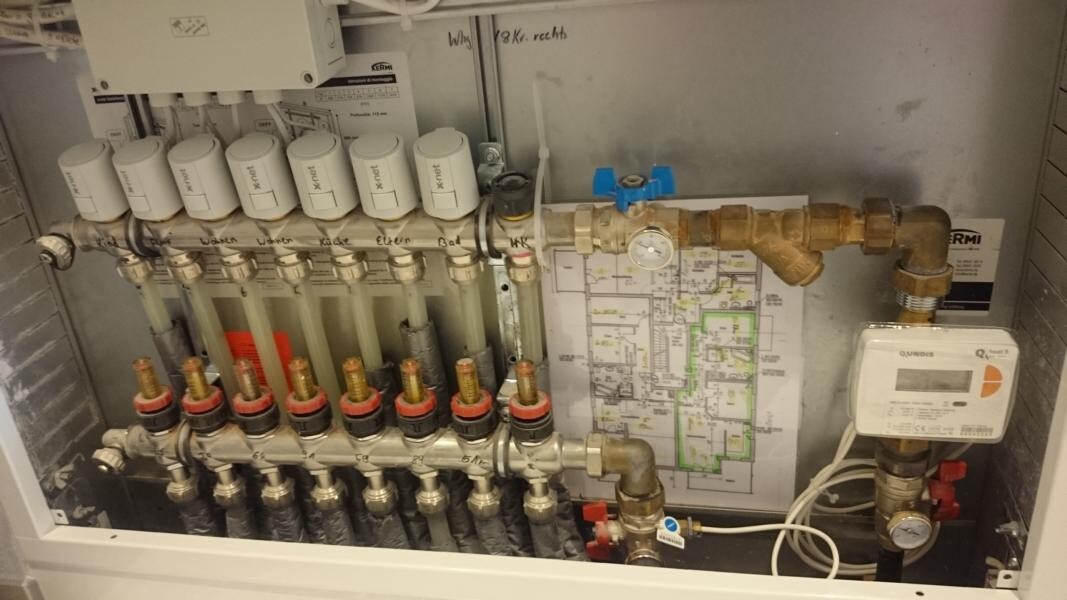
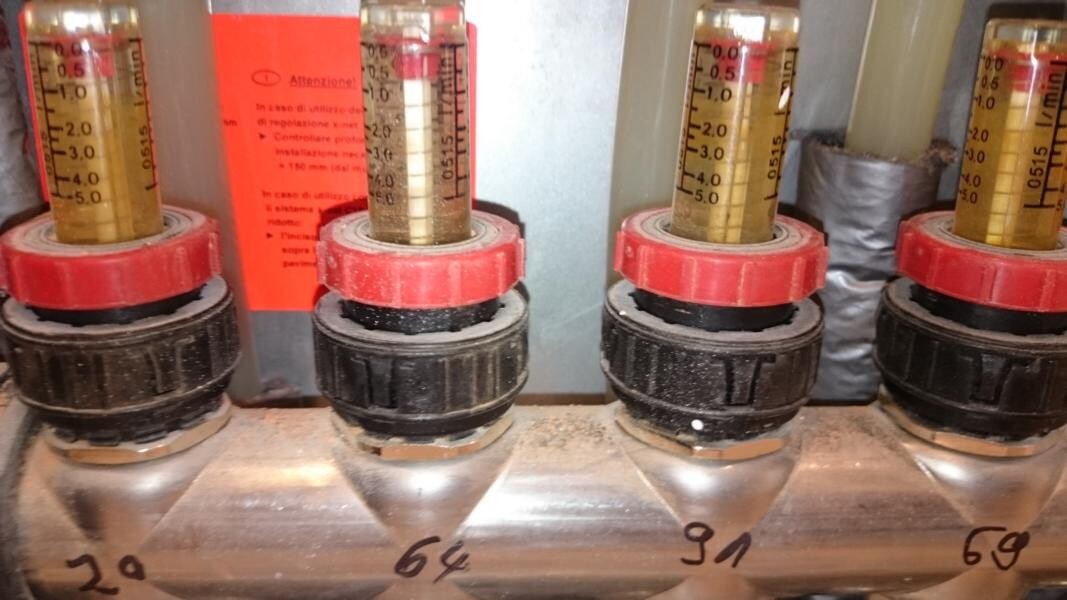
- A glass tube in the manifold box appears to be empty of water.
All the others show a water level!
Apparently, a balancing was done during inspection. According to the installer, the heating system should be set correctly.
Supposedly no further action is needed. Only regulate via the room thermostat...
I’m at a loss...
Maybe someone can give me some advice.
My new underfloor heating system raises a few questions.
- Flow temperature only 20°C (68°F)??? KfW 70 new build with solar support. Return temperature also 20°C (68°F)?
The surface temperature (laminate) is between 23 and 21°C (73 and 70°F)!
The heat meter shows consumption.
The thermostatic valves are set to 20°C (68°F).
- A glass tube in the manifold box appears to be empty of water.
All the others show a water level!
Apparently, a balancing was done during inspection. According to the installer, the heating system should be set correctly.
Supposedly no further action is needed. Only regulate via the room thermostat...
I’m at a loss...

The room thermostat only has two settings: on or off. Everything else is controlled by the heating curve and the preset flow rate.
The float valves do not necessarily drop completely but only to the preset flow rate.
You will probably notice in the bedroom that even when you turn it fully on, the flow rate is limited. In contrast, the flow rate in the bathroom is likely unrestricted.
You can adjust the flow rate itself by turning the small wheel on the pipes.
There is a thread somewhere in this forum about how to set everything up so that the room thermostats become basically unnecessary. However, this is a lengthy process over weeks, months, or even years, and I am still not completely satisfied with it.
For example, my wife found the bedroom too warm. So, as in the rarely used guest room, I reduced the flow rate there. But if you forget to close the two doors, heat will, of course, escape from the other rooms. That means the living room, despite the maximum flow rate, no longer reaches the desired temperature. So, you have to slightly adjust the heating curve. And this way, you gradually get closer to the right settings.
Now it may be that the settings work well in the transitional period but not in winter. So, you adjust again slightly.
The float valves do not necessarily drop completely but only to the preset flow rate.
You will probably notice in the bedroom that even when you turn it fully on, the flow rate is limited. In contrast, the flow rate in the bathroom is likely unrestricted.
You can adjust the flow rate itself by turning the small wheel on the pipes.
There is a thread somewhere in this forum about how to set everything up so that the room thermostats become basically unnecessary. However, this is a lengthy process over weeks, months, or even years, and I am still not completely satisfied with it.
For example, my wife found the bedroom too warm. So, as in the rarely used guest room, I reduced the flow rate there. But if you forget to close the two doors, heat will, of course, escape from the other rooms. That means the living room, despite the maximum flow rate, no longer reaches the desired temperature. So, you have to slightly adjust the heating curve. And this way, you gradually get closer to the right settings.
Now it may be that the settings work well in the transitional period but not in winter. So, you adjust again slightly.
Similar topics