
ᐅ Underfloor Heating Spacing, Missing Sections, and Bathtub Installation
Created on: 23 Jun 2019 14:39
M
M4rvin
Hi,
I wasn’t exactly sure which subforum to post in...
Our site manager asked us whether we want to place the bathtub directly on the screed or on the concrete slab. We hadn’t really thought about it until now, but we decided to go with the concrete floor.
Anyway, I was on site earlier and cut away the styrofoam, as the screed work is starting on Monday.
A few things caught my attention:
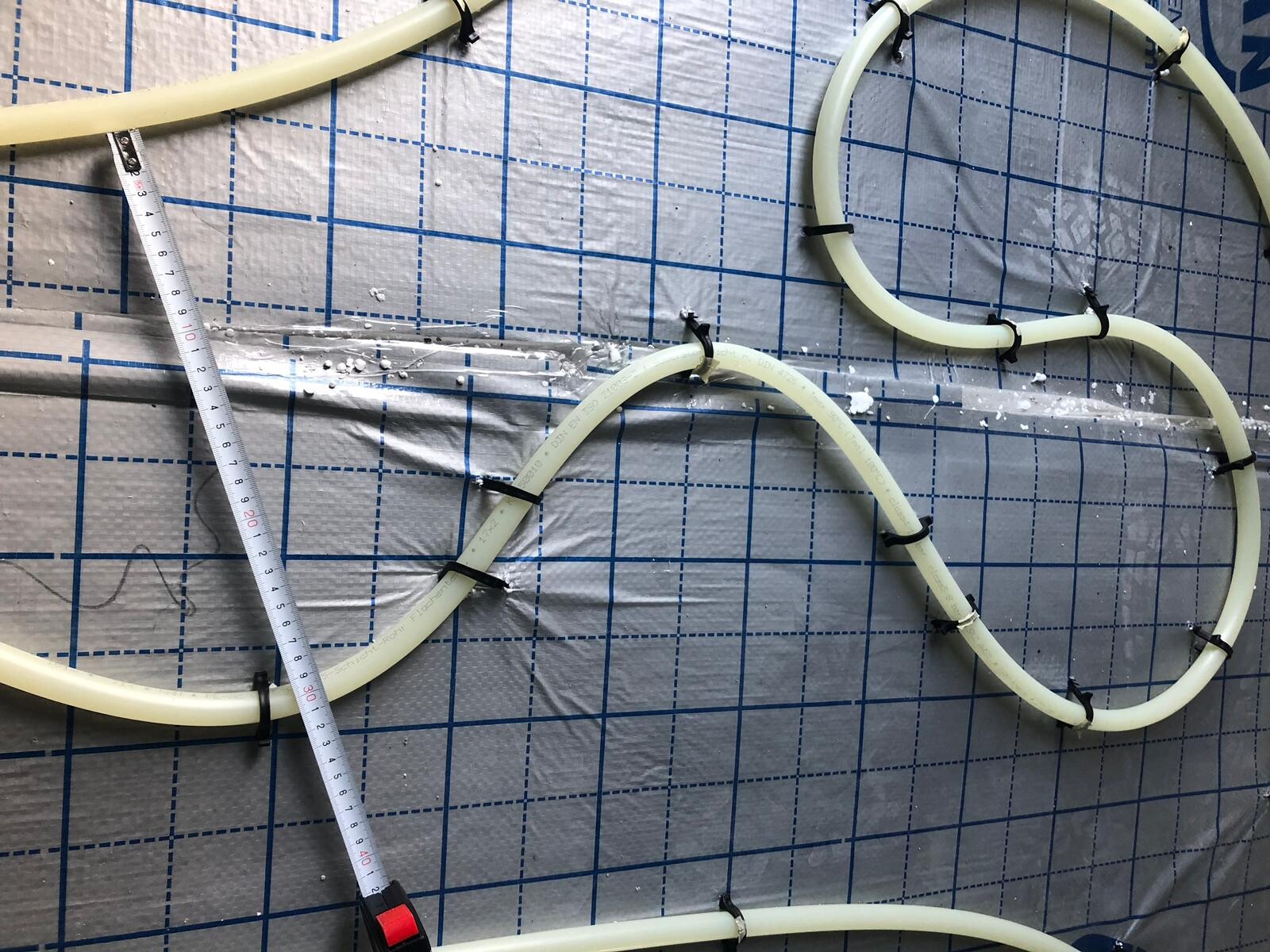
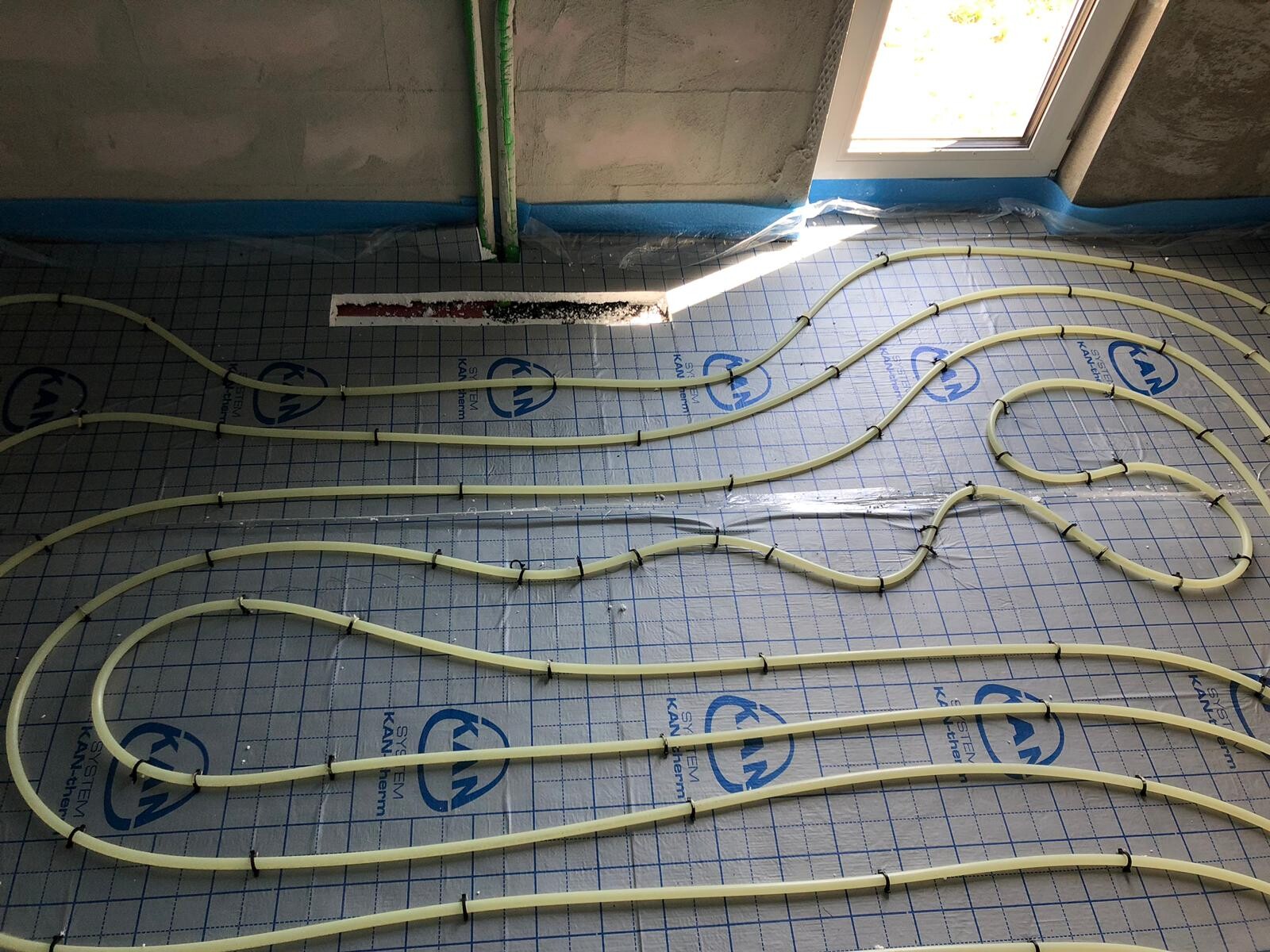
1) What should be the maximum spacing between the underfloor heating pipes? Some sections seem quite far apart, around 30cm (12 inches) to me.
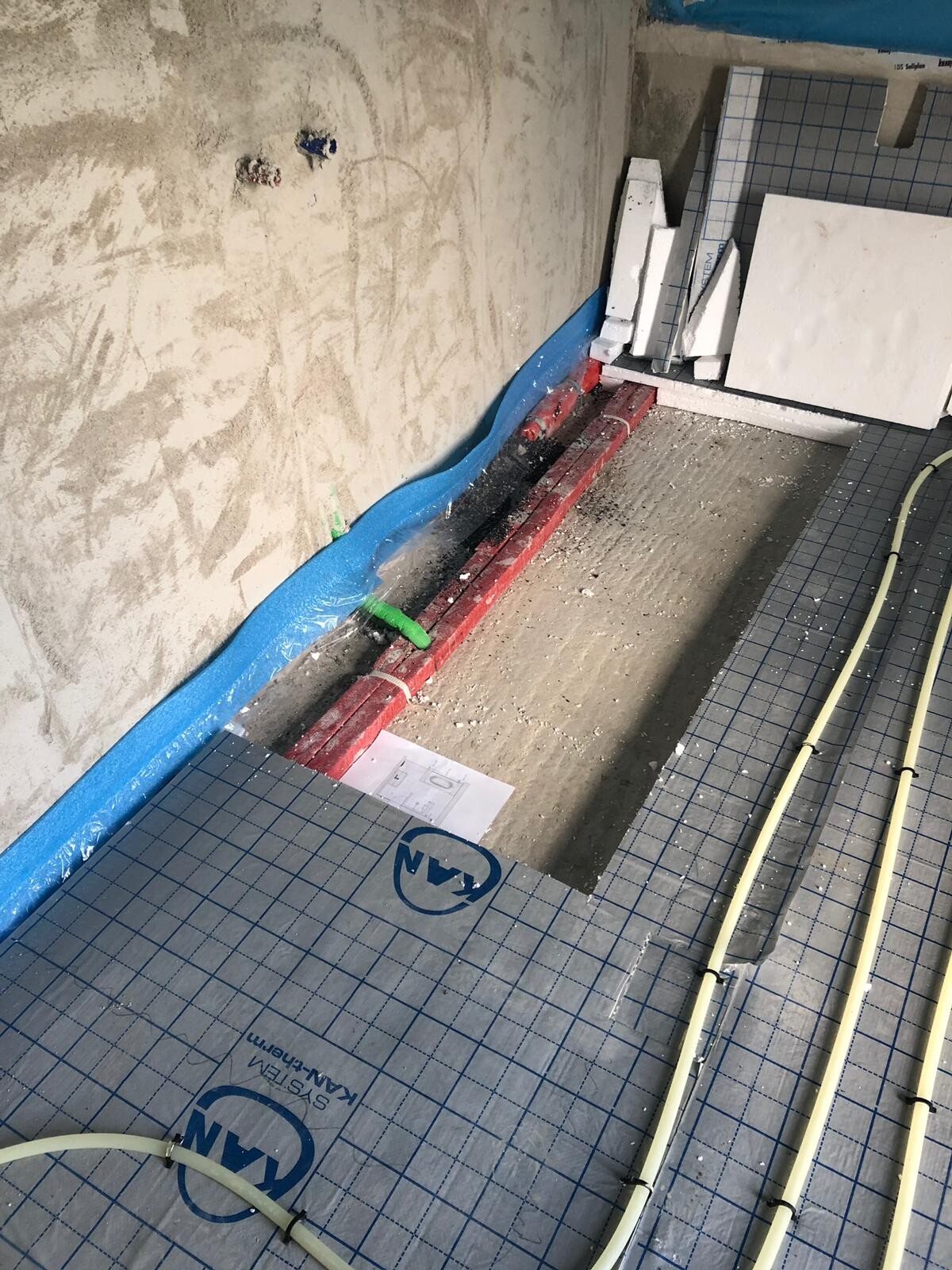
2) Is it common to leave some areas without pipes? (Like the spot in front of the bathtub, see picture)
3) Now that I removed the styrofoam around the bathtub, there are still some pipes underneath. Don’t they cause any issues? And why is such unstable styrofoam even placed between the floor and the screed?
Thanks in advance
Marvin
I wasn’t exactly sure which subforum to post in...
Our site manager asked us whether we want to place the bathtub directly on the screed or on the concrete slab. We hadn’t really thought about it until now, but we decided to go with the concrete floor.
Anyway, I was on site earlier and cut away the styrofoam, as the screed work is starting on Monday.
A few things caught my attention:
1) What should be the maximum spacing between the underfloor heating pipes? Some sections seem quite far apart, around 30cm (12 inches) to me.
2) Is it common to leave some areas without pipes? (Like the spot in front of the bathtub, see picture)
3) Now that I removed the styrofoam around the bathtub, there are still some pipes underneath. Don’t they cause any issues? And why is such unstable styrofoam even placed between the floor and the screed?
Thanks in advance
Marvin
Bookstar schrieb:
Less than 10cm (4 inches) doesn't make sense, I would recommend 15cm (6 inches) for the bathroom and 20cm (8 inches) for the restCould I please have a technical explanation for this general statement?
I understand that it might be inconvenient for the installer to lay, but why exactly would it make no sense, especially for a heat pump where every degree of supply temperature is important?

This is what it looks like. General statements about underfloor heating are absolutely inappropriate, but for example, in the edge zones and especially in front of floor-to-ceiling windows, the loops are often installed with less than 10cm (4 inches) spacing because it makes a lot of sense to go below 10cm (4 inches) exactly in those areas.
The bathroom is almost always the critical room. A pipe spacing of 10 cm (4 inches) or less is practically always required, especially when using a heat pump (exceptions prove the rule).
If you also don’t want towel warmers, you almost always need an additional 1-2 walls with wall heating alongside the underfloor heating. That’s how we did it, and in my opinion, it’s the ideal solution, especially if the wall heating also includes the shower area.
All of this assumes you want an efficient heating system. You could also simply underspecify the system and raise the supply temperature arbitrarily. It will get warm, but that’s ecologically ineffective and financially unwise.
If you also don’t want towel warmers, you almost always need an additional 1-2 walls with wall heating alongside the underfloor heating. That’s how we did it, and in my opinion, it’s the ideal solution, especially if the wall heating also includes the shower area.
All of this assumes you want an efficient heating system. You could also simply underspecify the system and raise the supply temperature arbitrarily. It will get warm, but that’s ecologically ineffective and financially unwise.
Similar topics