
ᐅ Underfloor heating with an air-to-water heat pump. House gets too warm when the sun is shining.
Created on: 4 Dec 2019 14:18
C
chewbacca123
Hello everyone,
I have a general question.
We moved into our new build four months ago. The living area on the ground floor has three large floor-to-ceiling windows facing south. We have underfloor heating and an air-to-water heat pump.
It provides a really comfortable temperature inside the house, but we have a problem – whenever the sun is shining in winter, even if it’s -2°C (28°F) outside, the temperature suddenly rises to 24°C (75°F) in the living room. It gets uncomfortably warm in here, and the underfloor heating can’t be turned down quickly.
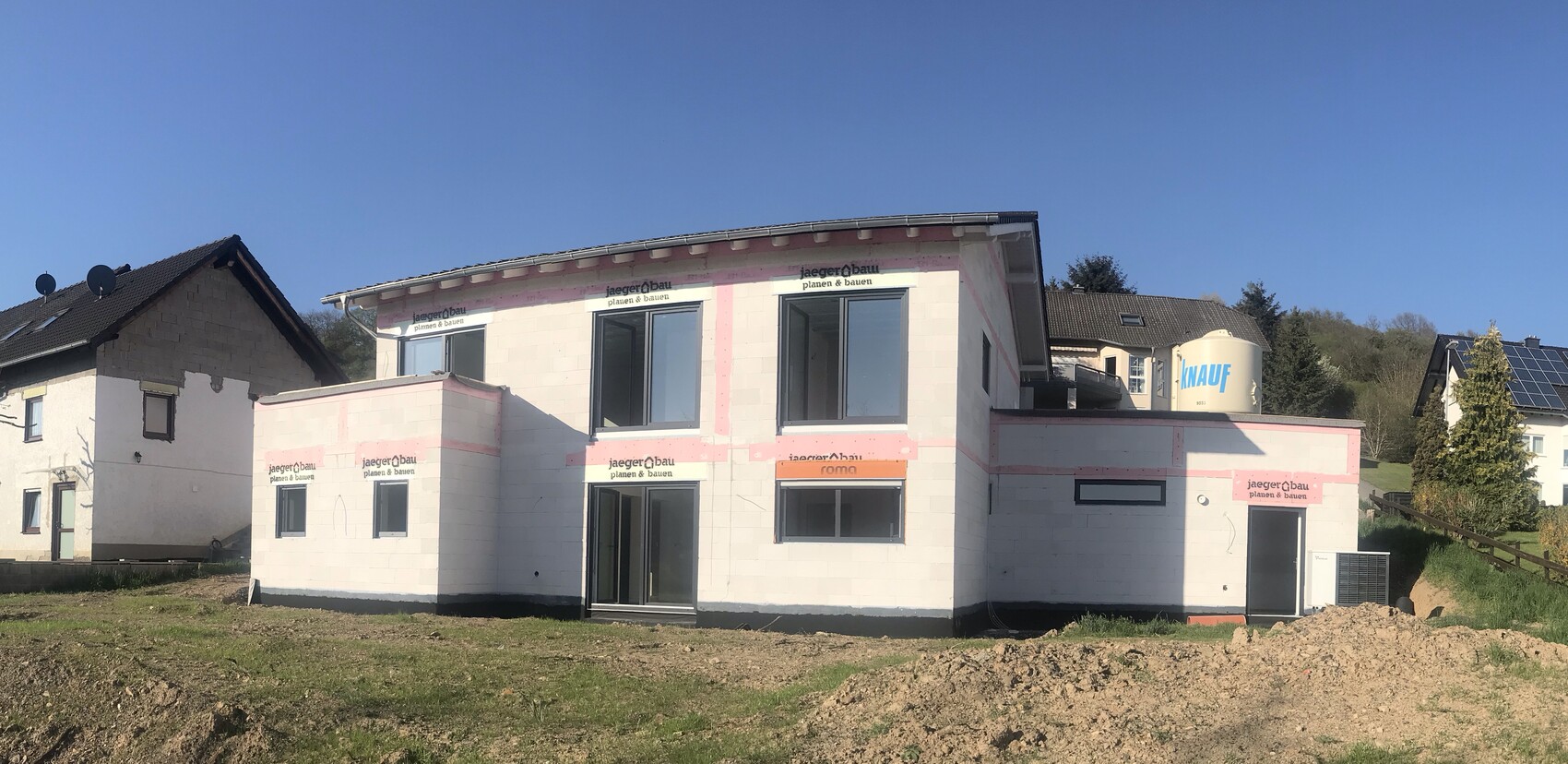
Should we assume that the large floor-to-ceiling windows are responsible for the heat gain? A photo of the south-facing side of the house is attached.
What would you do – always lower all the blinds as soon as sunlight is forecast? That seems quite annoying...
We have motorized blinds controlled by Somfy. Would you consider buying a sensor that automatically lowers the blinds at a certain temperature?
Thanks in advance for your replies.
I have a general question.
We moved into our new build four months ago. The living area on the ground floor has three large floor-to-ceiling windows facing south. We have underfloor heating and an air-to-water heat pump.
It provides a really comfortable temperature inside the house, but we have a problem – whenever the sun is shining in winter, even if it’s -2°C (28°F) outside, the temperature suddenly rises to 24°C (75°F) in the living room. It gets uncomfortably warm in here, and the underfloor heating can’t be turned down quickly.
Should we assume that the large floor-to-ceiling windows are responsible for the heat gain? A photo of the south-facing side of the house is attached.
What would you do – always lower all the blinds as soon as sunlight is forecast? That seems quite annoying...
We have motorized blinds controlled by Somfy. Would you consider buying a sensor that automatically lowers the blinds at a certain temperature?
Thanks in advance for your replies.

@Tolentino
Yes, I am aware of that.
@Andre77
The built-in controls are generally quite simple (even if someone hides "smart" in the name). They operate based on demand. During the day, there are fewer losses = less heating power. At night, it’s the opposite. But eventually, your screed will be heated enough for everything to stabilize and potentially also be charged during the day. Right now, in the transitional season, the system first needs to "get going."
For the heat pump, there is actually no difference between night and day (of course, this parameter is still present in the control). However, if you want to include this parameter in a meaningful way, you need to create your own logic for it. Otherwise, it simply switches on and off rigidly.
Yes, I am aware of that.
@Andre77
The built-in controls are generally quite simple (even if someone hides "smart" in the name). They operate based on demand. During the day, there are fewer losses = less heating power. At night, it’s the opposite. But eventually, your screed will be heated enough for everything to stabilize and potentially also be charged during the day. Right now, in the transitional season, the system first needs to "get going."
For the heat pump, there is actually no difference between night and day (of course, this parameter is still present in the control). However, if you want to include this parameter in a meaningful way, you need to create your own logic for it. Otherwise, it simply switches on and off rigidly.
D
Daniel-Sp9 Oct 2020 10:14With AI/Novelan, you can set a "daytime lift," which is likely possible with other manufacturers as well.
This can also be done by adjusting the heating times. Increase the heating curve during the day and lower it at night accordingly. However, it is questionable whether this pays off overall. Higher flow temperatures naturally reduce efficiency, which must be compensated for by the nightly reduction.
Unfortunately, this is all completely over my head... I can read the instructions ten times or look things up in forums, but I only understand a small part of it, if anything at all. You can ask me how much my soil survey cost from two years ago, or what this or that additional survey cost—I don’t need to look it up, I have it all in my head... but when it comes to the heat pump... no way.
I had hoped to program it so it only operates on certain days... I also entered something about the times in a program, but I’m not sure if it actually applies… At the start, it was using the electric heating element, which I have already turned off. I’ve seen the power spikes in the app for the photovoltaic system.
I had hoped to program it so it only operates on certain days... I also entered something about the times in a program, but I’m not sure if it actually applies… At the start, it was using the electric heating element, which I have already turned off. I’ve seen the power spikes in the app for the photovoltaic system.
D
Daniel-Sp9 Oct 2020 10:47That’s what I meant by daylight lift
Similar topics