
ᐅ Underfloor heating with an air-to-water heat pump. House gets too warm when the sun is shining.
Created on: 4 Dec 2019 14:18
C
chewbacca123
Hello everyone,
I have a general question.
We moved into our new build four months ago. The living area on the ground floor has three large floor-to-ceiling windows facing south. We have underfloor heating and an air-to-water heat pump.
It provides a really comfortable temperature inside the house, but we have a problem – whenever the sun is shining in winter, even if it’s -2°C (28°F) outside, the temperature suddenly rises to 24°C (75°F) in the living room. It gets uncomfortably warm in here, and the underfloor heating can’t be turned down quickly.
Should we assume that the large floor-to-ceiling windows are responsible for the heat gain? A photo of the south-facing side of the house is attached.
What would you do – always lower all the blinds as soon as sunlight is forecast? That seems quite annoying...
We have motorized blinds controlled by Somfy. Would you consider buying a sensor that automatically lowers the blinds at a certain temperature?
Thanks in advance for your replies.
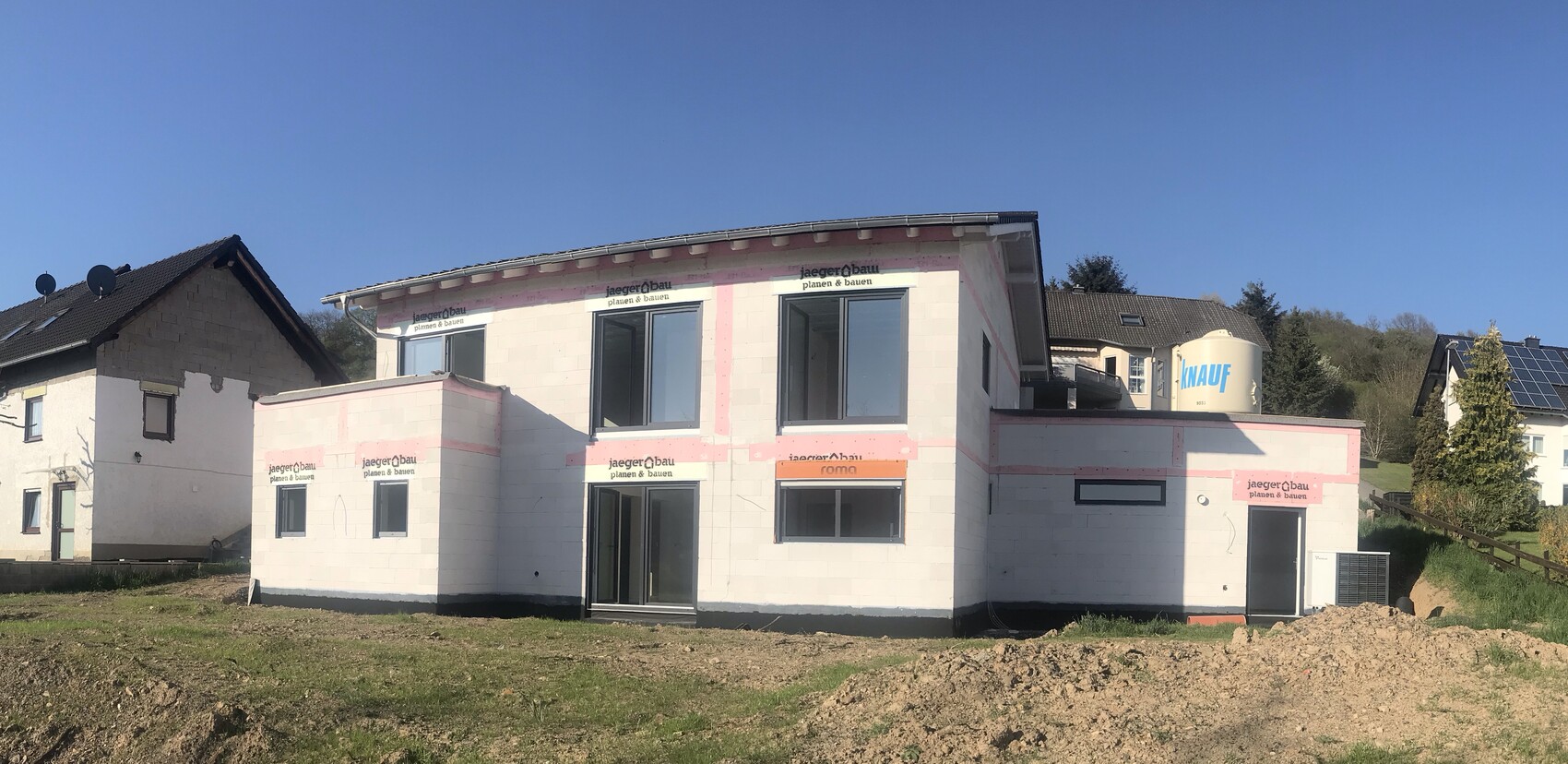
I have a general question.
We moved into our new build four months ago. The living area on the ground floor has three large floor-to-ceiling windows facing south. We have underfloor heating and an air-to-water heat pump.
It provides a really comfortable temperature inside the house, but we have a problem – whenever the sun is shining in winter, even if it’s -2°C (28°F) outside, the temperature suddenly rises to 24°C (75°F) in the living room. It gets uncomfortably warm in here, and the underfloor heating can’t be turned down quickly.
Should we assume that the large floor-to-ceiling windows are responsible for the heat gain? A photo of the south-facing side of the house is attached.
What would you do – always lower all the blinds as soon as sunlight is forecast? That seems quite annoying...
We have motorized blinds controlled by Somfy. Would you consider buying a sensor that automatically lowers the blinds at a certain temperature?
Thanks in advance for your replies.
B
boxandroof22 Jan 2020 14:22My house without a basement in the frost-free northern region used on average about 40 kWh of heat per day in January, including a 10% share for hot water.
That would correspond approximately to:
- 4 m³ (141 cubic feet) of gas per day at 100% efficiency
- 10 kWh of electricity per day with a coefficient of performance of 4
- 4 liters (1 gallon) of oil at 100% efficiency
That would correspond approximately to:
- 4 m³ (141 cubic feet) of gas per day at 100% efficiency
- 10 kWh of electricity per day with a coefficient of performance of 4
- 4 liters (1 gallon) of oil at 100% efficiency
P
pffreestyler22 Jan 2020 14:27Lumpi_LE schrieb:
One cubic meter is about 10 kWh.
With gas, the contribution of the solar thermal system is still interesting – this is simply not shown in the indicated consumption, even though it’s there. oh yes, I actually didn’t consider that in summer boxandroof schrieb:
My house without a basement in the frost-free north required on average about 40 kWh heating per day in January, including 10% hot water share.
That would be roughly:
- 4 m³ (140 ft³) gas per day at 100% efficiency
- 10 kWh per day with a coefficient of performance of 4
- 4 liters (1 gallon) oil at 100% efficiency how many square meters and what indoor temperature?B
boxandroof22 Jan 2020 14:38pffreestyler schrieb:
How many square meters and what temperature inside the house?I actually just wanted to contribute something about the energy sources. These comparisons are not very useful.The living area is about 150m² (1600 sq ft) with an average indoor temperature of around 21°C (70°F), varying by 1-2°C (2-4°F) depending on the room and usage. On cold days last year, with outdoor temperatures down to -8°C (18°F), the consumption was 70 kWh per day. A very similar house a few kilometers away shows nearly identical monthly consumption according to the database.

blackm88 schrieb:
21.01. Total 23 kWh – of which 13.4 kWh were for our heat pump
Inside the house, from the basement to the upper floor, we have about 22–24°C (72–75°F) in all rooms
Hot water set to 44°C (111°F) with a 3°C (5°F) hysteresis
We still have snow here, outside temperature always below 0°C (32°F) / 940 m (3084 ft) above sea level, 180 m² (1937 sq ft) plus basement 13 kW? For 180 m² (1937 sq ft) plus basement? And almost 1,000 meters altitude? What kind of heat pump is that – horizontal ground collector or brine (ground source)?
Could you please also specify your type of heat pump for comparison?
Read just now from January 17, 2020 at 6:00 PM to January 22, 2020 at 7:00 PM.
122 kWh of electricity recorded on the meter.
So, 25 kWh per day.
And 378 kWh of heat energy.
Room temperature at 22.5°C (72.5°F).
About 240 m² (2,583 ft²) of heated floor area.
Mechanical ventilation with heat recovery (MVHR).
Air-to-water heat pump from Buderus.
480 Nn.
Domestic hot water set to 49°C (120°F) with 6°C (11°F) hysteresis.
Heating curve set to 25.5 / 22 / 0.
122 kWh of electricity recorded on the meter.
So, 25 kWh per day.
And 378 kWh of heat energy.
Room temperature at 22.5°C (72.5°F).
About 240 m² (2,583 ft²) of heated floor area.
Mechanical ventilation with heat recovery (MVHR).
Air-to-water heat pump from Buderus.
480 Nn.
Domestic hot water set to 49°C (120°F) with 6°C (11°F) hysteresis.
Heating curve set to 25.5 / 22 / 0.
Similar topics