
ᐅ Underfloor heating with an air-to-water heat pump. House gets too warm when the sun is shining.
Created on: 4 Dec 2019 14:18
C
chewbacca123
Hello everyone,
I have a general question.
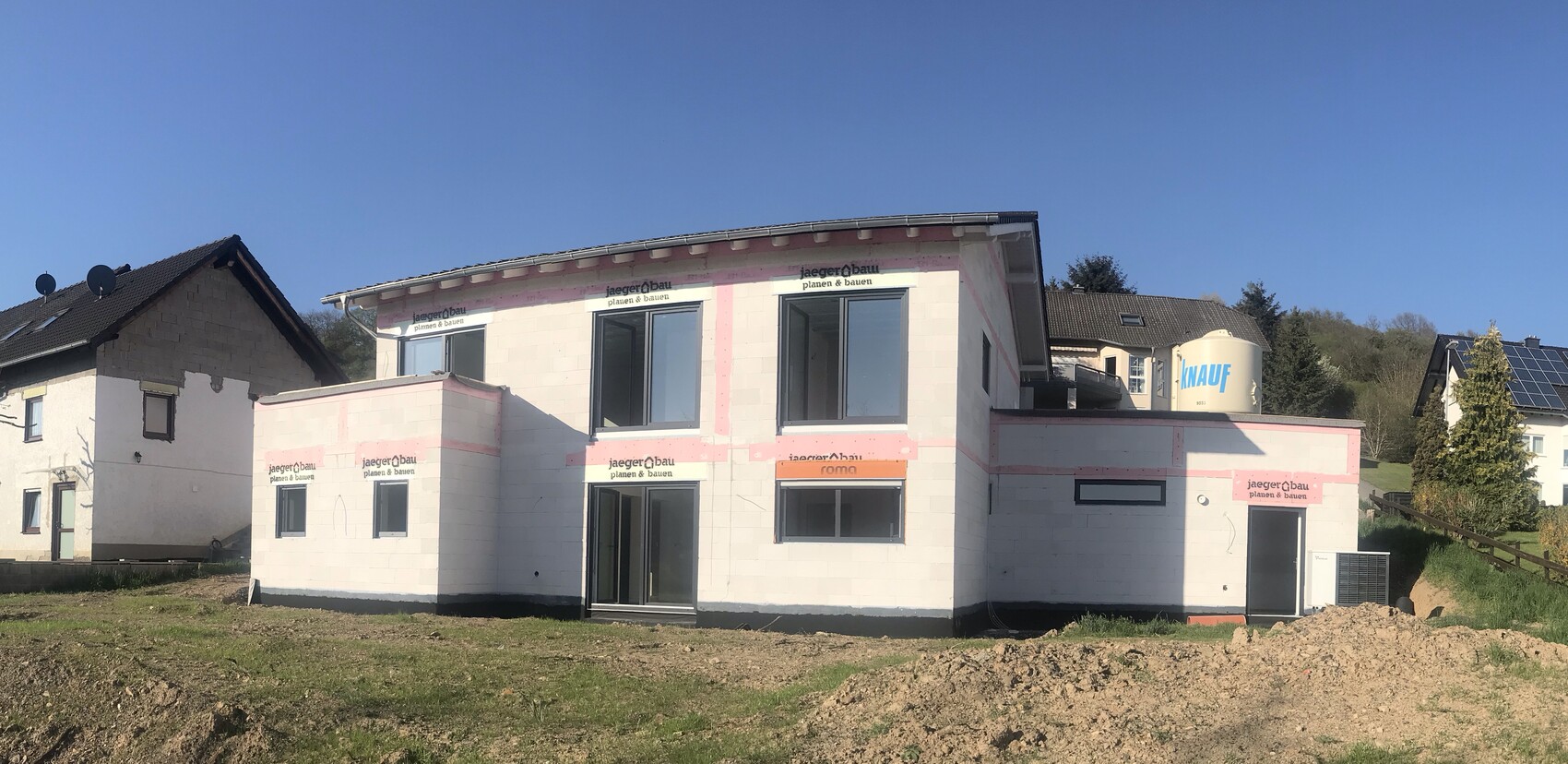
We moved into our new build four months ago. The living area on the ground floor has three large floor-to-ceiling windows facing south. We have underfloor heating and an air-to-water heat pump.
It provides a really comfortable temperature inside the house, but we have a problem – whenever the sun is shining in winter, even if it’s -2°C (28°F) outside, the temperature suddenly rises to 24°C (75°F) in the living room. It gets uncomfortably warm in here, and the underfloor heating can’t be turned down quickly.
Should we assume that the large floor-to-ceiling windows are responsible for the heat gain? A photo of the south-facing side of the house is attached.
What would you do – always lower all the blinds as soon as sunlight is forecast? That seems quite annoying...
We have motorized blinds controlled by Somfy. Would you consider buying a sensor that automatically lowers the blinds at a certain temperature?
Thanks in advance for your replies.
I have a general question.
We moved into our new build four months ago. The living area on the ground floor has three large floor-to-ceiling windows facing south. We have underfloor heating and an air-to-water heat pump.
It provides a really comfortable temperature inside the house, but we have a problem – whenever the sun is shining in winter, even if it’s -2°C (28°F) outside, the temperature suddenly rises to 24°C (75°F) in the living room. It gets uncomfortably warm in here, and the underfloor heating can’t be turned down quickly.
Should we assume that the large floor-to-ceiling windows are responsible for the heat gain? A photo of the south-facing side of the house is attached.
What would you do – always lower all the blinds as soon as sunlight is forecast? That seems quite annoying...
We have motorized blinds controlled by Somfy. Would you consider buying a sensor that automatically lowers the blinds at a certain temperature?
Thanks in advance for your replies.
S
Stefan89027 Dec 2019 22:40tomtom79 schrieb:
Better to decouple the towel radiator and heat it with an electric heating element.For that, the radiator would probably need to be replaced with a different one. I think, if there’s no reason against it, it certainly can’t hurt.B
boxandroof27 Dec 2019 22:46Another reason against it: a traditional towel radiator introduces rust into the system. On the internet, you often see photos of sight glasses on underfloor heating manifolds that have turned brown and are no longer readable after just a few years.

boxandroof schrieb:
Another reason against it: a classic towel radiator introduces rust into the system. On the internet, you often see photos of sight glasses on underfloor heating manifolds that turn brown and become unreadable after just a few years.Clearly, rust is not ideal, but what is the difference compared to a traditional heating system, where there are plenty of rust-prone radiators in the system? Those don’t fall apart after 5 years due to rust either.
I think this can also be exaggerated.
 chewbacca12328 Dec 2019 08:46
Musketier schrieb:
Obviously, rust isn’t ideal, but what’s the difference compared to a traditional heating system where there are plenty of rust-prone radiators? Those don’t fall apart after just 5 years because of rust either.
I think you can go too far with this.In my system, two small tubes for the volume control of the underfloor heating are already almost black. But when you shine a phone flashlight on them, the numbers are still visible. I also believe this can’t really be prevented. If it gets too dark, the heating technician should replace them.D
Daniel-Sp28 Dec 2019 11:11Hello,
looks much better. In the last 24 hours, you only had 5 heating cycles, previously more than three times as many. Heating cycles now also last several hours.
I would wait on the electricity consumption. The screed is being heated fully for the first time now, and the outside temperatures were also lower than usual last night.
I would reduce the hallway flow even further. What is the current flow rate there?
What are the supply and return temperatures for the bedroom and dressing room during a heating cycle (near the end would be good), as well as in the hallway?
I would leave the study as it is for now because of the overall flow.
Could you please provide an updated CSV file?
Tomorrow, I would like to see a DTA again.
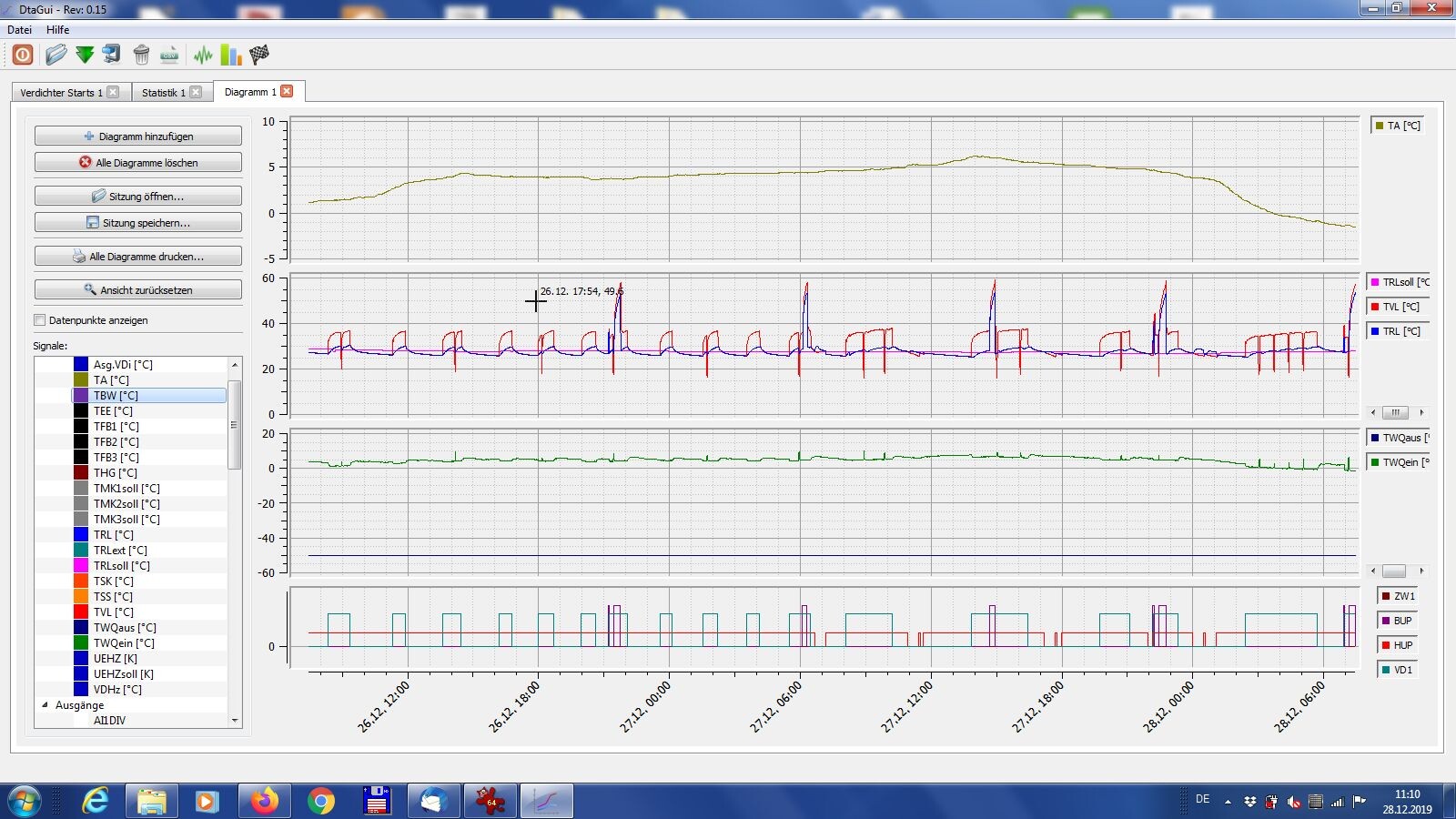
looks much better. In the last 24 hours, you only had 5 heating cycles, previously more than three times as many. Heating cycles now also last several hours.
I would wait on the electricity consumption. The screed is being heated fully for the first time now, and the outside temperatures were also lower than usual last night.
I would reduce the hallway flow even further. What is the current flow rate there?
What are the supply and return temperatures for the bedroom and dressing room during a heating cycle (near the end would be good), as well as in the hallway?
I would leave the study as it is for now because of the overall flow.
Could you please provide an updated CSV file?
Tomorrow, I would like to see a DTA again.
Similar topics