
ᐅ Underfloor heating with an air-to-water heat pump. House gets too warm when the sun is shining.
Created on: 4 Dec 2019 14:18
C
chewbacca123
Hello everyone,
I have a general question.
We moved into our new build four months ago. The living area on the ground floor has three large floor-to-ceiling windows facing south. We have underfloor heating and an air-to-water heat pump.
It provides a really comfortable temperature inside the house, but we have a problem – whenever the sun is shining in winter, even if it’s -2°C (28°F) outside, the temperature suddenly rises to 24°C (75°F) in the living room. It gets uncomfortably warm in here, and the underfloor heating can’t be turned down quickly.
Should we assume that the large floor-to-ceiling windows are responsible for the heat gain? A photo of the south-facing side of the house is attached.
What would you do – always lower all the blinds as soon as sunlight is forecast? That seems quite annoying...
We have motorized blinds controlled by Somfy. Would you consider buying a sensor that automatically lowers the blinds at a certain temperature?
Thanks in advance for your replies.
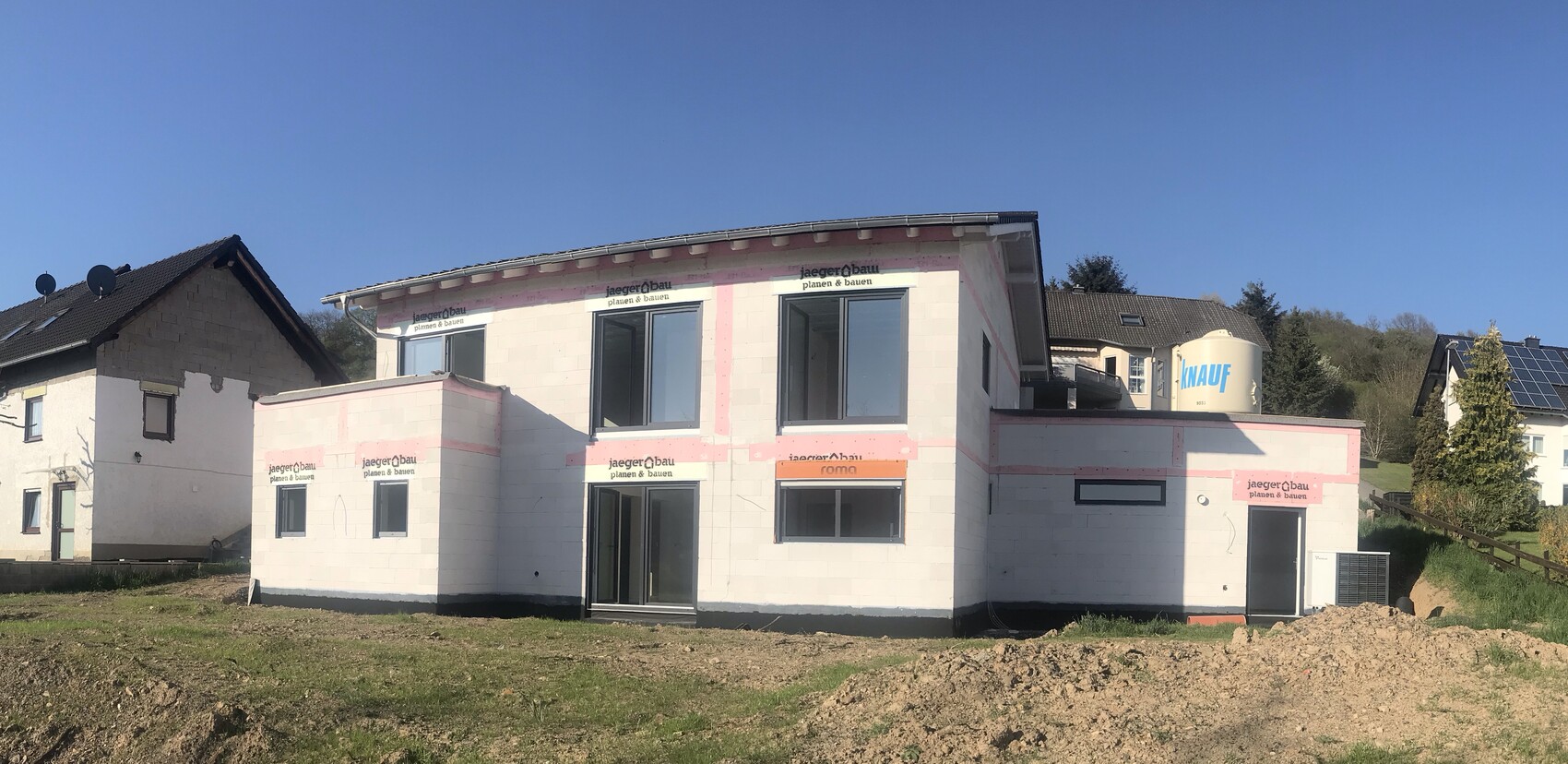
I have a general question.
We moved into our new build four months ago. The living area on the ground floor has three large floor-to-ceiling windows facing south. We have underfloor heating and an air-to-water heat pump.
It provides a really comfortable temperature inside the house, but we have a problem – whenever the sun is shining in winter, even if it’s -2°C (28°F) outside, the temperature suddenly rises to 24°C (75°F) in the living room. It gets uncomfortably warm in here, and the underfloor heating can’t be turned down quickly.
Should we assume that the large floor-to-ceiling windows are responsible for the heat gain? A photo of the south-facing side of the house is attached.
What would you do – always lower all the blinds as soon as sunlight is forecast? That seems quite annoying...
We have motorized blinds controlled by Somfy. Would you consider buying a sensor that automatically lowers the blinds at a certain temperature?
Thanks in advance for your replies.
 chewbacca12327 Dec 2019 19:57
Daniel-Sp schrieb:
So!!!!!!!!
This morning, chewbacca123’s bypass valve was adjusted from setting 4 to 5, and TADA, the return temperature now only starts to rise after about 6 minutes. This means more heat is reaching the screed. The heat pump will now operate more efficiently. The heating curve needs to be adjusted; I would initially try 27-22-0. Otherwise, the house will get too warm.
Here is the proof
[ATTACH alt="ÜV-Stufe5.jpg"]41275[/ATTACH]
It might be possible to go even further by adjusting the bypass valve from 5 to 6 or even fully closed.
For comparison, here is the previous setting:
[ATTACH alt="RL-Anstieg.jpg"]41277[/ATTACH]
The heating cycles are also longer in the first trend:
[ATTACH alt="ÜV-Stufe5-Heiztakte.jpg"]41278[/ATTACH]
Now, time to be brave and take the next step!
The exciting question remains how the bathroom temperatures will develop. Thanks to the previous adjustments, the flow rate improved from initially 1.5 liters/min to 2.9 liters/min.
Looking forward to the results... Great, I’m really happy about that. I’ll adjust the heating curve down later to prevent the house from turning into a sauna. I’m already excited that we can save so much energy.
THANK YOU
I’ll keep you updated; tomorrow I will adjust the bypass valve from 5 to 5.5
chewbacca12327 Dec 2019 20:02M4rvin schrieb:
What do these three numbers actually mean? For example, 27 22 0
Can every heating system (or heating control) be read out, or do you need any gadgets for that?27 is the supply temperature and 22 is the room temperature (according to my installer)D
Daniel-Sp27 Dec 2019 20:17No,
27-22-0 describes the heating curve. The heating system never actually knows how warm the rooms are.
27 is the endpoint, meaning the return temperature at -20°C (-4°F), 22°C (72°F) is the base point, which is the return temperature at 22°C (72°F) outdoor temperature. Based on this curve, the heat pump adjusts the return temperature according to the measured outdoor temperature. If the rooms are too warm or too cold, you need to adjust the heating curve...
The third number indicates the night setback, which usually doesn’t make much sense. You can experiment with it once everything is running smoothly.
Oh, and by the way, I heard a brief hissing and bubbling sound for one or two seconds when I had completely closed the bypass valve...
27-22-0 describes the heating curve. The heating system never actually knows how warm the rooms are.
27 is the endpoint, meaning the return temperature at -20°C (-4°F), 22°C (72°F) is the base point, which is the return temperature at 22°C (72°F) outdoor temperature. Based on this curve, the heat pump adjusts the return temperature according to the measured outdoor temperature. If the rooms are too warm or too cold, you need to adjust the heating curve...
The third number indicates the night setback, which usually doesn’t make much sense. You can experiment with it once everything is running smoothly.
Oh, and by the way, I heard a brief hissing and bubbling sound for one or two seconds when I had completely closed the bypass valve...
D
Daniel-Sp27 Dec 2019 20:21M4rvin schrieb:
Is it possible to read data from any heating system (control), or do you need some kind of gadgets for that? I have no idea, but it definitely works with Novelan and Alpha Innotec heat pumps. Thanks to a dedicated programmer, you can visualize the data using a free tool.

B
boxandroof27 Dec 2019 20:58This varies depending on the manufacturer. Ours, for example, is controlled via the supply temperature. For native visualization, I would need an additional module.
Due to the photovoltaic system and temperature fluctuations throughout the day, I use a night setback and a daytime boost. However, this is a bit more difficult to adjust, so everything else should be set correctly beforehand.
Due to the photovoltaic system and temperature fluctuations throughout the day, I use a night setback and a daytime boost. However, this is a bit more difficult to adjust, so everything else should be set correctly beforehand.
Similar topics