
ᐅ Underfloor heating with an air-to-water heat pump. House gets too warm when the sun is shining.
Created on: 4 Dec 2019 14:18
C
chewbacca123
Hello everyone,
I have a general question.
We moved into our new build four months ago. The living area on the ground floor has three large floor-to-ceiling windows facing south. We have underfloor heating and an air-to-water heat pump.
It provides a really comfortable temperature inside the house, but we have a problem – whenever the sun is shining in winter, even if it’s -2°C (28°F) outside, the temperature suddenly rises to 24°C (75°F) in the living room. It gets uncomfortably warm in here, and the underfloor heating can’t be turned down quickly.
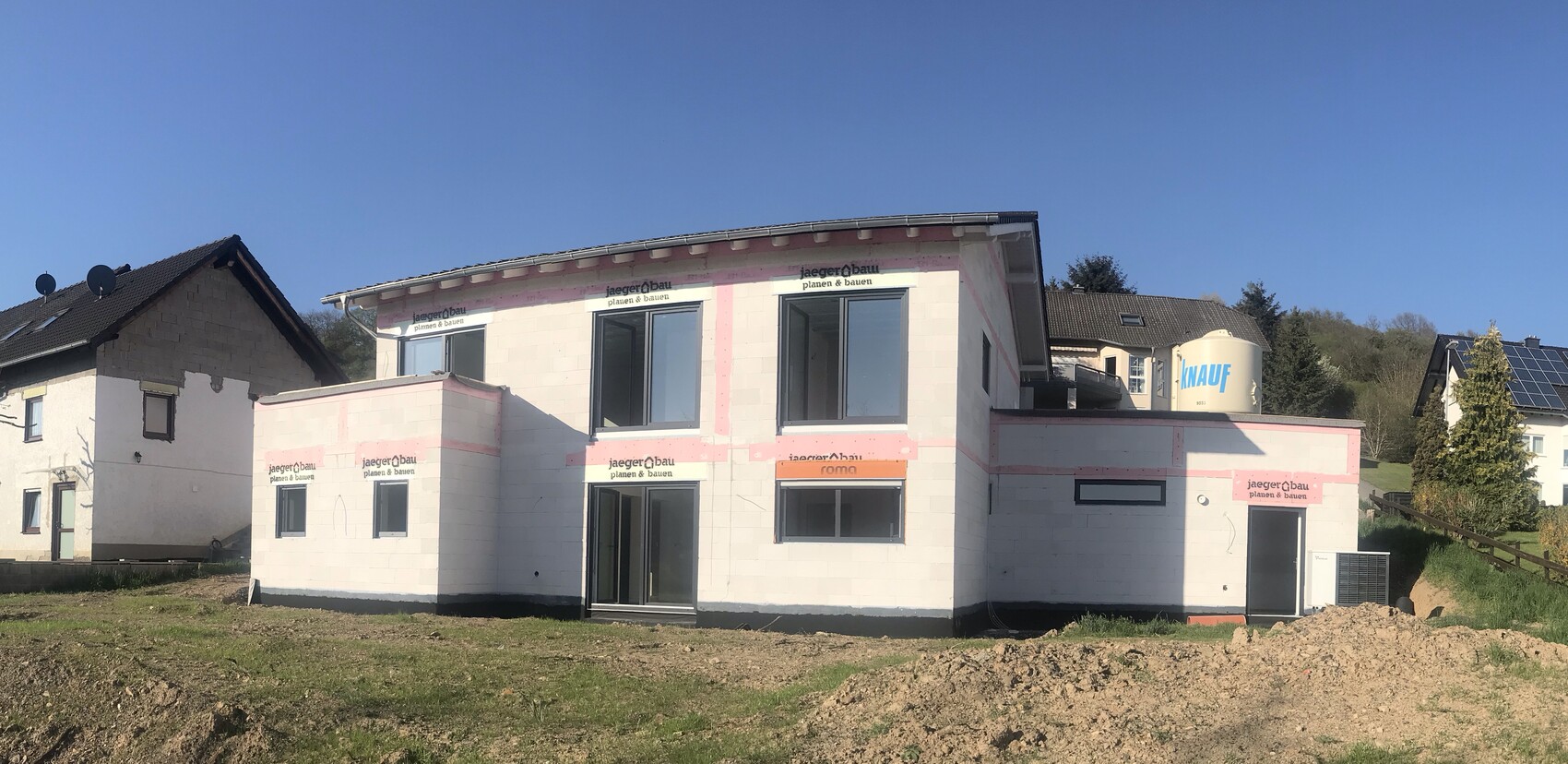
Should we assume that the large floor-to-ceiling windows are responsible for the heat gain? A photo of the south-facing side of the house is attached.
What would you do – always lower all the blinds as soon as sunlight is forecast? That seems quite annoying...
We have motorized blinds controlled by Somfy. Would you consider buying a sensor that automatically lowers the blinds at a certain temperature?
Thanks in advance for your replies.
I have a general question.
We moved into our new build four months ago. The living area on the ground floor has three large floor-to-ceiling windows facing south. We have underfloor heating and an air-to-water heat pump.
It provides a really comfortable temperature inside the house, but we have a problem – whenever the sun is shining in winter, even if it’s -2°C (28°F) outside, the temperature suddenly rises to 24°C (75°F) in the living room. It gets uncomfortably warm in here, and the underfloor heating can’t be turned down quickly.
Should we assume that the large floor-to-ceiling windows are responsible for the heat gain? A photo of the south-facing side of the house is attached.
What would you do – always lower all the blinds as soon as sunlight is forecast? That seems quite annoying...
We have motorized blinds controlled by Somfy. Would you consider buying a sensor that automatically lowers the blinds at a certain temperature?
Thanks in advance for your replies.
 chewbacca12325 Dec 2019 10:11
Joedreck schrieb:
Close the bypass valve! It doesn’t help otherwise. ONLY THEN can you balance the system. You then reduce the overheated rooms. Hopefully in favor of the bathroom.
Everything as already done, step by step. I will discuss this with our heating engineer early next year.
D
Daniel-Sp25 Dec 2019 10:18Since this is the first time the heat reaches the screed completely, the heating curve should be lowered at the same time; otherwise, it will become much too warm.
D
Daniel-Sp25 Dec 2019 10:19chewbacca123 schrieb:
I will talk to our heating engineer about it early next yearHe will not close it, manufacturer’s instructions...You will have to take care of that yourself
D
Daniel-Sp25 Dec 2019 10:28chewbacca123 schrieb:
Good morning, my compressor starts have decreased significantly. Whereas two weeks ago they occurred on average every 14 minutes, things look much better now. Data from December 23rd to December 25th:
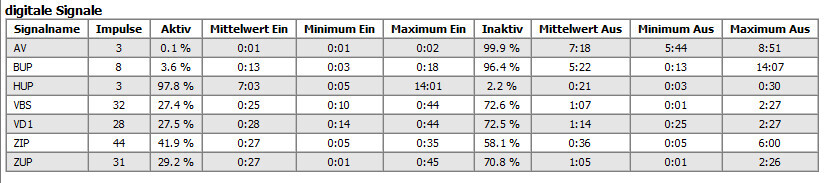
It probably can only be improved further by adjusting the bypass valve, but I’m not ready to do that yet. The heating technician is supposed to handle it.
Electricity consumption in kWh over the last 24 hours is still 20. I thought it would decrease because of the water settings—what could be the reason? Water circulation times are 6:00–10:00, 12:00–14:00, and 17:00–22:00.
Regarding temperatures: the hallway is still 22.8°C (73°F), even though I reduced the flow rate at the top to 1 and at the bottom to 0.75. The children’s room is too warm at 22.4°C (72°F), which might be an issue when the little one sleeps there next year. The flow rate there is set to 0.75. Should I reduce it further? The large bathroom was at 21.0°C (70°F). I was able to set the volume flow to 2.9–3.0, so maybe there will be some change by tomorrow. 21.3°C (70°F) would be great! If not, we’ll have to live with it.
Best regards Are these the times when the circulation pump is running? If so, I still find that quite a lot. Instead of further reducing flow rates, you should fully open the bypass valve first; only then does the hydraulic balancing make sense!
You will likely be able to lower the heating curve after that, as mentioned above, and that will reduce electricity consumption.
Would you be willing to email me a DTA?
Merry Christmas to everyone
chewbacca12325 Dec 2019 11:22Daniel-Sp schrieb:
Are those the times the circulation pump is running? If so, I still think that’s a lot.
Instead of further reducing the flow rates, you should fully open the bypass valve; only then does the hydraulic balancing make sense!
You will likely be able to lower the heating curve, as mentioned above, and only then reduce electricity consumption.
Would you be willing to email me a DTA?
Merry Christmas to everyone Those are the times I set on the dial for when we want warm water.
Sure, I’d be happy to send it—where can I find this data?