
P
Pinkiponk2 Jan 2022 11:41I would like to ask for your opinion regarding aesthetics and practical usability:
I want to install as few tiles as possible on the walls. Attached are the floor plans of our bathrooms on the ground floor and upper floor (marked in red). In your opinion, where should tiles definitely be installed, and what alternatives would you suggest?
I wish you and your families a Happy New Year, with many joyful moments here ;-) and beyond the forum. Let’s continue to come together in such a positive and helpful way.
--> And if anyone has contact with Hampshire, please use all available means to encourage him to return. He is greatly missed here.
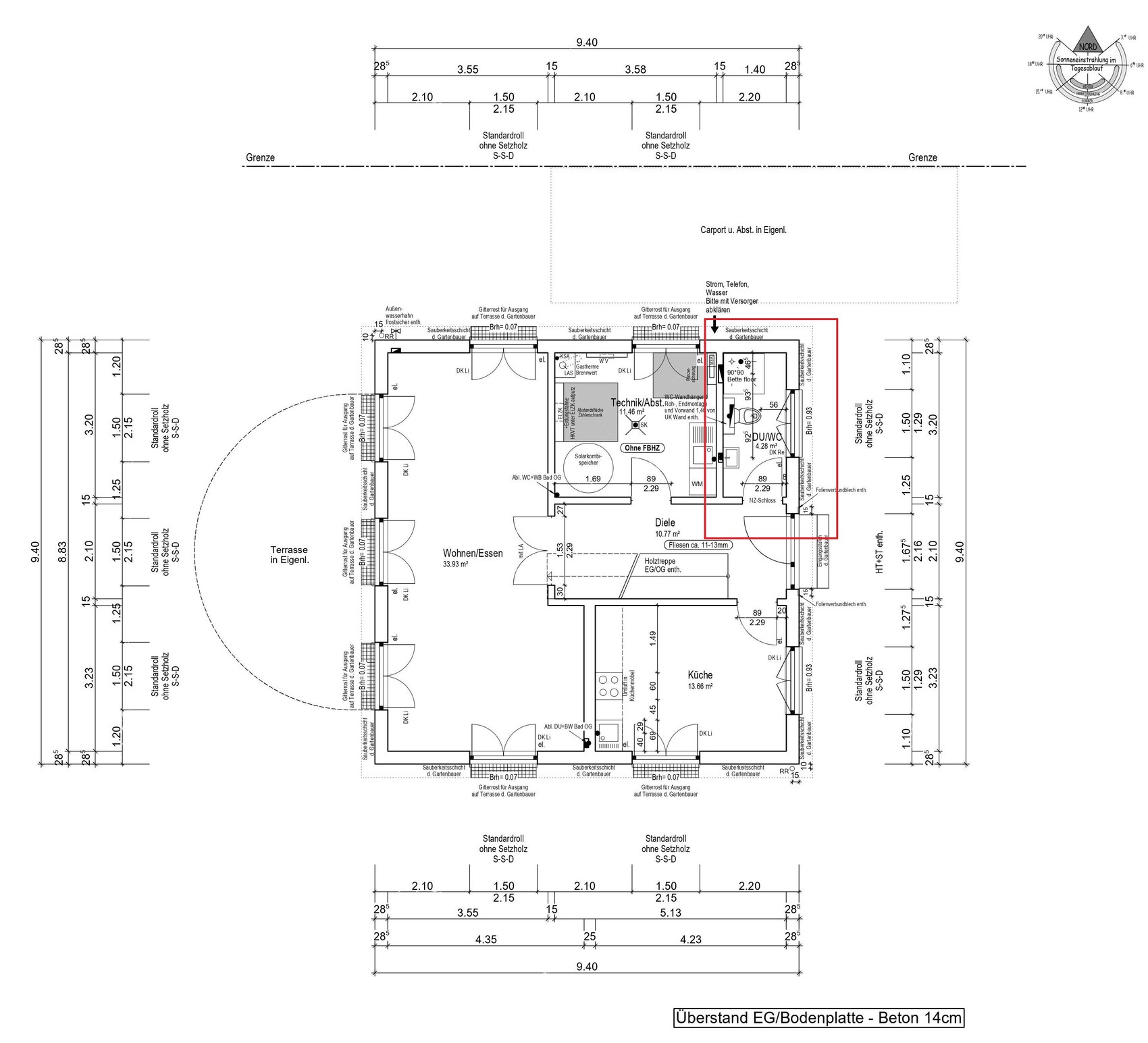
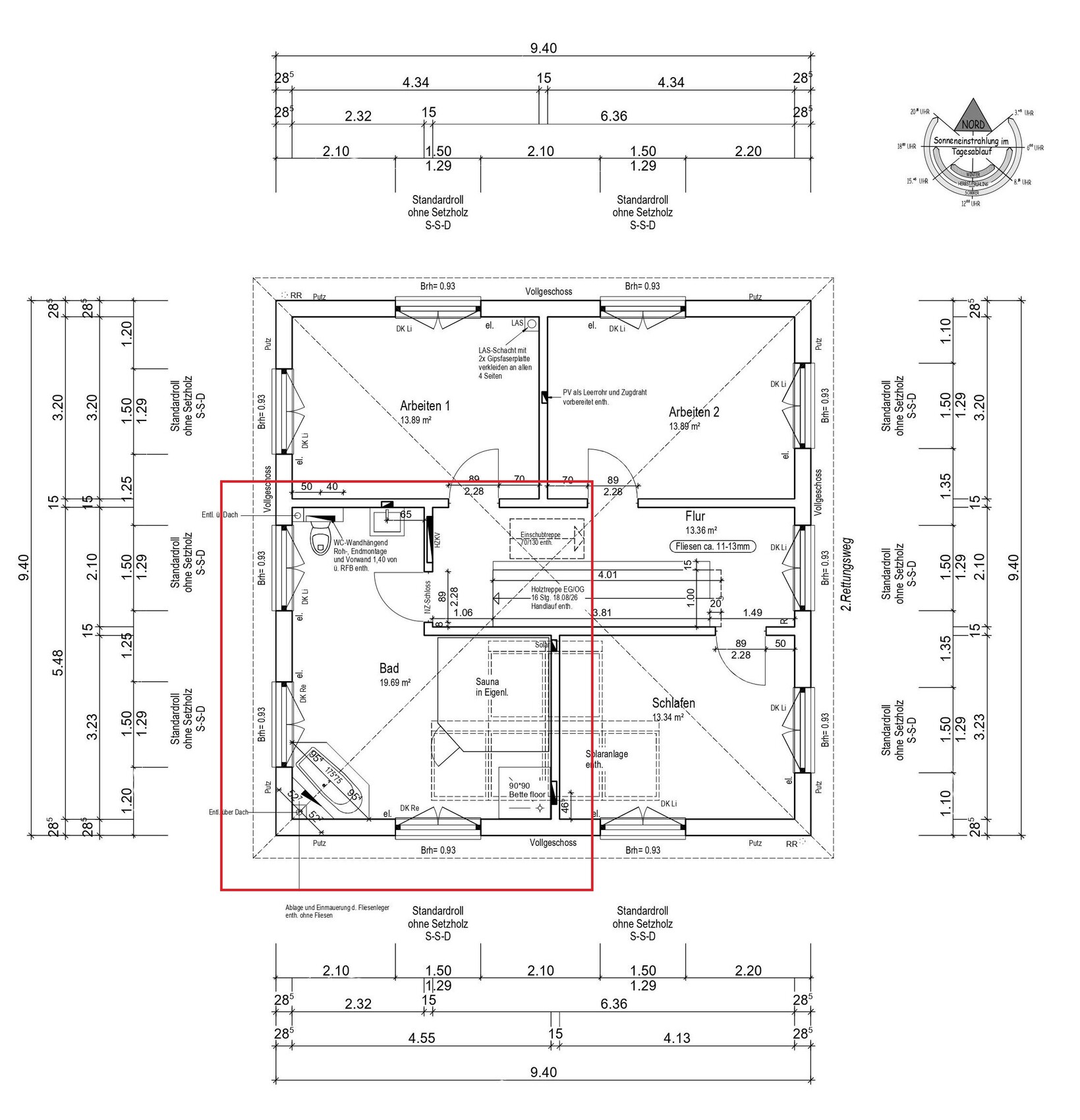
I want to install as few tiles as possible on the walls. Attached are the floor plans of our bathrooms on the ground floor and upper floor (marked in red). In your opinion, where should tiles definitely be installed, and what alternatives would you suggest?
I wish you and your families a Happy New Year, with many joyful moments here ;-) and beyond the forum. Let’s continue to come together in such a positive and helpful way.
--> And if anyone has contact with Hampshire, please use all available means to encourage him to return. He is greatly missed here.

B
Benutzer2002 Jan 2022 12:52Without referring to the plans: Tiles should be limited to the floor and areas prone to water splashes (shower, behind the washbasin). Personally, I prefer these areas to be simply nicely plastered and painted (or decorated with pictures, etc.). If the washbasin and toilet are located next to each other on one wall, it can be visually appealing to tile the entire area.

I would only tile the shower and washbasin/toilet areas in the bathroom. Possibly also the wall next to the washbasin.
In the guest toilet, I would only tile the shower area. Is there no possibility to install the flush tank inside the wall (or in the utility room)?
Wall@Deco Wet System is suitable for wet areas. It could be a modern alternative, for example.
We only requested the materials. Depending on the wallpaper, prices start at 160 euros per square meter (15 dollars per square foot). It was too expensive for us in the end.
Alternatively, you could use wallpaper with a vinyl surface.
We have this in the guest toilet in the washbasin area. If the wall does not get wet too often, I think it’s not a problem.
It has been working very well for us for a year.
In the guest toilet, I would only tile the shower area. Is there no possibility to install the flush tank inside the wall (or in the utility room)?
Wall@Deco Wet System is suitable for wet areas. It could be a modern alternative, for example.
We only requested the materials. Depending on the wallpaper, prices start at 160 euros per square meter (15 dollars per square foot). It was too expensive for us in the end.
Alternatively, you could use wallpaper with a vinyl surface.
We have this in the guest toilet in the washbasin area. If the wall does not get wet too often, I think it’s not a problem.
It has been working very well for us for a year.
A splash guard should be installed behind the washbasin and toilet at a minimum height of 120/140cm (47/55 inches). It should be done in a straight line to connect with the tiled backsplash. For the shower… obviously yes. Everything else is optional and can be omitted, serving mainly as a design element.
How to handle this in a limited bathroom space of about 20 square meters (215 square feet) on the upper floor should be discussed after properly planning the placement of sanitary fixtures. I see a significant need for planning here, but I also remember that the bathroom, as presented here, was already subject to criticism. Has nothing changed since then? 😱
How to handle this in a limited bathroom space of about 20 square meters (215 square feet) on the upper floor should be discussed after properly planning the placement of sanitary fixtures. I see a significant need for planning here, but I also remember that the bathroom, as presented here, was already subject to criticism. Has nothing changed since then? 😱
P
Pinkiponk2 Jan 2022 16:46ypg schrieb:
Behind the washbasin and toilet, a splash guard at least 120/140 cm (47/55 inches) high. Then it should be installed in a straight line so the tiled backsplash connects. Shower… obviously… Everything else is OPTIONAL, so you can skip it and it serves as a design element.
How to handle this in a tight 20 sqm (215 sq ft) bathroom on the upper floor should be discussed after properly planning the placement of sanitary fixtures. I still see a lot of planning needed here, but I also recall that this bathroom as presented here was already criticized. Has nothing happened in the meantime? 😱 For the bathroom on the upper floor, I don’t have much input since it’s my husband’s favorite room. Honestly, both of us lack a clear vision and hope that once we live in the house, good ideas will come.
The advice about the splash guard height is helpful.
Summarizing all the feedback, tiles behind the washbasin, toilet, and in the shower area are necessary; the rest is optional but not compulsory.
Similar topics