
Hello everyone,
Our garden has been landscaped by the landscaper, and all the slopes have been filled in. Now we have a brown, dusty desert.
We do get a fair amount of rain during “normal” summers here, but we have built on sandy soil. The rainwater drains quickly, and summers tend to be rather dry. Basically, the situation here is similar to the area cleared for Tesla in Grünheide. Therefore, we want to focus on a more Mediterranean-style planting and ideally avoid irrigation.
On the south side of our brick house, I would like to plant a fig tree, which I want to benefit from the heat stored by the façade in the evenings. After doing some research, I thought that a planting distance of about 1 meter (3 feet) for the fig tree might be okay. Closer would be better for heat utilization. Shade is also an important factor given the increasingly hot summers.
My main question is about the roots and what they might do to the exterior basement insulation. The basement is built with a waterproof concrete wall, so roots shouldn’t penetrate it, and the house would never leak because of roots.
Should I be worried about the insulation when planting a fig tree at this distance, or is 1 meter (3 feet) sufficient?
If you walk around in France, or regions like the Pfalz, for example, you see fig trees growing from all sorts of cracks and corners. Their houses are still standing.
Should I just go ahead, or take precautions?
Attached again are pictures of the shell construction and the site after landscaping. The distance from the light well is also 1 meter (3 feet), just like the distance from the exterior wall.
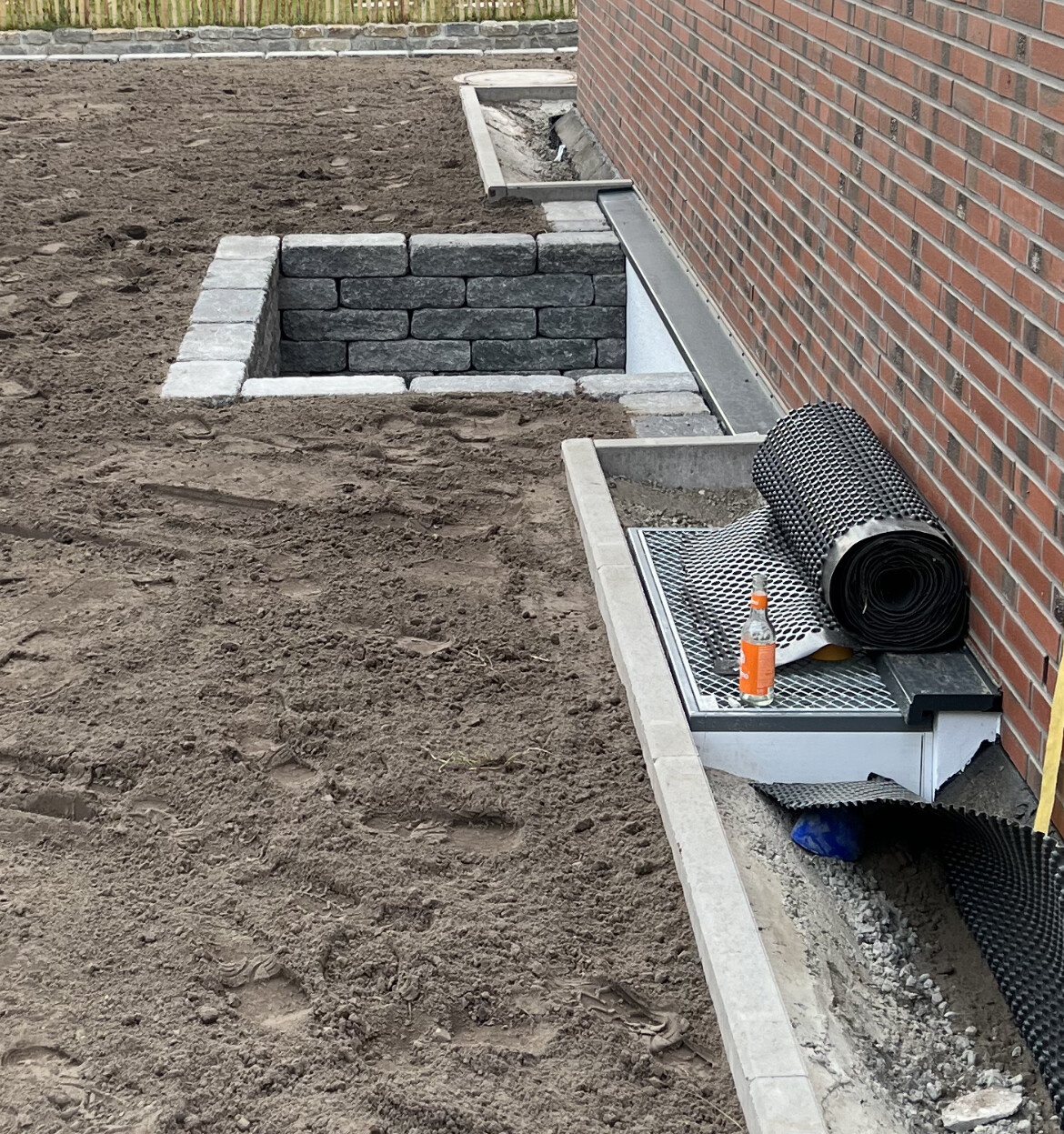
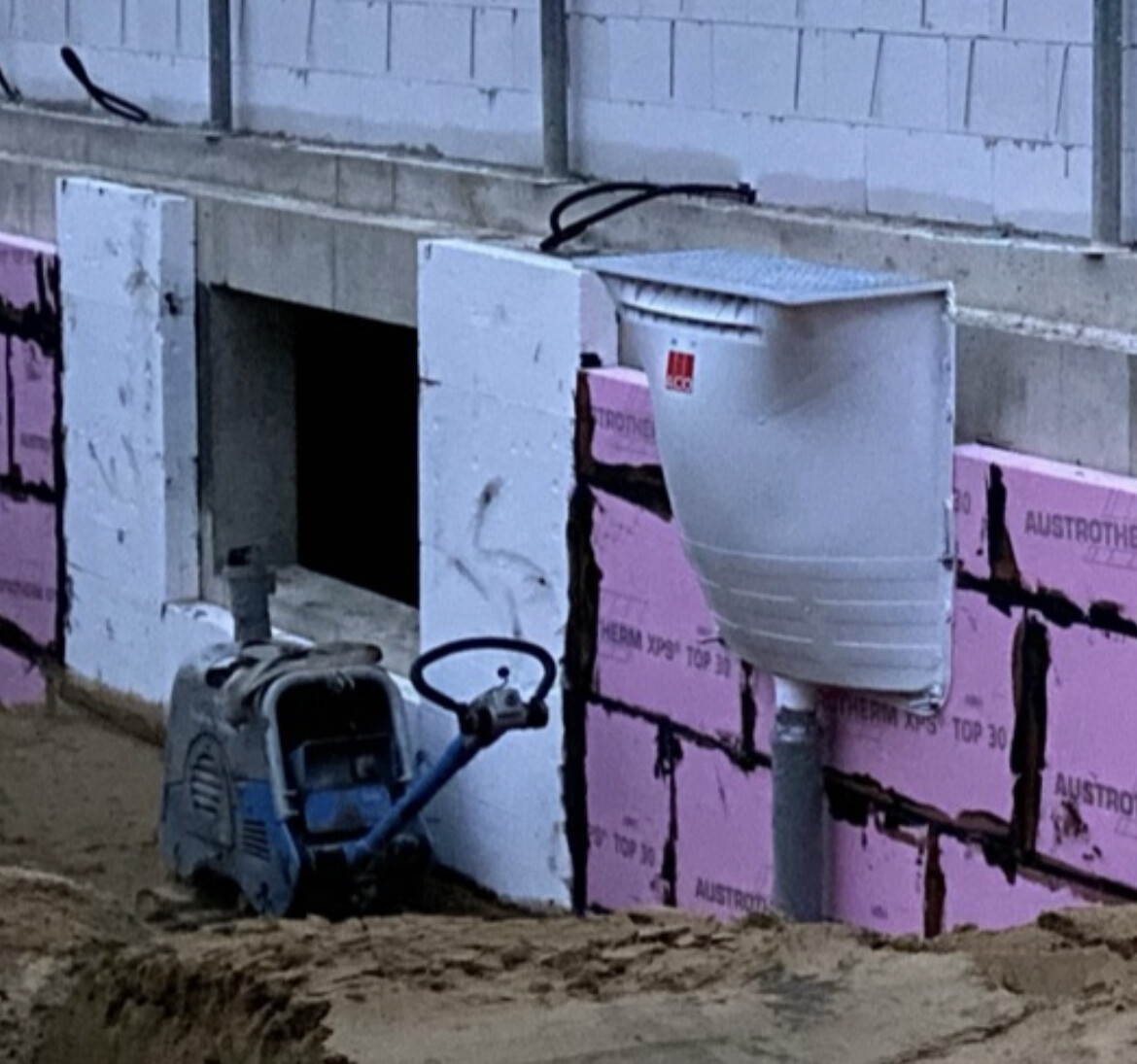
Our garden has been landscaped by the landscaper, and all the slopes have been filled in. Now we have a brown, dusty desert.
We do get a fair amount of rain during “normal” summers here, but we have built on sandy soil. The rainwater drains quickly, and summers tend to be rather dry. Basically, the situation here is similar to the area cleared for Tesla in Grünheide. Therefore, we want to focus on a more Mediterranean-style planting and ideally avoid irrigation.
On the south side of our brick house, I would like to plant a fig tree, which I want to benefit from the heat stored by the façade in the evenings. After doing some research, I thought that a planting distance of about 1 meter (3 feet) for the fig tree might be okay. Closer would be better for heat utilization. Shade is also an important factor given the increasingly hot summers.
My main question is about the roots and what they might do to the exterior basement insulation. The basement is built with a waterproof concrete wall, so roots shouldn’t penetrate it, and the house would never leak because of roots.
Should I be worried about the insulation when planting a fig tree at this distance, or is 1 meter (3 feet) sufficient?
If you walk around in France, or regions like the Pfalz, for example, you see fig trees growing from all sorts of cracks and corners. Their houses are still standing.
Should I just go ahead, or take precautions?
Attached again are pictures of the shell construction and the site after landscaping. The distance from the light well is also 1 meter (3 feet), just like the distance from the exterior wall.


Axolotl-neu schrieb:
A fig only grows as a shrub or small tree and won’t get taller than 4m (can of course also be pruned and kept smaller). So, not really a problem. I’m not a fig expert. As I said, usually sooner or later there are problems and the tree has to be removed.
Axolotl-neu schrieb:
That would mean that most gardens wouldn’t be allowed to have trees, if your distance rules were applied 😉. Even on my 1,100 sq m (11,840 sq ft) plot, I would only have one spot for a tree. Strange. Apparently, you’ve built too much. 😉
OWLer schrieb:
Even with rainwater, this isn’t a huge problem and it’s relatively easy to access so it could be repaired if needed. The nice tree might be gone, but then you could do it properly with a root barrier from the start. Have you ever dug up a fully grown tree including its roots? Maybe I’m just too weak, but I already struggle with the seedlings I rescue from various gardens to save them from dying.
W
WilderSueden15 Jul 2022 14:10As a rough guideline, I would take the house setback to be equal to the boundary setback. So, in this case, the oak tree must be 8 meters (26 feet) away from the boundary and should also be 8 meters (26 feet) away from the house. The dwarf serviceberry can be planted just one meter (3 feet) next to the house.
What is particularly interesting, of course, is how espalier fruit trees are classified, since they are supposed to be planted right against the wall 😉
What is particularly interesting, of course, is how espalier fruit trees are classified, since they are supposed to be planted right against the wall 😉
WilderSueden schrieb:
As a rough guideline, I would use the building setback distance as the tree setback as well. So, in this case, the oak must be 8m (26 feet) away from the property line... Wait, you actually have setback rules for specific tree species?