
ᐅ Transition profile tiles to vinyl flooring in an attractive way
Created on: 30 Jul 2020 07:22
M
Markuss85M
Markuss8530 Jul 2020 07:22Good morning everyone,
At the transition from the kitchen (fully tiled by the main contractor) to the living room (flooring installed as a DIY project, Parador Modular One vinyl laid as a floating floor), we are unsure how to achieve a professional and visually appealing finish.
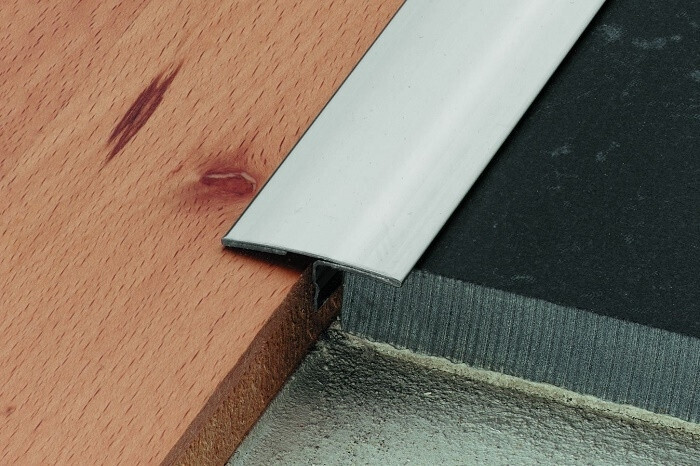
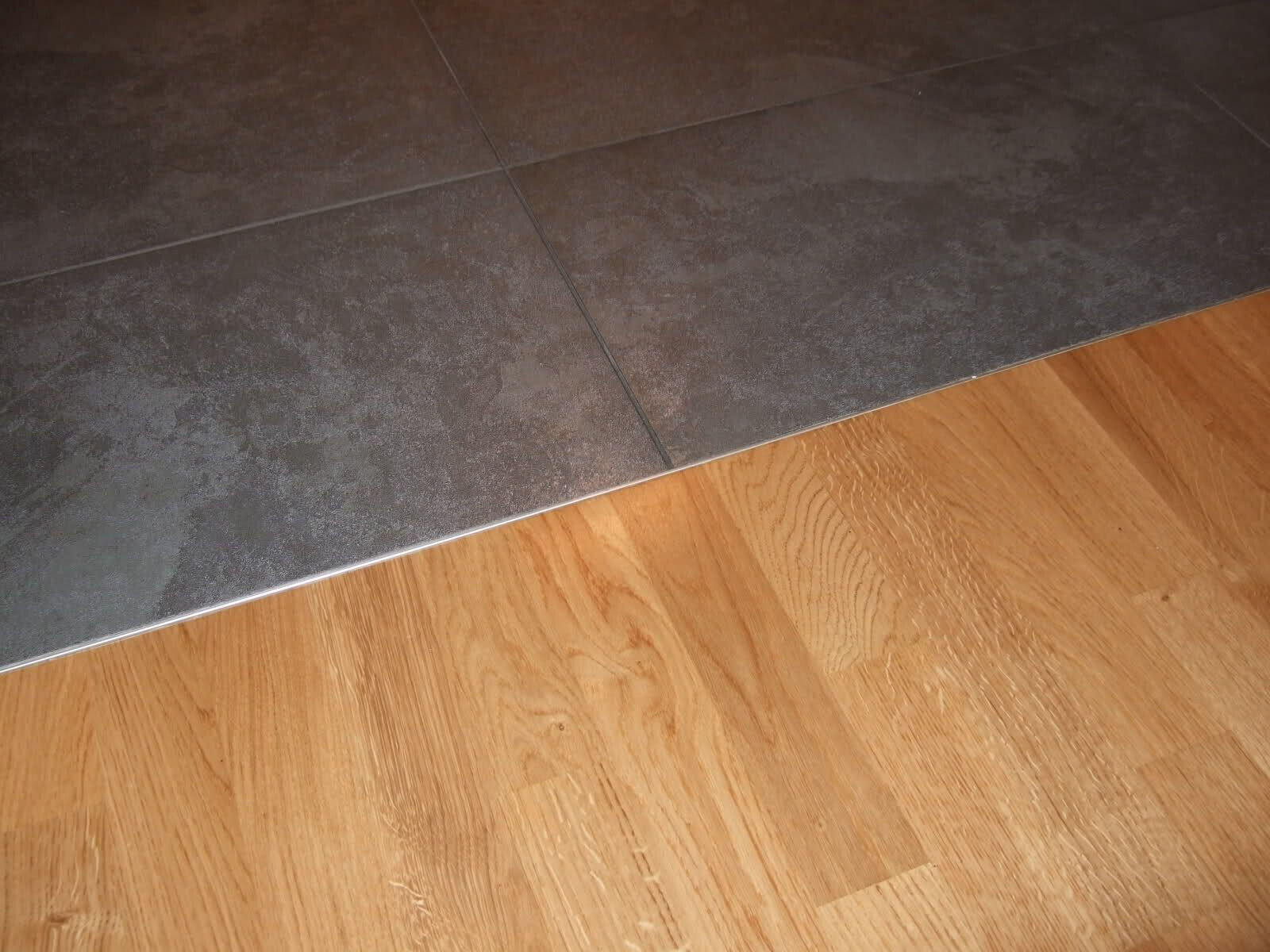
The simplest solution would, of course, be a standard transition strip, but honestly, we don’t find those very attractive (first photo). A more visually appealing option would be to have the vinyl meet directly against the existing stainless steel edge profile (second photo). However, we have some concerns about this because the flooring is supposed to have about a 1cm (0.4 inch) expansion gap to allow for movement.
How would you approach this? Would a small silicone joint between the tiles and the vinyl be a viable alternative?
Thank you very much in advance!
Not so nice:
Nice:
At the transition from the kitchen (fully tiled by the main contractor) to the living room (flooring installed as a DIY project, Parador Modular One vinyl laid as a floating floor), we are unsure how to achieve a professional and visually appealing finish.
The simplest solution would, of course, be a standard transition strip, but honestly, we don’t find those very attractive (first photo). A more visually appealing option would be to have the vinyl meet directly against the existing stainless steel edge profile (second photo). However, we have some concerns about this because the flooring is supposed to have about a 1cm (0.4 inch) expansion gap to allow for movement.
How would you approach this? Would a small silicone joint between the tiles and the vinyl be a viable alternative?
Thank you very much in advance!
Not so nice:
Nice:
T
T_im_Norden30 Jul 2020 07:33Finishing profile if the height fits, or metal design for the transition profile
M
Markuss8530 Jul 2020 14:06T_im_Norden schrieb:
End profile if the height fits, or metal design for the transition profileThanks! By end profile, do you mean something like this? Unfortunately, it’s not much nicer... Is the silicone option not possible?
T
T_im_Norden30 Jul 2020 15:59I wouldn’t do that. Silicone is not permanent, and on top of that, you need the floating installation.
If you fix it in place with silicone, it won’t work properly anymore.
If you fix it in place with silicone, it won’t work properly anymore.

Hello "Markuss85."
There is no technically correct way to install fixed (tile) and adjoining floating (loose) flooring without a transition profile that is firmly connected to the substrate. Just as you cannot install large areas of parquet flooring without expansion joints, it is also necessary for smaller areas to allow movement of the covering. In your case, only the aesthetic aspect of a transition profile is opposing this. However, there are several manufacturers on the market whose products you can consider.
Cork strips, as intended, are not suitable because they quickly fail under vertical movement of the covering. And such movement cannot be ruled out! This is also not considered best practice for floating installation.
So, the choice is between aesthetics and durability, as well as damage prevention.
A flooring edge that bounces continuously up and down when walked on and is pushed aside within a few months is not ideal for everyone. The resulting "aesthetic" can surely be imagined by anyone...
There is no technically correct way to install fixed (tile) and adjoining floating (loose) flooring without a transition profile that is firmly connected to the substrate. Just as you cannot install large areas of parquet flooring without expansion joints, it is also necessary for smaller areas to allow movement of the covering. In your case, only the aesthetic aspect of a transition profile is opposing this. However, there are several manufacturers on the market whose products you can consider.
Cork strips, as intended, are not suitable because they quickly fail under vertical movement of the covering. And such movement cannot be ruled out! This is also not considered best practice for floating installation.
So, the choice is between aesthetics and durability, as well as damage prevention.
A flooring edge that bounces continuously up and down when walked on and is pushed aside within a few months is not ideal for everyone. The resulting "aesthetic" can surely be imagined by anyone...
Similar topics