
ᐅ Transition Between Existing Building and New Construction in the Stairwell
Created on: 15 May 2026 09:45
B
batomekHello everyone,
I would like to get your opinion on the following detail at the junction between the existing building and the new construction.
In our renovation, the wall between the old building and the new extension has now been opened. On the upper floor, the existing stairwell is planned to be seamlessly connected to the new building. Directly in the connection area, there will later be a drywall partition with an apartment entrance door (where the wooden railing is).
The current issue is the floor construction immediately after the stairs, especially in the doorway area:
- In the new building, there will be a new structure with insulation, underfloor heating, and screed.
- The existing stairwell already has an old floor structure.
- If I were to remove everything completely there, there would be a height difference of about 2–2.5 cm (about 1 inch) at the last stair step and in front of the door that would need to be compensated.
My idea is therefore:
To leave the existing floor structure in the door/stair area in place, carefully cut/separate it with a diamond saw, and then continue behind it with the new floor construction (insulation + underfloor heating + screed), including the door frame installation.
This would, according to my layman’s thoughts, result in:
- a defined existing floor height in the sensitive door/stair area
- fewer problems with the last stair step and door connection
- less complicated small build-ups for insulation/screed
The alternative would be a complete demolition and height adjustment in the stairwell using insulation/screed/tile layers.
How would you technically solve this in a clean way?
Thank you!
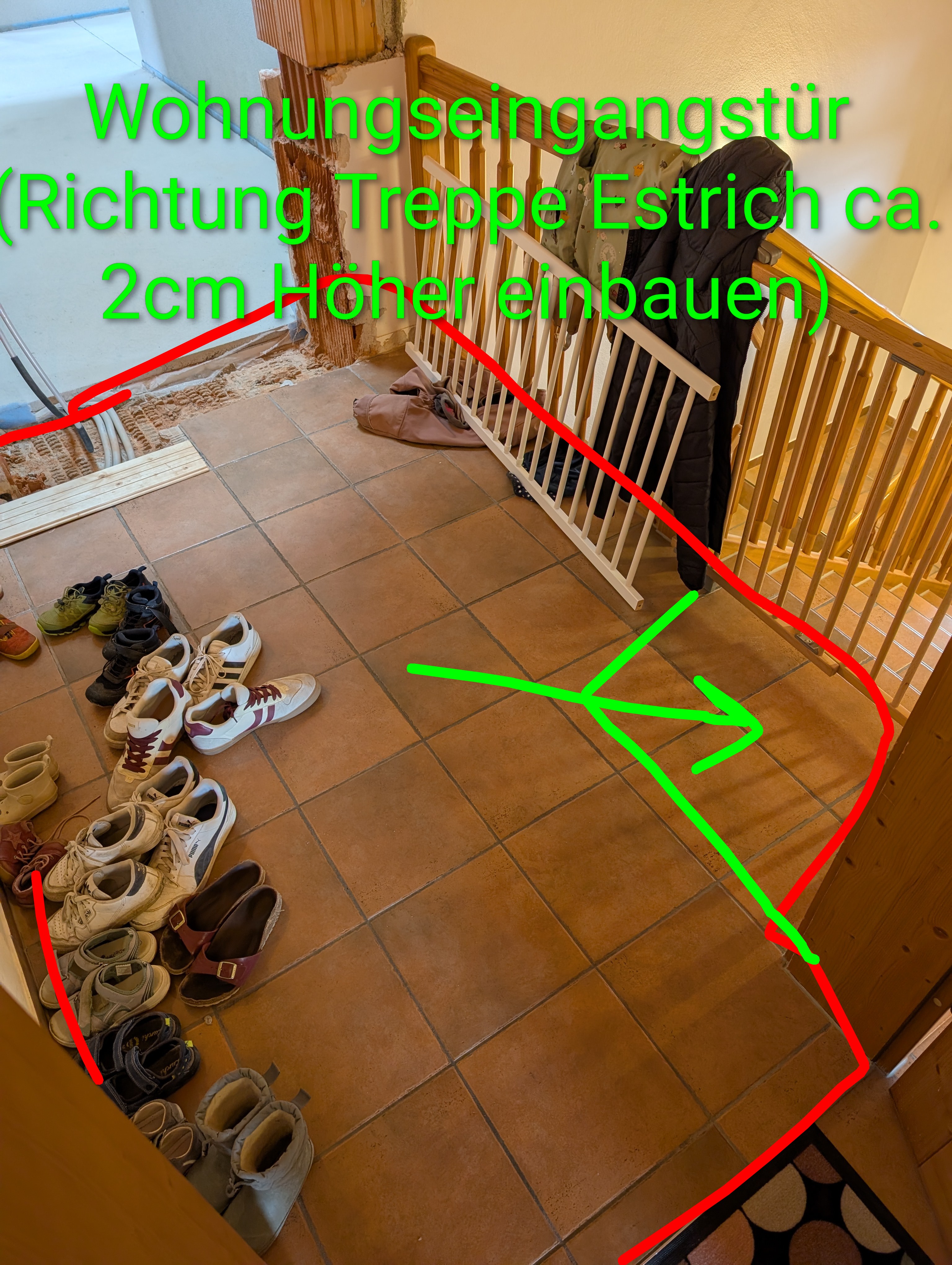
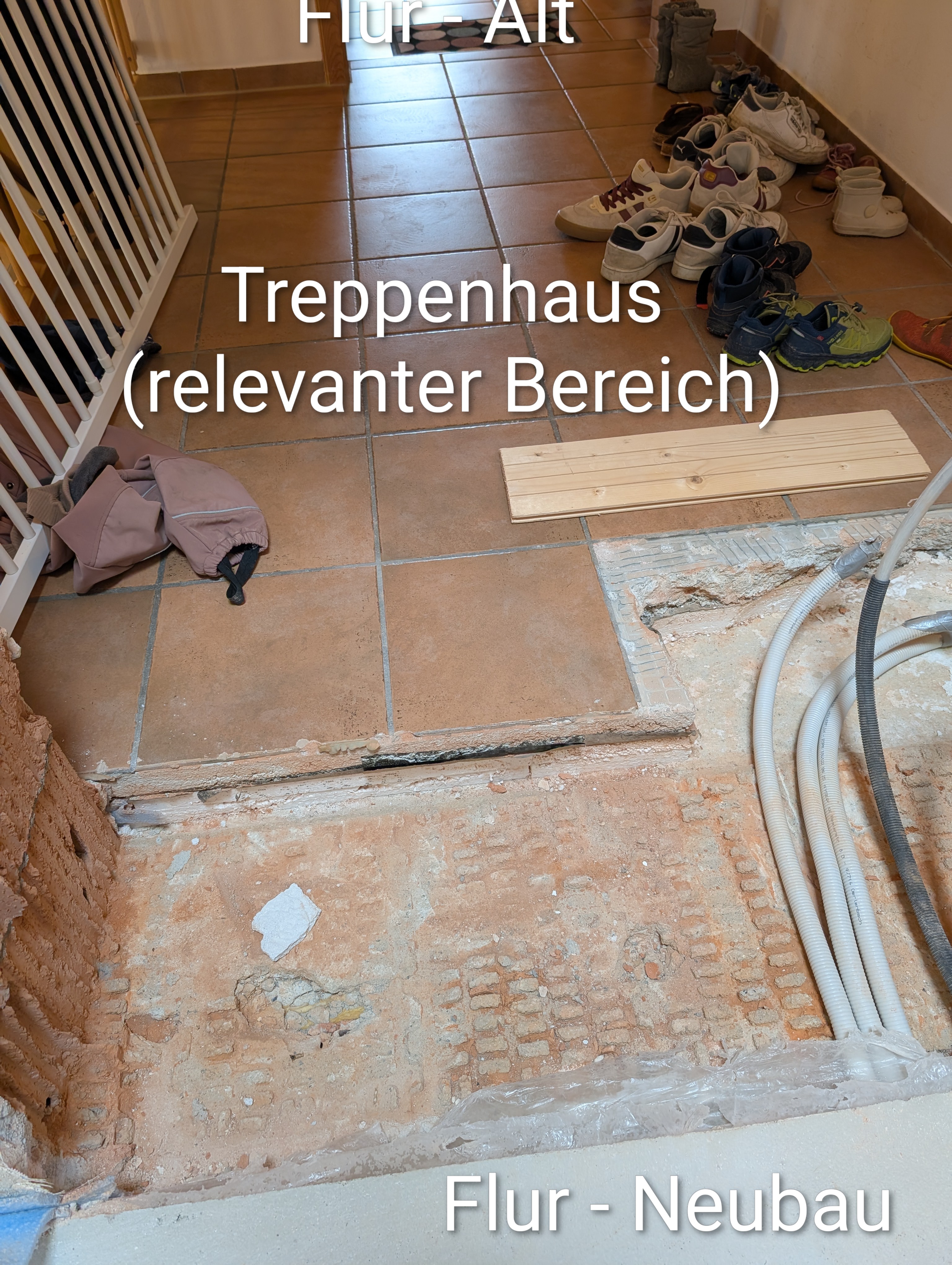
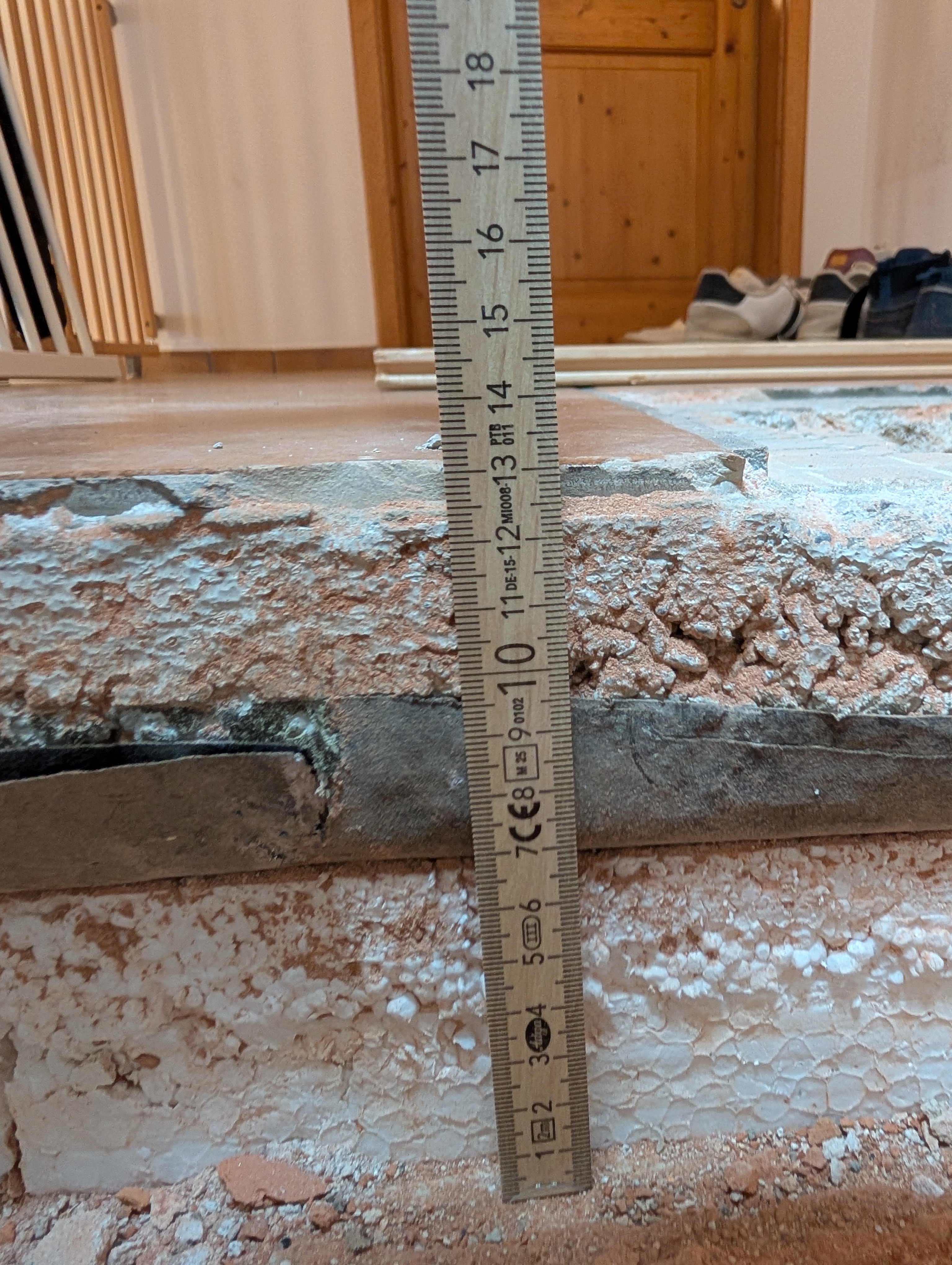
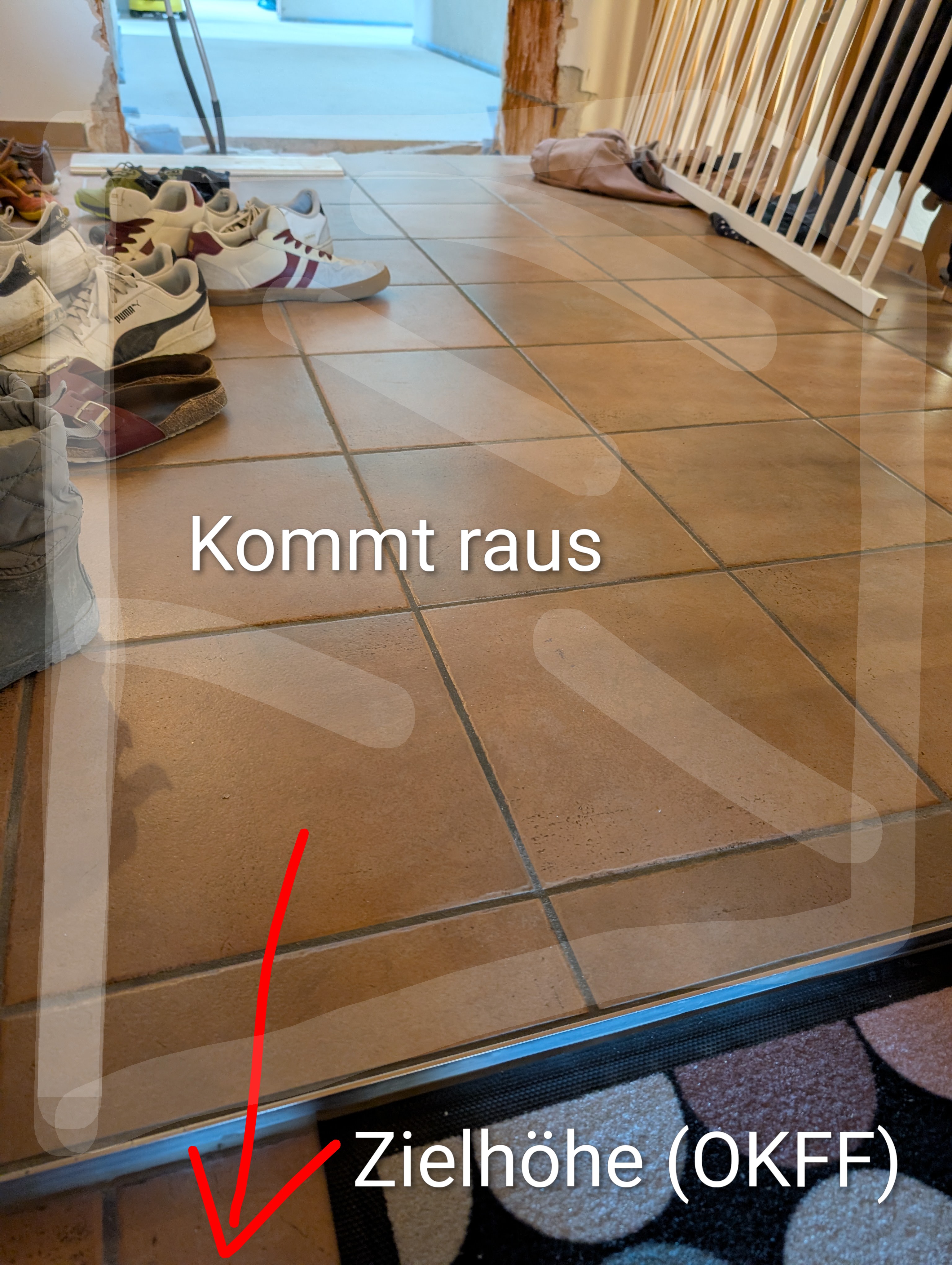
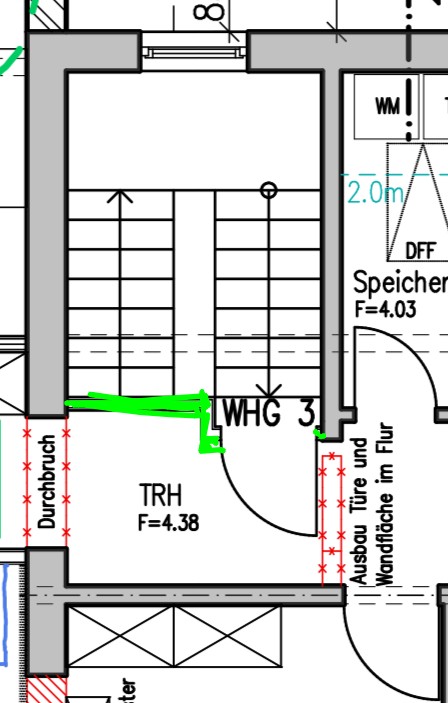
I would like to get your opinion on the following detail at the junction between the existing building and the new construction.
In our renovation, the wall between the old building and the new extension has now been opened. On the upper floor, the existing stairwell is planned to be seamlessly connected to the new building. Directly in the connection area, there will later be a drywall partition with an apartment entrance door (where the wooden railing is).
The current issue is the floor construction immediately after the stairs, especially in the doorway area:
- In the new building, there will be a new structure with insulation, underfloor heating, and screed.
- The existing stairwell already has an old floor structure.
- If I were to remove everything completely there, there would be a height difference of about 2–2.5 cm (about 1 inch) at the last stair step and in front of the door that would need to be compensated.
My idea is therefore:
To leave the existing floor structure in the door/stair area in place, carefully cut/separate it with a diamond saw, and then continue behind it with the new floor construction (insulation + underfloor heating + screed), including the door frame installation.
This would, according to my layman’s thoughts, result in:
- a defined existing floor height in the sensitive door/stair area
- fewer problems with the last stair step and door connection
- less complicated small build-ups for insulation/screed
The alternative would be a complete demolition and height adjustment in the stairwell using insulation/screed/tile layers.
How would you technically solve this in a clean way?
Thank you!
H
hanghaus202316 May 2026 07:15Why don’t people plan this without a stumbling block?
The last step already has a 2cm (0.8 inch) shorter tread than the other steps. If I reduce the floor there by about 2.4cm (1 inch) again, I believe it would create an even worse situation on the last step.
In addition, I gladly accept the threshold as a windbreak.
However, my question was heading in a different direction.
In addition, I gladly accept the threshold as a windbreak.
However, my question was heading in a different direction.
H
hanghaus202316 May 2026 07:41batomek schrieb:
My question was actually going in a different direction. My answer was too. 😉
Feel free to answer my question for yourself.
H
hanghaus202316 May 2026 08:10If you add 2.5 cm (1 inch) in the stairwell, you’re just moving the tripping hazard to a different spot.
Is the floor in the extension already installed? If not, consider slightly reducing the thickness of the insulation and screed.
The new apartment entrance door right next to the stairs?
My first question was more about who is responsible for this issue. That person should solve the problem.
Is the floor in the extension already installed? If not, consider slightly reducing the thickness of the insulation and screed.
The new apartment entrance door right next to the stairs?
My first question was more about who is responsible for this issue. That person should solve the problem.
Similar topics