
ᐅ Towel wall heater with heat pump operating at low supply temperature (30 °C)
Created on: 3 Aug 2020 10:23
A
annab377
Hello everyone,
According to information online, most towel rail wall heaters are rated for a 75°C (167°F) supply temperature, which determines their wattage.
If you are planning a brine heat pump system with a low supply temperature—around 30°C (86°F)—does it even make sense to install such a towel rail wall heater if only 30°C is running through it? How have you dealt with this?
Or would it be better to forgo the heating function entirely and just hang a "dry towel rail" since 30°C in the heating system won’t really work?
If it’s possible to have this, would it then be a separate heating circuit solely for the towel rail wall heater?
Thanks and best regards
annab377
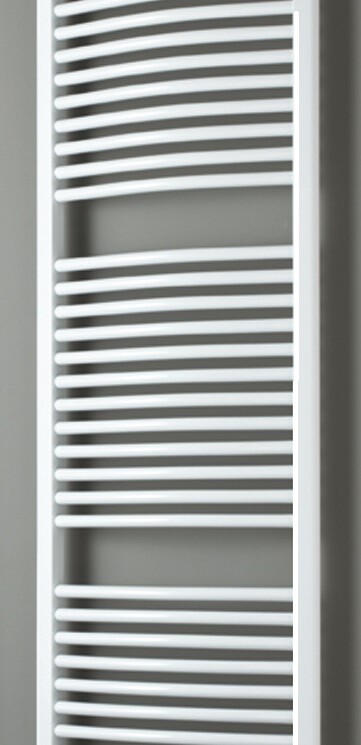
According to information online, most towel rail wall heaters are rated for a 75°C (167°F) supply temperature, which determines their wattage.
If you are planning a brine heat pump system with a low supply temperature—around 30°C (86°F)—does it even make sense to install such a towel rail wall heater if only 30°C is running through it? How have you dealt with this?
Or would it be better to forgo the heating function entirely and just hang a "dry towel rail" since 30°C in the heating system won’t really work?
If it’s possible to have this, would it then be a separate heating circuit solely for the towel rail wall heater?
Thanks and best regards
annab377

T
T_im_Norden3 Aug 2020 18:56It could be due to the fact that the heating effect of such a towel radiator tends to be negligible.

Pinky0301 schrieb:
In our last house, we left out the towel radiator in the (internal) bathroom. We never felt the bathroom was too cold. T_im_Norden schrieb:
That might be because the heating effect of a towel warmer tends to be close to zero. It could just as well be due to a poorly adjusted heating system. If you have to restrict the heating using an electronic radiator regulator (ERR), it naturally doesn’t get too cold, but it is not very efficient either. Additionally, an internal bathroom is likely to have different energy losses compared to bathrooms with two external walls and windows.
By the way, I don’t believe the heating effect approaches zero.
Considering just the heated surface, such a radiator in a smaller bathroom could easily contribute 20% or more.
Of course, a wall heating system is certainly more attractive. However, that would probably have to be significantly larger again.
Similar topics