
Hello everyone,
Our tiles are 1000 x 1000 mm (39 x 39 inches) with 2 mm (0.08 inches) grout lines. We plan to install them in a straight joint pattern. Normally, as I understand it, you start from the center of the room and work outwards, with cut pieces at the edges (Option 1). However, a friend advised us to start from one wall instead, so that the cuts only appear along the opposite wall (preferably the wall where shelves, sofas, or tables will be placed), which would be Option 2. His reasoning was that this would make the cuts less noticeable.
I roughly sketched both options, not to scale, with the gray areas representing the cut pieces. The room measures 11 m x 5.6 m (36 x 18 feet).
What are your thoughts? How would you install such large tiles?
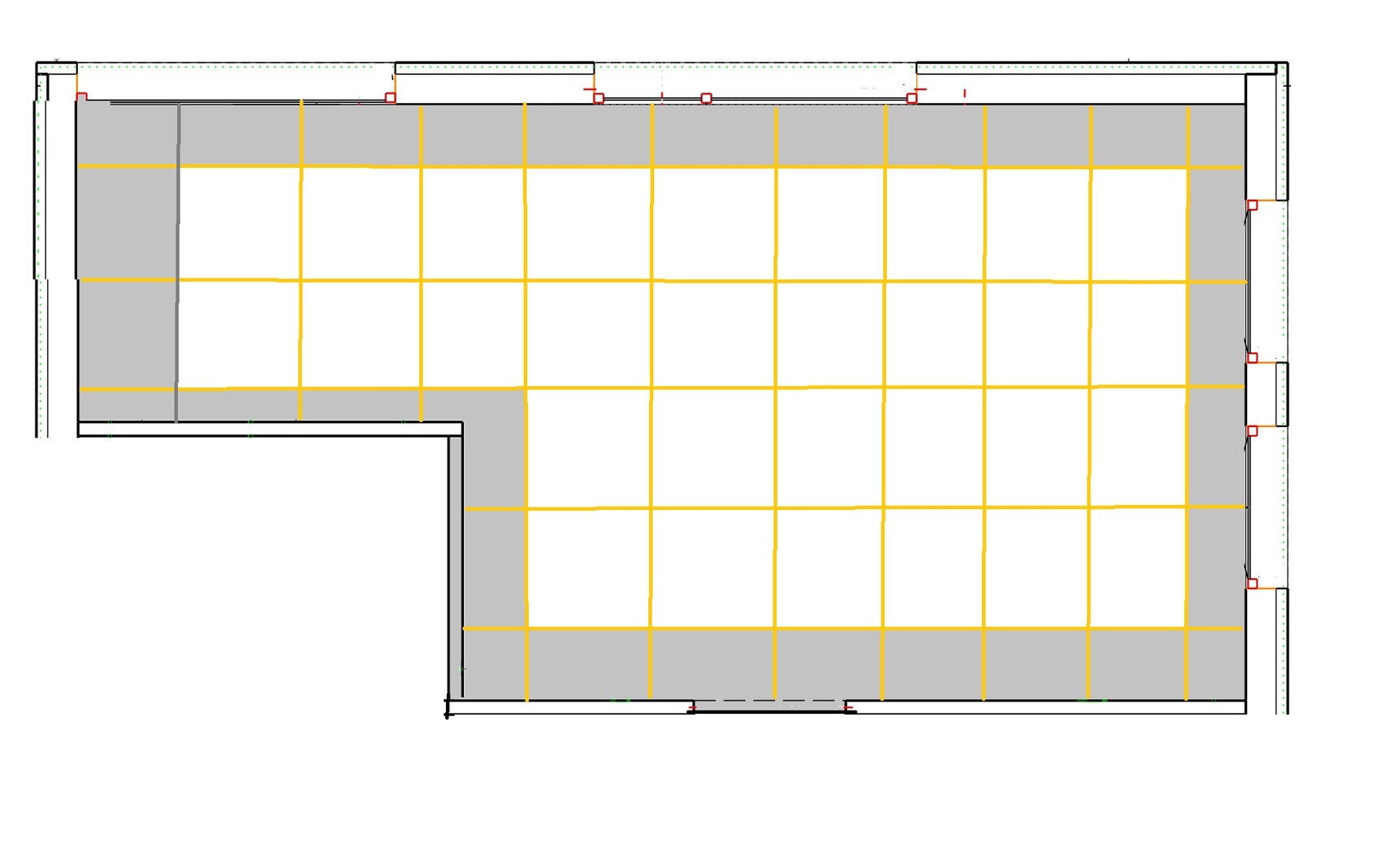
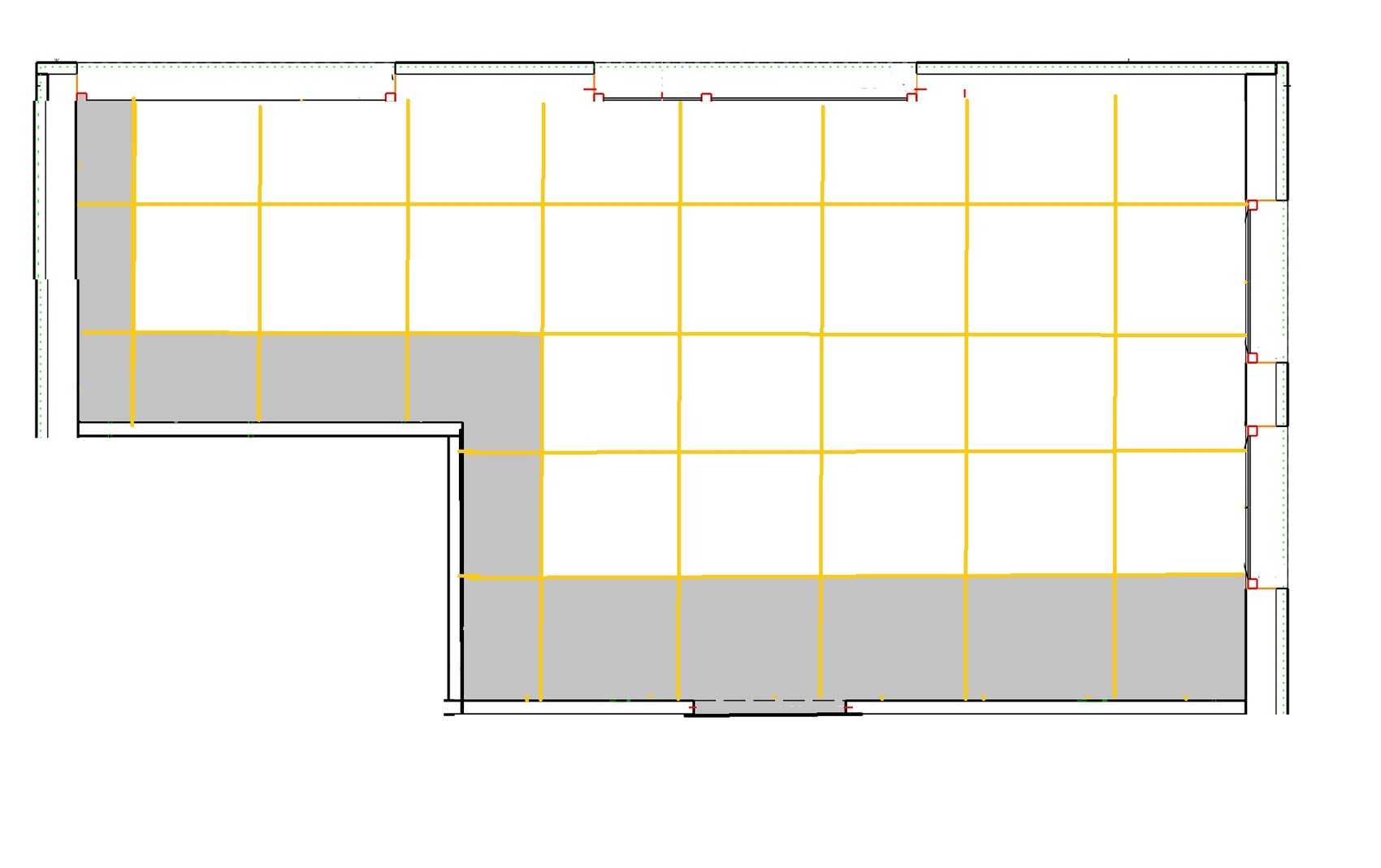
Our tiles are 1000 x 1000 mm (39 x 39 inches) with 2 mm (0.08 inches) grout lines. We plan to install them in a straight joint pattern. Normally, as I understand it, you start from the center of the room and work outwards, with cut pieces at the edges (Option 1). However, a friend advised us to start from one wall instead, so that the cuts only appear along the opposite wall (preferably the wall where shelves, sofas, or tables will be placed), which would be Option 2. His reasoning was that this would make the cuts less noticeable.
I roughly sketched both options, not to scale, with the gray areas representing the cut pieces. The room measures 11 m x 5.6 m (36 x 18 feet).
What are your thoughts? How would you install such large tiles?
L
Leopold8427 Oct 2019 19:51No screed yet, just the installation plan for the prefab house supplier. Otherwise, they would have left it to the local tile installer to decide, but that seemed too uncertain to us because we’re not sure if we can be on site beforehand to discuss how he would do it. That’s why we wanted to provide a rough guideline.
However, it turned out to be difficult in hindsight. Firstly, it’s very challenging to plan it in such a way that the joints line up properly at the transitions (having a joint right in the middle of a transition happens very easily, and with 1m x 1m (3 ft 3 in x 3 ft 3 in) tiles, there isn’t much room for adjustment). Secondly, we are not experts here (keyword: expansion joint, which we hadn’t considered at all until it was mentioned here).
Expansion joints are a good tip though, we will inquire about that during the week.
However, it turned out to be difficult in hindsight. Firstly, it’s very challenging to plan it in such a way that the joints line up properly at the transitions (having a joint right in the middle of a transition happens very easily, and with 1m x 1m (3 ft 3 in x 3 ft 3 in) tiles, there isn’t much room for adjustment). Secondly, we are not experts here (keyword: expansion joint, which we hadn’t considered at all until it was mentioned here).
Expansion joints are a good tip though, we will inquire about that during the week.

I would probably try to place an expansion joint where different usage zones (living, dining, kitchen) meet, and create an offset or change the installation direction along that line.
https://www.instagram.com/11antgmxde/
https://www.linkedin.com/company/bauen-jetzt/
https://www.instagram.com/11antgmxde/
https://www.linkedin.com/company/bauen-jetzt/
We have 120 by 120 cm (47 by 47 inches) tiles and faced the same decision in our hallway. Either place one tile in the center with a 20 cm (8 inch) cut-off on each side, or start with a full tile along the wall where the view from the front door leads through to the living room.
Unfortunately, we have an expansion joint in that area. The tiler then cut a tile at that spot and installed the rest accordingly. In my opinion, this is the least noticeable solution.
A good tiler will usually give you 2-3 options to choose from. At least that’s how ours worked.
Unfortunately, we have an expansion joint in that area. The tiler then cut a tile at that spot and installed the rest accordingly. In my opinion, this is the least noticeable solution.
A good tiler will usually give you 2-3 options to choose from. At least that’s how ours worked.
Similar topics