
ᐅ Thermal bridge caused by metal anchors? (long brick element at window lintel)
Created on: 19 Jul 2015 18:15
L
LeguritHello everyone,
Since the soldier course of the brickwork would not hold at two of our windows, our construction supervisor has now installed long concrete elements with cut-out bricks and then installed them as a long unit. From the outside, it looks very good.
However, I noticed that the elements are additionally secured to the lintel with two anchors besides just resting on it. I will definitely ask again for the PU elements to be properly installed here, without gaps.
But my main question is about these anchors. Could they cause thermal bridging? Although the cross-section is relatively small, from my understanding, there is no insulation between the outside air and the interior wall at this point.
Thanks and best regards
Picture of the location (from top to bottom: brickwork -> PU insulation -> window lintel):
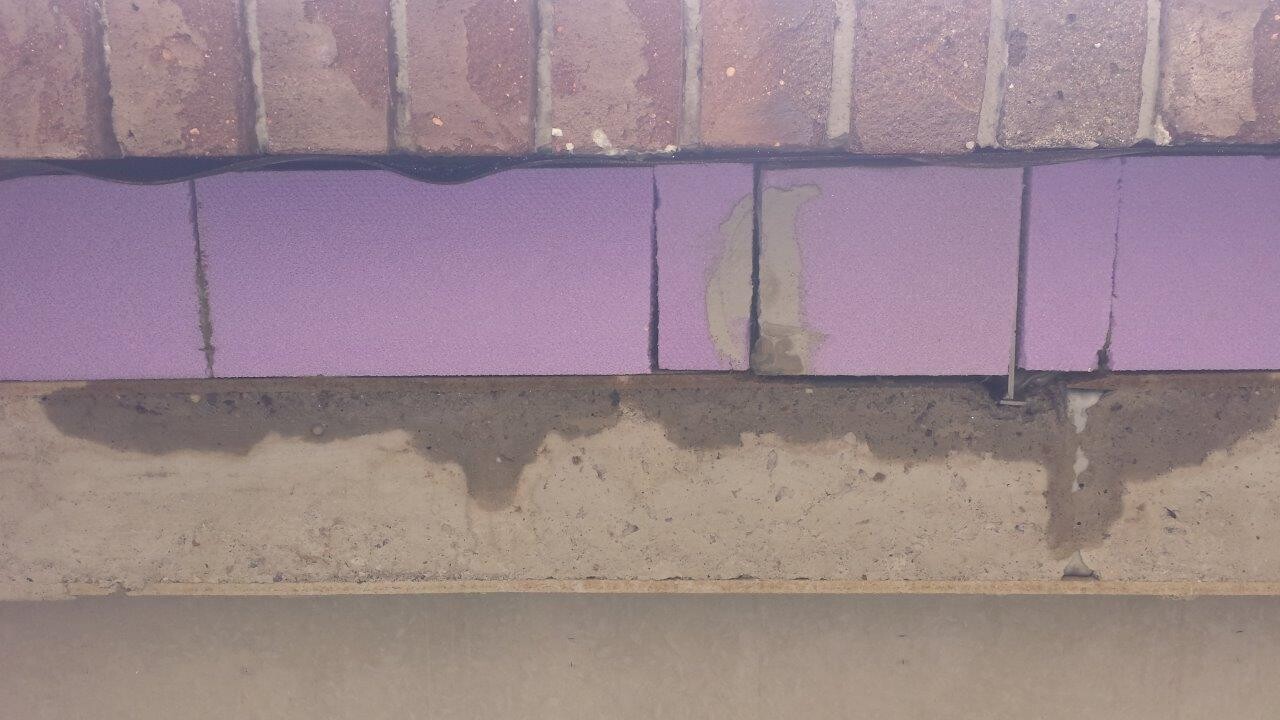
Since the soldier course of the brickwork would not hold at two of our windows, our construction supervisor has now installed long concrete elements with cut-out bricks and then installed them as a long unit. From the outside, it looks very good.
However, I noticed that the elements are additionally secured to the lintel with two anchors besides just resting on it. I will definitely ask again for the PU elements to be properly installed here, without gaps.
But my main question is about these anchors. Could they cause thermal bridging? Although the cross-section is relatively small, from my understanding, there is no insulation between the outside air and the interior wall at this point.
Thanks and best regards
Picture of the location (from top to bottom: brickwork -> PU insulation -> window lintel):
S
Sebastian7919 Jul 2015 21:25Clearly, that’s a thermal bridge – but honestly, you can pretty much ignore it. Do you really think the house is free of thermal bridges otherwise?
I find the patchwork insulation much worse... I hope they did a cleaner job elsewhere.
But how much length does the brick cladding need to cover for them not to manage that without tools?
Here, except for the garage, there’s no steel or anything like that underneath or inside anywhere...
I find the patchwork insulation much worse... I hope they did a cleaner job elsewhere.
But how much length does the brick cladding need to cover for them not to manage that without tools?
Here, except for the garage, there’s no steel or anything like that underneath or inside anywhere...
4 and 3 meters. Yes – the polyurethane insulation will be corrected again – a piece has already fallen out, I think they were working on it in the rain.
The builder said that it is otherwise very difficult with the perimeter layer and that this way is better. Normally I would be suspicious, but this even caused additional costs for him.
I’m just worried that I might get mold problems – I can’t assess thermal bridges at all – I’m only familiar with those "horror pictures" around windows or in room corners.
The builder said that it is otherwise very difficult with the perimeter layer and that this way is better. Normally I would be suspicious, but this even caused additional costs for him.
I’m just worried that I might get mold problems – I can’t assess thermal bridges at all – I’m only familiar with those "horror pictures" around windows or in room corners.
S
Sebastian7919 Jul 2015 22:39The bricks in the rain? No wonder something is falling off.
For me, the largest opening with the segmental arch is 2.5m (8.2 feet) – I originally wanted angle irons underneath and bricks laid straight above, but there was a misunderstanding. Well, by now I actually find it quite nice.
I wouldn’t worry about mold there – the two anchors are far too small to create a large area of heat loss.
For me, the largest opening with the segmental arch is 2.5m (8.2 feet) – I originally wanted angle irons underneath and bricks laid straight above, but there was a misunderstanding. Well, by now I actually find it quite nice.
I wouldn’t worry about mold there – the two anchors are far too small to create a large area of heat loss.
Similar topics