
ᐅ Shower drain installed incorrectly – Should it be accepted or not?
Created on: 8 Mar 2018 20:16
S
sula2210
Hello,
in our new build, the shower drain for a walk-in shower was not installed in the center (see photo). We only noticed this after installation. The construction company admits the mistake and has offered to credit us for the costs. They say that fixing it would be too complicated and expensive. Everything would have to be removed again, and the tiles would be damaged. What do you think?
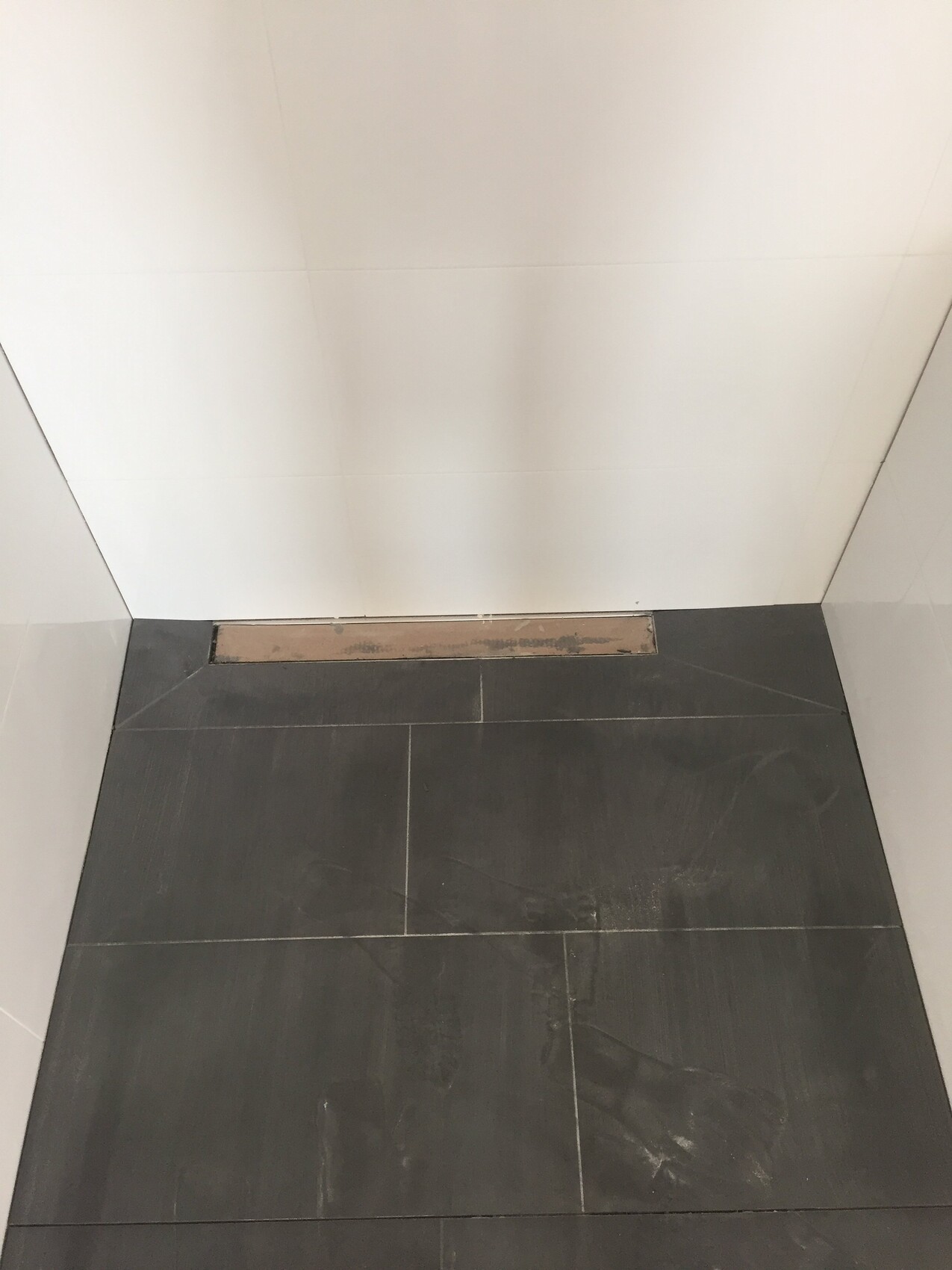
in our new build, the shower drain for a walk-in shower was not installed in the center (see photo). We only noticed this after installation. The construction company admits the mistake and has offered to credit us for the costs. They say that fixing it would be too complicated and expensive. Everything would have to be removed again, and the tiles would be damaged. What do you think?
Without knowing for sure if this would technically work, I just had the idea of powder coating the gutter (or at least the removable part) in a color that matches the tiles, which might make it less noticeable.
I believe that dismantling and modifying it later would be disproportionate, as it would be labor-intensive and possibly risky if you try to fix it like that. More extensive work would probably be necessary.
I believe that dismantling and modifying it later would be disproportionate, as it would be labor-intensive and possibly risky if you try to fix it like that. More extensive work would probably be necessary.

According to DIN EN 1253, a required backwater height of 20 mm (0.8 inches) above the drain grate must be maintained, and the resulting maximum flow rate must be achieved without water draining into adjacent bathroom and living areas.
Here, water also always accumulates at the edge of the wall.
If the joint fails there sooner or later, after 5 to 7 years, you might then have to use your costly €500 bill to dry the damage below or next door…
In our case, the distance to the wall is about 10 cm (4 inches), with a slope towards the drain.
The tricky part is that the screed underneath needs to be repaired if the drain is relocated.
Here, water also always accumulates at the edge of the wall.
If the joint fails there sooner or later, after 5 to 7 years, you might then have to use your costly €500 bill to dry the damage below or next door…
In our case, the distance to the wall is about 10 cm (4 inches), with a slope towards the drain.
The tricky part is that the screed underneath needs to be repaired if the drain is relocated.
If I am not completely mistaken, there are also shower drains that can be installed fully against the wall. These come with corresponding waterproofing all around, so that the sealing does not rely on the joint but is properly sealed behind the tile through the shower drain.
Whether 500€ is sufficient or not is something the original poster has to decide. However, a dismantling and correction will likely only be possible with the cooperation of the installer, provided this type of shower drain installation is allowed. There is the concept of proportionality, and I suspect that legally this might not be considered, even if it may seem unreasonable in some cases.
Whether 500€ is sufficient or not is something the original poster has to decide. However, a dismantling and correction will likely only be possible with the cooperation of the installer, provided this type of shower drain installation is allowed. There is the concept of proportionality, and I suspect that legally this might not be considered, even if it may seem unreasonable in some cases.
K
Knallkörper9 Mar 2018 13:45I’m less concerned about the appearance. I would accept that for a certain amount of money, but definitely not for 500 euros.
From a technical standpoint, though, this is poor workmanship. The water will eventually seep through the tile grout, as Otus already mentioned. So, it needs to be removed. I assume there’s no underfloor heating installed, so the screed situation isn’t too critical. The patched area will be resin-treated and done properly. For a professional tiler, this is not an unreasonable amount of work.
From a technical standpoint, though, this is poor workmanship. The water will eventually seep through the tile grout, as Otus already mentioned. So, it needs to be removed. I assume there’s no underfloor heating installed, so the screed situation isn’t too critical. The patched area will be resin-treated and done properly. For a professional tiler, this is not an unreasonable amount of work.
Similar topics