
ᐅ The hardwood flooring is warping in two places after refinishing.
Created on: 22 Oct 2025 09:38
B
bilo_67
Hello everyone,
I hope you can help me or offer some advice.
About five months ago, we bought an apartment. Around three weeks ago, the parquet flooring in the living room and kitchen started to noticeably warp in certain areas (there is underfloor heating installed).
Before the purchase, the floor was completely sanded and resealed.
The contractor now says that the damage is due to an installation error from about 15 years ago and therefore there is no warranty.
However, this doesn’t sound quite plausible to me, since both affected areas only started warping several months after his work and almost simultaneously. Could this possibly be related to the sanding and resealing?
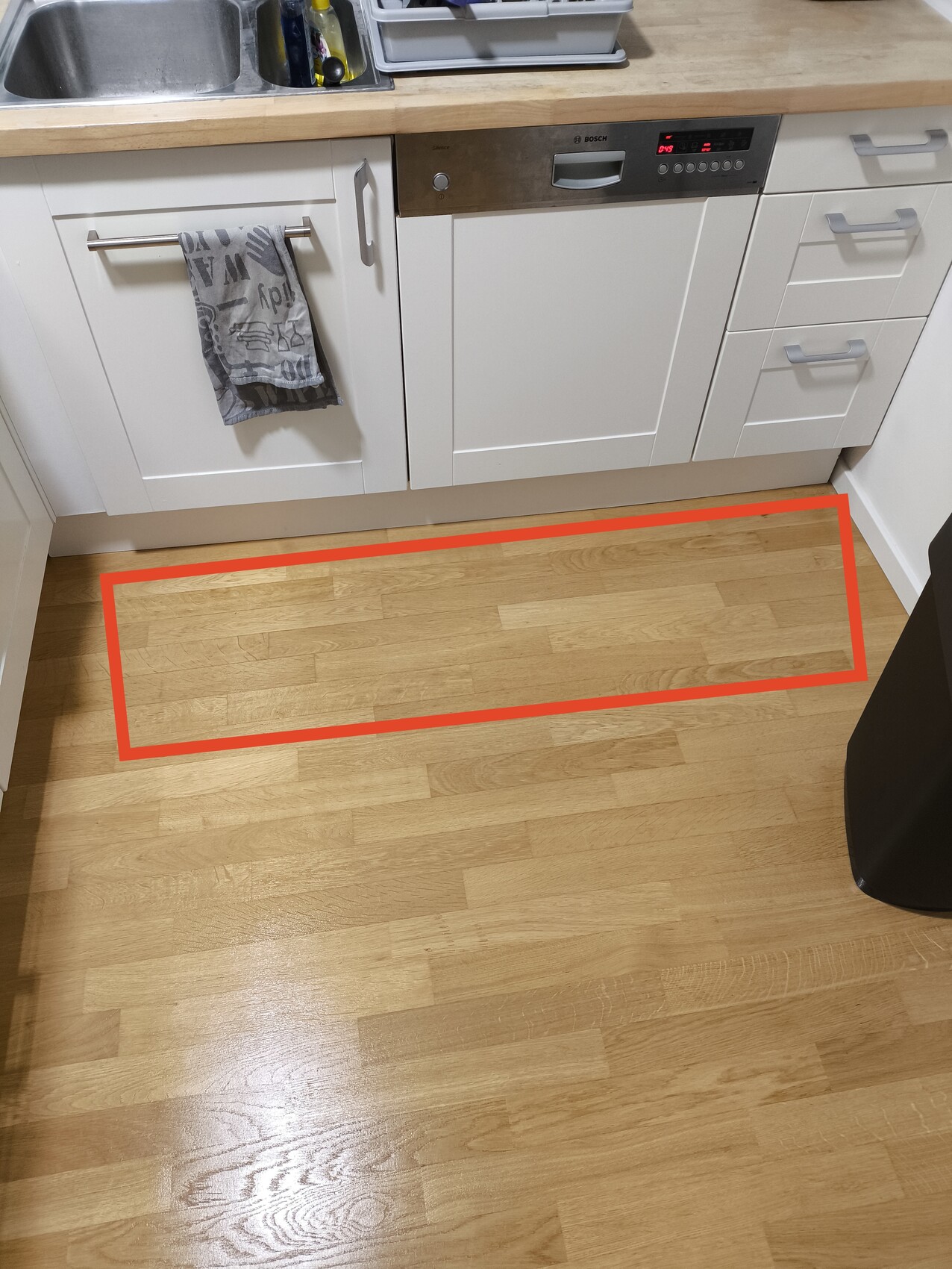
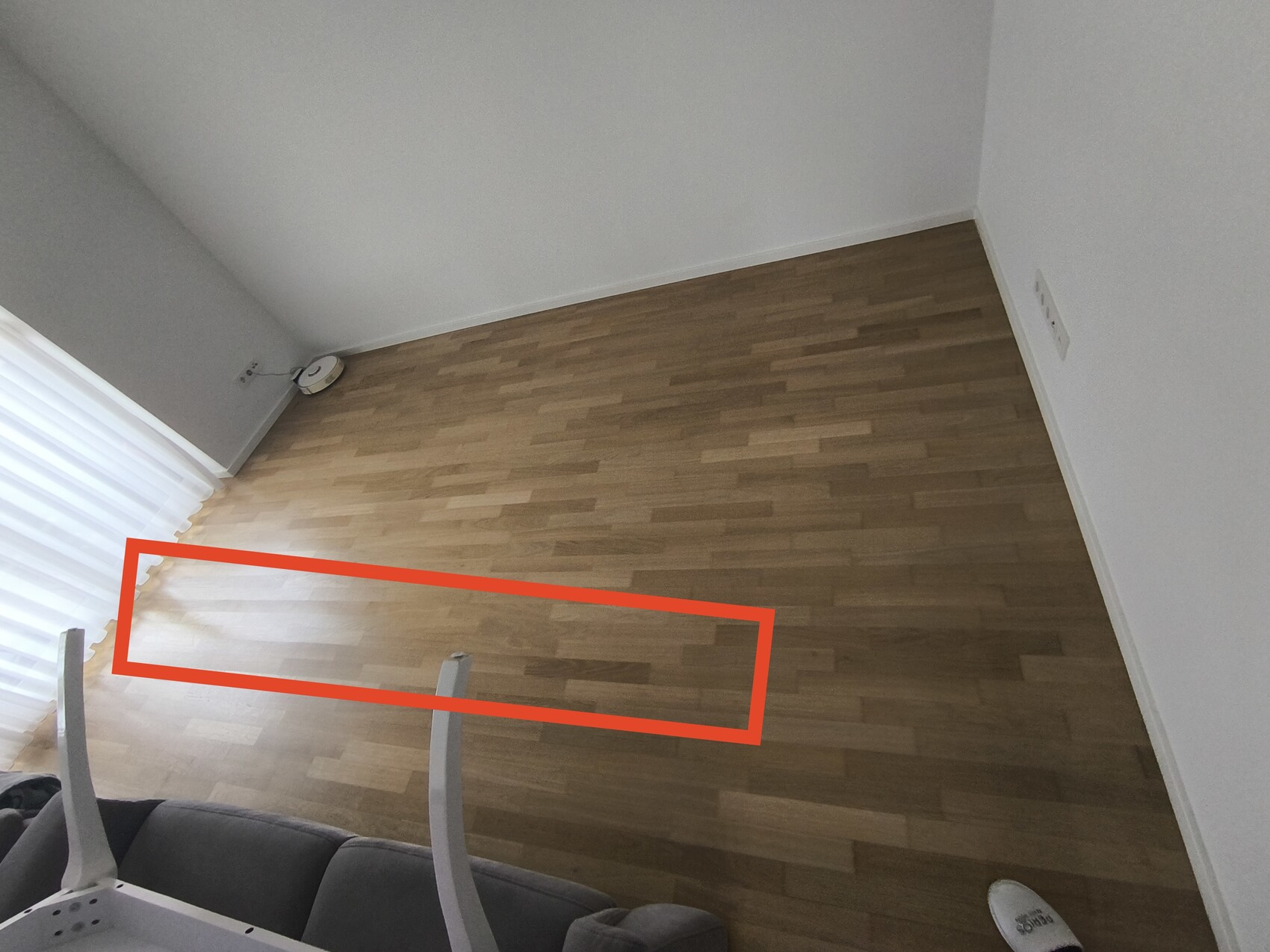
I have uploaded two photos of the affected areas.
The warping is not visible in the images, but I included the marked spots in case they are relevant.
What would you do in my situation?
Are such areas repairable, or is it really necessary – as is often suggested – to replace the entire floor?
Would you take action against the contractor, or could he be right?
Thanks in advance for your assessment!
I hope you can help me or offer some advice.
About five months ago, we bought an apartment. Around three weeks ago, the parquet flooring in the living room and kitchen started to noticeably warp in certain areas (there is underfloor heating installed).
Before the purchase, the floor was completely sanded and resealed.
The contractor now says that the damage is due to an installation error from about 15 years ago and therefore there is no warranty.
However, this doesn’t sound quite plausible to me, since both affected areas only started warping several months after his work and almost simultaneously. Could this possibly be related to the sanding and resealing?
I have uploaded two photos of the affected areas.
The warping is not visible in the images, but I included the marked spots in case they are relevant.
What would you do in my situation?
Are such areas repairable, or is it really necessary – as is often suggested – to replace the entire floor?
Would you take action against the contractor, or could he be right?
Thanks in advance for your assessment!
N
nordanney29 Oct 2025 12:30bilo_67 schrieb:
The facts suggested that it was glued down: underfloor heating installed continuously in all rooms, built in 2009.From that, I interpret it could be either glued or installed as a floating floor. Floating floors always tend to sound a bit hollow. Glued down is similar to tile installation. Otherwise, you can often check at the edge for a floating floor—by gently lifting it or looking under the impact sound insulation (which is almost always laid all the way to the wall).

@ bilo_67:
Please focus on an area of the raised/bowed parquet flooring.
Now run your fingernails across the surface of the parquet and listen to the sound it makes.
It will be a dull tone.
Then try the same on a flat, not bowed area.
If you hear a noticeably brighter sound, then the parquet floor was glued down.
If you hear the same dull tone as in the bowed part, then the entire floor was likely installed loosely, meaning “floating” on the underlay.
This doesn’t cause any issues at the moment, but knowing whether the floor is glued or loosely installed is important for determining the next steps.
------------
Best regards, KlaRa
Please focus on an area of the raised/bowed parquet flooring.
Now run your fingernails across the surface of the parquet and listen to the sound it makes.
It will be a dull tone.
Then try the same on a flat, not bowed area.
If you hear a noticeably brighter sound, then the parquet floor was glued down.
If you hear the same dull tone as in the bowed part, then the entire floor was likely installed loosely, meaning “floating” on the underlay.
This doesn’t cause any issues at the moment, but knowing whether the floor is glued or loosely installed is important for determining the next steps.
------------
Best regards, KlaRa
KlaRa schrieb:
@ bilo_67:
Please focus on an area of the raised or buckled parquet flooring.
Now, run your fingernails over the surface of the parquet and listen to the sound it makes.
It will be a dull tone.
Then try the same in a non-buckled area.
If you hear a noticeably brighter sound, the parquet was glued down.
If the tone is just as dull as in the buckled area, the entire floor was likely installed as a floating floor on an underlay.
This doesn’t cause issues right now, but knowing whether it is glued or floating is important for the next steps.
------------
Regards, KlaRa Then it is probably glued. The sound is completely different.
Well, as it turns out, a weak spot developed beneath the warped parquet boards, between the screed, leveling compound, adhesive layer, and the back of the parquet. What exactly this weak spot was (or is) will become clear after the warped parquet boards are removed.
To put it briefly: there is indeed a way to firmly reattach the warped boards to the subfloor.
BUT!
This is not a job for an amateur; it requires a professional parquet specialist.
The parquet boards will be carefully removed from the surface, and depending on what is revealed, the exposed subfloor will be sanded, primed, and the new parquet boards (hopefully there is some unused material still available in storage) fitted in.
At this point, I must warn against suggestions to inject a synthetic resin-based adhesive under the old boards.
This will almost certainly not work because the exact failure zone beneath the warped parquet boards is currently unknown.
What does this mean?
Let’s assume, for example, the weak spot was the old leveling compound.
Due to continuous mechanical stress, it has pulverized into dust.
Using an injection process would only place the resin onto this dust—what do you expect to actually bond here??
This is just one example (but based on practical experience).
As a general rule throughout the construction industry: Do not attempt repairs without first identifying the cause of the damage.
---------------------
Get a reliable parquet installer and hire them to fix the warping.
Best regards,
KlaRa
To put it briefly: there is indeed a way to firmly reattach the warped boards to the subfloor.
BUT!
This is not a job for an amateur; it requires a professional parquet specialist.
The parquet boards will be carefully removed from the surface, and depending on what is revealed, the exposed subfloor will be sanded, primed, and the new parquet boards (hopefully there is some unused material still available in storage) fitted in.
At this point, I must warn against suggestions to inject a synthetic resin-based adhesive under the old boards.
This will almost certainly not work because the exact failure zone beneath the warped parquet boards is currently unknown.
What does this mean?
Let’s assume, for example, the weak spot was the old leveling compound.
Due to continuous mechanical stress, it has pulverized into dust.
Using an injection process would only place the resin onto this dust—what do you expect to actually bond here??
This is just one example (but based on practical experience).
As a general rule throughout the construction industry: Do not attempt repairs without first identifying the cause of the damage.
---------------------
Get a reliable parquet installer and hire them to fix the warping.
Best regards,
KlaRa
 ZWEIK GmbH20 Nov 2025 15:39
The description clearly matches the failure pattern lamella delamination in a re-coated parquet floor structure. If the floor was surface-treated afterwards, the old adhesive bond in the substrate layer may give way. The lamella then detaches slightly from the substrate – both visible and audible.
Likely Causes
Recommended Next Steps
Likely Causes
- Coating applied after installation → additional stress in the system
- Aged adhesive bond → loses strength, especially in older parquet flooring
- Moisture/climate fluctuations → material movement causes adhesive to fail
- Point mechanical load → can further trigger the weak spot
Recommended Next Steps
- Initiate on-site inspection: visual check plus tap test for verification.
- Assess lamella condition: localized or widespread?
- Define repair approach:
- localized injection gluing (if possible)
- for more extensive delamination segment replacement of the affected plank
Objection: Such large bulges in the parquet flooring, as shown in the photos, cannot be solely attributed to the detachment of the approximately 3mm (0.12 inch) thick wood wear layer! Here, the entire panel has separated convexly from the original adhesive bed. Attempting to speculate on "probable causes" and offer recommendations is—please forgive my choice of words—nonsense.
“bilo65” describes in the initial question that the parquet surface was renovated, meaning it was also sanded down again. In old multi-layer parquet (not solid hardwood flooring), the glue bond between the top layer and the substrate often becomes brittle. When the sanding mechanically affects the surface, the top layer can partly or fully detach. This is always a significant risk for the flooring installer.
Therefore, if the installer is wise, they should draft a warranty exclusion before starting the work, warning about the possible damage event. If the homeowner is informed of the risk and can make an informed decision as a layperson, ultimately the responsibility lies with them.
To reiterate: even the best flooring installer cannot foresee this risk in advance, but they know it exists and what may happen. The warranty exclusion is thus a legitimate way for the installer to protect their business from unfounded claims.
--------------
In the hope of a fair decision between the parties: KlaRa
“bilo65” describes in the initial question that the parquet surface was renovated, meaning it was also sanded down again. In old multi-layer parquet (not solid hardwood flooring), the glue bond between the top layer and the substrate often becomes brittle. When the sanding mechanically affects the surface, the top layer can partly or fully detach. This is always a significant risk for the flooring installer.
Therefore, if the installer is wise, they should draft a warranty exclusion before starting the work, warning about the possible damage event. If the homeowner is informed of the risk and can make an informed decision as a layperson, ultimately the responsibility lies with them.
To reiterate: even the best flooring installer cannot foresee this risk in advance, but they know it exists and what may happen. The warranty exclusion is thus a legitimate way for the installer to protect their business from unfounded claims.
--------------
In the hope of a fair decision between the parties: KlaRa
Similar topics