
ᐅ Wood Flooring Has Black Stains from Mopping Water – What Can Be Done?
Created on: 30 Jul 2024 19:21
H
Hafenguy
Hello forum community,
Yesterday, my wife cleaned the tiles in the hallway. The tiles are separated from the living room parquet flooring by a strip. Some water with cleaning detergent must have gotten onto the parquet. It looks like this now.
Is there any way to fix this?
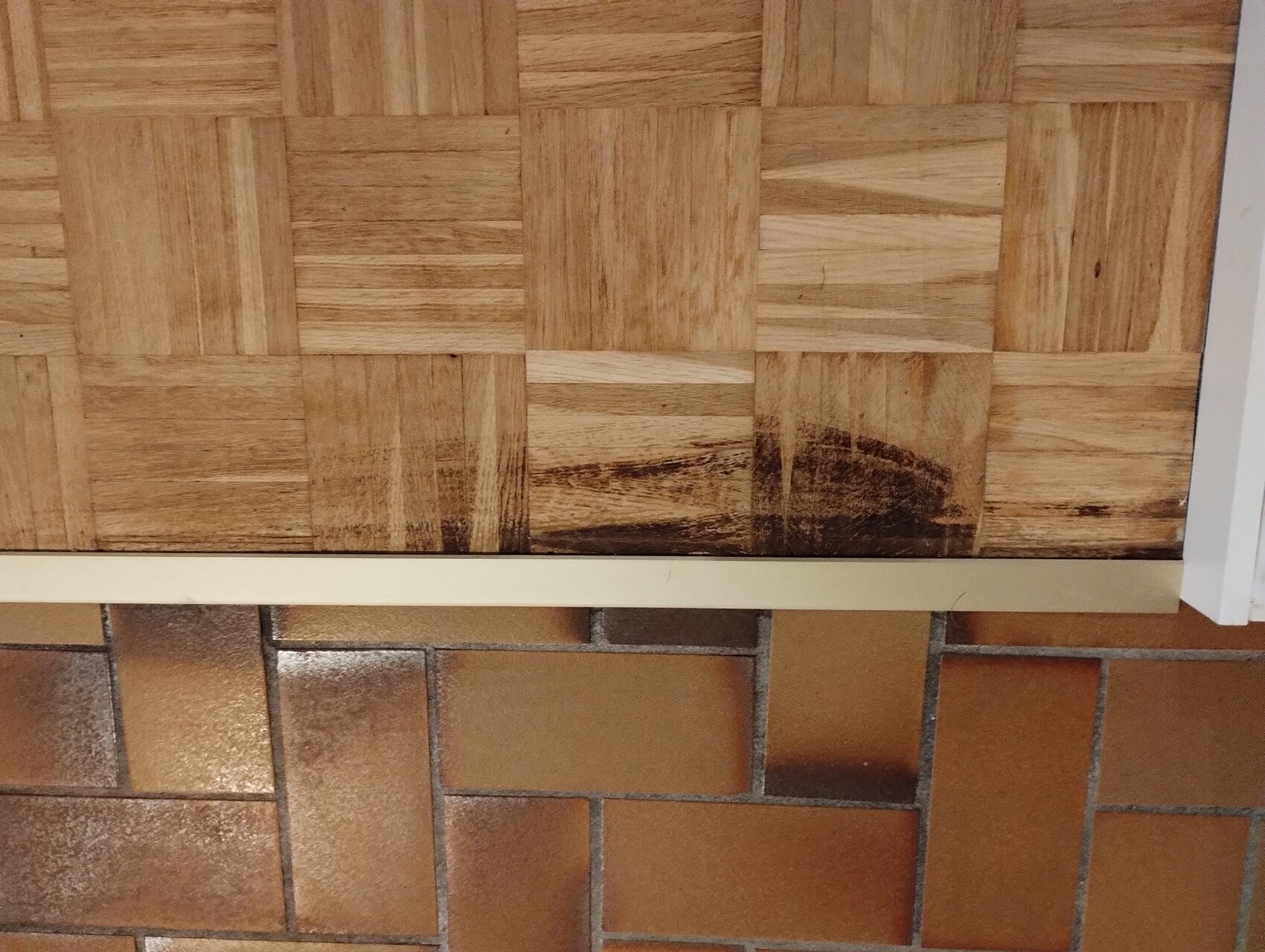
Yesterday, my wife cleaned the tiles in the hallway. The tiles are separated from the living room parquet flooring by a strip. Some water with cleaning detergent must have gotten onto the parquet. It looks like this now.
Is there any way to fix this?
B
Buchsbaum06631 Jul 2024 06:28Before proceeding with any further treatment, I would definitely recommend hiring an independent damage assessor to prepare a damage report.
S
Schorsch_baut31 Jul 2024 08:27Buchsbaum066 schrieb:
Before proceeding with any further treatment, I would definitely recommend hiring an independent damage assessor to produce a damage report. Why is that? To sue the wife? The soda has made the cleaning solution more alkaline, and the oak was essentially liquid-smoked.
M
MachsSelbst31 Jul 2024 09:58Schorsch_baut schrieb:
Why is that? To sue the wife? The soda made the cleaning solution more alkaline, and the oak was practically liquid-smoked. He mocks my advice to have a professional fix it... you can take it however you want, but I wouldn’t risk sanding it yourself if you’ve never done it before... you can definitely make it a lot worse.
Bertram100 schrieb:
There are cleaning products that remove water stains from wood. The black marks come from the oxidation of metal traces in the wood. They will disappear again. Afterwards, oil the spot again if the parquet is oiled.We also have two small black spots, probably caused by a rusty drying rack. But I haven't found any product yet that removes such oxidation stains. Do you have any tips? ThanksB
Bertram10025 Aug 2024 21:05I use the "Woca Fleckenentferner-Spray" or "Wood Stain Remover." It’s the same product—sometimes it’s only labeled in English, sometimes in German. The stuff costs about 15-20 euros for a small spray bottle. But it really works well.
Alternatively, you can look up “home remedies for oxidation stains on wood.” There are some options there as well. It didn’t work very well for me back then, though. I don’t even remember exactly what it was.
Good luck!
Alternatively, you can look up “home remedies for oxidation stains on wood.” There are some options there as well. It didn’t work very well for me back then, though. I don’t even remember exactly what it was.
Good luck!

First of all, regarding the "advice" to have the parquet inspected by an expert:
Experts do not work and live on "air and love." This is especially true in old age for point number 2 (just kidding).
Seriously though: the costs for an inspection will far outweigh the benefits. Therefore, drop the idea of hiring an expert. The hourly rate currently ranges between €90 (about $97) and €125 (about $135) per hour, plus travel expenses, of course.
A more affordable and effective solution is to buy fine sandpaper at a home improvement store and carefully sand the surface of the affected parquet blocks.
This will almost certainly remove the unwanted appearance, even if the top wood fibers have been “smoked” by alkali exposure.
You should also pick up a can of clear lacquer at the store.
Cover the unaffected parquet with paper or cardboard to protect it, then clean the dust-free surface after sanding with a damp sponge. Once the area is dry, lightly sand the raised wood fibers caused by moisture contact again.
Then apply a very thin spray coat of lacquer onto the 2 or 3 parquet blocks several times in short bursts.
It is better to do multiple light coats than to apply too much at once.
Remember: MORE is not always better and will likely harm the result.
--------------------------
Good luck: KlaRa
Experts do not work and live on "air and love." This is especially true in old age for point number 2 (just kidding).
Seriously though: the costs for an inspection will far outweigh the benefits. Therefore, drop the idea of hiring an expert. The hourly rate currently ranges between €90 (about $97) and €125 (about $135) per hour, plus travel expenses, of course.
A more affordable and effective solution is to buy fine sandpaper at a home improvement store and carefully sand the surface of the affected parquet blocks.
This will almost certainly remove the unwanted appearance, even if the top wood fibers have been “smoked” by alkali exposure.
You should also pick up a can of clear lacquer at the store.
Cover the unaffected parquet with paper or cardboard to protect it, then clean the dust-free surface after sanding with a damp sponge. Once the area is dry, lightly sand the raised wood fibers caused by moisture contact again.
Then apply a very thin spray coat of lacquer onto the 2 or 3 parquet blocks several times in short bursts.
It is better to do multiple light coats than to apply too much at once.
Remember: MORE is not always better and will likely harm the result.
--------------------------
Good luck: KlaRa
Similar topics