
D
DragonyxXL26 May 2016 13:32I took a look at the KfW statistics to find out how common energy-efficient building is.
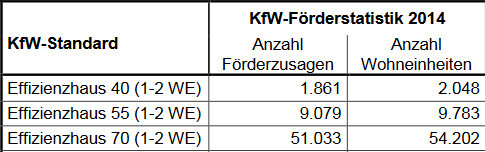
In discussions with various home builders, architects, structural engineers, and energy consultants, I repeatedly heard that KfW55 represents a huge challenge, is rarely built, and that people are unsure how to precisely meet the requirements.
Since the Passive House energy standard has existed for many years (15-20?) and according to KfW several thousand houses are built to this standard annually, I don’t understand why this remains such an "unknown" topic for many professionals in the industry.
Why is that?
In discussions with various home builders, architects, structural engineers, and energy consultants, I repeatedly heard that KfW55 represents a huge challenge, is rarely built, and that people are unsure how to precisely meet the requirements.
Since the Passive House energy standard has existed for many years (15-20?) and according to KfW several thousand houses are built to this standard annually, I don’t understand why this remains such an "unknown" topic for many professionals in the industry.
Why is that?
B
Bauexperte26 May 2016 14:06Attention – Personal Opinion
Many providers still have not realized that the tightened energy saving regulation roughly corresponds to the former KfW 70 standard. This makes the step towards KfW 55 – depending on the design and plot location – manageable. However, there are also quite a few providers who have only just managed to meet KfW 70 on paper and are now struggling even more.
Go to a reputable provider and you will find that KfW 55, 40, 40+ or Passive House (PH) standards are no problem for them. Whether it is cost-effective, of course, is another matter 😉
Bauexperte
Many providers still have not realized that the tightened energy saving regulation roughly corresponds to the former KfW 70 standard. This makes the step towards KfW 55 – depending on the design and plot location – manageable. However, there are also quite a few providers who have only just managed to meet KfW 70 on paper and are now struggling even more.
Go to a reputable provider and you will find that KfW 55, 40, 40+ or Passive House (PH) standards are no problem for them. Whether it is cost-effective, of course, is another matter 😉
Bauexperte


Now that KfW 70 is almost the standard anyway, KfW 55 is not far behind. Due to the attractive conditions of the KfW Program 153 with a loan amount of 100,000 euros and a 20-year fixed interest rate, it has become even more appealing. Currently, for us, the additional costs are no longer that high (a central ventilation system was planned anyway), and with the lower interest rates, KfW 55 actually turns out to be cheaper in the end.
None of the companies we have spoken with so far had any problem with it. They were able to give us a rough estimate of what is needed to make KfW 55 possible, if it was not already almost entirely designed for it.
None of the companies we have spoken with so far had any problem with it. They were able to give us a rough estimate of what is needed to make KfW 55 possible, if it was not already almost entirely designed for it.
D
DragonyxXL27 May 2016 09:16As mentioned, I have had completely different experiences with various unnamed construction companies and other parties in Berlin/Brandenburg. Perhaps it is not worth the effort for these companies to deal with this if they only build 20-30 houses per year anyway.
Similar topics