
ᐅ Cantilever staircase is unstable; the stair builder is not a true specialist.
Created on: 30 Jan 2025 16:37
F
Fenix34
Hello dear forum members,
I am completely desperate. We are currently building a house. I have wanted a cantilever staircase for years. Unfortunately, the companies specializing in cantilever staircases were outside our budget. That’s why I placed an ad on eBay Classifieds, and someone responded claiming to be a staircase builder. His price was “only” half of what the specialists charge, which is still quite a lot of money. In the end, he tried three times to attach the steps to the concrete wall. On the first attempt, the steps did not hold. On the second attempt, he used different anchors. On the third attempt, he used adhesive. The steps held for about three weeks with the adhesive. The staircase was never used, but just now we saw that one step slipped out and is no longer properly fixed.
After the first failed attempt, I became suspicious and contacted the Chamber of Crafts. Although he is registered there, he is not registered as a staircase builder; he is only allowed to manufacture wire frames.
Of course, we made an initial down payment. After the third attempt, we also paid the remaining amount.
I no longer trust him. Should I involve a lawyer and demand my money back, or should I give him another chance? I am worried that someone might get hurt if the staircase is not properly designed and secured.
I am completely desperate. We are currently building a house. I have wanted a cantilever staircase for years. Unfortunately, the companies specializing in cantilever staircases were outside our budget. That’s why I placed an ad on eBay Classifieds, and someone responded claiming to be a staircase builder. His price was “only” half of what the specialists charge, which is still quite a lot of money. In the end, he tried three times to attach the steps to the concrete wall. On the first attempt, the steps did not hold. On the second attempt, he used different anchors. On the third attempt, he used adhesive. The steps held for about three weeks with the adhesive. The staircase was never used, but just now we saw that one step slipped out and is no longer properly fixed.
After the first failed attempt, I became suspicious and contacted the Chamber of Crafts. Although he is registered there, he is not registered as a staircase builder; he is only allowed to manufacture wire frames.
Of course, we made an initial down payment. After the third attempt, we also paid the remaining amount.
I no longer trust him. Should I involve a lawyer and demand my money back, or should I give him another chance? I am worried that someone might get hurt if the staircase is not properly designed and secured.
hanghaus2023 schrieb:
You do have rights (for example, the building code regulates such cases). In an emergency, you just have to enforce them through legal action. I’ve already told you how to do that.hanghaus2023 schrieb:
In my opinion, this gives you the right to withdraw from the contract and claim damages.hanghaus2023 schrieb:
If you have the time, definitely. I suspect the contractor won’t want to pay voluntarily, or worse, won’t be able to.That sounds simple. But it probably won’t be that easy.I personally got involved in a botched project (not a cheap purchase). The proceedings have been going on for 10 months, the responsible party has nothing and will never have anything. Lawyers are arguing sluggishly. I keep pushing myself to make timely decisions, the opposing party repeatedly misses deadlines or doesn’t respond at all. Nothing but costs so far. Now we’re demanding our money back (for which you could buy at least 10 staircases) and I bet we’ll have to take legal action.
The building code also has some provisions for cases like this. For example, I remember that many years ago there was a warning against so-called fake shops that offer goods below average value. That applies here too. Someone offering contracts on classified ads probably won’t attract customers the other way around. You should use common sense. Price is a reflection of quality.
How much money is involved here?
You also have to admit that if you were naive, you can’t always demand your rights—you may have to pay a learning fee. Ultimately, it’s a shame about the ruined wall!

I have little faith that an incompetent tradesperson would willingly admit their faults. So yes, involving a lawyer is a good idea. But don’t wait for a refund; as soon as the lawyer says "from now on," have the staircase contract reassigned immediately. Climbing around the house on ladders or the construction stairs for a potentially prolonged legal process? No thanks. The range of possibilities is very limited: the tradesperson being ordered to pay the additional costs for a replacement job done by a professional? Never going to happen. I see the original poster either having to invest significantly more money or settling for a simple staircase. Like the fisherman's wife Ilsebill. Sometimes even a shot taken backfires.
https://www.instagram.com/11antgmxde/
https://www.linkedin.com/company/bauen-jetzt/
https://www.instagram.com/11antgmxde/
https://www.linkedin.com/company/bauen-jetzt/
Hello everyone,
the contractor initially fixed the steps with concrete anchors, but these more or less immediately pulled out of the wall under load. On the second attempt, the contractor removed the concrete anchors and glued threaded rods in place using an adhesive from Hilti. Now, one of the threaded rods is pulling out of the wall again, see photo. We have a 20cm (8 inch) reinforced concrete wall, and the current threaded rods are 15cm (6 inch) long.
In my opinion (I’m an amateur, so please don’t be harsh), the bearing surface is too small, resulting in excessive point load. What do you think? Should this have held if done properly?
Currently, we are considering increasing the bearing surface by welding a metal plate to the existing steps and gluing additional threaded rods in place, see example photo.
Thanks and best regards
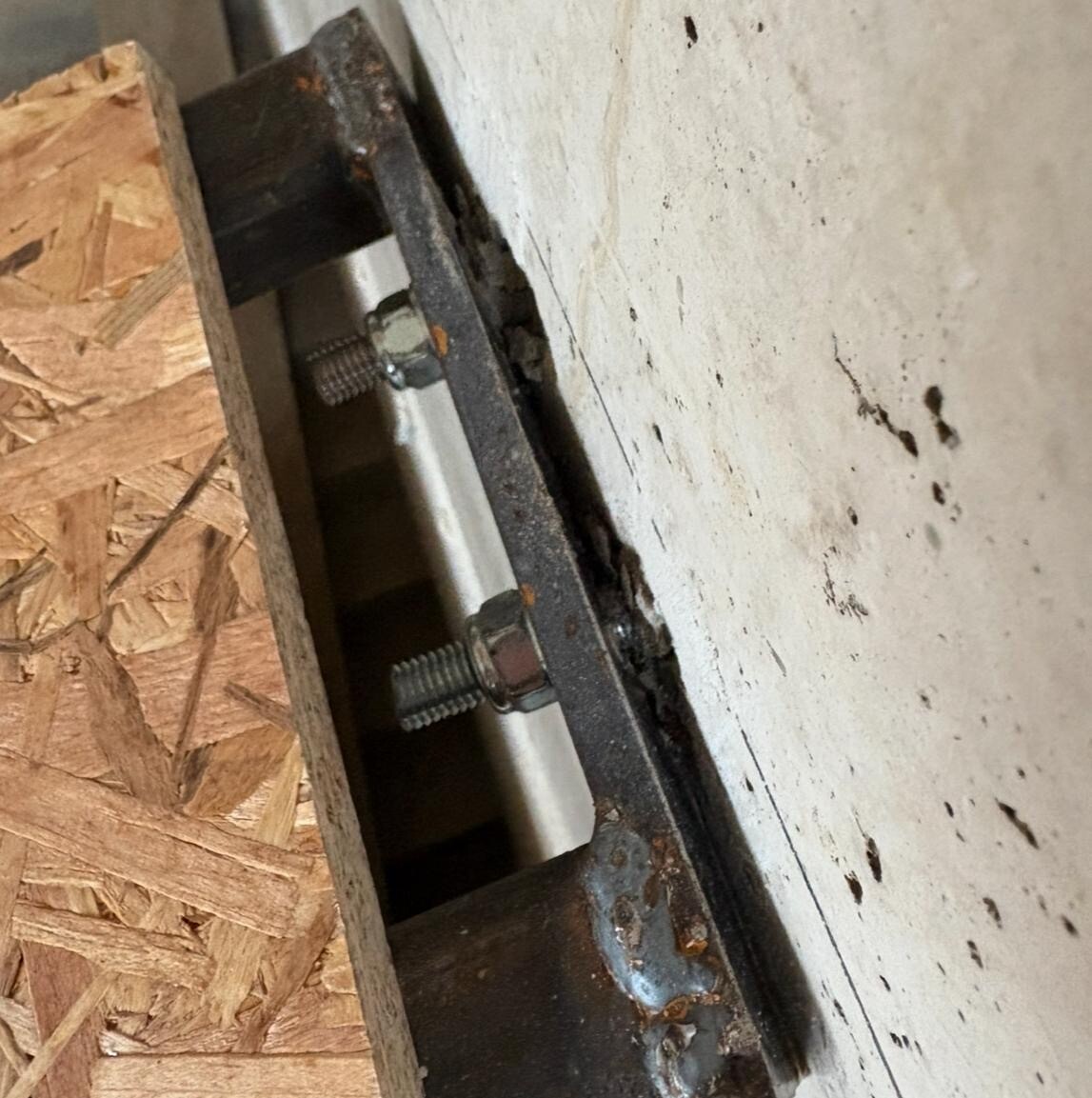
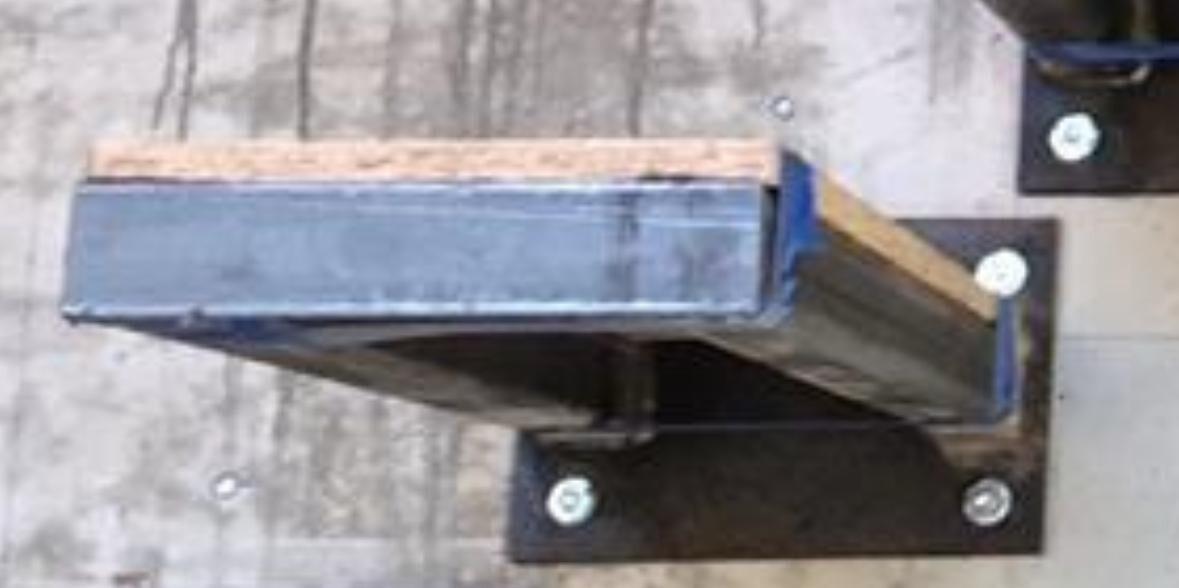
the contractor initially fixed the steps with concrete anchors, but these more or less immediately pulled out of the wall under load. On the second attempt, the contractor removed the concrete anchors and glued threaded rods in place using an adhesive from Hilti. Now, one of the threaded rods is pulling out of the wall again, see photo. We have a 20cm (8 inch) reinforced concrete wall, and the current threaded rods are 15cm (6 inch) long.
In my opinion (I’m an amateur, so please don’t be harsh), the bearing surface is too small, resulting in excessive point load. What do you think? Should this have held if done properly?
Currently, we are considering increasing the bearing surface by welding a metal plate to the existing steps and gluing additional threaded rods in place, see example photo.
Thanks and best regards
N
nordanney2 Feb 2025 09:38Fenix34 schrieb:
What do you think about this?Not only are you amateurs, but the contractor is as well. Nothing should pull out of clean (!) drilled holes.W
wiltshire2 Feb 2025 11:05Fenix34 schrieb:
I no longer trust him. Should I involve a lawyer and demand my money back, or give him another chance? I’m afraid something might break if the staircase wasn’t properly designed and fixed. Only involve a lawyer if you have no knowledge of contracts at all. I would try to resolve this yourself first – start by demanding a refund and compensation for any damages incurred.
hanse987 schrieb:
Pictures of the whole thing would be interesting. Usually, everything holds well on a concrete wall. This type of staircase creates an unusual leverage on the supports, combined with dynamic loads that must be sustained and a high risk of injury if it fails. You’re right in what you say, but I wouldn’t let amateurs handle this.
hanghaus2023 schrieb:
I can’t imagine the original poster will find someone willing to fix this botched work. The proper solution is to award the job to a professional company and then claim the additional costs as damages. I agree. Claiming damages is more like “bargaining leverage.” It’s unlikely you will actually recover those costs.
ypg schrieb:
You have to admit that if you were naive, you might not be able to enforce your rights but instead have to learn a costly lesson. Ultimately, it’s a pity about the ruined wall! That might be the outcome – I’m not convinced that far yet.
11ant schrieb:
I don’t believe an incompetent tradesperson would admit fault voluntarily. So yes, lawyer recommended. See above: a lawyer costs time and money and only increases the chances of a good outcome if you have no knowledge of contract law and negotiation yourself.
Fenix34 schrieb:
Right now, we are considering enlarging the bearing surface by welding a metal plate to the existing steps, with additional threaded rods bonded on, see example photo. To me, that sounds like you are about to make a second mistake on top of the first one.
H
hanghaus20232 Feb 2025 11:42Is this how you wanted the steps? But no architect planned it that way. How is the handrail supposed to be installed there?
Similar topics