
ᐅ Swedish Prefabricated Panel House / AB-Elementhus Renovation vs Demolition
Created on: 12 Jun 2019 17:51
H
HarvSpec
Hello everyone,
We have purchased a Swedish prefabricated house from the company AB-Elementhus. It features a solid masonry ground floor, on top of which the prefabricated house is built.
Initially, the plan was to completely demolish the house and replace it with a new cross-laminated timber (CLT) structure of the same size.
While studying the building documents and permits for the AB-Elementhus house, I was positively surprised by the construction.
The wall assembly is (inside to outside) 2cm (0.8 inches) cross-laminated timber, 16cm (6 inches) compressed wood chips, 2cm (0.8 inches) cross-laminated timber, and 0.2mm (0.008 inches) stove-lacquered aluminum.
The planned layout of the new building could be realized within the existing structure, so I am now considering renovating and upgrading instead of demolishing (insulation, interior, windows, etc.).
Does anyone have experience with these houses?
Best regards,
Harv
We have purchased a Swedish prefabricated house from the company AB-Elementhus. It features a solid masonry ground floor, on top of which the prefabricated house is built.
Initially, the plan was to completely demolish the house and replace it with a new cross-laminated timber (CLT) structure of the same size.
While studying the building documents and permits for the AB-Elementhus house, I was positively surprised by the construction.
The wall assembly is (inside to outside) 2cm (0.8 inches) cross-laminated timber, 16cm (6 inches) compressed wood chips, 2cm (0.8 inches) cross-laminated timber, and 0.2mm (0.008 inches) stove-lacquered aluminum.
The planned layout of the new building could be realized within the existing structure, so I am now considering renovating and upgrading instead of demolishing (insulation, interior, windows, etc.).
Does anyone have experience with these houses?
Best regards,
Harv
Hello everyone, it’s great to see so many people still involved with these houses. We have an AB elementhus mockfjärd and I have a question about the built-in wardrobes. We have the large wall closet in the bedroom—has anyone ever taken it apart?
Thank you very much and have a nice holiday,
Julian
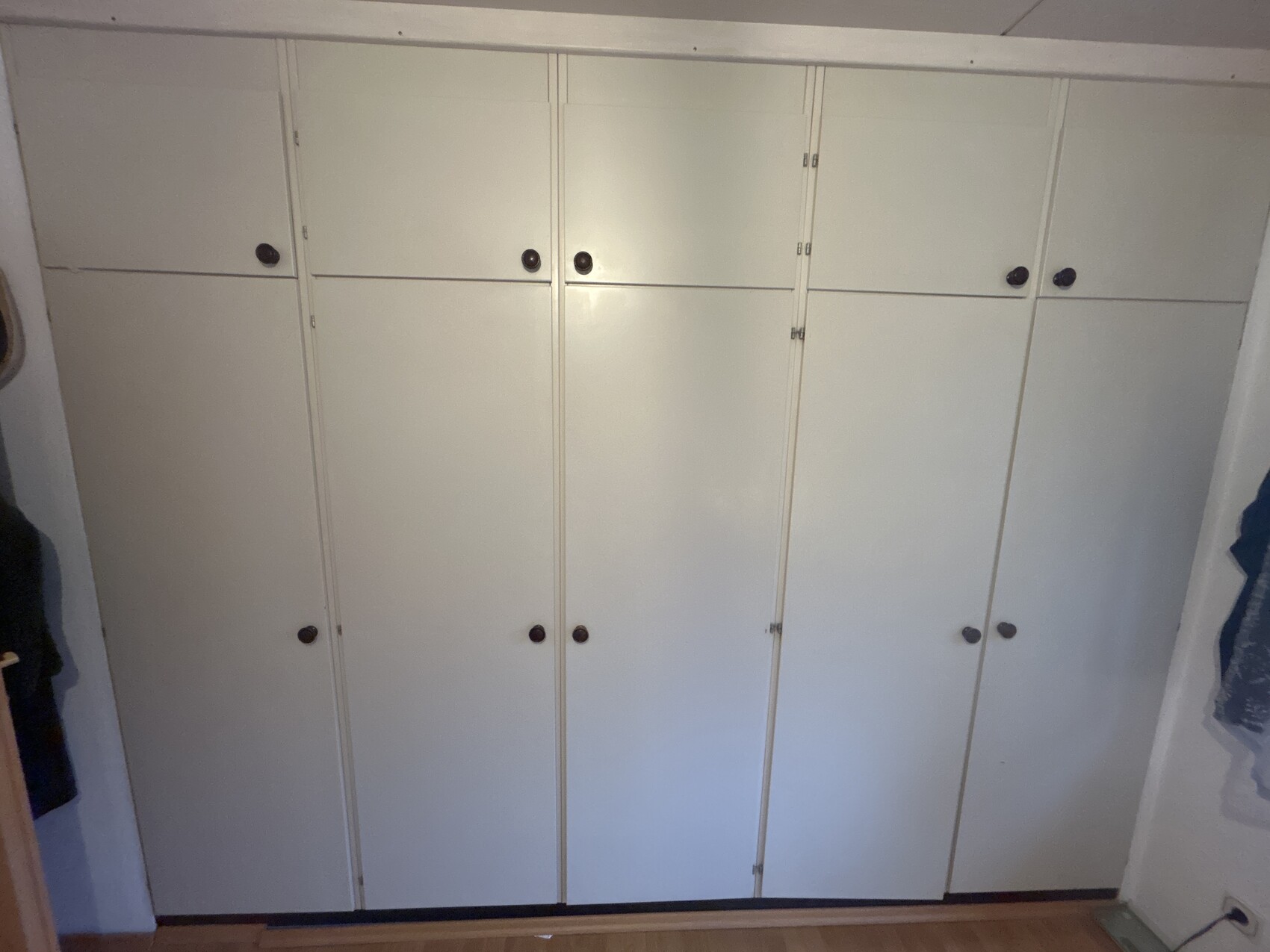
Thank you very much and have a nice holiday,
Julian
S
Skyhawk17213 Oct 2024 14:36Hello everyone,
we are also interested in an existing house built by Schwedische Elementhäuser GmbH and are wondering whether to demolish or renovate.
What is currently worrying me is a very unpleasant odor. Has anyone else had experience with this? The comment about insulation having fallen down doesn’t fully convince me, as it doesn’t smell like moisture and there are no signs of moisture damage on the upper floor either. I know a similar smell from an older Bien-Zenker prefabricated house, where I suspected chloranisoles.
I appreciate any hints.
Best regards
we are also interested in an existing house built by Schwedische Elementhäuser GmbH and are wondering whether to demolish or renovate.
What is currently worrying me is a very unpleasant odor. Has anyone else had experience with this? The comment about insulation having fallen down doesn’t fully convince me, as it doesn’t smell like moisture and there are no signs of moisture damage on the upper floor either. I know a similar smell from an older Bien-Zenker prefabricated house, where I suspected chloranisoles.
I appreciate any hints.
Best regards
Do you know the year of construction?
Otherwise: Take wood samples (you don’t need much), ideally from different spots, and have them analyzed. The costs are usually in the low triple-digit range, which is reasonable given the investment in a house.
A house from the 1960s, I think, always develops a certain characteristic odor over the years. That’s my impression, regardless of whether it’s wood or masonry.
Otherwise: Take wood samples (you don’t need much), ideally from different spots, and have them analyzed. The costs are usually in the low triple-digit range, which is reasonable given the investment in a house.
A house from the 1960s, I think, always develops a certain characteristic odor over the years. That’s my impression, regardless of whether it’s wood or masonry.
S
Skyhawk17215 Oct 2024 09:12HarvSpec schrieb:
Do you know the year of construction?
Otherwise: take wood samples (you don’t need much), ideally from different spots, and have them analyzed. Costs are in the low three-digit range. Justifiable when investing in a house.
I think a house from the 1960s always develops a certain characteristic smell over the years. That’s my impression regardless of whether it’s wood or stone. Year of construction: 1972/1973.
If we get the contract, I might take samples. But: what good is knowing limit values if the smell bothers me? It is quite strong and settles into clothing and all belongings. I would have preferred a renovation, but I believe it’s unrealistic to remove it. Hence my question about experiences. Unfortunately, I am now quite sure it can’t be eliminated.
A natural wood smell is rather pleasant, for example, we currently also have wooden floors. I also recall a much older listed apartment with wooden floors that had a very pleasant natural scent.
In our case, the smell disappeared once everything was removed outside:
https://www.hausbau-forum.de/threads/schwedisches-elementhaus-ab-elementhus-umbau-vs-abriss.31351/post-343899
I believe that from the 1970s onwards, they used a different wall construction and no longer used the spruce plywood boards, but I'm not entirely sure about that.
https://www.hausbau-forum.de/threads/schwedisches-elementhaus-ab-elementhus-umbau-vs-abriss.31351/post-343899
I believe that from the 1970s onwards, they used a different wall construction and no longer used the spruce plywood boards, but I'm not entirely sure about that.