
Hello dear forum,
We recently managed to secure a building plot and are now slowly but surely moving into the detailed planning phase.
Our plot has a total slope of 4m (13 feet), with 2m (6.5 feet) within the buildable area. So we almost have the choice: basement or no basement.
If we decide against a basement, higher costs for filling and slope stabilization will arise. The question is: what additional costs should we realistically expect?
We are also currently considering a basement. It doesn't really fit into the budget, but we would consider it if the costs for filling and stabilization are very high. And here again the question: a utility basement with partial heating or a living basement that could possibly be rented out. But that would probably also generate significant additional costs.
Opinions on costs vary here as well. So far, we have been quoted prices ranging from 60,000 to 100,000 euros. What would be realistic?
Our plot is located in a new development area, for which a soil report exists. This report does not indicate any special issues. We will obtain a soil report specific to our plot once we know exactly who we will build with.
Of course, we could also wait until that report is available and then decide, but in fact our choice of builder also depends on the decision about the basement.
I would be happy to receive tips and opinions from you.
Thank you very much!
We recently managed to secure a building plot and are now slowly but surely moving into the detailed planning phase.
Our plot has a total slope of 4m (13 feet), with 2m (6.5 feet) within the buildable area. So we almost have the choice: basement or no basement.
If we decide against a basement, higher costs for filling and slope stabilization will arise. The question is: what additional costs should we realistically expect?
We are also currently considering a basement. It doesn't really fit into the budget, but we would consider it if the costs for filling and stabilization are very high. And here again the question: a utility basement with partial heating or a living basement that could possibly be rented out. But that would probably also generate significant additional costs.
Opinions on costs vary here as well. So far, we have been quoted prices ranging from 60,000 to 100,000 euros. What would be realistic?
Our plot is located in a new development area, for which a soil report exists. This report does not indicate any special issues. We will obtain a soil report specific to our plot once we know exactly who we will build with.
Of course, we could also wait until that report is available and then decide, but in fact our choice of builder also depends on the decision about the basement.
I would be happy to receive tips and opinions from you.
Thank you very much!
haydee schrieb:
Without knowing the elevation points and orientation, I would plan it similarly to how we do it.
The top edge of the slab is 1.2 m (4 feet) above street level.
Ground floor or basement, whatever you want to call it.
Utility room, cloakroom, entrance, common room, guest toilet, garden access
First floor: bedroom, 2 children’s rooms, bathroom, laundry
Attic not developed
No idea how many have offered us a basement or a recessed garage. For what purpose? Giving up garden access? More steps every day?
Please share your site plan with contour lines. Black out the street.I find it hard to imagine.
So did you basically build a basement and use it as living space, then place the house on top? Or how should this be understood?
I attached a picture. Hopefully it’s clear.
WU basement slab with load-bearing rear wall in solid wood
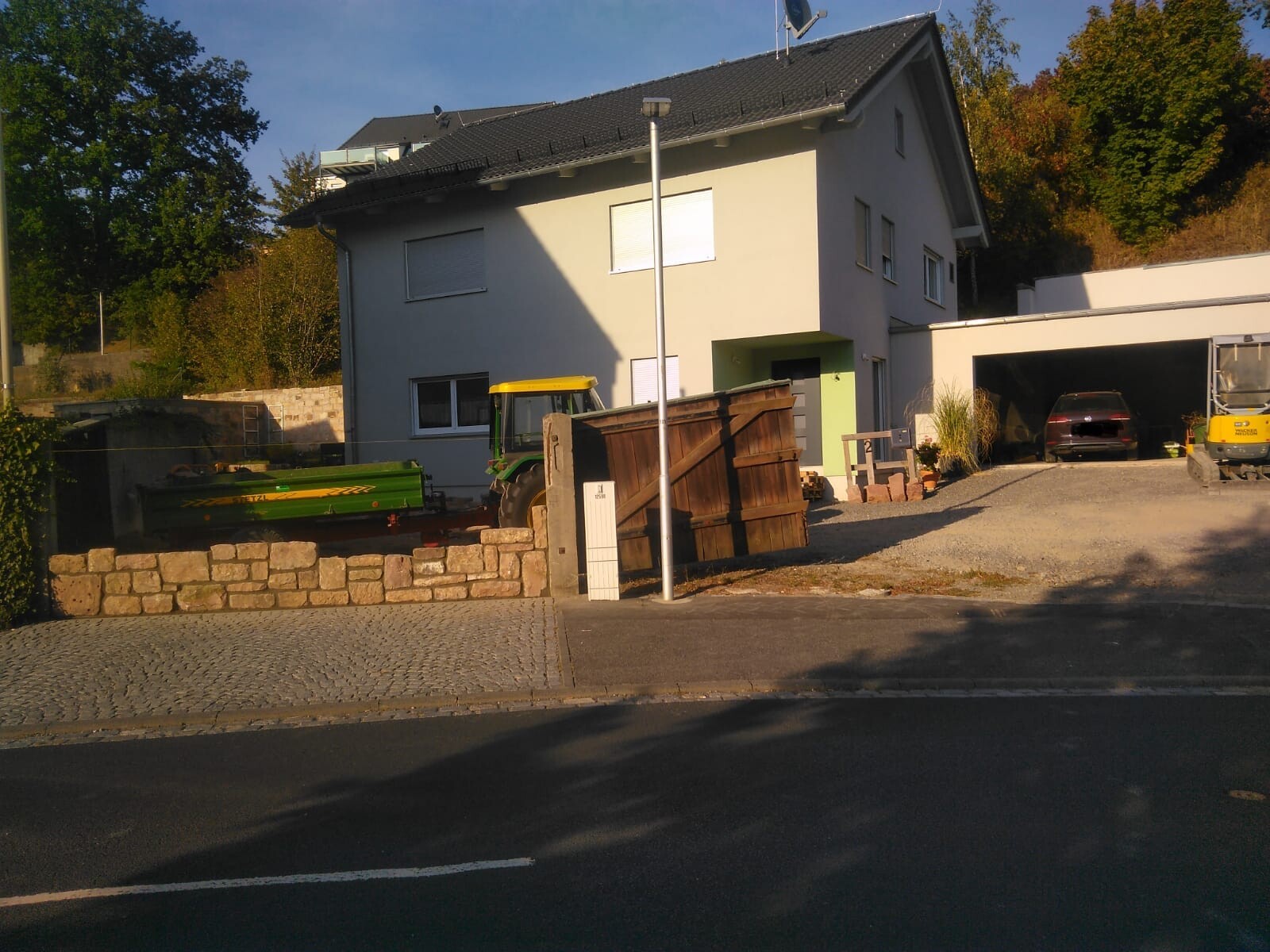
Most of the excavation work was already completed due to the previous development on our site.
And south is on the valley side for us.
Looking at your site plan
- without knowing the building permit / planning permission -
Garage and building services, entrance, and 2 rooms in the basement level (when the children are older, maybe a nice cool parent area)
Ground floor: open living area and garden facing southeast
Attic floor: the rest
Or a separate carport on the west side
Entrance, technical rooms, bedrooms downstairs
Open living area and office upstairs, possibly even with an open roof structure
You need to check what the building permit / planning permission allows.
Plan in a way that minimizes excavation and does not exceed the necessary built-up area.
Every cubic meter costs.
A basement can be full-value living space. With higher ceilings, bright, and friendly.
Most of the excavation work was already completed due to the previous development on our site.
And south is on the valley side for us.
Looking at your site plan
- without knowing the building permit / planning permission -
Garage and building services, entrance, and 2 rooms in the basement level (when the children are older, maybe a nice cool parent area)
Ground floor: open living area and garden facing southeast
Attic floor: the rest
Or a separate carport on the west side
Entrance, technical rooms, bedrooms downstairs
Open living area and office upstairs, possibly even with an open roof structure
You need to check what the building permit / planning permission allows.
Plan in a way that minimizes excavation and does not exceed the necessary built-up area.
Every cubic meter costs.
A basement can be full-value living space. With higher ceilings, bright, and friendly.
Ah, now I can imagine that much better. Great tip!
What exactly is a WU back wall? And how do you "order" that from the supplier?
Did you build a solid (masonry) house or a prefabricated house?
Our regulations only allow 1.5 stories, but a basement can count as an additional full story.
What exactly is a WU back wall? And how do you "order" that from the supplier?
Did you build a solid (masonry) house or a prefabricated house?
Our regulations only allow 1.5 stories, but a basement can count as an additional full story.
WU concrete is waterproof concrete. It is used for concrete shells (“white tanks”).
You are looking for a partner (architect, general contractor) who will build your house according to your wishes. Anyone who does not meet this requirement is out. This process grows step by step. It can be overwhelming at the beginning.
The general contractor will never sell you a house that cannot hold the slope. Structural engineering and the soil survey report are included in the planning.
You must never lose sight of your budget and your wishes.
Familiarize yourself with your zoning plan / building permit.
Articulate your wishes as precisely as possible. Don’t just present a floor plan, but specify:
A dining table for 12 people,
a walk-in closet with 6 linear meters (20 feet) of shelving,
a cloakroom that can hold the shoe collection,
a living room with an XXL sofa, 7 m (23 ft) ceiling height, shelves for books,
No gallery under any circumstances,
and so on.
Visit model homes and look through catalogs.
Gather pictures of what you like.
You are looking for a partner (architect, general contractor) who will build your house according to your wishes. Anyone who does not meet this requirement is out. This process grows step by step. It can be overwhelming at the beginning.
The general contractor will never sell you a house that cannot hold the slope. Structural engineering and the soil survey report are included in the planning.
You must never lose sight of your budget and your wishes.
Familiarize yourself with your zoning plan / building permit.
Articulate your wishes as precisely as possible. Don’t just present a floor plan, but specify:
A dining table for 12 people,
a walk-in closet with 6 linear meters (20 feet) of shelving,
a cloakroom that can hold the shoe collection,
a living room with an XXL sofa, 7 m (23 ft) ceiling height, shelves for books,
No gallery under any circumstances,
and so on.
Visit model homes and look through catalogs.
Gather pictures of what you like.
Similar topics