
Hello,
In our new build, a fresh water pipe burst today, probably the supply line to the bathtub. As a result, water suddenly leaked through the ventilation openings on the floor below, from the sockets in the kitchen, and from the ceiling in the basement next to a downpipe.
Without going into the detailed plans: it is certain that the bathroom screed and insulation are completely wet. The bathtub is located at one end of the room, while the ventilation openings in the ceiling, through which the water then flowed downwards, are at two other ends of the room.
The question now is how do we _reliably_ determine how far the damage has spread?
The kitchen below also must have been affected. The sockets are next to a downpipe, and the water has run along it into the basement.
The corridor upstairs and an adjacent study might have been impacted as well. Is there any way other than removing the parquet flooring and breaking up the screed?
This will probably be quite unpleasant. Our site manager will likely try to downplay everything and suggested that we should contact our insurance… (he previously tried to pressure me into insurance fraud in a clear warranty case to avoid handling it himself) (I can share the company and the site manager’s name via private message).
Really great, another one of those incompetent plumbers has done a terrible job. This is now the third leaking pipe in the house. I can share the company’s name privately—be warned!
I could really be sick...
Best regards,
Andreas
In our new build, a fresh water pipe burst today, probably the supply line to the bathtub. As a result, water suddenly leaked through the ventilation openings on the floor below, from the sockets in the kitchen, and from the ceiling in the basement next to a downpipe.
Without going into the detailed plans: it is certain that the bathroom screed and insulation are completely wet. The bathtub is located at one end of the room, while the ventilation openings in the ceiling, through which the water then flowed downwards, are at two other ends of the room.
The question now is how do we _reliably_ determine how far the damage has spread?
The kitchen below also must have been affected. The sockets are next to a downpipe, and the water has run along it into the basement.
The corridor upstairs and an adjacent study might have been impacted as well. Is there any way other than removing the parquet flooring and breaking up the screed?
This will probably be quite unpleasant. Our site manager will likely try to downplay everything and suggested that we should contact our insurance… (he previously tried to pressure me into insurance fraud in a clear warranty case to avoid handling it himself) (I can share the company and the site manager’s name via private message).
Really great, another one of those incompetent plumbers has done a terrible job. This is now the third leaking pipe in the house. I can share the company’s name privately—be warned!
I could really be sick...
Best regards,
Andreas

Hello Andreas,
the situation is not as critical as the initial request might have suggested.
Depending on the material used for impact sound insulation, the amount of water absorption can vary greatly. For example, with EPS, it can be almost negligible.
At the moment, I don’t think it’s wise to cause unnecessary alarm. It doesn’t lead anywhere.
You can only try to protect yourself through appropriate wording in communication with the general contractor. That is the job of a lawyer.
From a purely technical point of view, I would not take any action currently if only the tile layers are or were affected. And provided that no calcium sulfate screed (previously called anhydrite) was used as a binder in the heated screed.
Whether the screed insulation on the upper floor became wet or damp can be easily checked by opening up the floor.
But again: please do not jump to conclusions or act prematurely based on possibly amateurish technical understanding by blindly cutting multiple openings in the screed.
This should—together with the assessment—be the task of a specialist or the experts in the trade to carefully and purposefully open the floor and analyze the findings.
the situation is not as critical as the initial request might have suggested.
Depending on the material used for impact sound insulation, the amount of water absorption can vary greatly. For example, with EPS, it can be almost negligible.
At the moment, I don’t think it’s wise to cause unnecessary alarm. It doesn’t lead anywhere.
You can only try to protect yourself through appropriate wording in communication with the general contractor. That is the job of a lawyer.
From a purely technical point of view, I would not take any action currently if only the tile layers are or were affected. And provided that no calcium sulfate screed (previously called anhydrite) was used as a binder in the heated screed.
Whether the screed insulation on the upper floor became wet or damp can be easily checked by opening up the floor.
But again: please do not jump to conclusions or act prematurely based on possibly amateurish technical understanding by blindly cutting multiple openings in the screed.
This should—together with the assessment—be the task of a specialist or the experts in the trade to carefully and purposefully open the floor and analyze the findings.
Does this also lead to an acknowledged loss in value? We are generally talking about newly built properties here.
If I were offered two identical hypothetical properties in the same location, I would certainly be willing to pay several thousand euros more for the building without water damage. Is this compensated for?
Are there significant risks or technical uncertainties that remain during the drying process between the concrete slab and the screed?
Thank you in advance.
If I were offered two identical hypothetical properties in the same location, I would certainly be willing to pay several thousand euros more for the building without water damage. Is this compensated for?
Are there significant risks or technical uncertainties that remain during the drying process between the concrete slab and the screed?
Thank you in advance.

Hi KlaRa,
Attached is a photo showing the setup of the screed insulation. This is exactly the area around the bathtub. On top of it, there is about 7 cm (3 inches) of cement screed today (which is therefore uncritical), followed by tiles or parquet flooring.
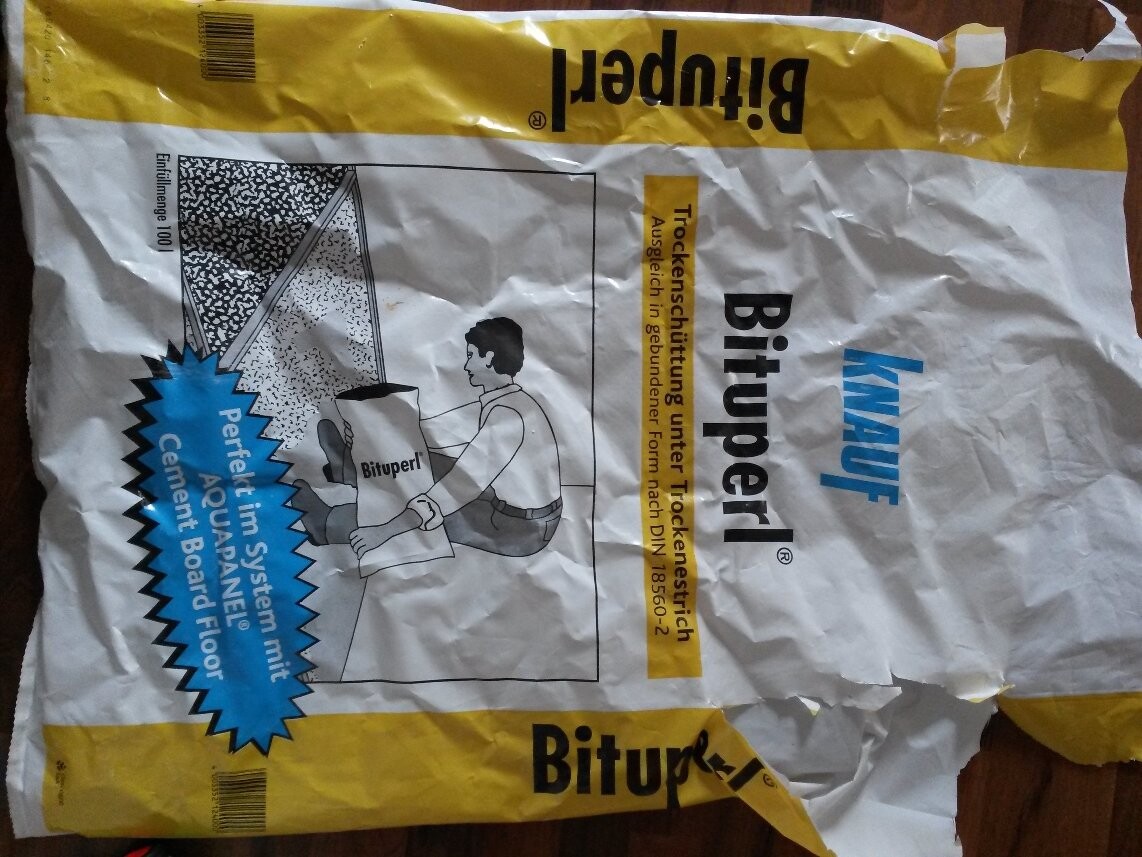
Unfortunately, I don’t have a datasheet for the EPS used. This loose-fill material came from Knauf, as shown in the photo. It would be worth asking how sensitive it is to moisture.
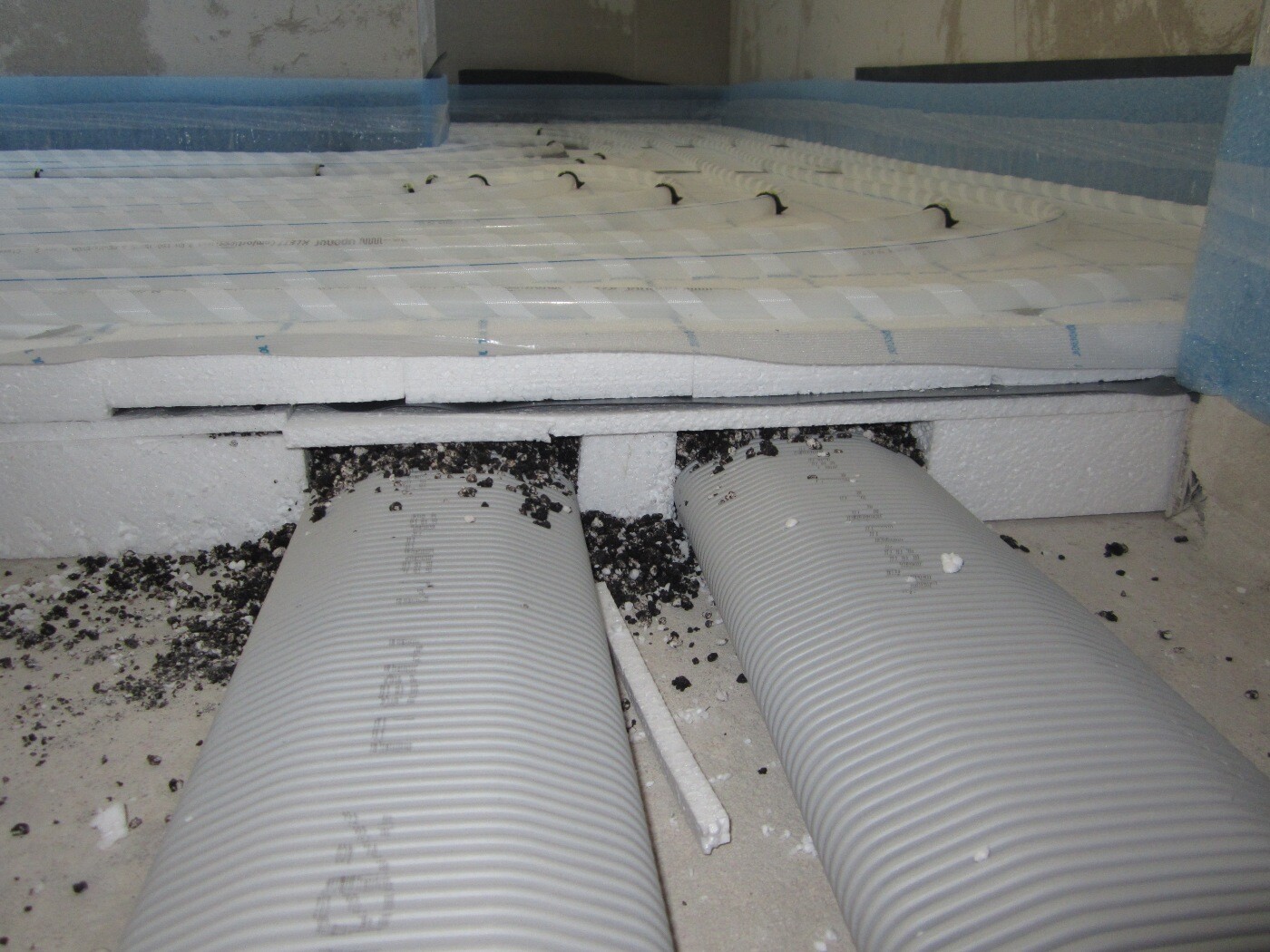
Of course, I’m not removing any floors myself—I’m leaving that to my general contractor. A drying technician already came today but did not get down to the subfloor along the edge insulation strips.
My concern is that the water has spread quite far within the screed insulation. After all, the bathroom isn’t that small, and the whole bathroom is clearly affected. Why would the water have stopped at the door threshold? And outside the bathroom, there is parquet flooring throughout the upper floor!
This means I have a moisture source in the house that, if not completely dried out, will always cause damp odors and will damage any parquet flooring in the short to medium term.
Best regards,
Andreas
Attached is a photo showing the setup of the screed insulation. This is exactly the area around the bathtub. On top of it, there is about 7 cm (3 inches) of cement screed today (which is therefore uncritical), followed by tiles or parquet flooring.
Unfortunately, I don’t have a datasheet for the EPS used. This loose-fill material came from Knauf, as shown in the photo. It would be worth asking how sensitive it is to moisture.
Of course, I’m not removing any floors myself—I’m leaving that to my general contractor. A drying technician already came today but did not get down to the subfloor along the edge insulation strips.
My concern is that the water has spread quite far within the screed insulation. After all, the bathroom isn’t that small, and the whole bathroom is clearly affected. Why would the water have stopped at the door threshold? And outside the bathroom, there is parquet flooring throughout the upper floor!
This means I have a moisture source in the house that, if not completely dried out, will always cause damp odors and will damage any parquet flooring in the short to medium term.
Best regards,
Andreas
KlaRa schrieb:
This should – together with the assessment – be the task of a professional or the expert from the relevant trade, to carefully open it and evaluate the findings. It’s good that you strongly recommend this, even repeatedly. People in this forum tend not to believe me, but more often frequent posters.
"Does this also result in a recognized loss of value?"
This is a matter that must be assessed legally. There is only the aspect of loss of value itself, which is either valid (if accepted by the contracting parties) or not.
Damage caused by a water damage incident either has an effect—in which case we talk about damage that must be repaired—or it does not have an effect. If it does not, then no loss of value is necessary.
I have already addressed the possible impacts in detail, so further elaboration here is not required. Everything else would be speculative, making additional comments pointless.
---------------------------------
Regards: KlaRa
This is a matter that must be assessed legally. There is only the aspect of loss of value itself, which is either valid (if accepted by the contracting parties) or not.
Damage caused by a water damage incident either has an effect—in which case we talk about damage that must be repaired—or it does not have an effect. If it does not, then no loss of value is necessary.
I have already addressed the possible impacts in detail, so further elaboration here is not required. Everything else would be speculative, making additional comments pointless.
---------------------------------
Regards: KlaRa
P
Peanuts7416 Mar 2017 10:10andimann schrieb:
Hello everyone,
first of all, thanks for the replies.
I obviously do not want to handle the adjustment myself, nor will I. What does my insurance have to do with it anyway? The house was handed over to us 3 months ago, so if a burst pipe after 3 months isn’t considered a warranty case, I don’t know what is….
The general contractor and the plumber have also made this very clear—there is no discussion.
The cause was an incorrectly installed locking clip on the bathtub spout. We have a concealed wall-mounted faucet for the bathtub (which is still leaking even after the third repair attempt, but that wasn’t the main issue). From there, a pipe runs to the tub spout. This pipe is connected to the tub spout with a quick-connect fitting and is secured with a very visible, bright yellow clip. Or it should have been secured—if the (insert any harsh insult you want here) wasn’t too incompetent to properly snap the clip in place. Ideas as intellectually demanding as securing this clip additionally with tape aren’t even worth mentioning. That would be beyond the comprehension of these ignoramuses.
Anyway, yesterday when filling the tub, a large amount of water didn’t flow into the tub but collected in the cavity underneath it and then found its way out. Definitely into the screed insulation and probably also into the screed itself.
The bathroom insulation is completely soaked; the water must have been standing there. This also explains why water ran along the bathroom waste pipe down to the basement, and why water was coming out of the ventilation openings in the ceiling of the ground floor. The affected openings are located in the bathroom when viewed from above.
There is probably also water in the hallway; initial moisture measurements show slightly damp walls there. That suggests that water has been leaking repeatedly over some time. Usually, the porous clay blocks (Poroton) don’t absorb water up to 25 cm (10 inches) above the rough floor level within just a few hours.
This might also explain why our parquet flooring in the upstairs hallway and bedroom has been creaking more and more lately. I had blamed it on changing temperatures and humidity—turns out I was wrong…
After consulting with my carpenter today, I removed the baseboards in the affected areas so that moisture vapor can escape from the gaps between the parquet and the wall, instead of being absorbed by the wood. And if the parquet edges start to warp in the next few days, it will be clear that those will have to be replaced as well.
The drying technician was already here but couldn’t measure much because of the 18 cm (7 inches) thickness of the screed. Drilling will have to happen first.
So, we’ll have drying equipment in the house for many weeks, along with the uncertainty about whether things will actually dry out, or if we will end up with mold and mildew later on.
Just great….
Best regards,
AndreasThat obviously doesn’t help now, but as they say, if you want something done properly, do it yourself...
You can’t even generalize this to the entire company, but all it takes is one person with zero motivation to cause trouble. And with water, that kind of trouble is significant right away...
Similar topics