
ᐅ Are there enough ceiling openings for KNX, LAN, and plumbing installations?
Created on: 15 Aug 2025 05:06
A
adamarcHello everyone,
I’m not entirely sure if this is the right section, but I hope some of you can assess the situation well.
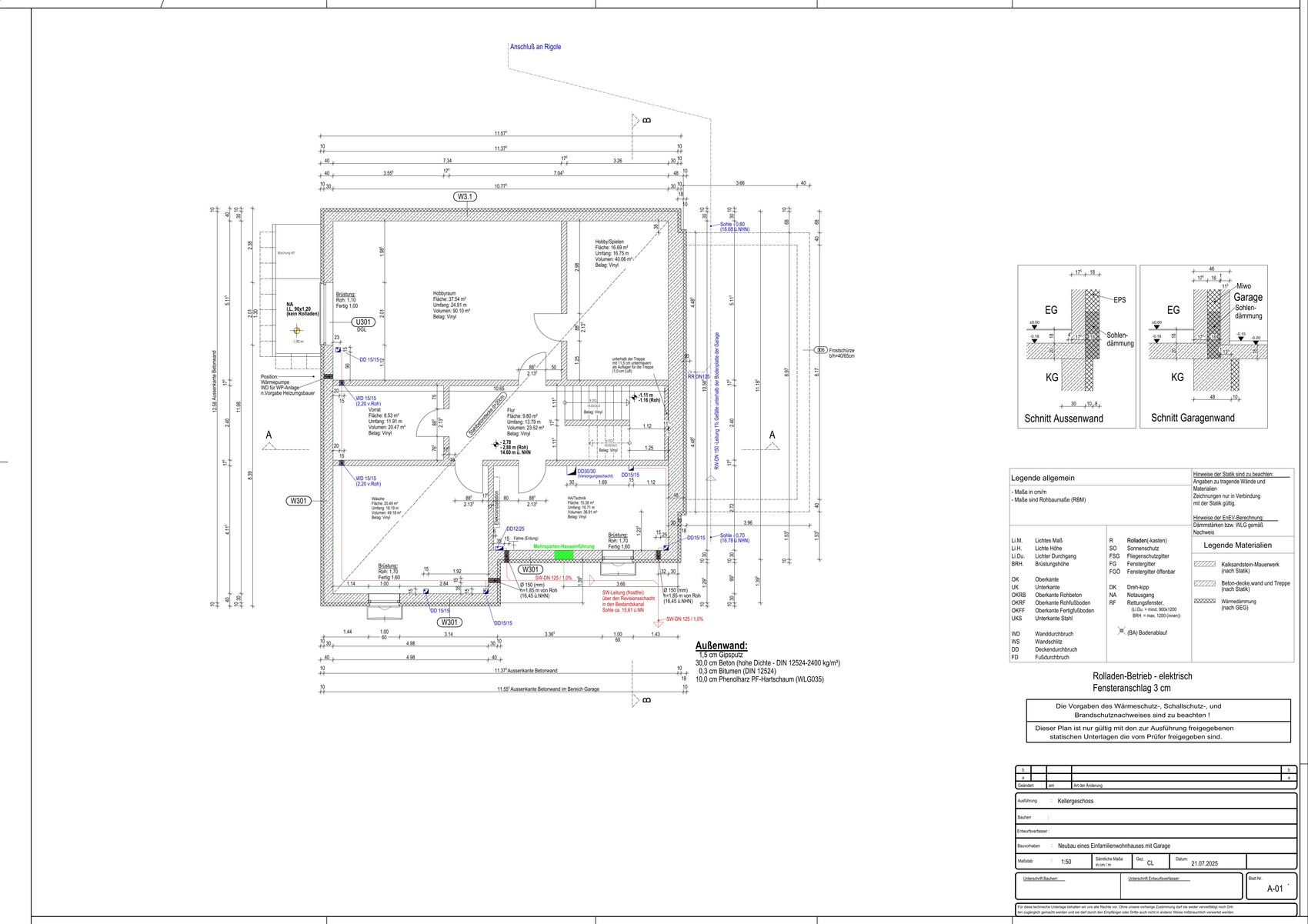
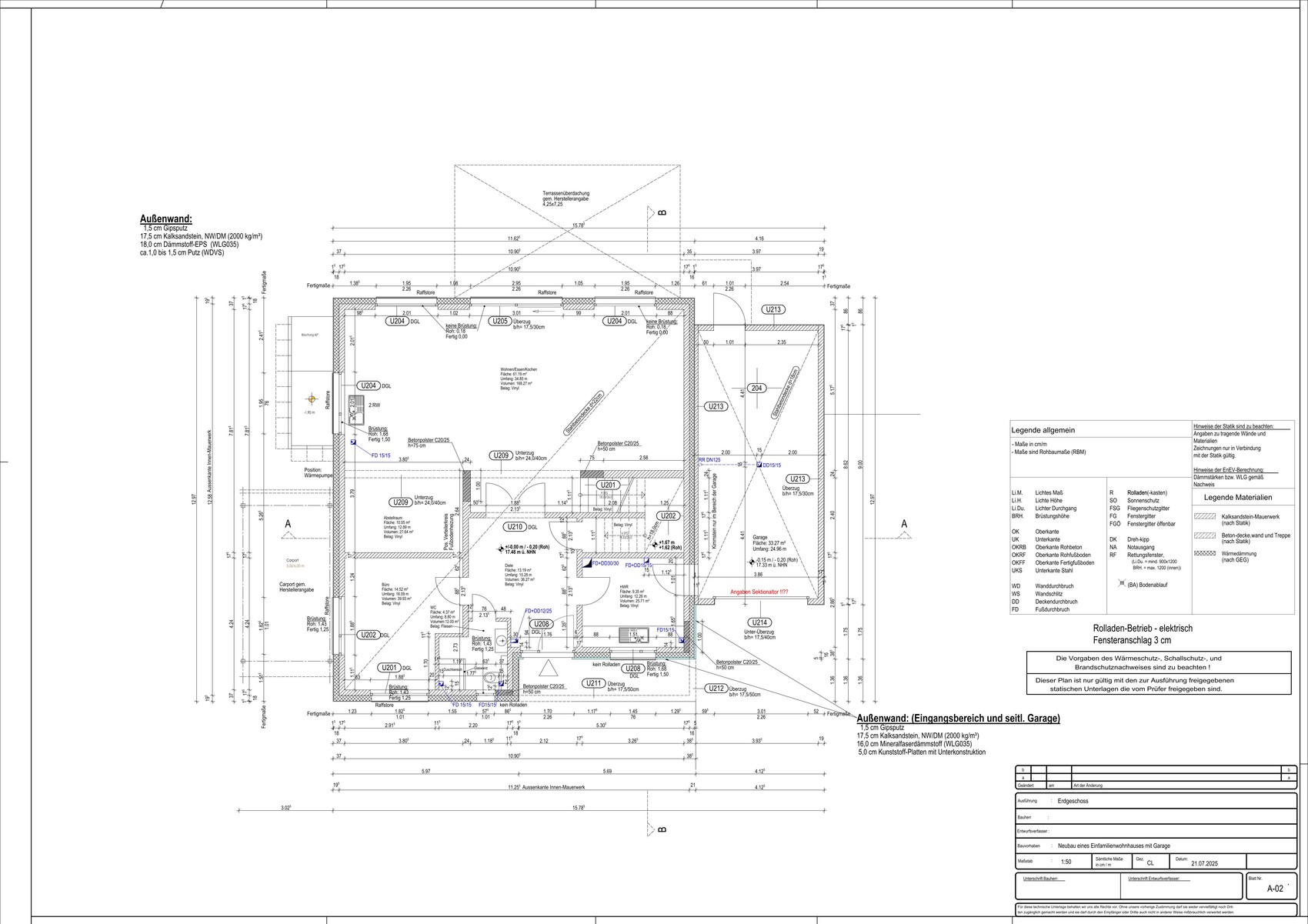
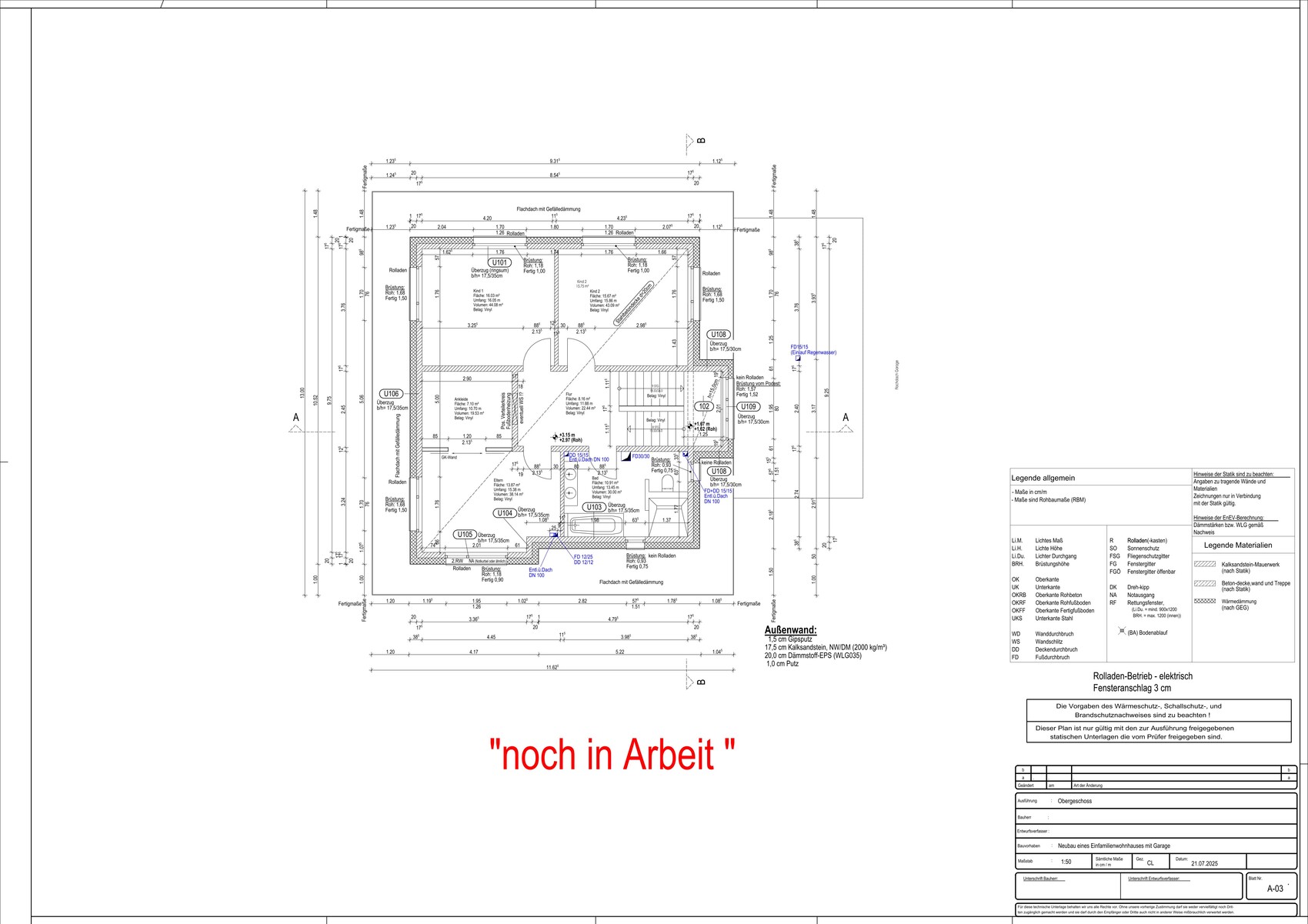
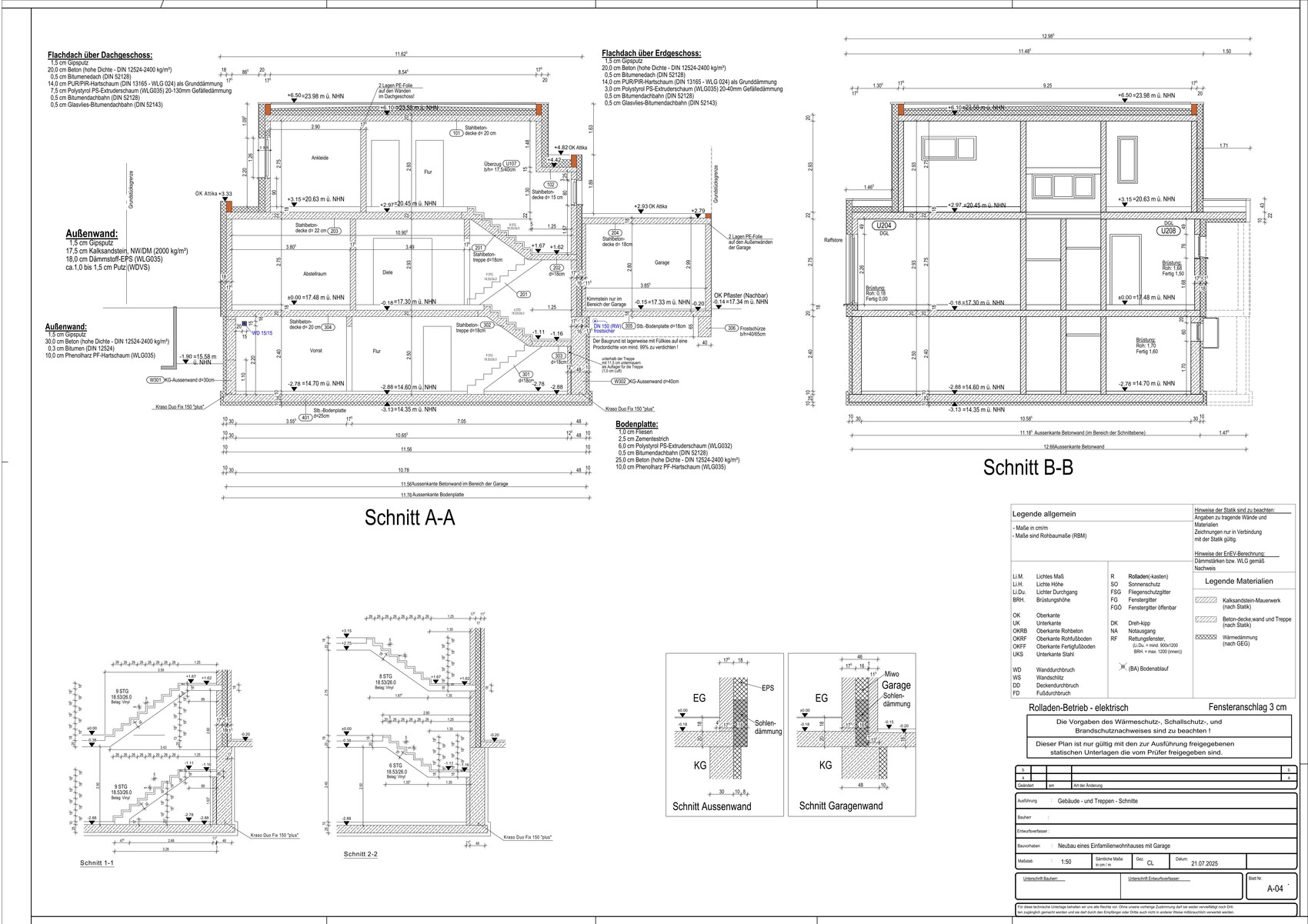
We are nearing the completion of the electrical planning. Since I will be handling most of the detailed work myself, I have taken a closer look at the ceiling openings. According to the architect, these should be sufficient for both electrical and plumbing installations, but I’m beginning to have doubts.
I wonder if the amount of cables might have been underestimated or if I am overestimating it. We are planning a KNX system as well as extensive LAN cabling. Additionally, a photovoltaic system and a weather station will be installed on the roof. So far, I do not see any dedicated ceiling openings for these. Are such cables usually routed differently, or can they possibly be run through the shafts intended for ventilation?
Of course, I will discuss this with the architect, but I would definitely appreciate a few additional practical opinions. The problem is that the basement and ground floor are already built, so in the worst case, I can only do damage control now.
Regards and thanks
I’m not entirely sure if this is the right section, but I hope some of you can assess the situation well.
We are nearing the completion of the electrical planning. Since I will be handling most of the detailed work myself, I have taken a closer look at the ceiling openings. According to the architect, these should be sufficient for both electrical and plumbing installations, but I’m beginning to have doubts.
I wonder if the amount of cables might have been underestimated or if I am overestimating it. We are planning a KNX system as well as extensive LAN cabling. Additionally, a photovoltaic system and a weather station will be installed on the roof. So far, I do not see any dedicated ceiling openings for these. Are such cables usually routed differently, or can they possibly be run through the shafts intended for ventilation?
Of course, I will discuss this with the architect, but I would definitely appreciate a few additional practical opinions. The problem is that the basement and ground floor are already built, so in the worst case, I can only do damage control now.
Regards and thanks
No one outside can really give you a definite answer on that. If you are involved in the planning anyway, you can easily count the necessary cables for each electrical circuit, each separate appliance/outlet, each LAN connection, bus cable, and cables for outdoors/garage/carport...
For photovoltaic systems, it depends a bit on where the inverter is located. DC cables should be installed separately. In my case, the inverters are in the attic, so only a thicker standard 5-core cable plus grounding runs down from there. The plumber and electrician didn’t coordinate at my place, which is why there are separate floor penetrations. The electrician would have preferred to use the plumber’s penetrations afterward. Here is what the ceiling opening from the basement to the ground floor looked like for me...

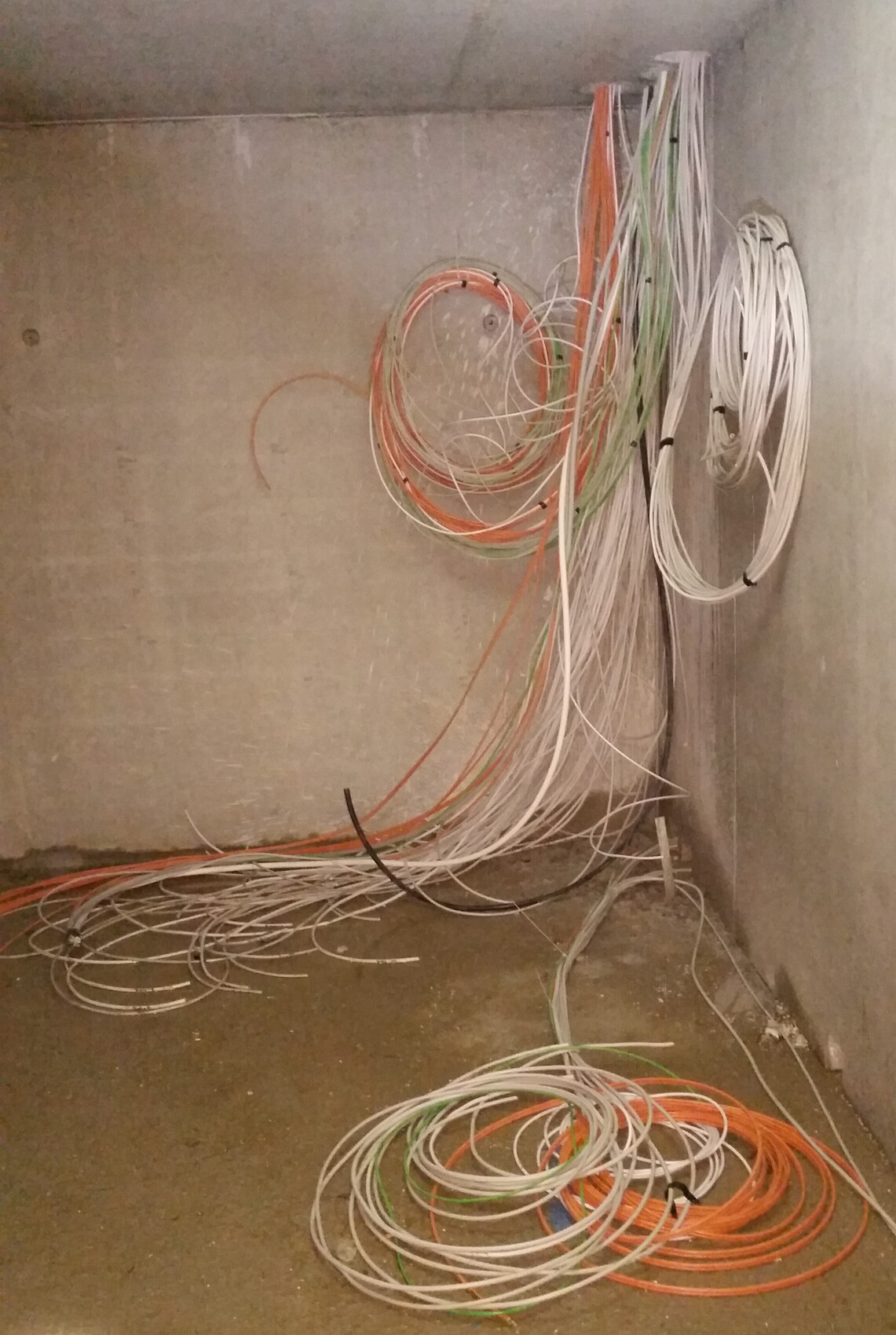
For photovoltaic systems, it depends a bit on where the inverter is located. DC cables should be installed separately. In my case, the inverters are in the attic, so only a thicker standard 5-core cable plus grounding runs down from there. The plumber and electrician didn’t coordinate at my place, which is why there are separate floor penetrations. The electrician would have preferred to use the plumber’s penetrations afterward. Here is what the ceiling opening from the basement to the ground floor looked like for me...

We have planned a large central shaft for plumbing and electrical installations measuring 200 x 30 cm (79 x 12 inches). The electrical systems, including KNX, photovoltaic, and LAN, require about 80 x 30 cm (31 x 12 inches). However, we have a comparatively large number of empty conduits because, for example, each roller shutter motor is routed through an individual conduit instead of using multi-core cables.
Attached is a photo of the upper floor slab before concrete pouring.
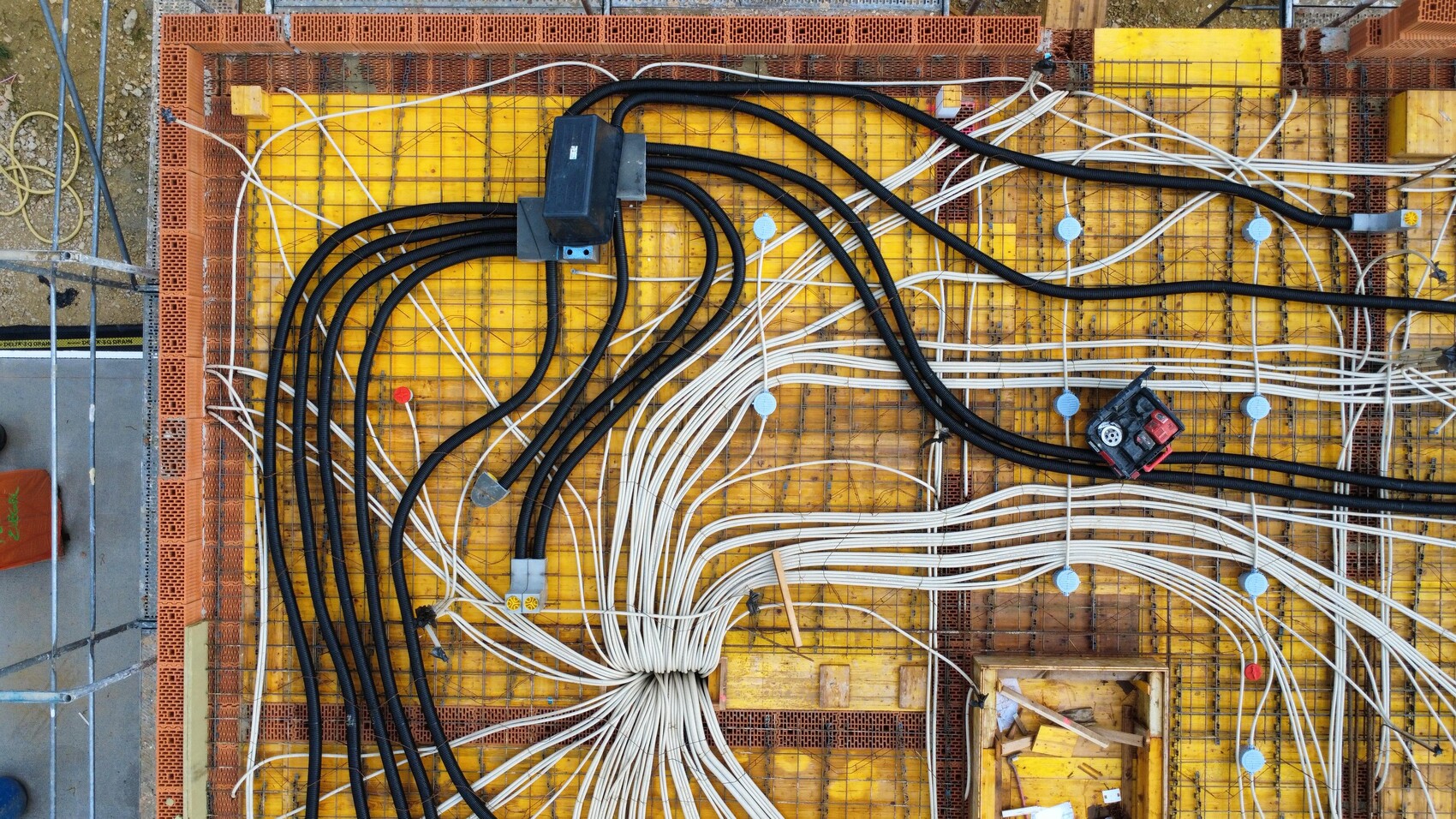
Attached is a photo of the upper floor slab before concrete pouring.
