
S
SmokinAces22 Mar 2026 11:59Hello,
We want to convert our upper floor (house built in 2019).
Current situation: The subfloor consists of rough-sawn boards. A load-bearing timber frame drywall partition wall is installed, containing 8 cm (3 inches) of insulation, and covered on both sides with 15 mm (0.6 inch) OSB boards and 12.5 mm (0.5 inch) gypsum plasterboard. Now, we plan to install underfloor heating. The heating installer recommended the herotec tempus Dry 30-16 system (3 cm (1.2 inch) thickness), with 16x2 mm (5/8 inch) aluminum pipes and heat-conducting fins. Unfortunately, I can’t find a company able to install the remaining layers (impact sound insulation and dry screed) this year. Every company I contacted is fully booked. Therefore, I probably have to install the impact sound insulation and dry screed myself. That is no problem technically, but I wanted to avoid it for warranty reasons.
Now the static load capacity comes into play.
My planned floor build-up is as follows:
1. 2 cm (0.8 inch) impact sound insulation made of mineral wool (approx. 5 kg/m² (1.0 lb/sq ft))
2. 3 cm (1.2 inch) underfloor heating system Tempusdry as mentioned above (approx. 4 kg/m² (0.8 lb/sq ft), including water-filled pipes)
3. 2.5 cm (1 inch) dry screed panel (approx. 39 kg/m² (8 lb/sq ft))
This initially exceeds the load limits considered in the structural calculations. According to the structural engineer, this is not an issue because very high values are used for the live load, which compensate for it. However, I prefer to rely on a person rather than only on the engineer’s software. What is your opinion? Is this acceptable, or would it be better to switch to a 2 cm (0.8 inch) dry screed, which would keep the total load within the limits?
Best regards
We want to convert our upper floor (house built in 2019).
Current situation: The subfloor consists of rough-sawn boards. A load-bearing timber frame drywall partition wall is installed, containing 8 cm (3 inches) of insulation, and covered on both sides with 15 mm (0.6 inch) OSB boards and 12.5 mm (0.5 inch) gypsum plasterboard. Now, we plan to install underfloor heating. The heating installer recommended the herotec tempus Dry 30-16 system (3 cm (1.2 inch) thickness), with 16x2 mm (5/8 inch) aluminum pipes and heat-conducting fins. Unfortunately, I can’t find a company able to install the remaining layers (impact sound insulation and dry screed) this year. Every company I contacted is fully booked. Therefore, I probably have to install the impact sound insulation and dry screed myself. That is no problem technically, but I wanted to avoid it for warranty reasons.
Now the static load capacity comes into play.
My planned floor build-up is as follows:
1. 2 cm (0.8 inch) impact sound insulation made of mineral wool (approx. 5 kg/m² (1.0 lb/sq ft))
2. 3 cm (1.2 inch) underfloor heating system Tempusdry as mentioned above (approx. 4 kg/m² (0.8 lb/sq ft), including water-filled pipes)
3. 2.5 cm (1 inch) dry screed panel (approx. 39 kg/m² (8 lb/sq ft))
This initially exceeds the load limits considered in the structural calculations. According to the structural engineer, this is not an issue because very high values are used for the live load, which compensate for it. However, I prefer to rely on a person rather than only on the engineer’s software. What is your opinion? Is this acceptable, or would it be better to switch to a 2 cm (0.8 inch) dry screed, which would keep the total load within the limits?
Best regards
M
MachsSelbst22 Mar 2026 22:54Ask a structural engineer if you want to exceed the allowed ceiling load... anything else is complete madness. AI can tell you anything if you, as a layperson, are unable to verify it...
I have a feeling dangerous times are ahead if AI is already being consulted by non-professionals regarding the structural design of a house... help...
Even an imprecise or technically incorrect formulation can lead AI completely astray.
I have a feeling dangerous times are ahead if AI is already being consulted by non-professionals regarding the structural design of a house... help...
Even an imprecise or technically incorrect formulation can lead AI completely astray.
S
SmokinAces23 Mar 2026 08:11Hello,
that’s exactly why I’m asking, because I don’t fully trust the AI 😉
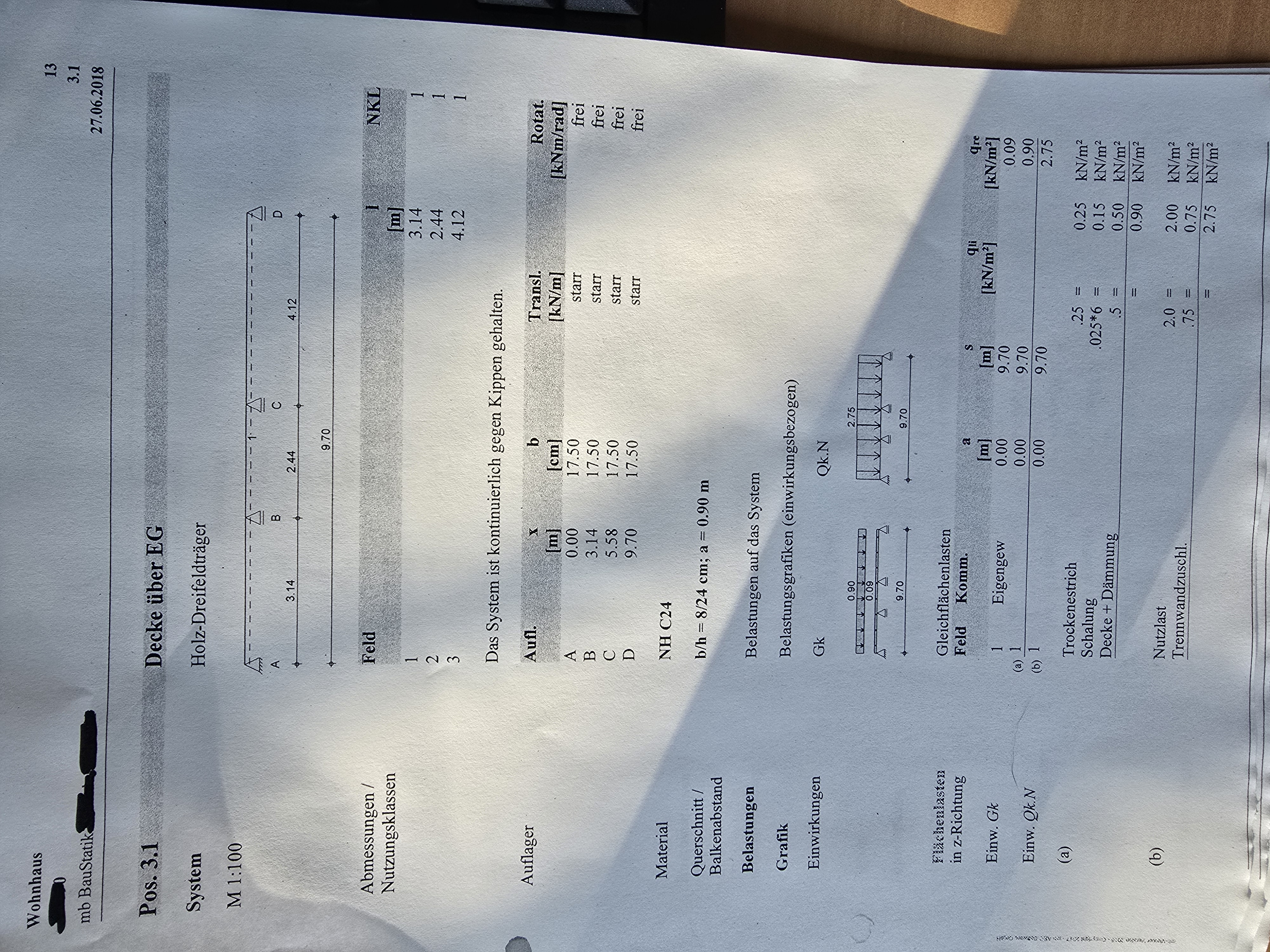
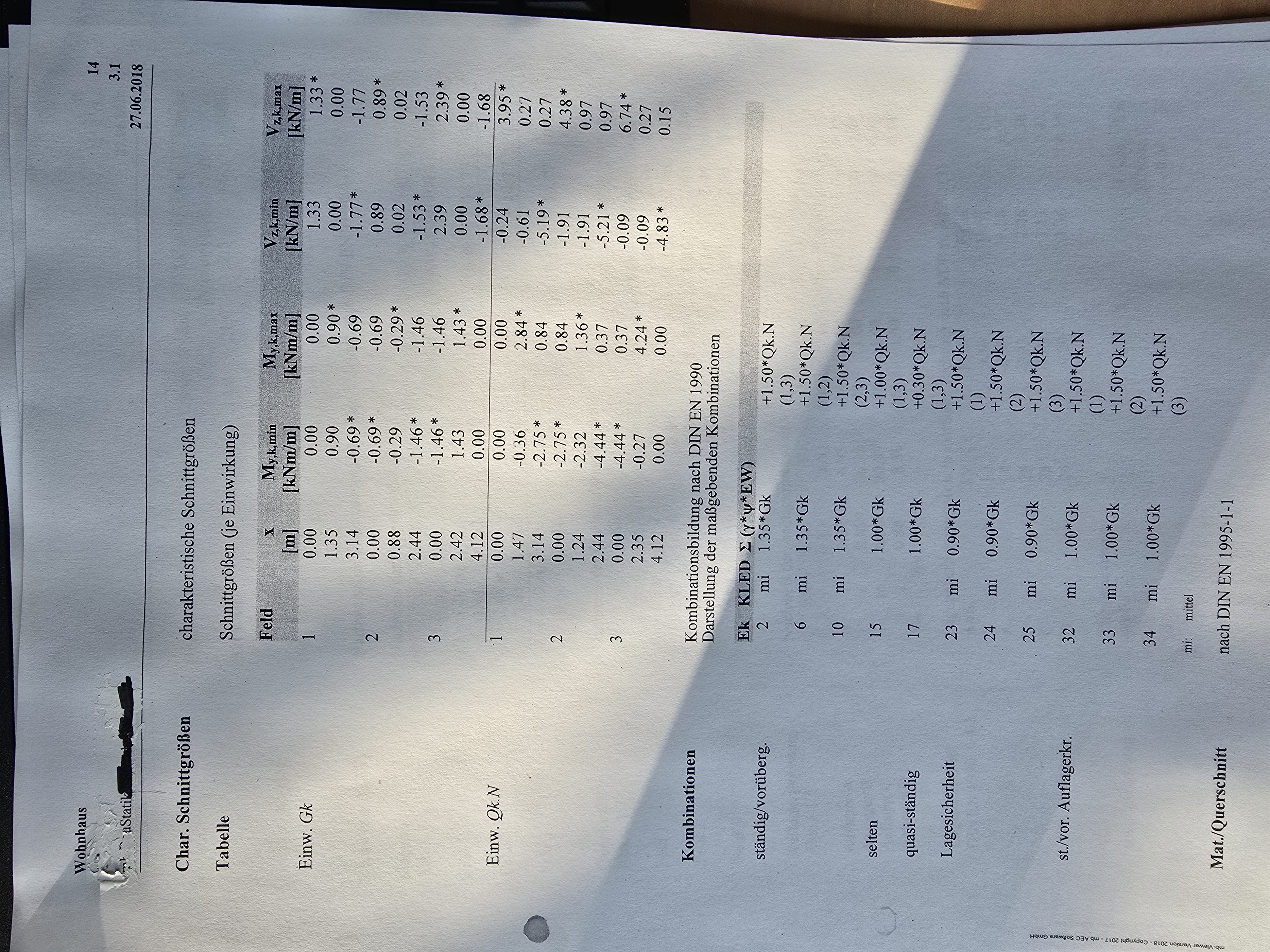
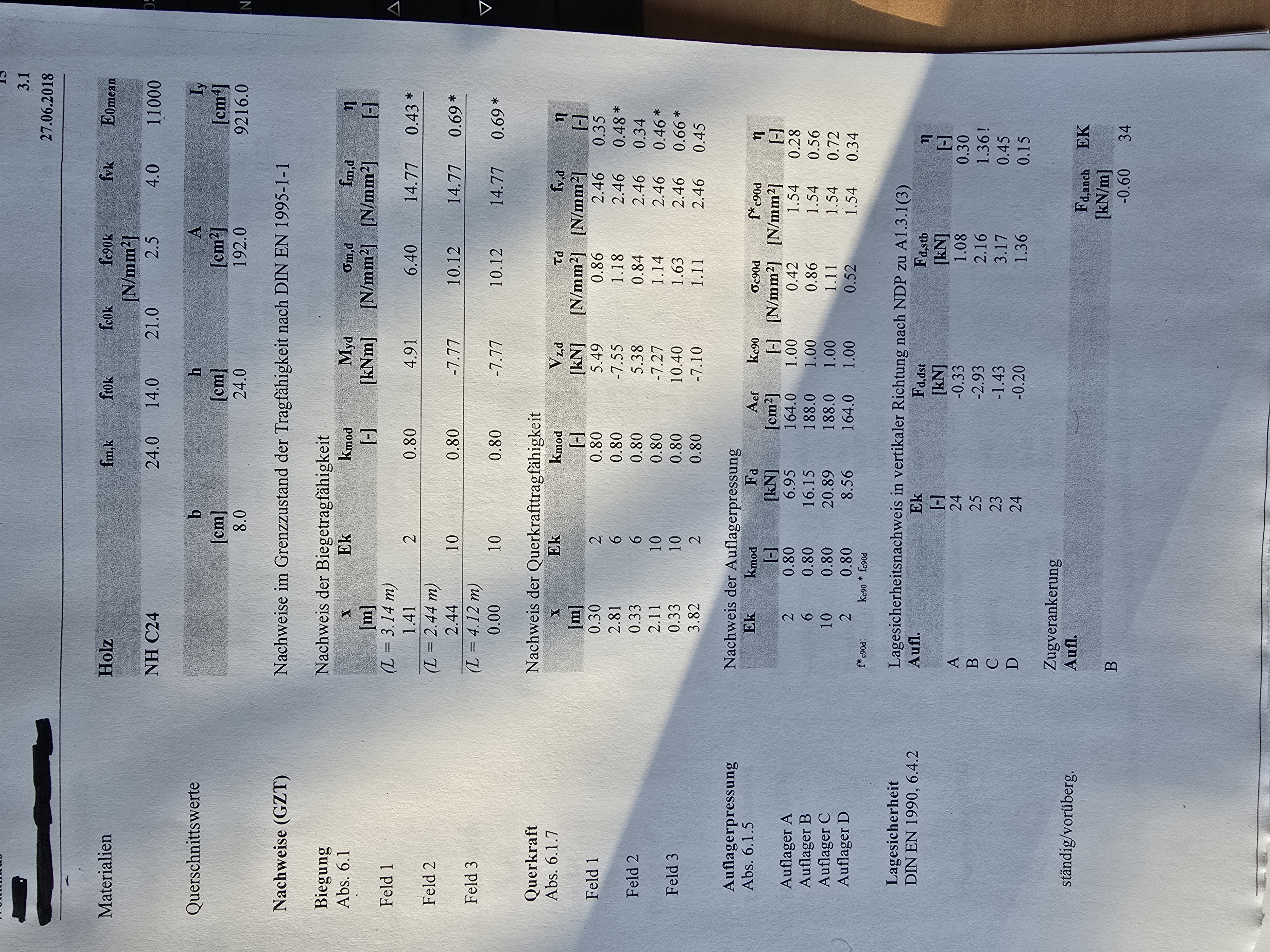
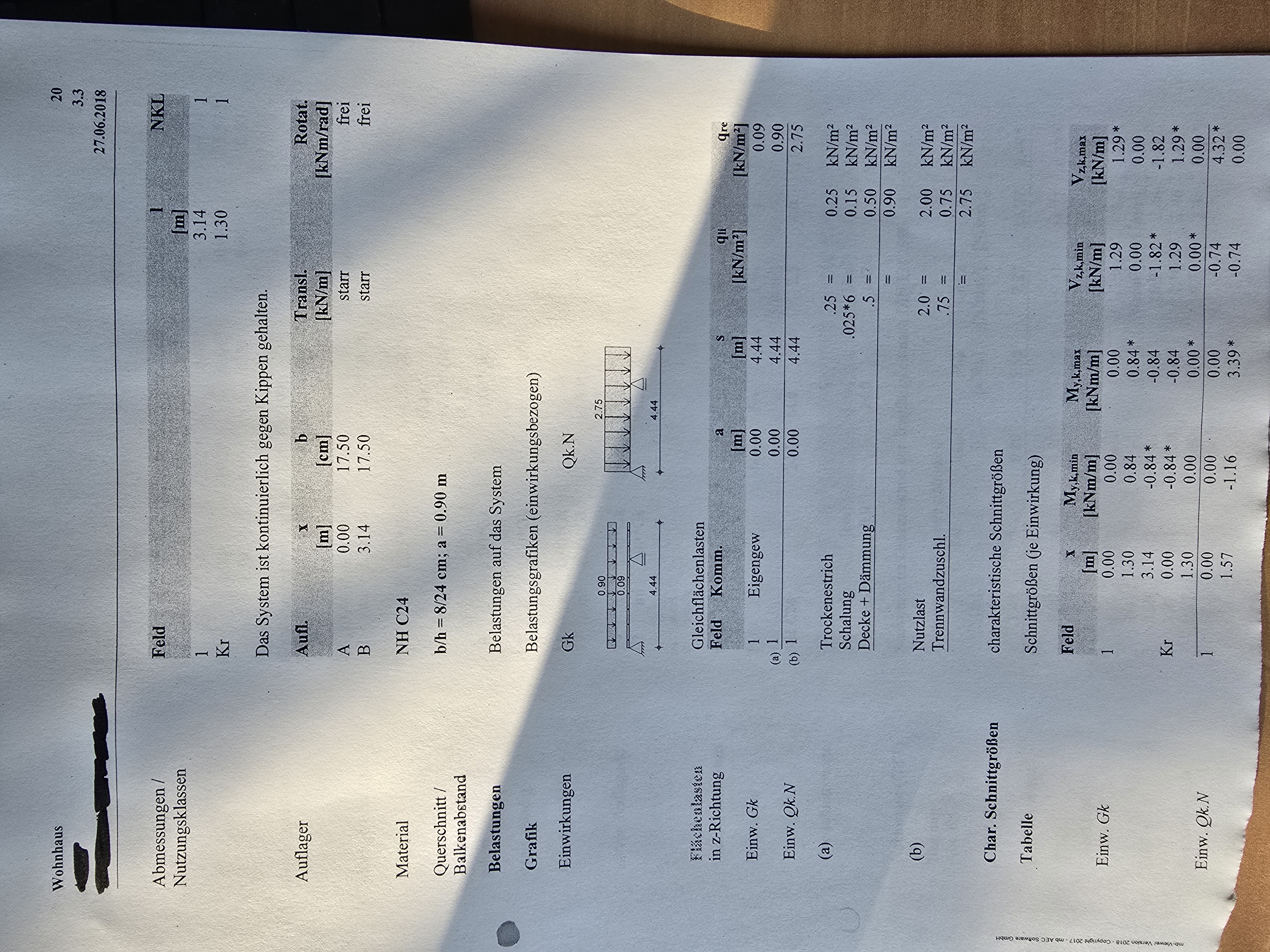
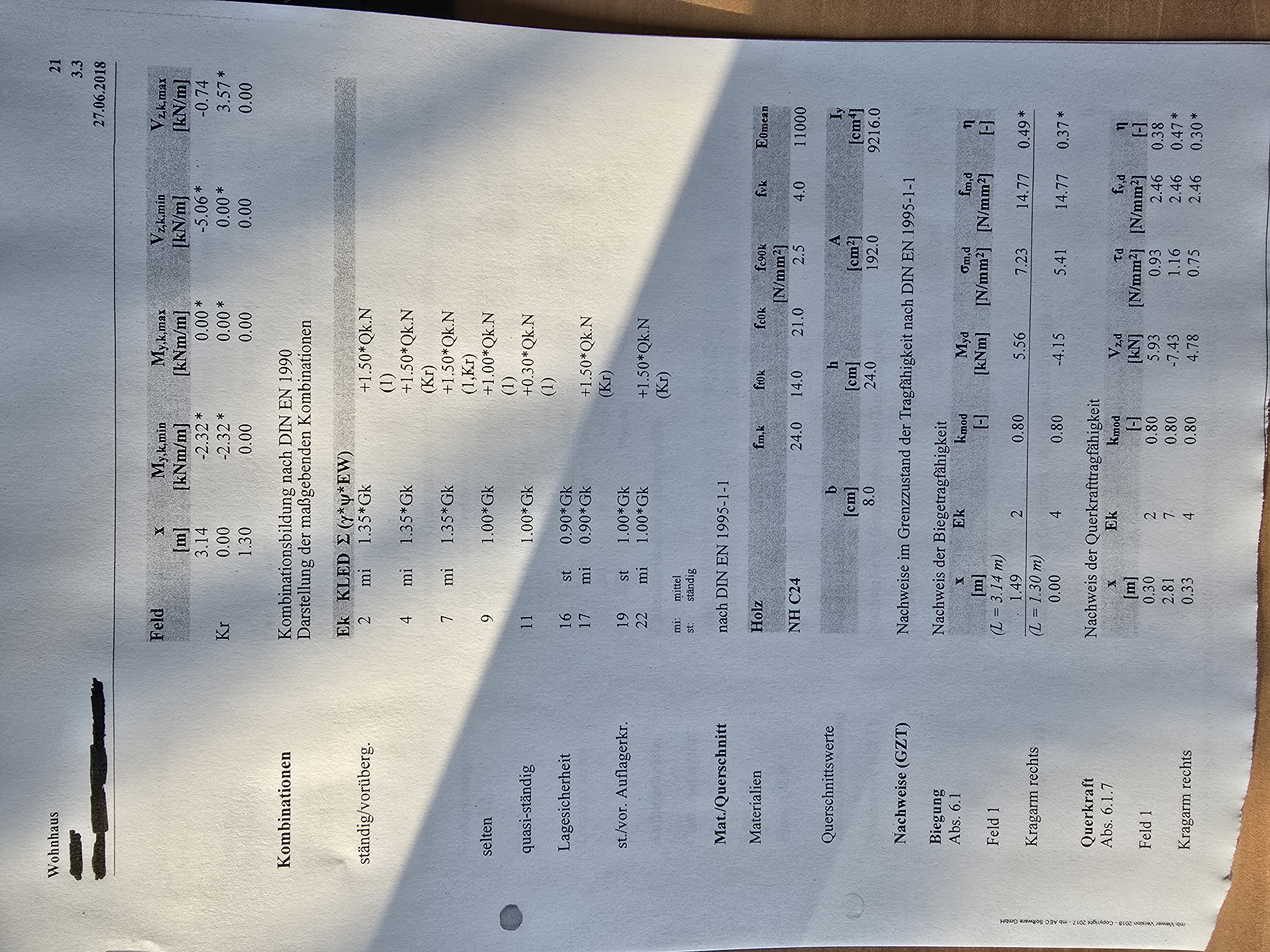
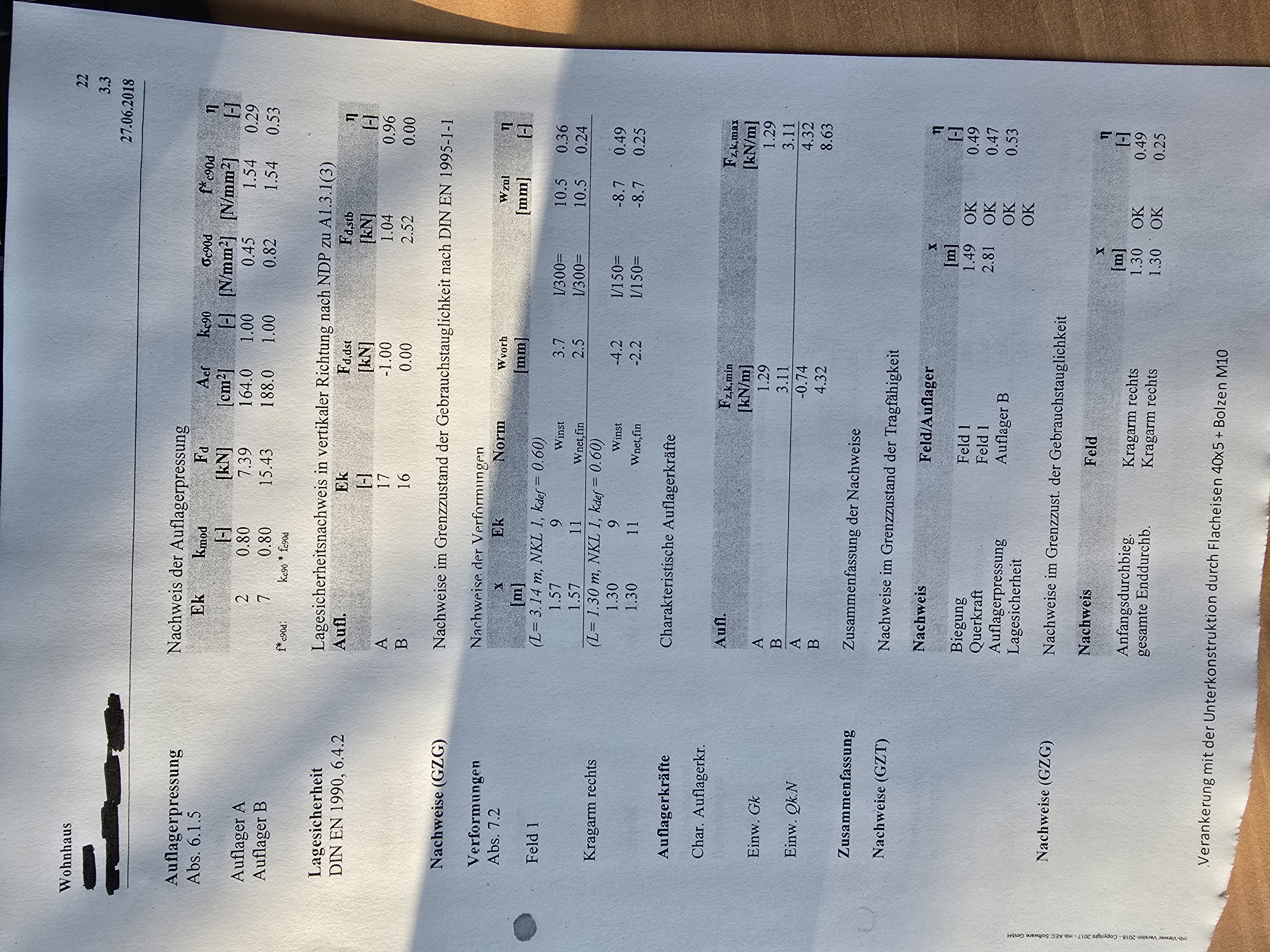
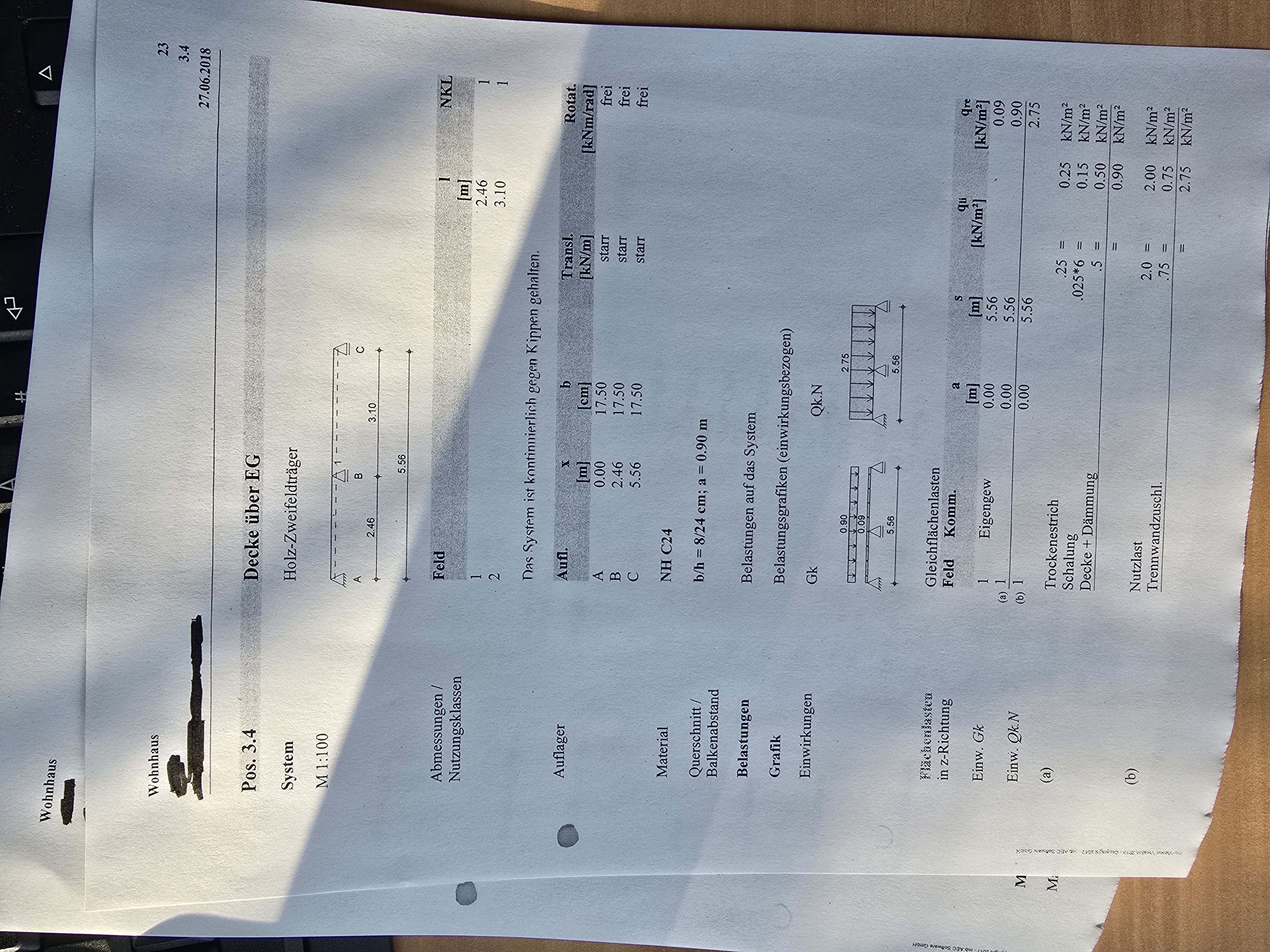
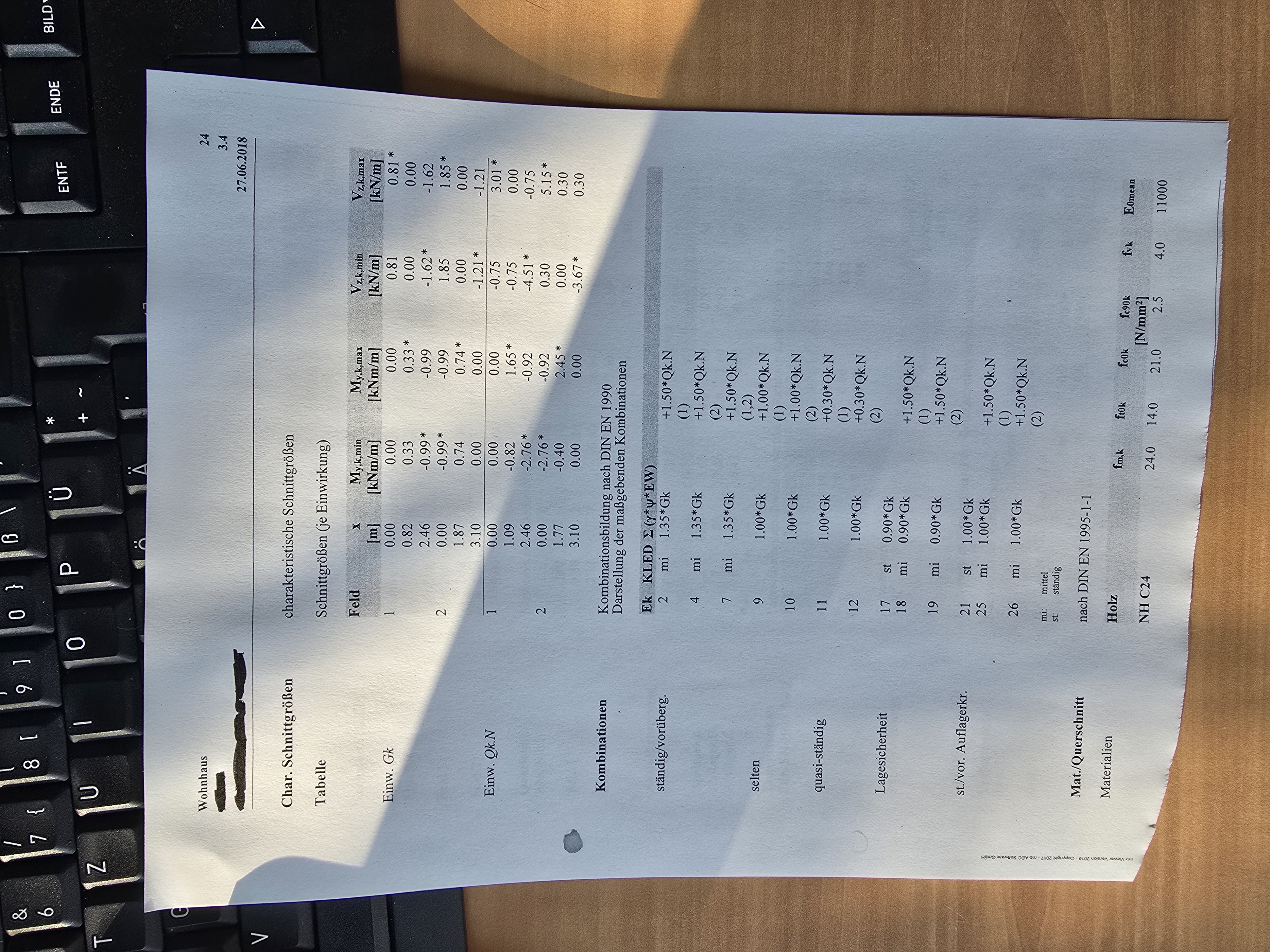
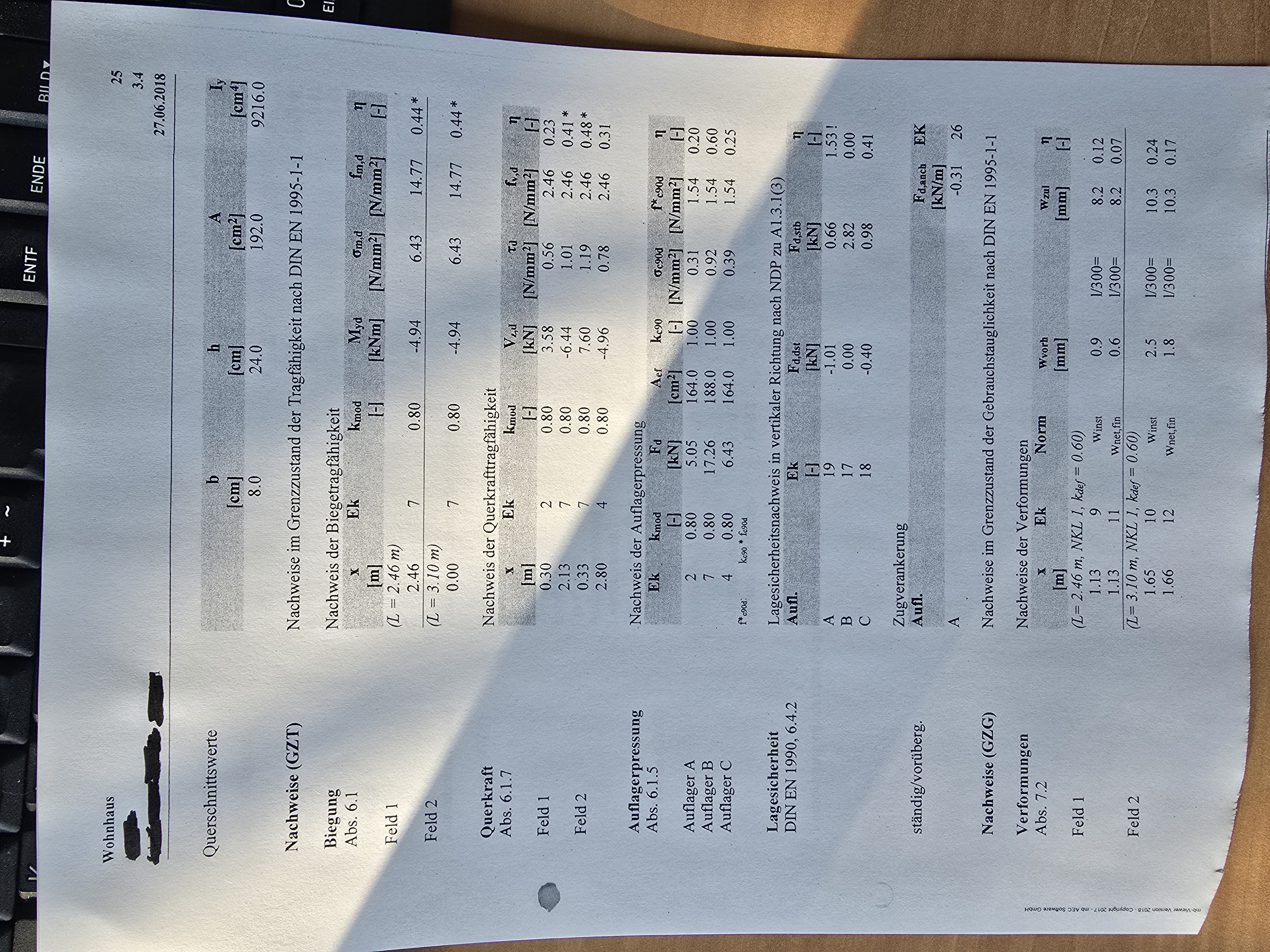
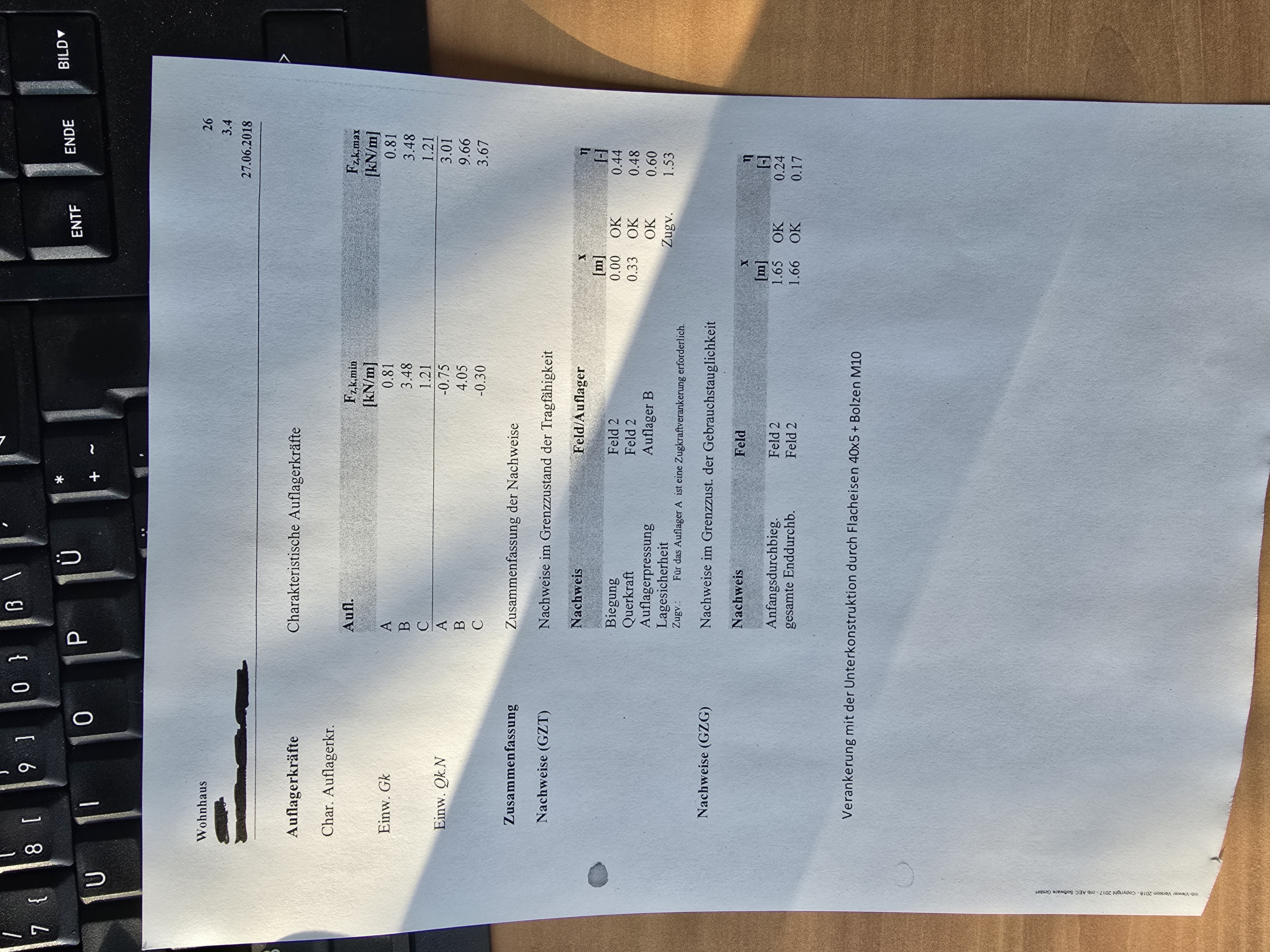
Attached are the complete structural calculations for the ceiling.
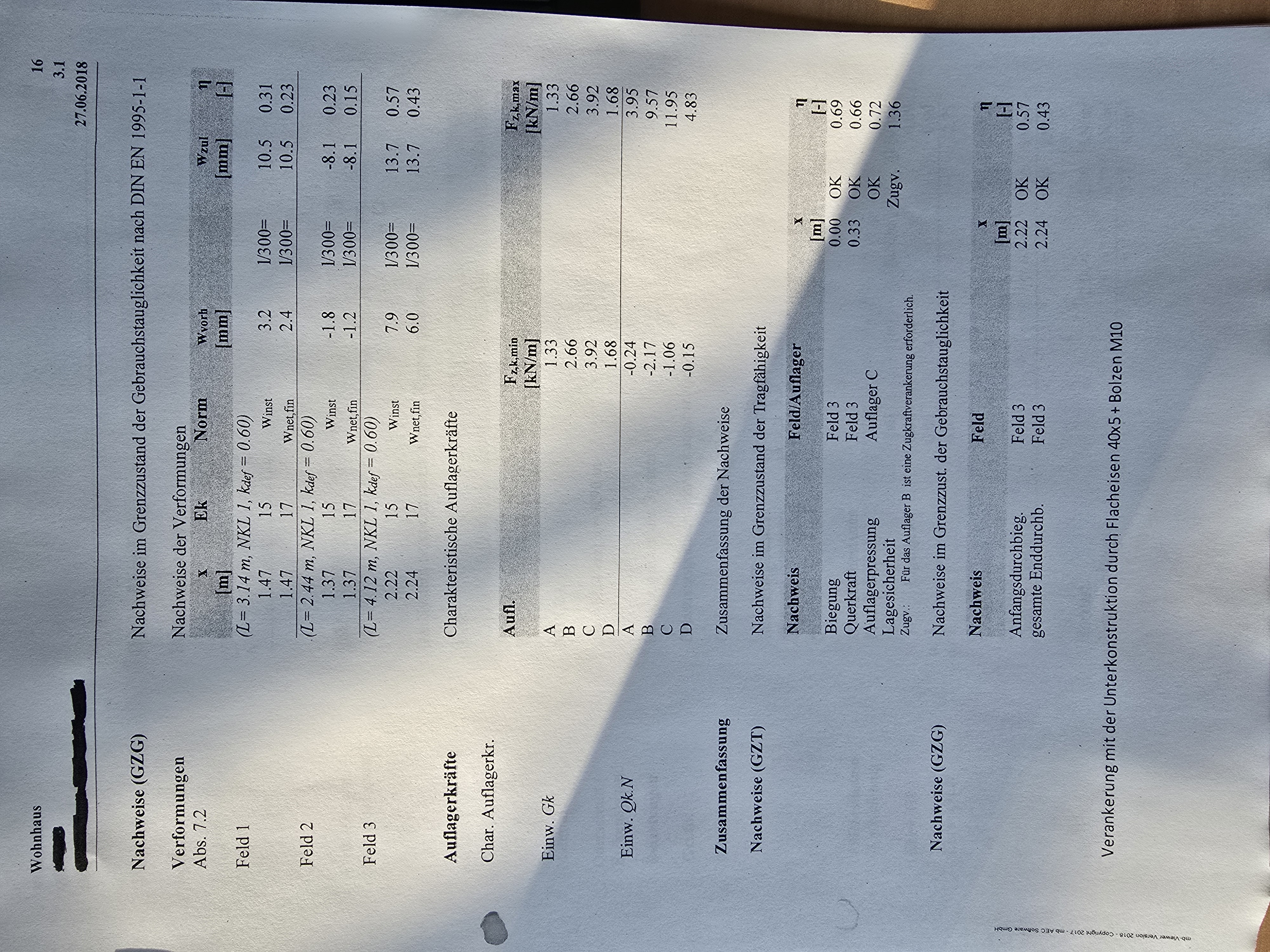
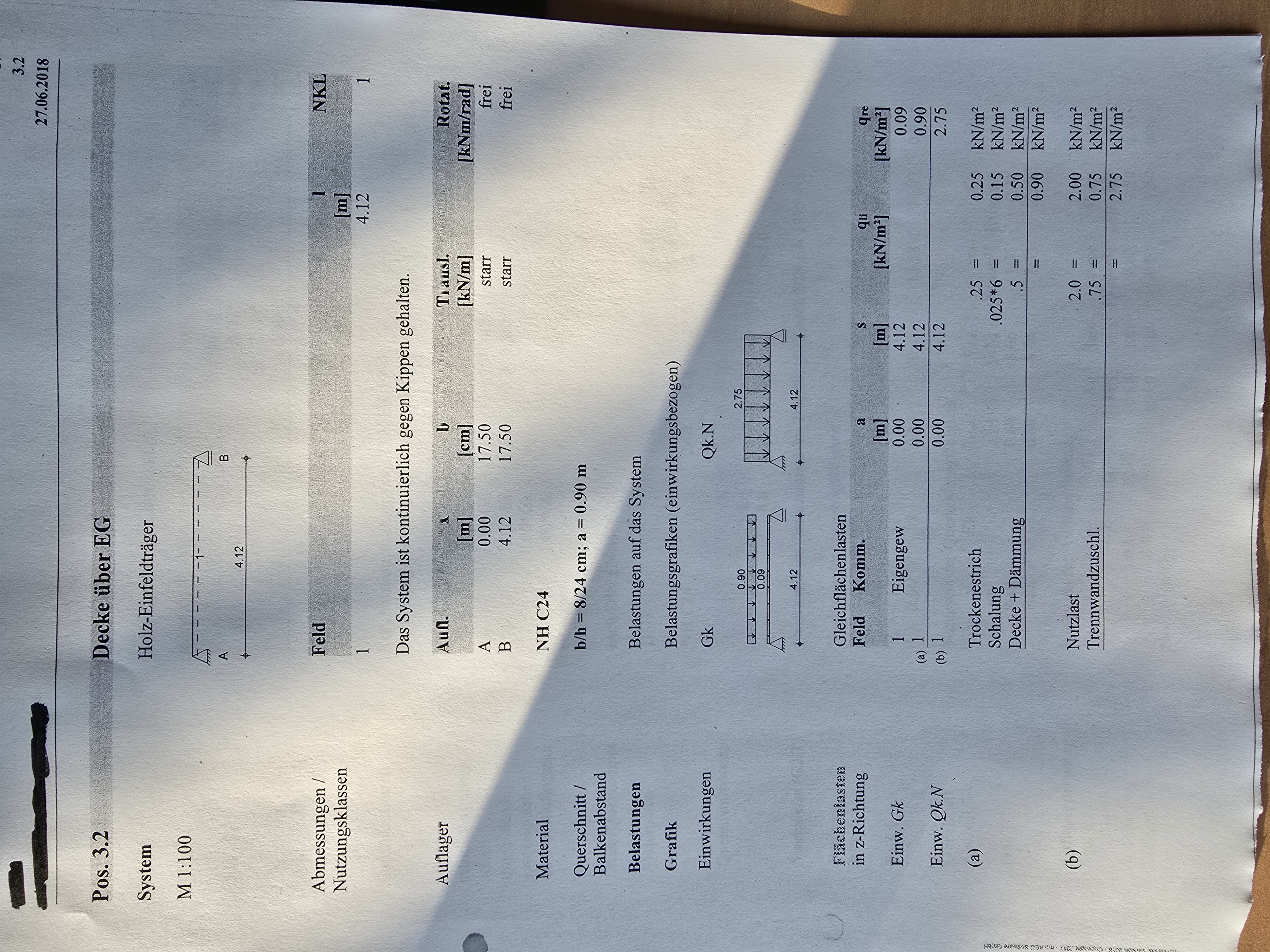
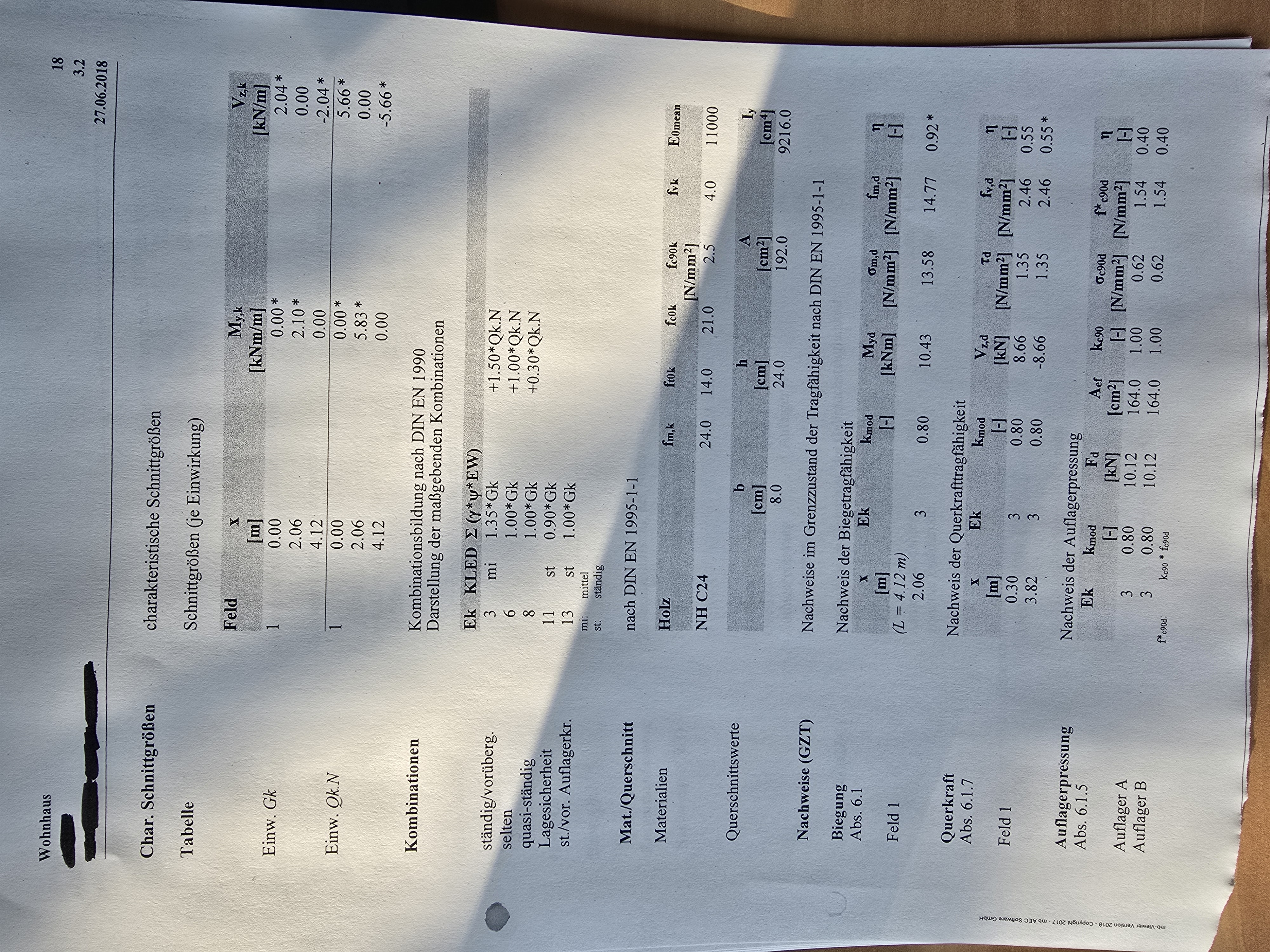
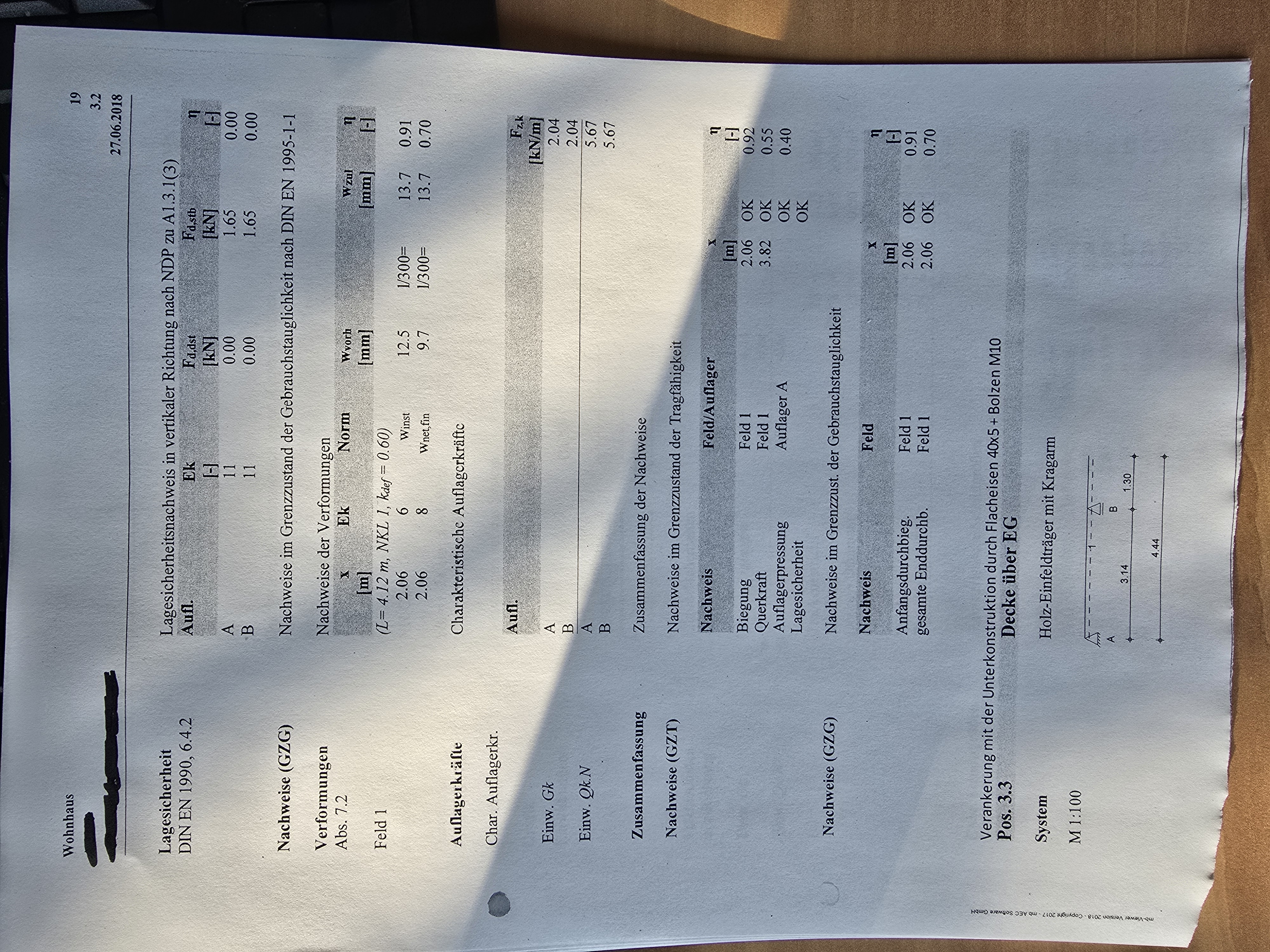
that’s exactly why I’m asking, because I don’t fully trust the AI 😉
Attached are the complete structural calculations for the ceiling.
S
SmokinAces23 Mar 2026 08:17The rough-sawn board is at least 2.3 cm (0.9 inches) thick, I would need to check the calculation again. The ceiling contains 24 cm (9.4 inches) of mineral wool insulation.
How important is the 2 cm (0.8 inches) impact sound insulation? Currently, it is quite noticeable on the ground floor when someone walks above on the rough-sawn board. Would 3 cm (1.2 inches) of EPS and, for example, 2 cm (0.8 inches) of Fermacell E 11 significantly improve this without the 2 cm (0.8 inches) impact sound insulation? Then I would be at about 28 kg/m² (5.7 lb/ft²). That is not optimal for thermal mass with underfloor heating, but I guess there's no perfect solution.
How important is the 2 cm (0.8 inches) impact sound insulation? Currently, it is quite noticeable on the ground floor when someone walks above on the rough-sawn board. Would 3 cm (1.2 inches) of EPS and, for example, 2 cm (0.8 inches) of Fermacell E 11 significantly improve this without the 2 cm (0.8 inches) impact sound insulation? Then I would be at about 28 kg/m² (5.7 lb/ft²). That is not optimal for thermal mass with underfloor heating, but I guess there's no perfect solution.
S
SmokinAces23 Mar 2026 09:06PS: In case additional structural calculations (ring beam, lintel, etc.) are needed, I have all the structural engineering documents in my files.
M
MachsSelbst23 Mar 2026 10:55You will need quite a bit of luck to find a structural engineer who will review this for free and tell you that it’s acceptable despite the exceedance. I think you should invest some money and take the matter to an engineering firm. They are licensed to provide you with legally binding advice. In this forum, all information is given without guarantee, even if a professional is behind it. No one here can or may give legally binding statements, as this is already excluded by the forum rules.
Similar topics