
Hello,
I am building a single-family house with a general contractor.
After the screed was laid, it was noticed that the staircase is offset by 10cm (4 inches). That means it starts 10cm too early.
According to the plan, there should be 1.05m (41 inches) of space in front of the stairs, but currently, there are only 94cm (37 inches).
As a result, the last step at the top is 10cm (4 inches) lower than planned (according to the plan, the last step was not supposed to be a full step).
The staircase is a straight two-stringer staircase. Since the house has a basement, the staircase cannot simply be shortened because it would otherwise be unsupported.
Are there any options to reduce the stairwell opening? The floor (or basement ceiling) is made of 18cm (7 inches) concrete (prefabricated concrete slab).
Even during planning, the 1.05m (41 inches) space in front of the stairs felt a bit tight; I would be glad to have at least 1 meter (39 inches) here.
Thank you,
morgenstern
I am building a single-family house with a general contractor.
After the screed was laid, it was noticed that the staircase is offset by 10cm (4 inches). That means it starts 10cm too early.
According to the plan, there should be 1.05m (41 inches) of space in front of the stairs, but currently, there are only 94cm (37 inches).
As a result, the last step at the top is 10cm (4 inches) lower than planned (according to the plan, the last step was not supposed to be a full step).
The staircase is a straight two-stringer staircase. Since the house has a basement, the staircase cannot simply be shortened because it would otherwise be unsupported.
Are there any options to reduce the stairwell opening? The floor (or basement ceiling) is made of 18cm (7 inches) concrete (prefabricated concrete slab).
Even during planning, the 1.05m (41 inches) space in front of the stairs felt a bit tight; I would be glad to have at least 1 meter (39 inches) here.
Thank you,
morgenstern
B
Benutzer2004 Jan 2022 16:30morgenstern schrieb:
The plan was for a staircase where the top step is only half the tread width (about 15cm (6 inches)) And in my opinion, that would be the much bigger problem if you come down from the top and suddenly there is no step. Life-threatening...
morgenstern schrieb:
That means it starts 10cm (4 inches) too early.
According to the plan, there should be 1.05m (3 ft 5 in) of space in front of the stairs, but currently there are only 94cm (37 inches).
Therefore, the top step is 10cm (4 inches) lower (according to the plan, the last step would not have been a full step). At this point, I expect not only a drawing but also one or two photos.
Benutzer200 schrieb:
And in my opinion, that would be the much bigger problem if you come from above and suddenly there is no step. Danger to life... I suspect the top step is level with the floor slab. This happens quite often and results in only half a step depth. Some don’t have any step there at all. Like us, for example.
B
Benutzer2004 Jan 2022 21:12aero2016 schrieb:
I assume the top step is levelOnly photos reveal the truth...
I wouldn’t worry too much about that. In my opinion, this is not a minor defect and cannot be properly compensated with money. So, demand a dismantling and a complete redo. This is nobody’s favorite outcome, but I can’t think of any other satisfactory solution for the client.
M
morgenstern4 Jan 2022 22:24So, here are a few pictures:
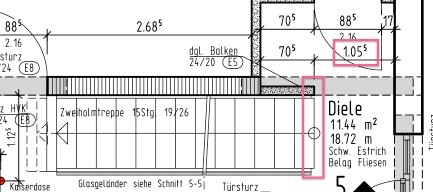
In the plan, you can see that the staircase is supposed to be flush with the wall, and there should be a rough construction gap of 1.05cm (0.4 inches) between the stair tread and the wall.
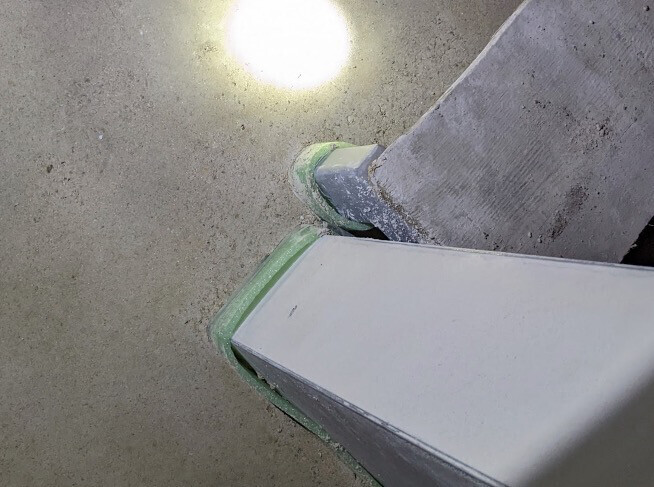
This picture shows that the metal structure already extends beyond the wall. The finished stair tread will protrude about 4cm (1.6 inches) further beyond that.
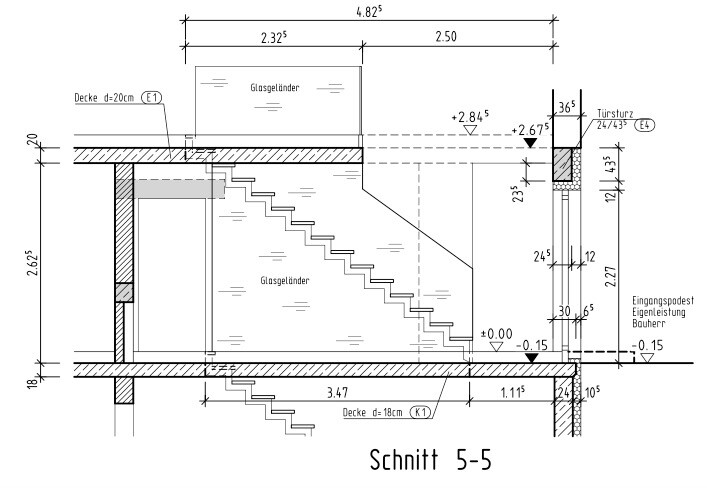
Here is a cross-section of the staircase:
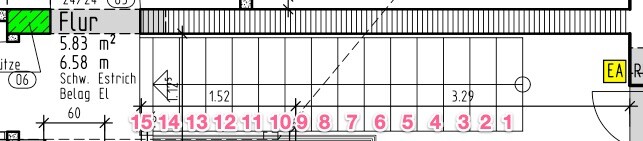
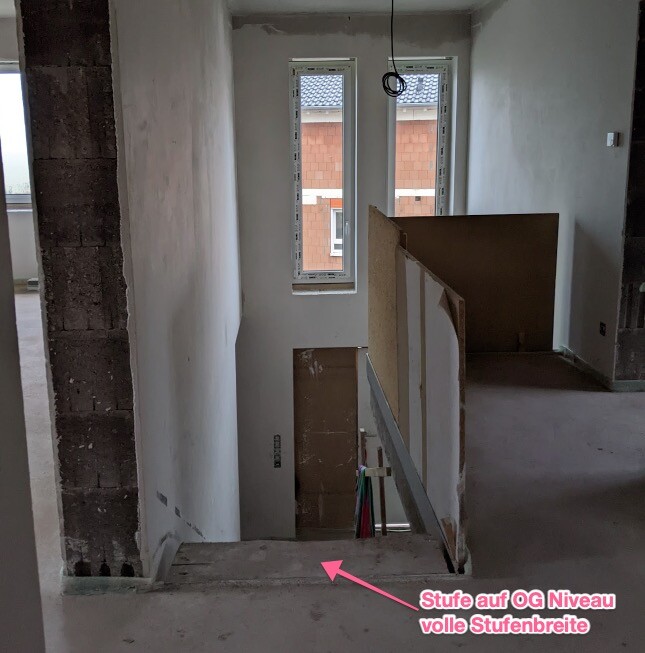
Here is the staircase from the upper floor perspective, where you can see that the last step (which is on the same level as the finished floor on the upper floor) does not have the full "depth" (tread width):
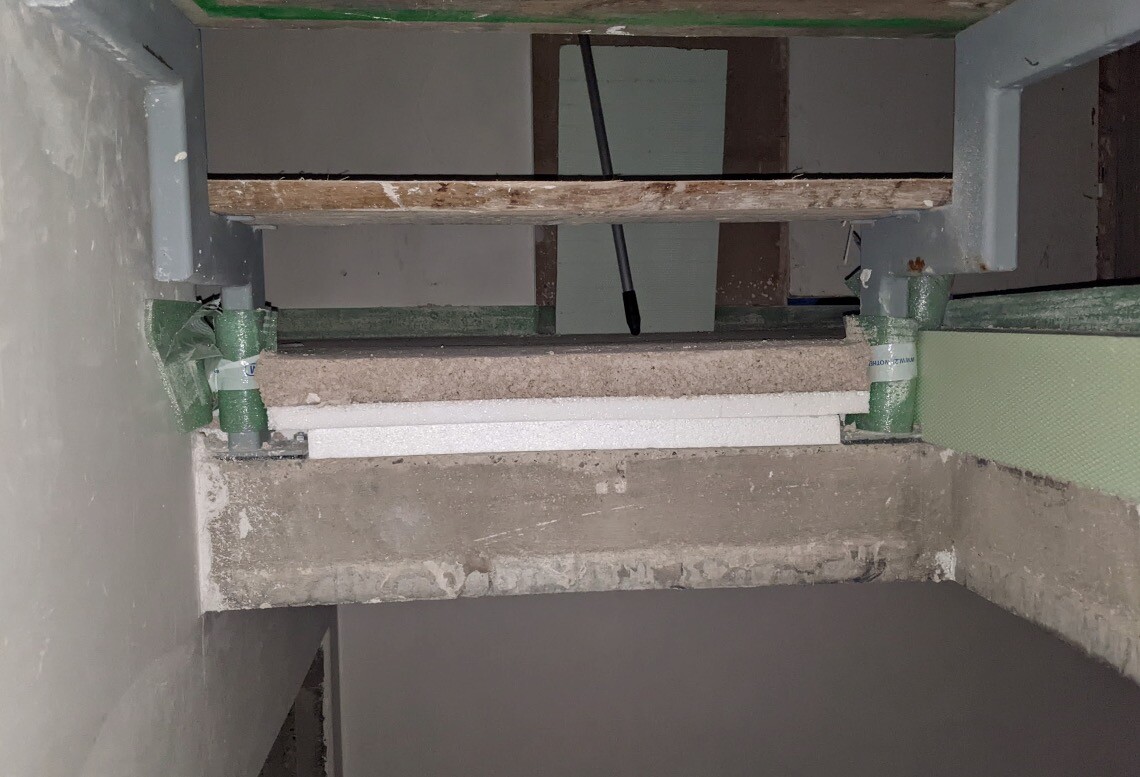
The staircase rests on the ground floor slab here:
The stair opening would need to be reduced by about 10cm (4 inches) to accommodate the shortened metal structure.
View from above:
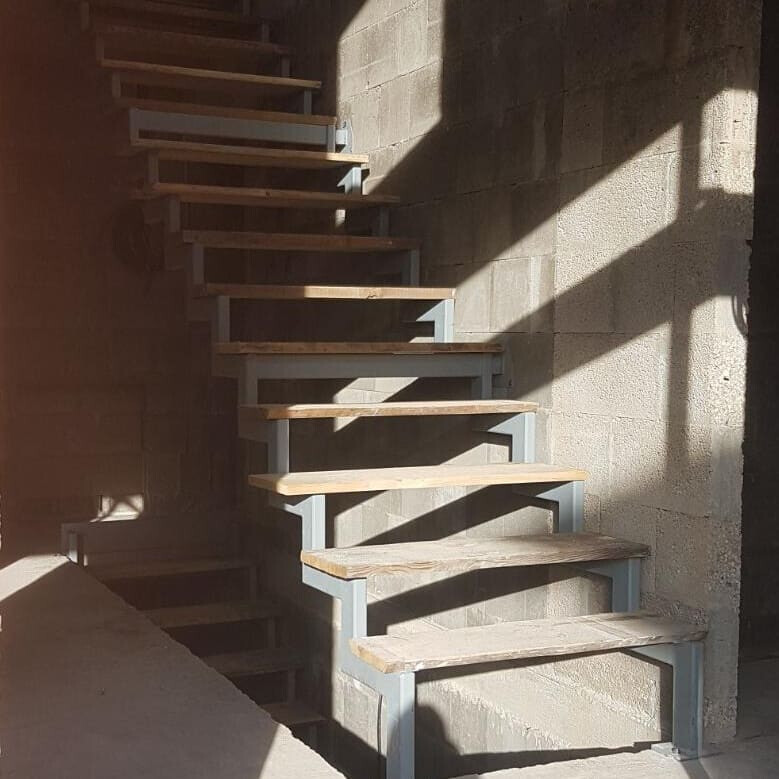
View from below (before screed):
If you need any additional plans or pictures, please let me know.
In the plan, you can see that the staircase is supposed to be flush with the wall, and there should be a rough construction gap of 1.05cm (0.4 inches) between the stair tread and the wall.
This picture shows that the metal structure already extends beyond the wall. The finished stair tread will protrude about 4cm (1.6 inches) further beyond that.
Here is a cross-section of the staircase:
Here is the staircase from the upper floor perspective, where you can see that the last step (which is on the same level as the finished floor on the upper floor) does not have the full "depth" (tread width):
The staircase rests on the ground floor slab here:
The stair opening would need to be reduced by about 10cm (4 inches) to accommodate the shortened metal structure.
View from above:
View from below (before screed):
If you need any additional plans or pictures, please let me know.