
Hello everyone,
We have a spiral U-shaped concrete staircase with a landing and want to build a railing on the inside that is as slim as possible. Since a masonry version would take up too much space, we would like to realize the railing as thin as possible using drywall construction.
For this, I thought about attaching horizontal UW profiles to each stair tread and a vertical UA profile to the stair tread itself. I’ve attached a sketch to illustrate this.
I would use a 50mm (2-inch) profile and fix 12.5mm (0.5-inch) gypsum fiberboard on both sides. That would give a total thickness of 7.5cm (3 inches).
I have two questions and hope you can help me out:
1. Would this construction be stable enough as a stair railing? Since it’s on the inside of the staircase, the railing stands free without a wall connection.
2. With a 50mm (2-inch) profile, the anchors would be placed in the center. Adding the 12.5mm (0.5-inch) board means the anchor would be positioned 37.5mm (1.5 inches) from the edge. I’m a bit concerned that the concrete might chip here. Maybe not when drilling the hole, but possibly when fastening the anchor, or if someone falls against the railing. An alternative would be chemical anchors, but there is still the concern of concrete spalling under pressure on the railing.
What do you think?
cheers
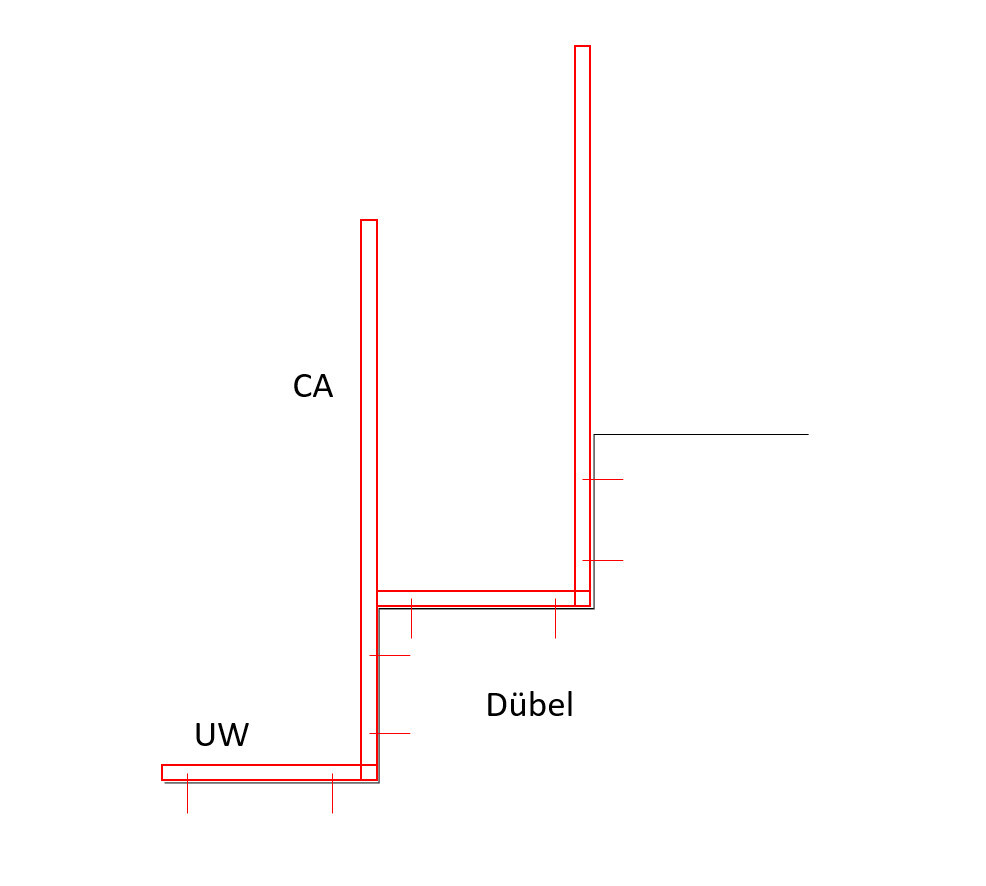
We have a spiral U-shaped concrete staircase with a landing and want to build a railing on the inside that is as slim as possible. Since a masonry version would take up too much space, we would like to realize the railing as thin as possible using drywall construction.
For this, I thought about attaching horizontal UW profiles to each stair tread and a vertical UA profile to the stair tread itself. I’ve attached a sketch to illustrate this.
I would use a 50mm (2-inch) profile and fix 12.5mm (0.5-inch) gypsum fiberboard on both sides. That would give a total thickness of 7.5cm (3 inches).
I have two questions and hope you can help me out:
1. Would this construction be stable enough as a stair railing? Since it’s on the inside of the staircase, the railing stands free without a wall connection.
2. With a 50mm (2-inch) profile, the anchors would be placed in the center. Adding the 12.5mm (0.5-inch) board means the anchor would be positioned 37.5mm (1.5 inches) from the edge. I’m a bit concerned that the concrete might chip here. Maybe not when drilling the hole, but possibly when fastening the anchor, or if someone falls against the railing. An alternative would be chemical anchors, but there is still the concern of concrete spalling under pressure on the railing.
What do you think?
cheers
Yes, unfortunately, the masonry wall does not work with a thickness of 6cm (2.4 inches), which is why we are considering drywall construction. I currently don’t have a picture of the storage room, but this should be addressed separately. We have two floors, so the storage space under the stairs on the ground floor is a special case. In the attached photos, you can see our stairs from the upper floor going down to the ground floor and then down to the basement.
The image from the previous post is simply meant to show the style we like.
Do you think I should use timber studs instead of CW and CA profiles? That wouldn’t be a problem. It makes sense to me that a timber stud is more stable than a CW profile, but a CA profile already seems quite sturdy. I assume that a timber stud and a CA profile are comparable, but if you replace the CW profile with a timber stud, then you can also replace the CA profile, right?
I wouldn’t draw too much there. Just plan one step and repeat it 34 times.
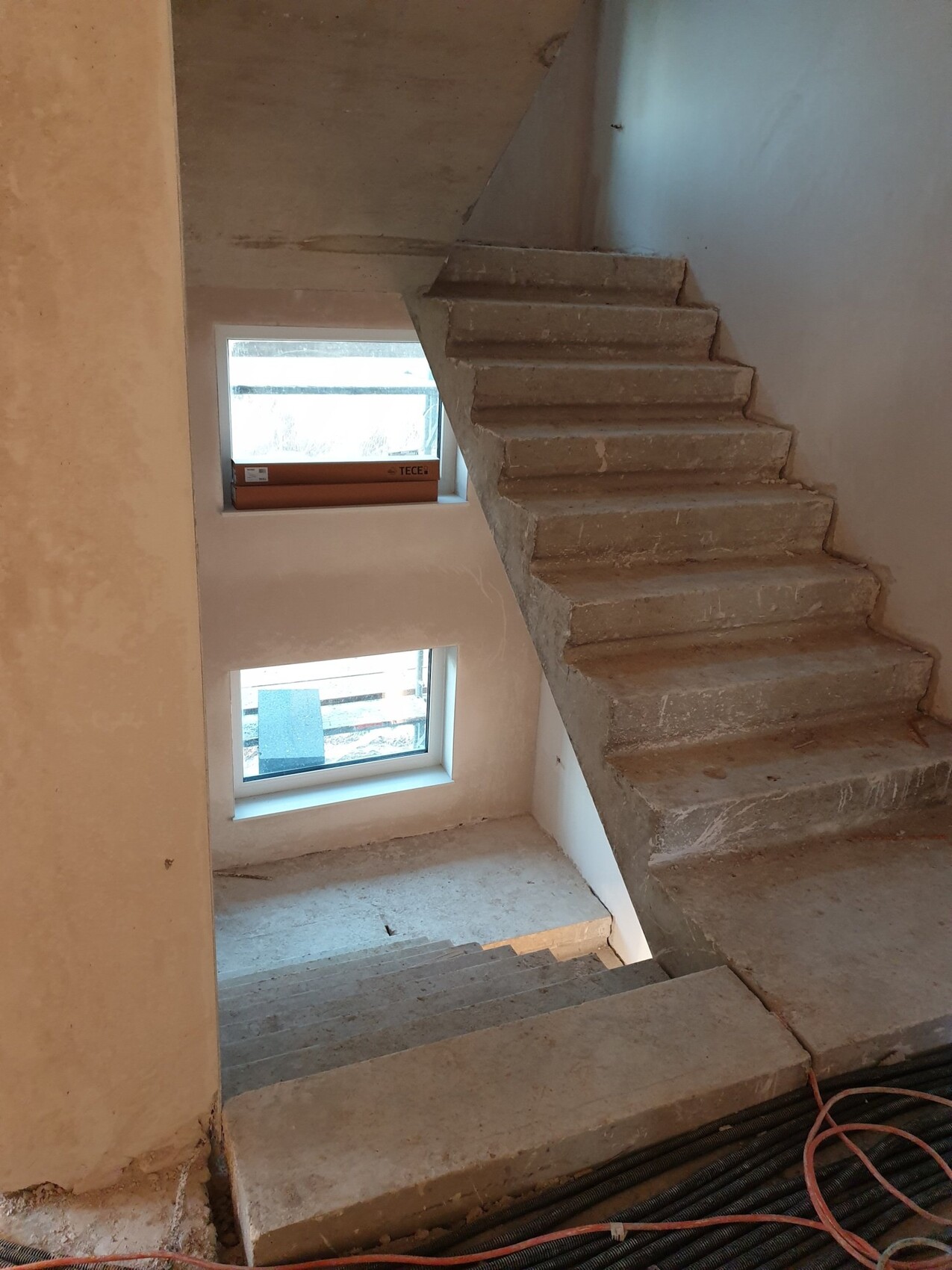
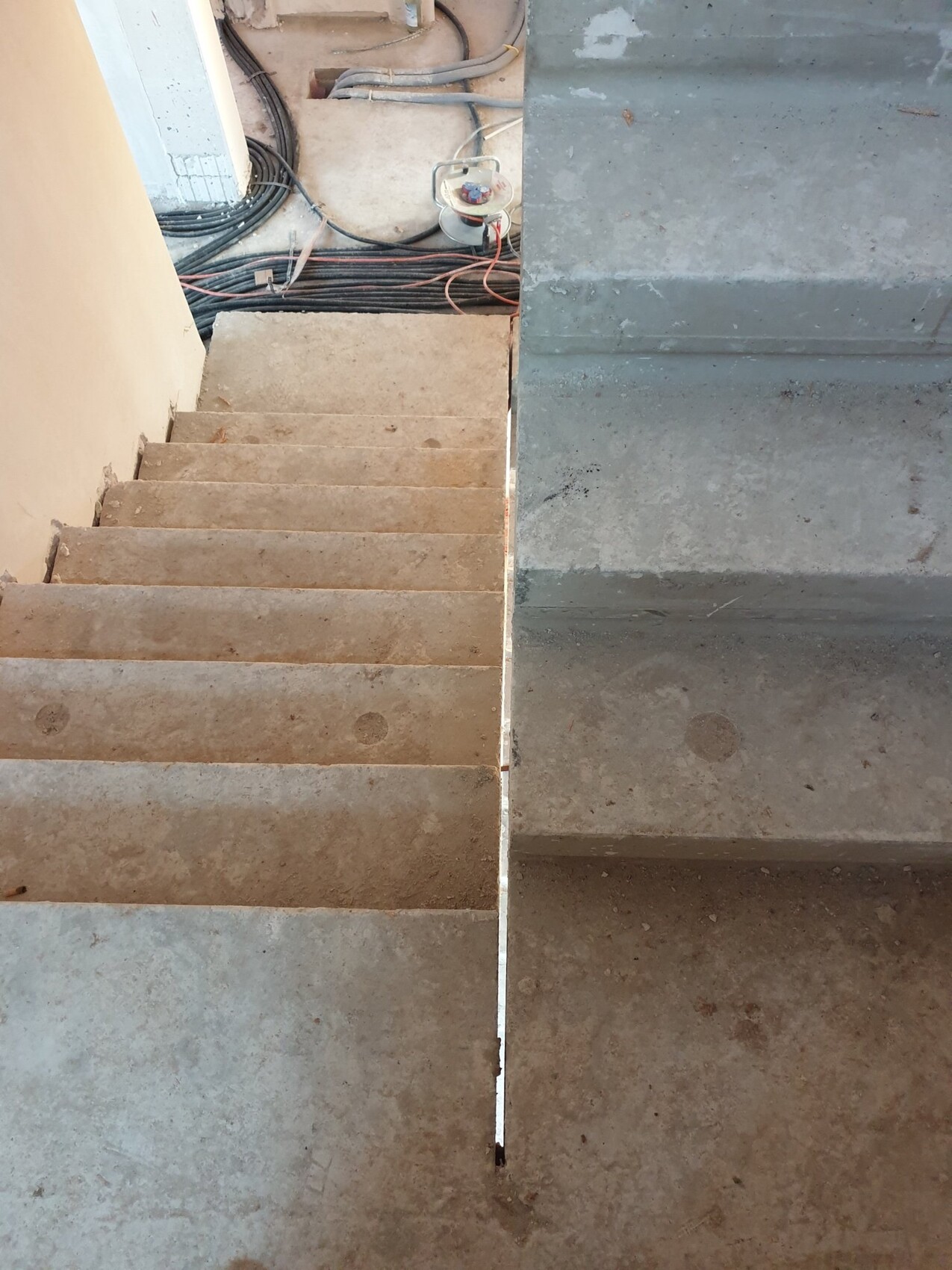
The image from the previous post is simply meant to show the style we like.
Do you think I should use timber studs instead of CW and CA profiles? That wouldn’t be a problem. It makes sense to me that a timber stud is more stable than a CW profile, but a CA profile already seems quite sturdy. I assume that a timber stud and a CA profile are comparable, but if you replace the CW profile with a timber stud, then you can also replace the CA profile, right?
I wouldn’t draw too much there. Just plan one step and repeat it 34 times.

M. Gerd schrieb:
I wouldn’t draw that much. Plan one step and then replicate it 34 times. It seems to me that you lack the spatial imagination 34 times over :-(https://www.instagram.com/11antgmxde/
https://www.linkedin.com/company/bauen-jetzt/
Maybe you should start with the drywall partition first.
You are already aware of the issues and concerns regarding edge distance for anchors and the stability of the connection.
You have been given alternatives here, which you have thoroughly dismissed or ignored.
In the worst case, you just do it a second time..!
I wish you good luck to achieve a solid overall result.
You are already aware of the issues and concerns regarding edge distance for anchors and the stability of the connection.
You have been given alternatives here, which you have thoroughly dismissed or ignored.
In the worst case, you just do it a second time..!
I wish you good luck to achieve a solid overall result.
Winjoe1 schrieb:
You were given alternatives here and dismissed or ignored them very well. I don’t understand this condescending tone right now. I don’t mean it in a malicious way or anything like that. I really don’t quite get it.
Which alternatives do you mean specifically? Because currently, the only alternative mentioned that I can recall is the squared timber beam. It was not explained why it would be used, just that it would be used, and then it was immediately qualified in the next sentence. Without a reason, you can’t just trust it blindly. So I politely asked why the squared timber would be better and was ignored, but instead I got a snarky comment.
We want a stair railing like the one shown in the previous post. Using regular railing posts as an alternative with glass panels in between doesn’t help us achieve our goal. Sorry if anyone feels offended by this.
M. Gerd schrieb:
It was never explained why one would use it, only that it would be used, and then in the very next subordinate clause that was qualified. [...] but I got a snarky comment for that. Nothing was qualified, and I simply take it humorously that you clearly have a serious misunderstanding. I think you should 1. consider the entire structure as a whole sculpture, that is a 6cm (2½ inch) rise + 2cm (¾ inch) stair opening + 6cm (2½ inch) rise = a 14cm (5½ inch) deep framework; 2. accordingly, avoid screwing a post into every side of every step individually, instead position vertical posts at intervals of two to three steps—cutting them out on one side or the other is, to say the least, quite complex in terms of spatial composition, and nowhere something that could simply be repeated step by step using a 34mm (1¼ inch) pattern.
You build the entire structure like a roof frame lying flat and first sheath it completely on one side. Use squared timber at 10cm (4 inches) thickness in the thickest parts, sheathed once vertically and once following the diagonal upper edge. @kbt09 might be able to draw that, but expecting that for free in a forum is too much, so have an experienced carpenter do that for you. Then you stand it up, secure the posts and rails, and sheath the other side, finishing with the second sheathing layer. If you feel inventive, you can add step lighting as an optional feature.
You see: the task is solvable—but the solution is light years away from simply shifting a 34mm (1¼ inch) template up one step and stuffing 68 dowels in. And using any pre-made profiles where you only decide between option XY or QZ won’t work either. This is not beginner’s geometry with some simple linear displacement; it requires serious thinking long before the cordless screwdriver is even charged. Good luck!
https://www.instagram.com/11antgmxde/
https://www.linkedin.com/company/bauen-jetzt/
I am not able to give a constructive response yet, but I would like to sincerely thank you for your reply! In the meantime, I have decided today to implement the whole thing using timber beams, but I had not seen your approach before. I need to think it over calmly, as I cannot yet fully understand all the points you made. However, I believe I understand what you mean, and as I said at the beginning, thank you for the very helpful response.
Similar topics