
Hello everyone,
briefly outlining the situation. It’s a single-family house from 1948, so it was built quite simply. The wall is 36cm (14 inches) thick with a cavity. According to the neighbor, the house was supposed to be replastered in the 1970s, but when the plaster was removed, the bricks became loose, so the walls were opened up, filled with concrete, and then insulated with “sauerkraut boards.” Unfortunately, this was not done in the basement. When I drill here, individual bricks move.
Now, a detached extension is planned.
My concern is that the old building might be damaged.
1. Increased load on the basement walls due to concrete in the upper walls.
2. Lack of earth pressure when excavating the strip foundation.
3. Vibrations during compaction.
I want to reinforce the old basement wall. My idea would also be to open the wall and fill it with concrete. However, in the timber-frame forum, someone advised against fully filling a cavity wall with concrete. What are the reasons against this? If the concrete pressure is too high, I could also pour it in layers. Partially digging out the wall and gradually building the strip foundation in front of it seems much more complicated to me.
Thanks for your advice.
briefly outlining the situation. It’s a single-family house from 1948, so it was built quite simply. The wall is 36cm (14 inches) thick with a cavity. According to the neighbor, the house was supposed to be replastered in the 1970s, but when the plaster was removed, the bricks became loose, so the walls were opened up, filled with concrete, and then insulated with “sauerkraut boards.” Unfortunately, this was not done in the basement. When I drill here, individual bricks move.
Now, a detached extension is planned.
My concern is that the old building might be damaged.
1. Increased load on the basement walls due to concrete in the upper walls.
2. Lack of earth pressure when excavating the strip foundation.
3. Vibrations during compaction.
I want to reinforce the old basement wall. My idea would also be to open the wall and fill it with concrete. However, in the timber-frame forum, someone advised against fully filling a cavity wall with concrete. What are the reasons against this? If the concrete pressure is too high, I could also pour it in layers. Partially digging out the wall and gradually building the strip foundation in front of it seems much more complicated to me.
Thanks for your advice.
In der Ruine schrieb:
Just without structural engineer advice for now (I will ask one later), does anyone know a case where a house collapsed because a basement wall was excavated or is that an urban legend?Sure, these cases regularly appear in the news. For example, "Insurance refuses to pay after collapse" last year: collapse after excavation work for drainage.
In der Ruine schrieb:
Sorry, but it’s "above" in the plan. The bathroom window becomes the door. Ah yes, still on the gable side. I assume it will be difficult to extend the roof linearly like that. If the extension is going to be two stories, I would connect it with a shed roof so that its ridge remains within the straight section of the gable wall.
In der Ruine schrieb:
The structural engineer will come by again next week. He will be glad. What you uncovered is likely representative. 38cm (15 inches) thick walls above the basement were uncommon even before the war; 25cm (10 inches) walls were typically used. Under post-war supply conditions, it was probably not built as originally planned. On the other hand, something that has stood for so long seems to be stable and solid.
https://www.instagram.com/11antgmxde/
https://www.linkedin.com/company/bauen-jetzt/
 In der Ruine9 Sep 2021 18:53
Just for your information, the extension is already planned and approved (building permit / planning permission). Now it’s only about the execution and dealing with the existing building.
Since I want to do everything myself, I need some advice here and there.
Since I want to do everything myself, I need some advice here and there.
R
RuineinBigL2 Oct 2024 10:47In der Ruine schrieb:
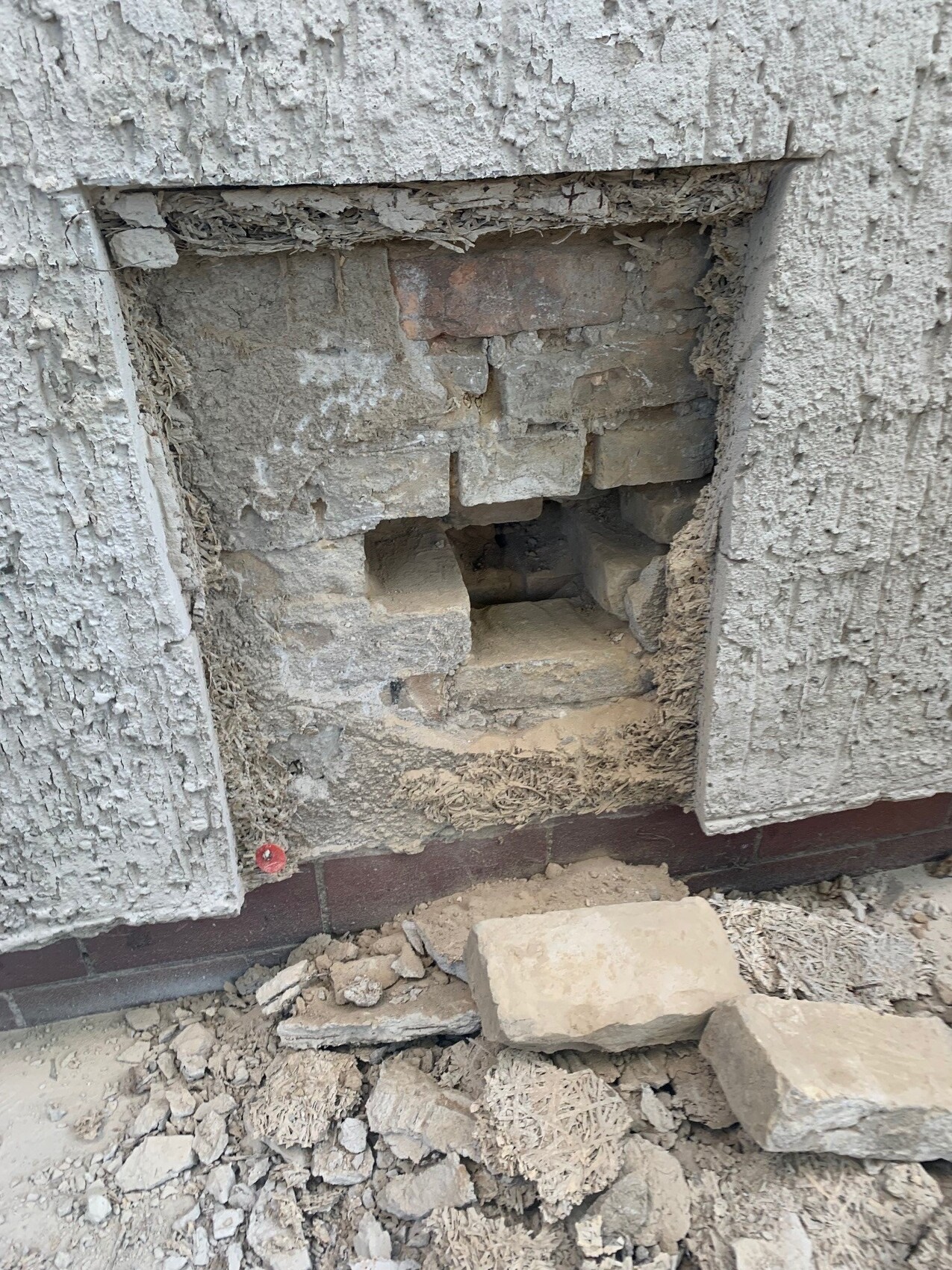
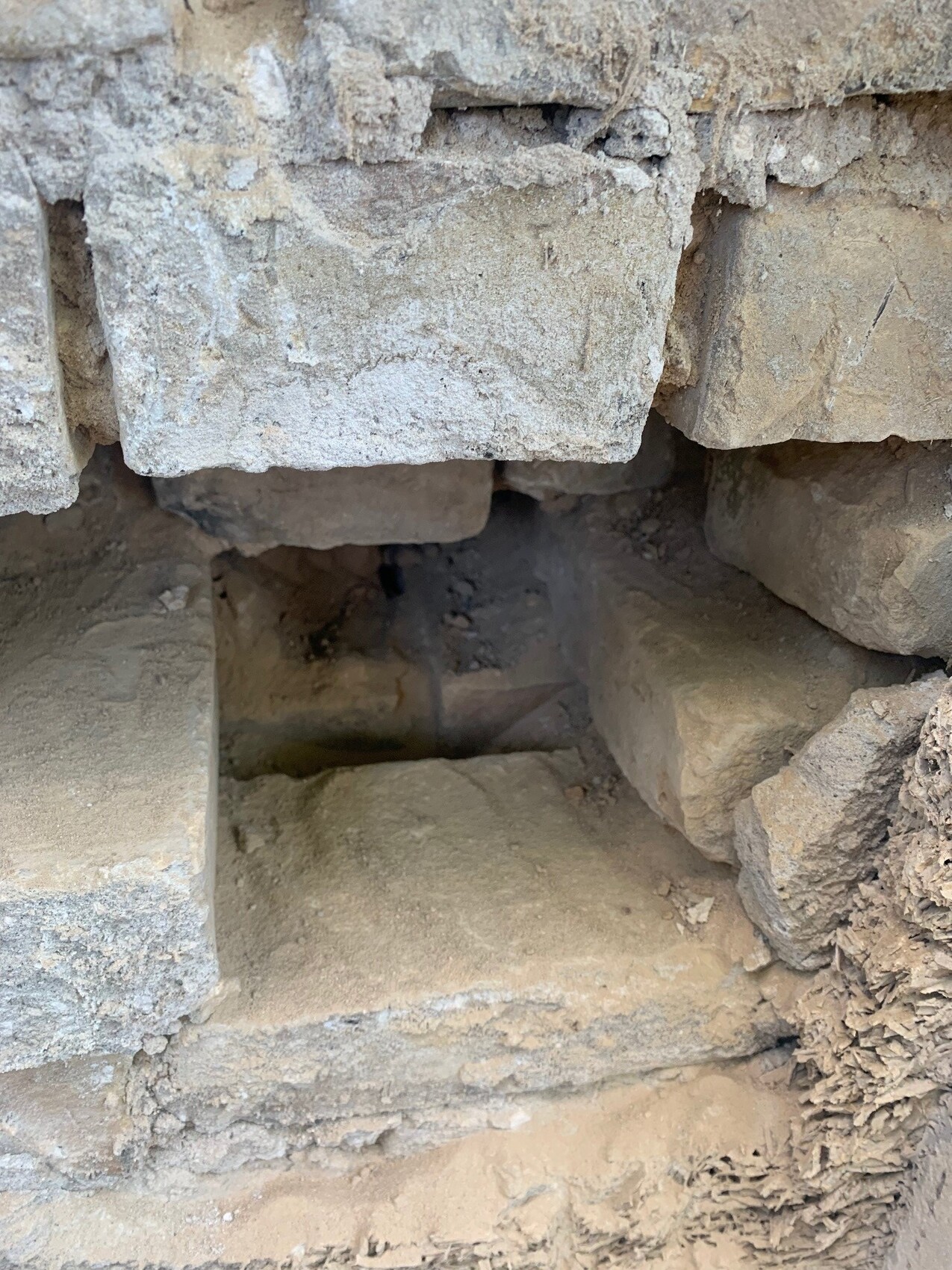
So, I have now opened up the wall, and yes, the wall is not hollow but alarmingly “crumby.”
Tapping one brick too hard makes it loose, and it can be pulled out of the wall.
So, filling with concrete is out of the question.
Now, without consulting a structural engineer yet (I will still ask one), does anyone know of a case where a house collapsed because a basement wall was excavated/opened up, or is that an urban legend?
Hello,
A few years ago, we bought a residential house from 1946 in Brandenburg. The walls look just like in your pictures. Since stability is at the very top of our to-do list, I wanted to ask if you have since filled the basement walls with concrete or similar?
Many thanks!
In der Ruine2 Oct 2024 15:19I didn’t touch the basement walls at all. I performed underpinning according to DIN standards. I excavated section by section down to the basement floor and poured concrete blocks in front of the basement wall.
Similar topics