
Hello everyone,
We are currently planning the arrangement of our recessed lights—mainly in the shower area of our bathroom.
At the moment, our contract includes 4 recessed lights at our request, but this number can of course be increased or decreased anytime (1 recessed light for concrete ceiling = €70.00).
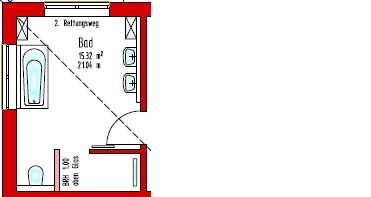
I have attached our bathroom on the upper floor.
Shower: the full depth to the "toilet wall" is 2.10 m (7 feet), with a width of 1.00 m (3 feet 3 inches). The wall towards the door will be built up three-quarters high, meaning the shower is not fully enclosed and may still get some light since the wall does not reach the ceiling. The toilet wall is half height and has glass above it, so light also comes in here. How many recessed lights would you install in the shower, and how would you arrange them? Are 4 recessed lights really necessary here?
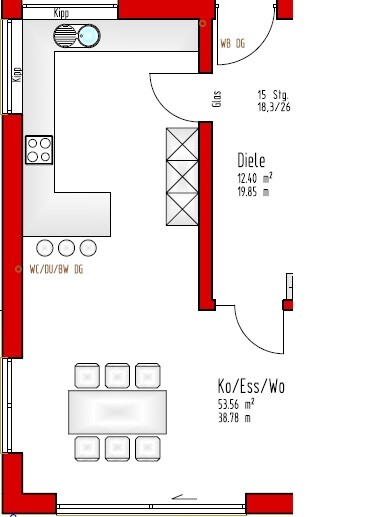
I have also attached our kitchen on the ground floor.
We are planning to add 2 recessed lights above the breakfast bar, plus a normal ceiling light centered in the kitchen. Does this make sense or not? The kitchen is quite long, so we assume that 2 recessed lights above the bar area would improve the lighting.
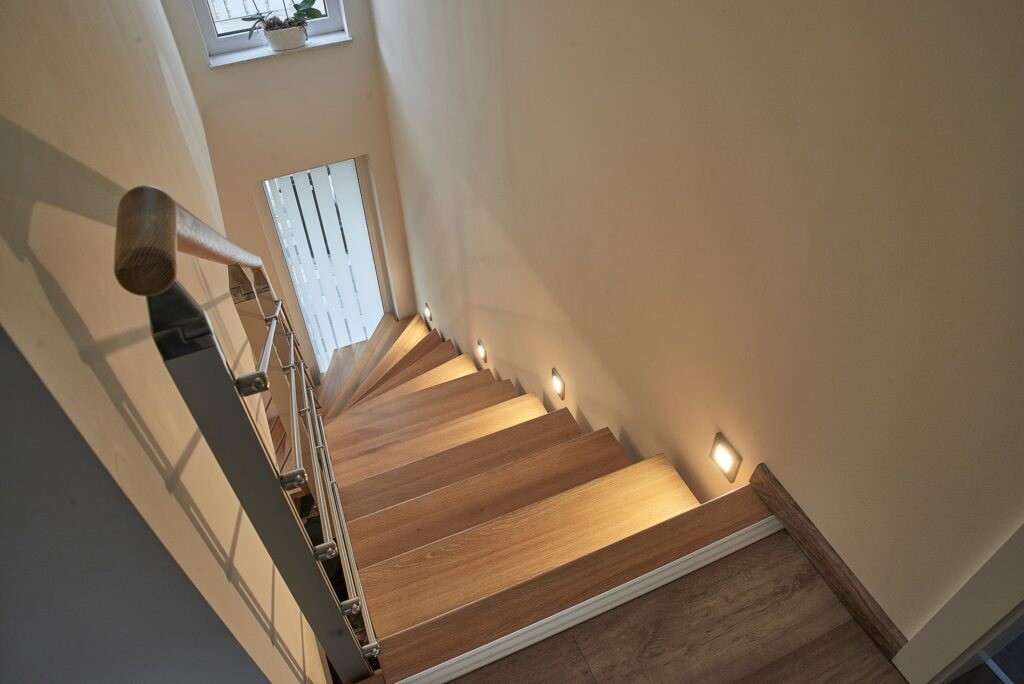
We are also considering typical recessed lighting along the stairs—see the example image attached.
What do you think about that? Is the main contractor allowed to charge the €70.00 per recessed light here as well, or is it somehow cheaper to install wall-mounted lights? Does this make sense at all, or does anyone have experience with it? Or is it ultimately just a visual highlight that ends up costing a lot?
Otherwise, we are not planning any other recessed lights in the house.
We would appreciate brief feedback on our thoughts 🙂
We are currently planning the arrangement of our recessed lights—mainly in the shower area of our bathroom.
At the moment, our contract includes 4 recessed lights at our request, but this number can of course be increased or decreased anytime (1 recessed light for concrete ceiling = €70.00).
I have attached our bathroom on the upper floor.
Shower: the full depth to the "toilet wall" is 2.10 m (7 feet), with a width of 1.00 m (3 feet 3 inches). The wall towards the door will be built up three-quarters high, meaning the shower is not fully enclosed and may still get some light since the wall does not reach the ceiling. The toilet wall is half height and has glass above it, so light also comes in here. How many recessed lights would you install in the shower, and how would you arrange them? Are 4 recessed lights really necessary here?
I have also attached our kitchen on the ground floor.
We are planning to add 2 recessed lights above the breakfast bar, plus a normal ceiling light centered in the kitchen. Does this make sense or not? The kitchen is quite long, so we assume that 2 recessed lights above the bar area would improve the lighting.
We are also considering typical recessed lighting along the stairs—see the example image attached.
What do you think about that? Is the main contractor allowed to charge the €70.00 per recessed light here as well, or is it somehow cheaper to install wall-mounted lights? Does this make sense at all, or does anyone have experience with it? Or is it ultimately just a visual highlight that ends up costing a lot?
Otherwise, we are not planning any other recessed lights in the house.
We would appreciate brief feedback on our thoughts 🙂
Ysop*** schrieb:
Personally, I would have chosen pendant lights above the counter. They simply create a more homely atmosphere than spotlights 🙂 The lamp in the middle of the kitchen could be a spotlight from the same series.We want to have a pendant light above the dining table, but having another pendant light just 2 meters (6.5 feet) away at the open counter would probably look a bit odd.
H
hampshire1 Apr 2021 14:35There are also attractive ceiling lights that are not flush-mounted and provide wonderful lighting. Alignment works especially well with a track system. For example, the Nordic Trac system is affordable and very flexible.
exto1791 schrieb:
We want to have a pendant light over the dining table, but having another pendant light just 2 meters (6.5 feet) away at the open kitchen counter might look a bit odd, I think.That’s not necessarily the case. Of course, it shouldn’t look like a jumble of lights :-) I could imagine simple black pendant lights for the kitchen and maybe the same design in white for the dining table. Or the same color but a different style (2-3 individual pendant lights over the counter, one long linear pendant over the dining table). Or actually a track lighting system for the kitchen.
P
pagoni20201 Apr 2021 17:54Lighting is an interesting topic, but personal preference always plays a big role. In one of our bathrooms, we have a very wide mirror with a slim, wide LED light installed above it. When I switch it on, the entire 8m² (86ft²) bathroom is extremely bright; such bright lighting is ideal for a mirror. Since our bathroom layout is a bit complex, we also installed two smaller, inexpensive Philips lights distributed around the room for general lighting. Of course, you can create endless lighting scenarios, but that requires separate switches, and in the end, you usually only use one or two settings. Clearly, the shower area needs to be well lit but not glaring.
At around €70 (approximately $75) per fixture, costs can add up quickly, and when you buy the real quality lights, the prices can be quite high, often leading to the use of cheaper materials. Installing recessed spotlights, in my opinion, requires careful consideration because it limits you regarding choice, beam angle, etc.
I would rather think about more wall lamps and also a track lighting system. I once had a track system where the lights could be removed and attached by magnets. Check out brands like Oligo, Bruck, or, as @hampshire mentioned, Paulmann among others.
We have a similar issue at our kitchen counter: the work surface should be brightly lit, while the bar or counter area should have a more romantic atmosphere; two lamps side by side would look awkward. With a track system, you can play around with this easily. We installed a large, flat ceiling light with various lighting options, which you can find starting at around €200 (about $215).
Also, consider floor lamps and the flexibility to adapt your lighting. I’m not a big fan of spotlights in living areas; they can make me uncertain, and I might end up installing too many just to be safe. With the money saved, you could invest in a really nice central light fixture for the living space where you don’t have to worry about cost.
At around €70 (approximately $75) per fixture, costs can add up quickly, and when you buy the real quality lights, the prices can be quite high, often leading to the use of cheaper materials. Installing recessed spotlights, in my opinion, requires careful consideration because it limits you regarding choice, beam angle, etc.
I would rather think about more wall lamps and also a track lighting system. I once had a track system where the lights could be removed and attached by magnets. Check out brands like Oligo, Bruck, or, as @hampshire mentioned, Paulmann among others.
We have a similar issue at our kitchen counter: the work surface should be brightly lit, while the bar or counter area should have a more romantic atmosphere; two lamps side by side would look awkward. With a track system, you can play around with this easily. We installed a large, flat ceiling light with various lighting options, which you can find starting at around €200 (about $215).
Also, consider floor lamps and the flexibility to adapt your lighting. I’m not a big fan of spotlights in living areas; they can make me uncertain, and I might end up installing too many just to be safe. With the money saved, you could invest in a really nice central light fixture for the living space where you don’t have to worry about cost.

Hey,
I am a fan of using a variety of light sources and types of lighting throughout the house.
Dialux is a great program for simulating lighting. I recreated our house exactly in Dialux and planned a lot with it.
Personally, I would plan three types of lighting in the bathroom:
1.) General lighting
- Recessed spotlights could be used here.
- In the shower area, I would use 2 adjustable spotlights with a 60° beam angle.
- In the center of the room, maybe the same recessed spotlights as in the shower or 2 individual ones with a wider beam angle and higher output, or 1-2 stylish ceiling lights. The main thing is bright light.
2.) Vanity lighting
There are many options here.
- For example, wall lamps – mirror – wall lamps – mirror – wall lamps, illuminated mirrors, or pendant lights on the sides of the mirror.
- Don’t forget lighting for the makeup mirror if desired.
3.) Cozy lighting
I don’t find overhead lighting ideal for this and would rather rely on wall and decorative lighting (unless you illuminate the wall to highlight, for example, a picture or painting).
If overhead lighting is used here, it should hang quite low.
- Between the toilet and bathtub, a wall lamp.
- Is there a tall cabinet planned at the top left of the room? Otherwise, I would either install a wall light there or 2 low-hanging pendant lights. The cozy lighting should always be dimmable.
Stair lighting:
We installed Delta Light: Heli 1 Screen on every second step and are very satisfied.
The most beautiful light is simply light that does not come from above.
In addition to step lighting, I would definitely plan ceiling light(s) depending on the staircase.
Kitchen:
Here, two lighting groups:
1.) Task lighting
General room and work area lighting.
In the work areas, 500-600 lux is appropriate.
2.) Counter lighting
No spotlights at the counter; instead, use a continuous pendant light or 3 individual pendants. Maybe from the same brand and series as the dining table lighting.
If I’m sitting comfortably at the counter, I don’t want the light to be too bright.
I am a fan of using a variety of light sources and types of lighting throughout the house.
Dialux is a great program for simulating lighting. I recreated our house exactly in Dialux and planned a lot with it.
Personally, I would plan three types of lighting in the bathroom:
1.) General lighting
- Recessed spotlights could be used here.
- In the shower area, I would use 2 adjustable spotlights with a 60° beam angle.
- In the center of the room, maybe the same recessed spotlights as in the shower or 2 individual ones with a wider beam angle and higher output, or 1-2 stylish ceiling lights. The main thing is bright light.
2.) Vanity lighting
There are many options here.
- For example, wall lamps – mirror – wall lamps – mirror – wall lamps, illuminated mirrors, or pendant lights on the sides of the mirror.
- Don’t forget lighting for the makeup mirror if desired.
3.) Cozy lighting
I don’t find overhead lighting ideal for this and would rather rely on wall and decorative lighting (unless you illuminate the wall to highlight, for example, a picture or painting).
If overhead lighting is used here, it should hang quite low.
- Between the toilet and bathtub, a wall lamp.
- Is there a tall cabinet planned at the top left of the room? Otherwise, I would either install a wall light there or 2 low-hanging pendant lights. The cozy lighting should always be dimmable.
Stair lighting:
We installed Delta Light: Heli 1 Screen on every second step and are very satisfied.
The most beautiful light is simply light that does not come from above.
In addition to step lighting, I would definitely plan ceiling light(s) depending on the staircase.
Kitchen:
Here, two lighting groups:
1.) Task lighting
General room and work area lighting.
In the work areas, 500-600 lux is appropriate.
2.) Counter lighting
No spotlights at the counter; instead, use a continuous pendant light or 3 individual pendants. Maybe from the same brand and series as the dining table lighting.
If I’m sitting comfortably at the counter, I don’t want the light to be too bright.
exto1791 schrieb:
Otherwise, we planned one main light source somewhere in the middle of the bathroom; that should be enough, right?A good main light source. Then dimmable. Plus mirror lighting.exto1791 schrieb:
Dimming in the bathroom? Isn’t that unnecessary?... for the spa-like atmosphere 😉Similar topics