
ᐅ Unique floor plan or just a standard layout with a basement?
Created on: 8 Oct 2023 22:40
F
FamilieForest
Hello dear floor plan experts,
I’ll get straight to the point and start with the questionnaire:
Development Plan / Restrictions
Plot size – approx. 1000m² (to be subdivided)
Slope – approx. 60cm (2 ft) height difference over 10m (approximate building area)
Location – Bavaria (Franconia)
Some details are unknown because there is no development plan (e.g., floor area ratio, plot ratio, building area, building line and boundary, edge development, etc.)
Roof style / design / orientation according to surroundings – but really almost everything is present in the neighborhood.
Client Requirements
Style, roof design, building type – Single-family house – preferably hip roof / clipped hip roof, possibly also gable roof with high knee wall, not just rectangular
Basement, floors – Basement + ground floor + upper floor
Number of people, ages – 2 adults (31, 32) and one child (2 years) + 2nd child not excluded
Space requirements for ground floor and upper floor –
Ground floor: Living-dining room adjacent to kitchen (separate room, preferably with large sliding door to dining room), pantry connected to kitchen, 1 office with sofa bed (10m² (108 sq ft)), WC and shower
Upper floor: 2 children's rooms (preferably equal size, at least 14m² (150 sq ft)), master bedroom, walk-in closet (separate from bedroom), 1 bathroom
Basement: Study (+ sofa bed), workshop (craft room), technical room, storage space
Office use: family or home office? – I work permanently from home, my husband 2 days per week
Guests per year – 4 (family from farther away, so although “only” 4, more frequent during the year)
Open or closed architecture – rather closed, but spacious living/dining area
Conservative or modern construction – good question?
Open kitchen, kitchen island – closed kitchen, considering the size / closed-off kitchen probably no island, possibly an extended kitchen counter with 3 bar stools?
Number of dining seats – 8 in the dining room, 3-4 bar stools in the kitchen
Fireplace – maybe
Music/stereo wall – no
Balcony, roof terrace – not essential, but okay if it fits well
Garage, carport – preferably double garage, but probably initially nothing due to costs, then double carport
Utility garden, greenhouse – not planned yet
Other wishes / special features / daily routine, also reasons why some things should or should not be included – We need storage space + a second study, hence the desire for a basement, beautiful south-facing view, therefore living/dining area faces south, entrance on the east (street side), no rectangular box-shaped house – preferably something “special” like a corner annex or bay window
House Design
Who is the designer? Architect
What do you particularly like? Why? – Coatroom and shower/WC on the ground floor take up little space and are functional – orientation towards street + north side also good, pantry adjacent to kitchen with passage through kitchen cabinet wall, dining room layout facing south (planned corner glazing at the dining table), room sizes nice
What don’t you like? Why? – We miss the “special touch,” kitchen space feels wasted, staircase possibly too large?
Price estimate from architect/planner: 750,000€ (approx. $810,000) including basement (prefabricated house manufacturer’s offer)
Personal price limit for house including equipment: 650,000€ (approx. $700,000)
Preferred heating technology: Underfloor heating / photovoltaic system
If you have to do without, which details / additional features:
You can do without: Hip roof, sauna and shower in basement, hobby/workshop room
You cannot do without: Basement, photovoltaic system, pantry, 2nd study, storage space, plus energy (also with regard to KFW 300 funding)
Why did the design turn out the way it is? For example:
Which wishes were implemented exactly by the architect? It was implemented 1:1 exactly as we said without the architect’s own ideas or objections.
We were recommended the architect from the prefabricated house company and planned together, but now we are being strongly advised against the basement (we have poor soil conditions, so a waterproof concrete shell must be planned, and the basement costs about 130,000€ (approx. $140,000) plus incidental construction costs). However, we are not satisfied yet because the cost estimate far exceeds our budget. The fact is: As it is now, we cannot afford it, even though some parameters (650k budget, no rectangular shape, basement) were clearly communicated from the start. Now we are being asked either to leave out the basement (we already reduced it to just a useful basement) or to make the house rectangular on the upper floors (9 x 11m (30 x 36 ft) – so the “annex” removed).
Do you perhaps have recommendations regarding providers – maybe with our many wishes we simply cannot afford to build a house with Luxhaus, and we need to reduce scope to a “mid-range” manufacturer... A “low budget” option (Massa Haus, Allkauf Haus, Okal Haus) is not an option if it compromises quality.
What we hope for now are critical reviews of our floor plan and ideas for the “special something.” Also an assessment of whether a basement really makes no sense in our case. Are there alternative floor plans that really include storage space? If we add 2 rooms on the upper floor + ground floor instead of a basement, we will probably also reach the 130,000€ the basement would cost. Unfortunately, we only discovered this great forum now and already hired (through recommendation) an architect, but we hope with your help we can still “save something.”
Thanks so much in advance!
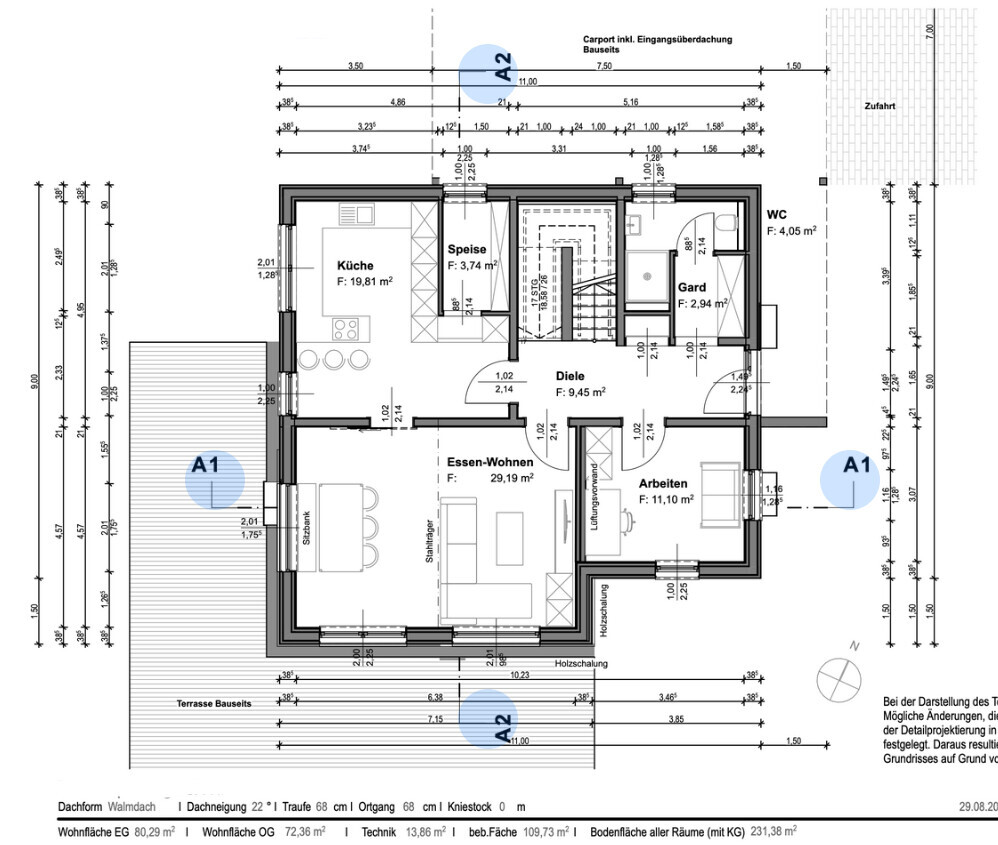
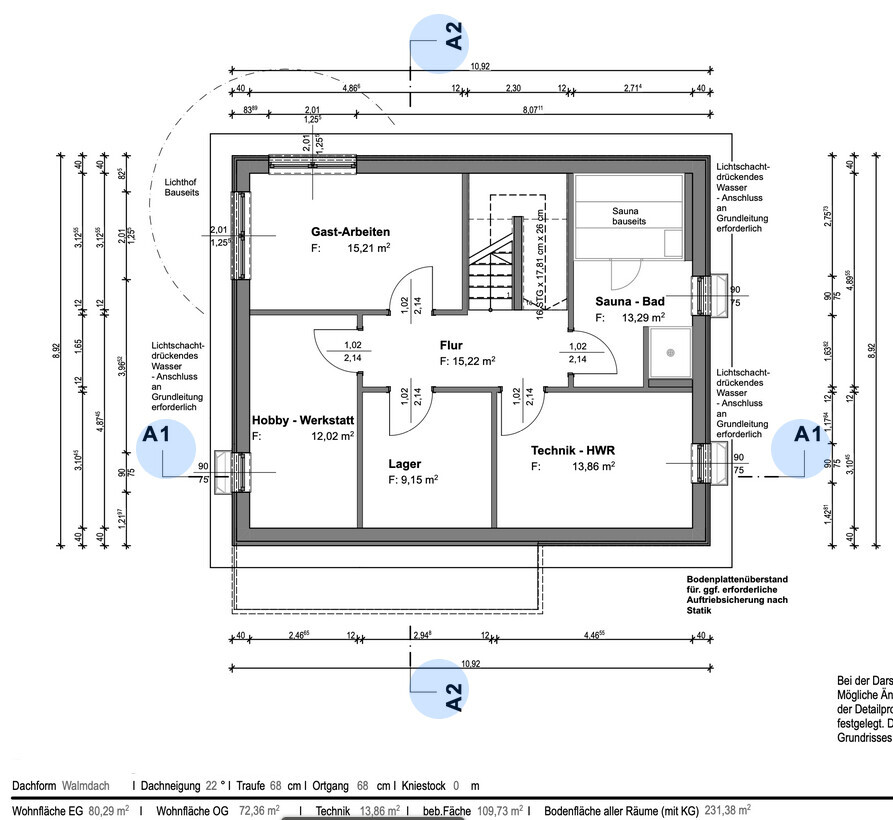
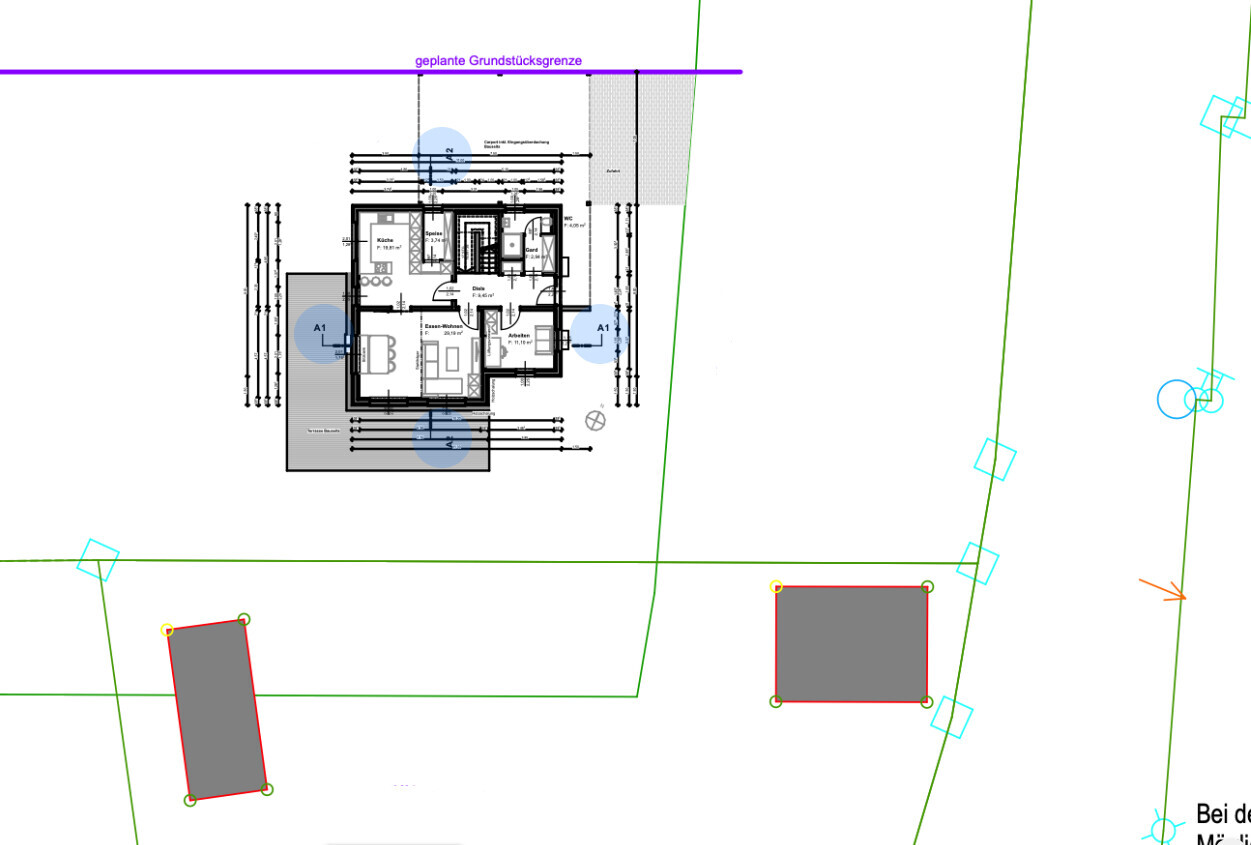
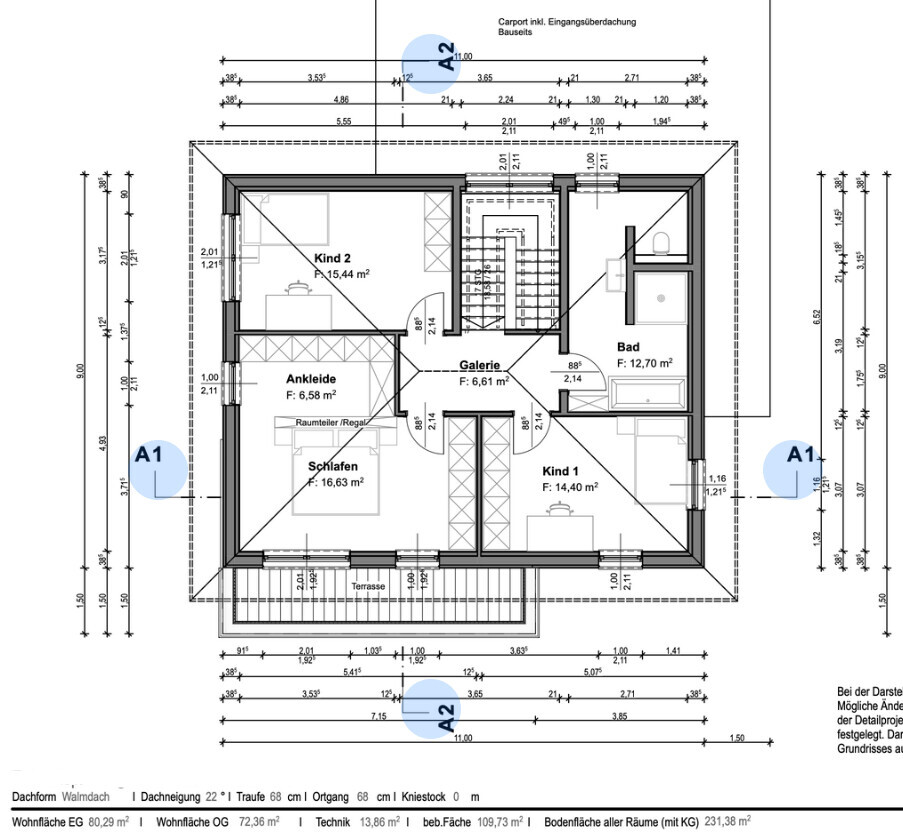
I’ll get straight to the point and start with the questionnaire:
Development Plan / Restrictions
Plot size – approx. 1000m² (to be subdivided)
Slope – approx. 60cm (2 ft) height difference over 10m (approximate building area)
Location – Bavaria (Franconia)
Some details are unknown because there is no development plan (e.g., floor area ratio, plot ratio, building area, building line and boundary, edge development, etc.)
Roof style / design / orientation according to surroundings – but really almost everything is present in the neighborhood.
Client Requirements
Style, roof design, building type – Single-family house – preferably hip roof / clipped hip roof, possibly also gable roof with high knee wall, not just rectangular
Basement, floors – Basement + ground floor + upper floor
Number of people, ages – 2 adults (31, 32) and one child (2 years) + 2nd child not excluded
Space requirements for ground floor and upper floor –
Ground floor: Living-dining room adjacent to kitchen (separate room, preferably with large sliding door to dining room), pantry connected to kitchen, 1 office with sofa bed (10m² (108 sq ft)), WC and shower
Upper floor: 2 children's rooms (preferably equal size, at least 14m² (150 sq ft)), master bedroom, walk-in closet (separate from bedroom), 1 bathroom
Basement: Study (+ sofa bed), workshop (craft room), technical room, storage space
Office use: family or home office? – I work permanently from home, my husband 2 days per week
Guests per year – 4 (family from farther away, so although “only” 4, more frequent during the year)
Open or closed architecture – rather closed, but spacious living/dining area
Conservative or modern construction – good question?
Open kitchen, kitchen island – closed kitchen, considering the size / closed-off kitchen probably no island, possibly an extended kitchen counter with 3 bar stools?
Number of dining seats – 8 in the dining room, 3-4 bar stools in the kitchen
Fireplace – maybe
Music/stereo wall – no
Balcony, roof terrace – not essential, but okay if it fits well
Garage, carport – preferably double garage, but probably initially nothing due to costs, then double carport
Utility garden, greenhouse – not planned yet
Other wishes / special features / daily routine, also reasons why some things should or should not be included – We need storage space + a second study, hence the desire for a basement, beautiful south-facing view, therefore living/dining area faces south, entrance on the east (street side), no rectangular box-shaped house – preferably something “special” like a corner annex or bay window
House Design
Who is the designer? Architect
What do you particularly like? Why? – Coatroom and shower/WC on the ground floor take up little space and are functional – orientation towards street + north side also good, pantry adjacent to kitchen with passage through kitchen cabinet wall, dining room layout facing south (planned corner glazing at the dining table), room sizes nice
What don’t you like? Why? – We miss the “special touch,” kitchen space feels wasted, staircase possibly too large?
Price estimate from architect/planner: 750,000€ (approx. $810,000) including basement (prefabricated house manufacturer’s offer)
Personal price limit for house including equipment: 650,000€ (approx. $700,000)
Preferred heating technology: Underfloor heating / photovoltaic system
If you have to do without, which details / additional features:
You can do without: Hip roof, sauna and shower in basement, hobby/workshop room
You cannot do without: Basement, photovoltaic system, pantry, 2nd study, storage space, plus energy (also with regard to KFW 300 funding)
Why did the design turn out the way it is? For example:
Which wishes were implemented exactly by the architect? It was implemented 1:1 exactly as we said without the architect’s own ideas or objections.
We were recommended the architect from the prefabricated house company and planned together, but now we are being strongly advised against the basement (we have poor soil conditions, so a waterproof concrete shell must be planned, and the basement costs about 130,000€ (approx. $140,000) plus incidental construction costs). However, we are not satisfied yet because the cost estimate far exceeds our budget. The fact is: As it is now, we cannot afford it, even though some parameters (650k budget, no rectangular shape, basement) were clearly communicated from the start. Now we are being asked either to leave out the basement (we already reduced it to just a useful basement) or to make the house rectangular on the upper floors (9 x 11m (30 x 36 ft) – so the “annex” removed).
Do you perhaps have recommendations regarding providers – maybe with our many wishes we simply cannot afford to build a house with Luxhaus, and we need to reduce scope to a “mid-range” manufacturer... A “low budget” option (Massa Haus, Allkauf Haus, Okal Haus) is not an option if it compromises quality.
What we hope for now are critical reviews of our floor plan and ideas for the “special something.” Also an assessment of whether a basement really makes no sense in our case. Are there alternative floor plans that really include storage space? If we add 2 rooms on the upper floor + ground floor instead of a basement, we will probably also reach the 130,000€ the basement would cost. Unfortunately, we only discovered this great forum now and already hired (through recommendation) an architect, but we hope with your help we can still “save something.”
Thanks so much in advance!

hanse987 schrieb:
The height of the floor-to-ceiling doors on the upper floor is marked as 2.11 meters (7 ft). The two doors in the bedroom leading to the (roof) terrace are marked as 1.92 meters (6 ft 4 in). I now think that the top edge of all doors is at the same height. These will be floor-to-ceiling windows—naturally without any low threshold. I had already thought you could read heights written with invisible ink ;-)
I didn’t even look for such details. They belong at the earliest in design development drawings. The plans shown here already contain details that are absolutely inappropriate for preliminary design planning. The proper scale for preliminary design is 1:200 for good reason, because individual centimeters have no place at this stage. It’s a major planning mistake when an “architect” is already fantasizing about wall cladding while fundamental questions like “basement yes or no” / “does the house fit the budget” have not yet been resolved!!!
https://www.instagram.com/11antgmxde/
https://www.linkedin.com/company/bauen-jetzt/

Hello,
I would swap Child 2’s room and the bedroom. Why would you want to use the brightest and sunniest spot on the upper floor for a place where you only stay to sleep (in the dark)?
And the children’s rooms should definitely be as close to the same size as possible.
Best regards,
Andreas
I would swap Child 2’s room and the bedroom. Why would you want to use the brightest and sunniest spot on the upper floor for a place where you only stay to sleep (in the dark)?
And the children’s rooms should definitely be as close to the same size as possible.
Best regards,
Andreas
Huge kitchen and a small dining area in the living room. That’s what stands out to me immediately. So, not exactly spacious.
Regarding the high estimate—which is usually always too low—there's only room for reductions.
Look at every room to determine if it is necessary, nice-to-have, or just filler space, especially since there is a basement anyway.
Go through each room. The kitchen has dead space, the living room feels quite cramped, and the walk-in closet is very generous. The pantry has a lot of circulation space for just a small amount of storage.
Be sure to draw in existing or desired furniture to scale and take into account the required clearance and movement areas.
Regarding the high estimate—which is usually always too low—there's only room for reductions.
Look at every room to determine if it is necessary, nice-to-have, or just filler space, especially since there is a basement anyway.
Go through each room. The kitchen has dead space, the living room feels quite cramped, and the walk-in closet is very generous. The pantry has a lot of circulation space for just a small amount of storage.
Be sure to draw in existing or desired furniture to scale and take into account the required clearance and movement areas.
After the soil investigation report, you probably can’t—or it is advised against, also for cost reasons—to build a basement?! That can happen.
Now here comes plan B, right? The floor plan would be obsolete with plan B. Basement replacement rooms, technical areas, and hobby rooms can also be integrated within the house itself, for example by increasing the floor area, partially converting the attic, or adding an extension with appropriate usable space. Of course, all of this can also be combined. So I would say goodbye to the current house design.
Or what option are you considering?
Now here comes plan B, right? The floor plan would be obsolete with plan B. Basement replacement rooms, technical areas, and hobby rooms can also be integrated within the house itself, for example by increasing the floor area, partially converting the attic, or adding an extension with appropriate usable space. Of course, all of this can also be combined. So I would say goodbye to the current house design.
Or what option are you considering?
H
hanghaus20239 Oct 2023 15:1360cm (24 inches) is not a major slope. The basement guideline from @11ant suggests that a basement is not worthwhile here.
Especially not with the groundwater situation.
Which direction does the slope go?
Without a basement, you will probably stay within your budget as well.
Is the northern boundary still negotiable?
Are there no photos of the plot?
No aerial images showing the surroundings?
Did the architect proceed without a soil report and survey plan?
Especially not with the groundwater situation.
Which direction does the slope go?
Without a basement, you will probably stay within your budget as well.
Is the northern boundary still negotiable?
Are there no photos of the plot?
No aerial images showing the surroundings?
Did the architect proceed without a soil report and survey plan?
F
FamilieForest9 Oct 2023 21:42Thank you first of all for your detailed explanation!
Exactly, the architect was recommended to us by Luxhaus, but we initially asked if it would be possible to plan the house as a solid masonry structure or with another prefab house or a different timber frame construction method. The architectural firm has experience with both and also works with several prefab house manufacturers. Of course, a plan based on solid masonry would change the layout a bit, but according to the architect, that’s not a problem. The architect also knows our budget and should be able to estimate it reasonably well. But maybe he is also "biased" because we came to him through Luxhaus and not directly. Our plan was to use the floor plan to get offers from other prefab house companies or for solid masonry to have some options and be able to compare. For such a large project and sum of money, especially without expertise, we don’t want to put all our eggs in one basket.
Still, I don’t know if we should or must start from scratch. With the original plan (the extension was originally designed as a corner extension), we already thought it was quite good and basically met all our wishes. But the corner extension was immediately discouraged because it is exorbitantly expensive — the compromise was just a one-sided extension. And now suddenly we are supposed to restrict ourselves even more: no extension at all or no basement. And that basically means we are completely moving away from our dream house.
11ant schrieb:
If I understood correctly, you planned a house with the provider Luxhaus as a custom design together with an architect recommended by them, and you made several unwise decisions along the way. From my professional point of view, this has now led to the (expected) consequence that at a rather late “planning stage,” you have to slow down on the budget and reconsider your plans. It is a pity because, on their own, the floor plans were actually not even bad, but given the newly recognized issues, they are unfortunately no longer workable. If the plans were originally yours, then even worse—do not try to salvage anything from the previous attempt for the next round!
Exactly, the architect was recommended to us by Luxhaus, but we initially asked if it would be possible to plan the house as a solid masonry structure or with another prefab house or a different timber frame construction method. The architectural firm has experience with both and also works with several prefab house manufacturers. Of course, a plan based on solid masonry would change the layout a bit, but according to the architect, that’s not a problem. The architect also knows our budget and should be able to estimate it reasonably well. But maybe he is also "biased" because we came to him through Luxhaus and not directly. Our plan was to use the floor plan to get offers from other prefab house companies or for solid masonry to have some options and be able to compare. For such a large project and sum of money, especially without expertise, we don’t want to put all our eggs in one basket.
Still, I don’t know if we should or must start from scratch. With the original plan (the extension was originally designed as a corner extension), we already thought it was quite good and basically met all our wishes. But the corner extension was immediately discouraged because it is exorbitantly expensive — the compromise was just a one-sided extension. And now suddenly we are supposed to restrict ourselves even more: no extension at all or no basement. And that basically means we are completely moving away from our dream house.
11ant schrieb:Do you have any recommendations on who we could contact for that?
“Economy but move-in ready” manufacturers.
11ant schrieb:I have already read that rule here and also checked the respective blog. We have very little slope (60cm (24 inches)), so according to the rule, a basement is probably not very practical. On top of that, we have poor soil conditions.
11ant basement rule
11ant schrieb:We’re not set yet. So far, we’ve just been swayed by prefab house marketing, but nothing is decided yet. Does that mean you offer to connect us with an architect? Or do you provide general support with floor plan design?
If you are open to construction methods, you can certainly come to me—provided you are set on timber frame panel construction (but why would you be?),
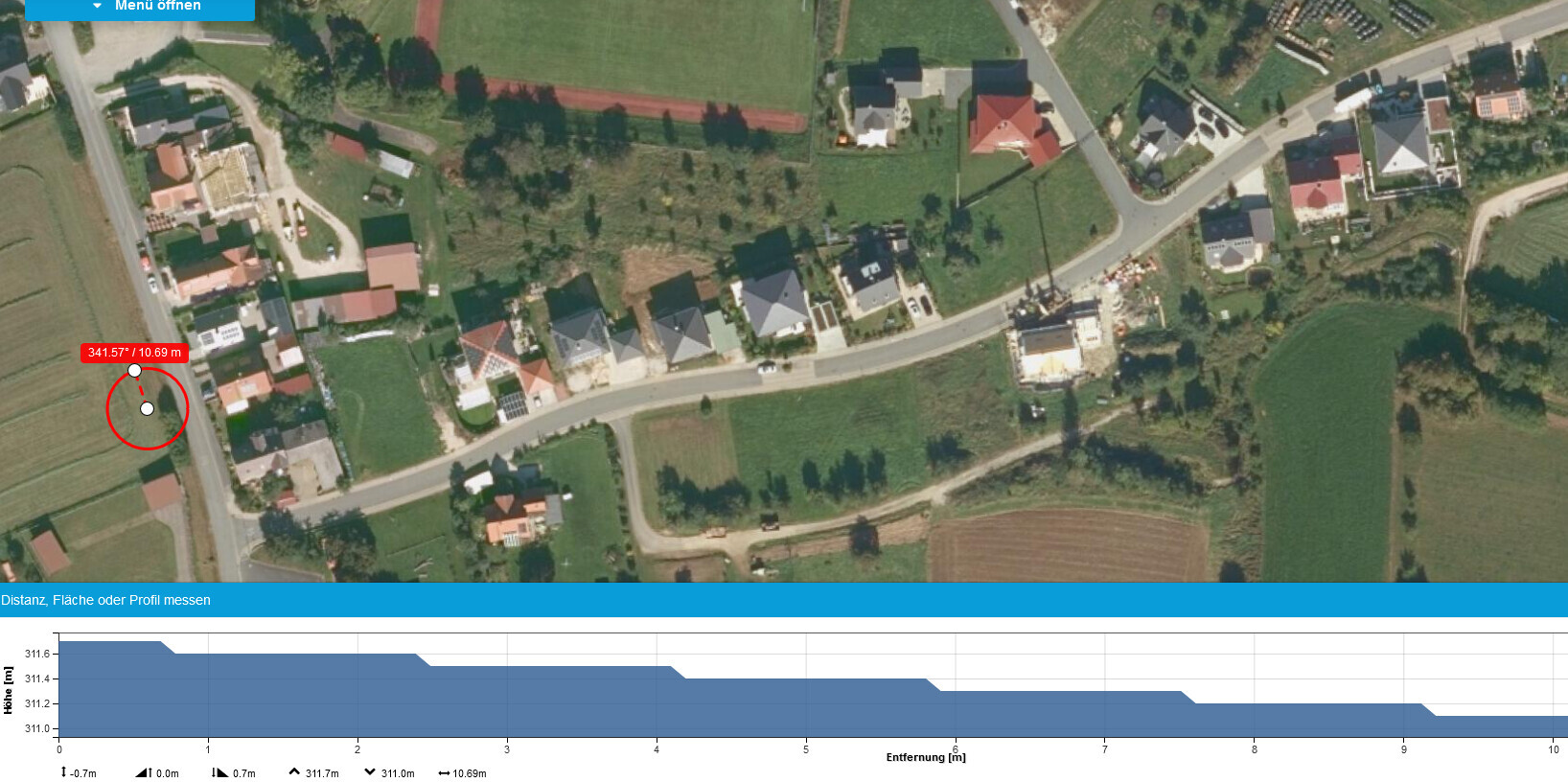
11ant schrieb:We wanted to do this preliminary building inquiry together with the architect. However, he said the exterior dimensions of the house should be fixed for that, including the position on the plot, as well as important parameters like roof shape, number of floors, basement yes/no. According to a phone inquiry by the architect at the building authority, everything is allowed. I’ve attached an aerial photo here, which also shows the slope of the plot. Red marks approximately one side of the house. There are mostly older buildings by the street, and then a new housing development to the right. Does this help clarify? Or if not, where can I get better data? The cadastral extract is not very informative because there is a lot of undeveloped land next to it.
Before you wonder what you can clearly reject, since from a layman’s perspective the surroundings just seem like a mixed bag: be smart and submit a preliminary building inquiry!
Similar topics