
Hello team,
We are currently building, and our drywall contractor has installed gypsum board interior walls. He only extends them up to the roof beams but not all the way to the OSB ceiling of the attic. This is how he does it on all sites. The ceiling will be lowered later. Insulation is installed in the attic space and therefore not planned between the roof beams. This means there is essentially an air gap below the suspended ceiling. We are now concerned that this may not provide sufficient sound insulation between the rooms. What do you think?
The drywall contractor said it would be too expensive and complicated to extend the drywall panels all the way up and cut them accordingly. He would line the space with mineral wool instead. However, I am not sure if that will provide adequate soundproofing. Do you have any suggestions?
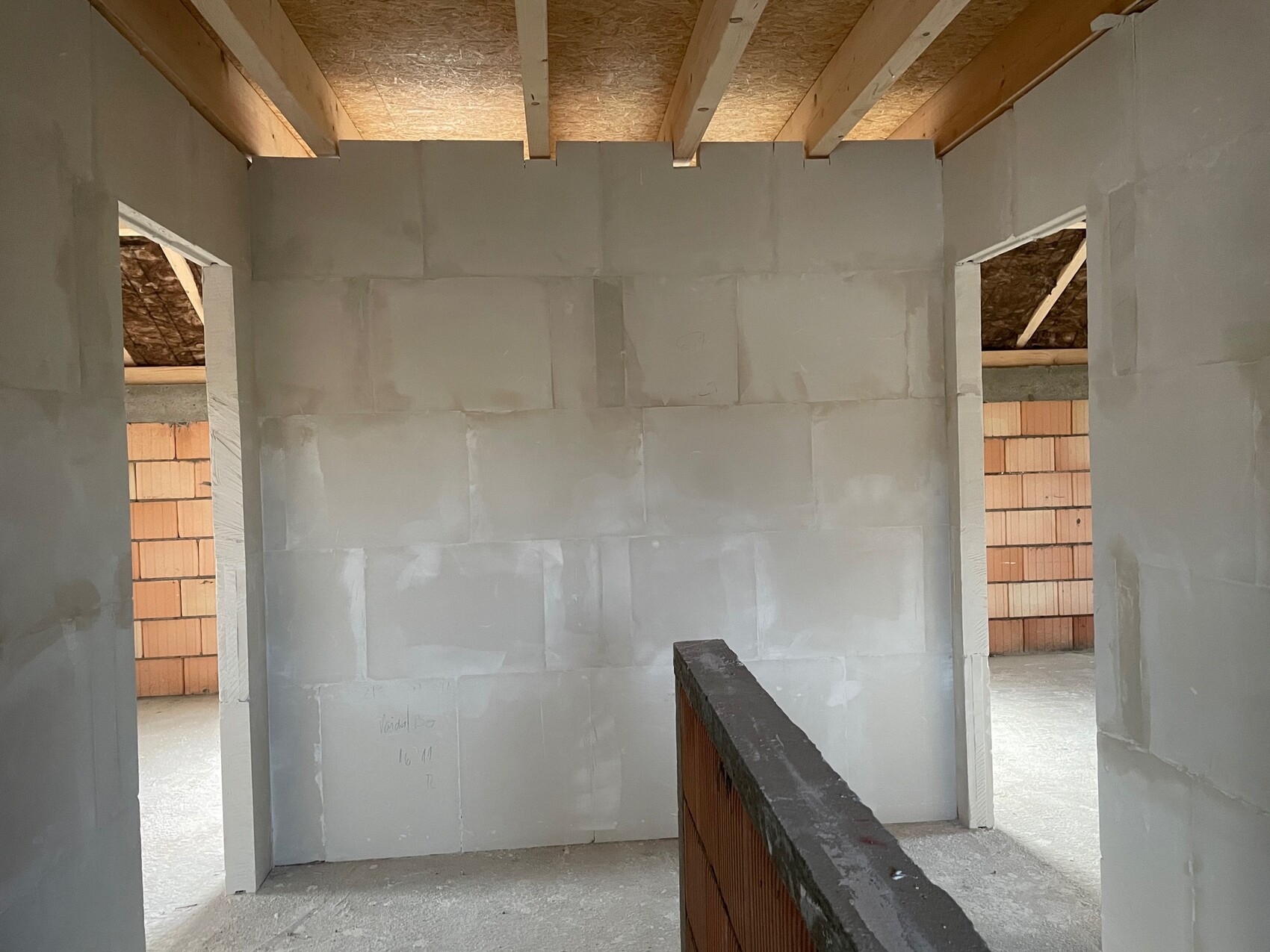
We are currently building, and our drywall contractor has installed gypsum board interior walls. He only extends them up to the roof beams but not all the way to the OSB ceiling of the attic. This is how he does it on all sites. The ceiling will be lowered later. Insulation is installed in the attic space and therefore not planned between the roof beams. This means there is essentially an air gap below the suspended ceiling. We are now concerned that this may not provide sufficient sound insulation between the rooms. What do you think?
The drywall contractor said it would be too expensive and complicated to extend the drywall panels all the way up and cut them accordingly. He would line the space with mineral wool instead. However, I am not sure if that will provide adequate soundproofing. Do you have any suggestions?

Kili1987 schrieb:
Below that are regular panels. No acoustic ceiling.In that case, sound insulation provided by the mineral wool is completely sufficient.https://www.instagram.com/11antgmxde/
https://www.linkedin.com/company/bauen-jetzt/
I don’t see such significant differences after the comma that would justify specifying a particular product to the contractor.
https://www.instagram.com/11antgmxde/
https://www.linkedin.com/company/bauen-jetzt/
https://www.instagram.com/11antgmxde/
https://www.linkedin.com/company/bauen-jetzt/

In my previous office, there was a small gap (about 5mm (0.2 inches)) between the drywall panels and the exterior wall, and we could overhear every conversation from the neighboring office. I couldn’t tell if or how much insulation was inside that gap. On the other hand, there was no gap in the drywall between my office and the other neighboring office, and I never heard anything through that wall.
I would insist that the gap be sealed with something to prevent any air connection. Whether acrylic, silicone, backer rod, or even expanding foam is the right choice, I don’t know. But I would want it to be properly airtight.
I would insist that the gap be sealed with something to prevent any air connection. Whether acrylic, silicone, backer rod, or even expanding foam is the right choice, I don’t know. But I would want it to be properly airtight.
11ant schrieb:
I don’t see such significant differences after the comma that would require you to specify a particular product to the contractor.Well, ideally I would just do it myself. It’s not rocket science to insert the insulation wool, right? 😉