
ᐅ Experiences with ground-source heat pumps using a borehole and water as the heat transfer medium?
Created on: 1 Feb 2023 23:05
N
NilsHolgersson
Hello everyone,
we are about to build a house (key details below). So far, a ground-to-air heat pump is planned. However, the more I read about it, the more doubtful I become whether it is the right choice: numerous reports about air-to-water heat pumps breaking down in freezing temperatures (when you actually need them), malfunctioning defrost cycles of the outdoor unit, noise emissions from the outdoor unit, and a maximum lifespan of 15-20 years.
Therefore, I am considering a ground-to-water heat pump as an alternative. Our plot is rather small, so drilling is the only option. I am aware of the disadvantages like initial and drilling costs and the requirement for a building permit/planning permission, and I accept these. In the end, I need a system that works reliably without breaking down in winter conditions (otherwise, the whole family has to wait for a week or more in a cold house until repairs are done), that operates relatively quietly, and possibly lasts a long time. A passive cooling function in summer is also attractive.
These are my considerations, now the questions:
1. Does anyone have experience with ground-to-water heat pumps with probes? Especially whether they actually work without problems?
2. The compressor would then be located in the basement along with the pump – how quiet is it?
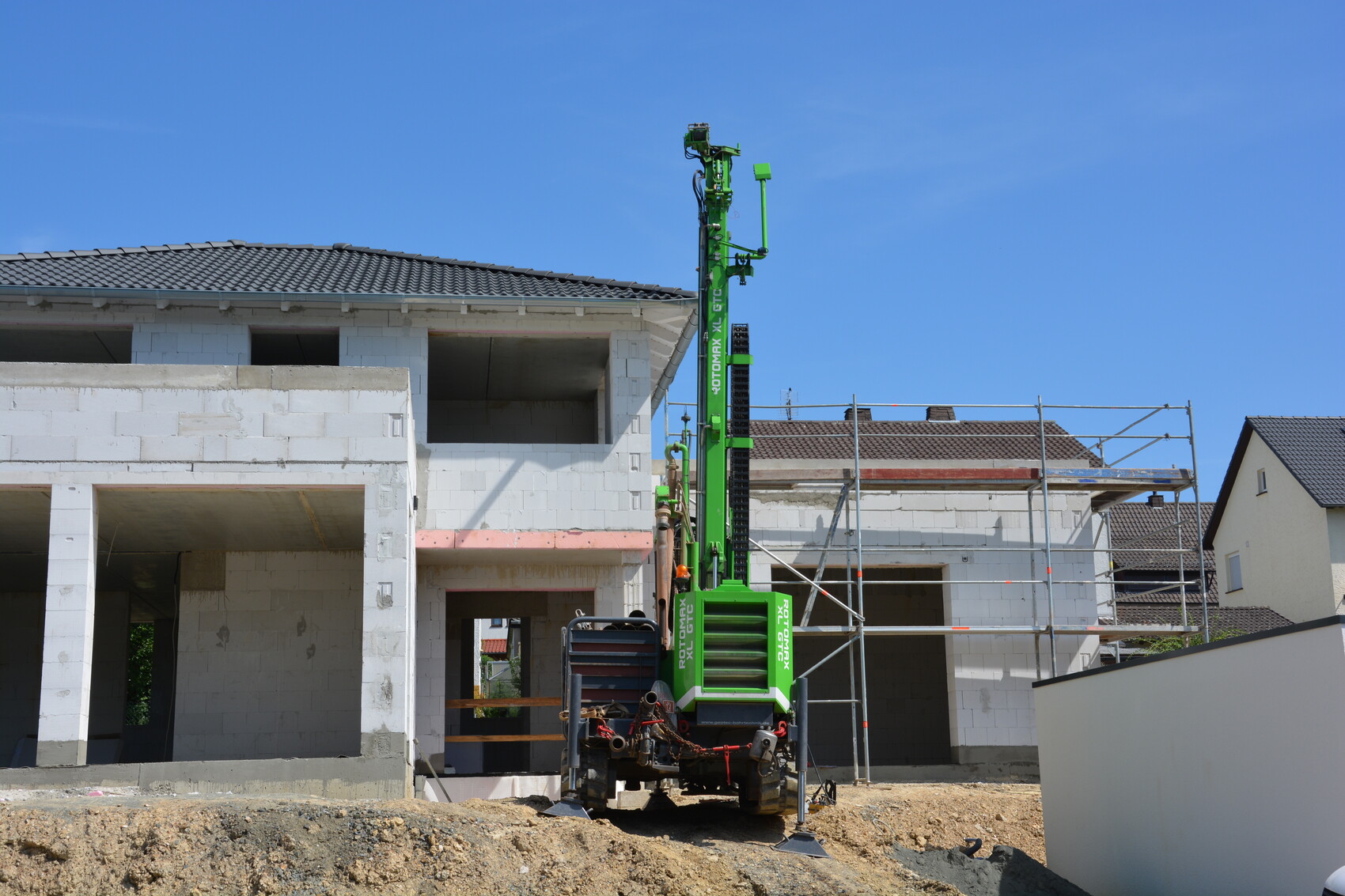
3. Where is the drilling usually done for the probes – directly under the house or beside it? Regarding the timing – should this be completed before construction starts or can it be done in parallel next to it?
4. Approximately how long does the approval process take (possibly including water law permits)?
Key details of the house:
Thank you very much!
Best regards
Nils
we are about to build a house (key details below). So far, a ground-to-air heat pump is planned. However, the more I read about it, the more doubtful I become whether it is the right choice: numerous reports about air-to-water heat pumps breaking down in freezing temperatures (when you actually need them), malfunctioning defrost cycles of the outdoor unit, noise emissions from the outdoor unit, and a maximum lifespan of 15-20 years.
Therefore, I am considering a ground-to-water heat pump as an alternative. Our plot is rather small, so drilling is the only option. I am aware of the disadvantages like initial and drilling costs and the requirement for a building permit/planning permission, and I accept these. In the end, I need a system that works reliably without breaking down in winter conditions (otherwise, the whole family has to wait for a week or more in a cold house until repairs are done), that operates relatively quietly, and possibly lasts a long time. A passive cooling function in summer is also attractive.
These are my considerations, now the questions:
1. Does anyone have experience with ground-to-water heat pumps with probes? Especially whether they actually work without problems?
2. The compressor would then be located in the basement along with the pump – how quiet is it?
3. Where is the drilling usually done for the probes – directly under the house or beside it? Regarding the timing – should this be completed before construction starts or can it be done in parallel next to it?
4. Approximately how long does the approval process take (possibly including water law permits)?
Key details of the house:
- Semi-detached house, solid construction, not a KfW-standard house (EnEV 2016)
- Two full floors plus basement, ground floor + upper floor 68 + 68 m² (732 + 732 sq ft), plus about 30 m² (320 sq ft) of heated basement area
- Underfloor heating, controlled ventilation system (mechanical ventilation) with heat recovery and enthalpy heat exchanger
- No photovoltaic system planned primarily
Thank you very much!
Best regards
Nils
N
NilsHolgersson6 Feb 2023 22:41Harakiri schrieb:
Also consider whether to choose a mechanical ventilation with heat recovery system from Viessmann as well, so that control can be managed via the heat pump / heat pump interface.Is it really worth it? We would go for a mechanical ventilation with heat recovery system from Zehnder – the one from Viessmann is said to be much too noisy...The noise level mainly depends on the design rather than the device itself.
We also have Zehnder connected to it using a smart grid/relay/timer along with a Novelan. More complicated than using a single brand, but feasible.
The question is: what is the purpose in this context?
We also have Zehnder connected to it using a smart grid/relay/timer along with a Novelan. More complicated than using a single brand, but feasible.
The question is: what is the purpose in this context?
NilsHolgersson schrieb:
Is it really worth it? We would choose a mechanical ventilation system with heat recovery from Zehnder – the one from Viessmann is said to be much too noisy...If you have a centralized control system (e.g., KNX), this is of course not necessary, but you can still control the devices uniformly.
If not, you can manage having two indoor units (if you even want any) – for example, if you want to quickly select a "party mode" for the ventilation, central control is somewhat more convenient. Furthermore, you can also integrate the mechanical ventilation system with heat recovery into the away/vacation mode.
Finally – if this is still relevant – mechanical ventilation systems with heat recovery (including duct installation) were supported by BAFA for a while only if they had a "shared control" with the heat pump. However, I no longer keep track of whether this still applies for new builds.
W
WilderSueden7 Feb 2023 12:57The subsidy has not been available for quite some time. Therefore, I would always recommend having two independent units that can also be replaced individually.
D
Dachshund9027 Jun 2023 19:41AxelH. schrieb:
Drilling carried out in summer 2018 before the structural shell was completed, 2 x 70 meters (230 feet).
The district authority approval came very quickly, €353.13.
Heating system put into operation in autumn 2018. Since then, it has been trouble-free and very quiet.
Heat pump 6 kW heats 190 m² (2,045 sq ft) KFW 55 standard house.
Electric backup heater was deactivated after the screed drying phase.
Annual consumption without photovoltaic system about 4,200 kWh.
All in all: exactly the right decision. Would do it again anytime.
P.S.: For future photovoltaic installations, make sure to have empty conduit pipes installed!
Hello! Could you please tell me exactly which heat pump model you are using?
Thanks and regards
Similar topics