
ᐅ Single-family house with a pitched roof, without a basement – feedback welcome
Created on: 1 Nov 2018 16:05
M
Milmay
Hello everyone,
We are planning to start building our single-family home next year. Currently, we are working on the floor plan, have tried several versions, and are quite satisfied with what we have so far.
I would appreciate it if you could share your opinions and feedback on the floor plan.
Development plan / restrictions:
Plot size: 445 sqm (4789 sq ft)
Slope: no
Site coverage ratio: 0.35
Floor area ratio: 0.7
Number of parking spaces: 2
Number of floors: 2 full stories plus attic conversion later
Roof style: gable roof
Maximum height: eaves height 6.5 m (21 ft 4 in) on the street side
Heating: geothermal
Personal budget limit: 400,000
Client requirements:
No basement
Number of occupants: 2 adults and 3 children
Open kitchen with sliding door
Double garage
The attic will initially be used instead of a basement.
It will also house the heating system and utility room with washing machine and dryer.
Since our family plan is not yet final, an additional children's room could be added in the attic in the future.
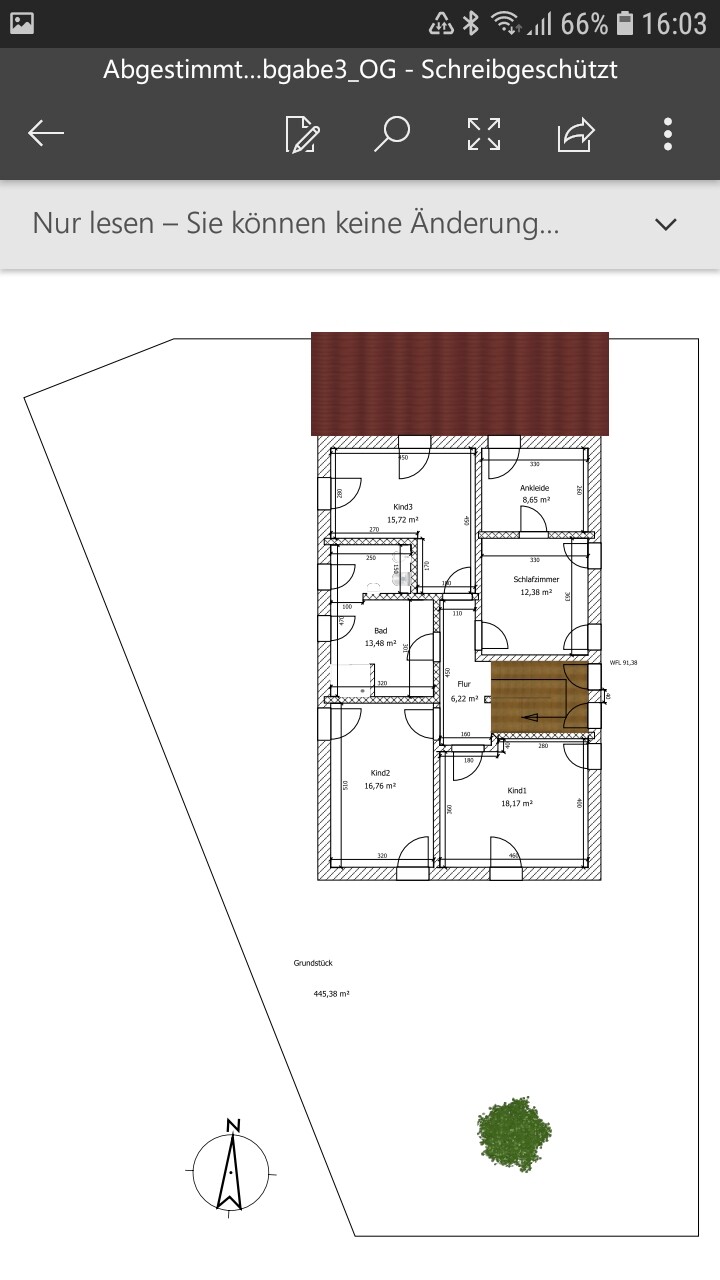
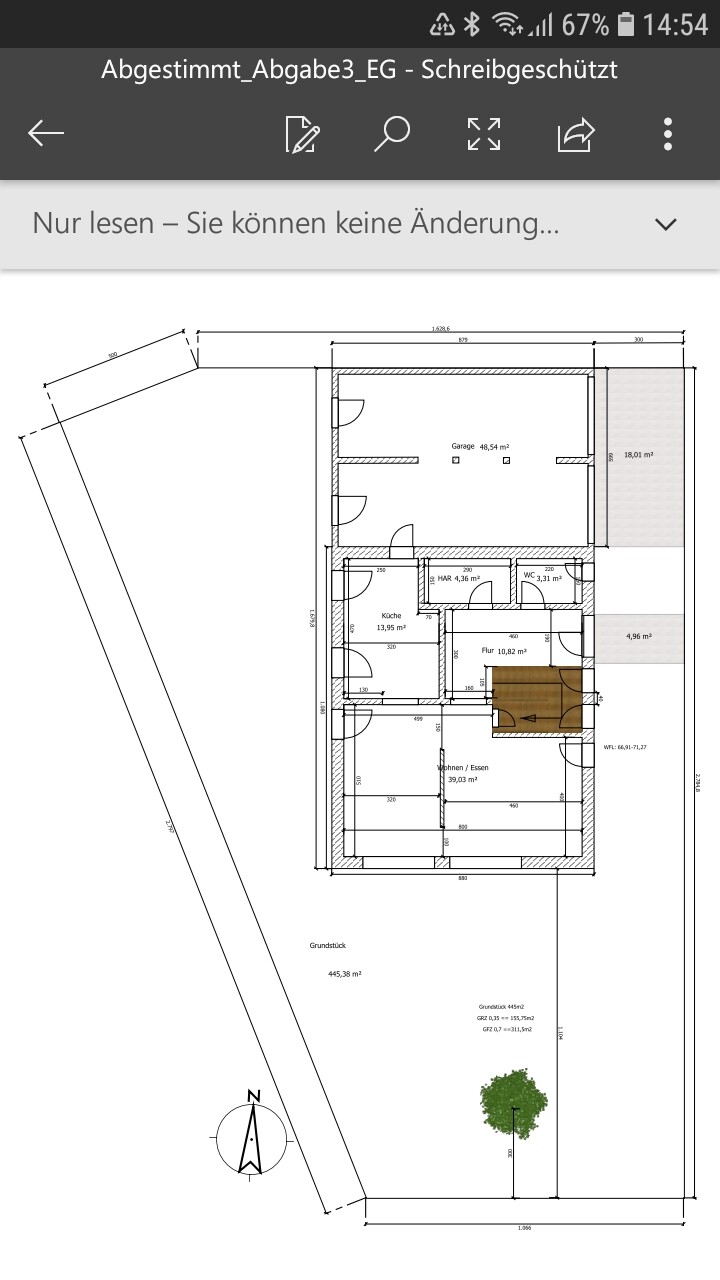
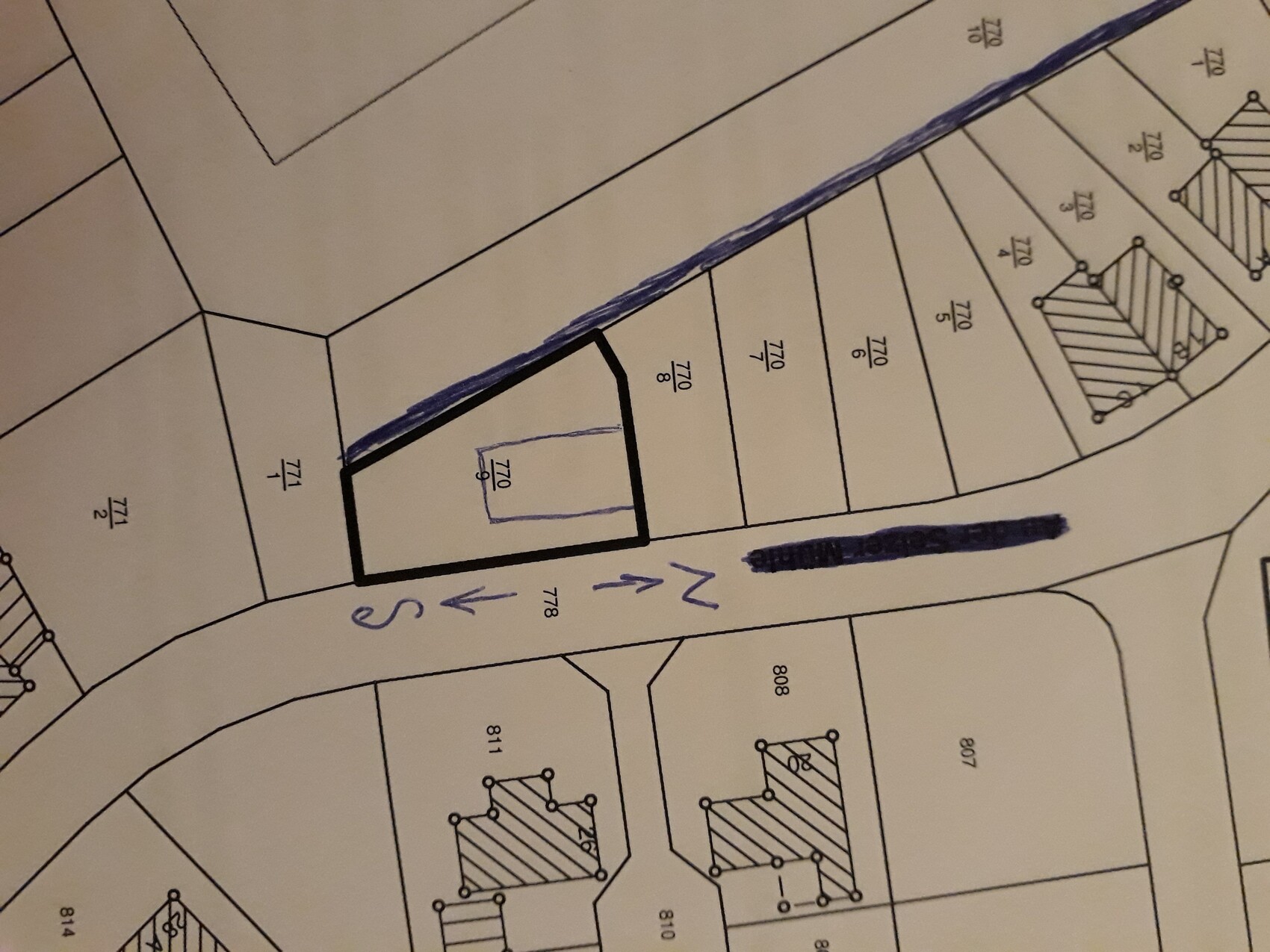
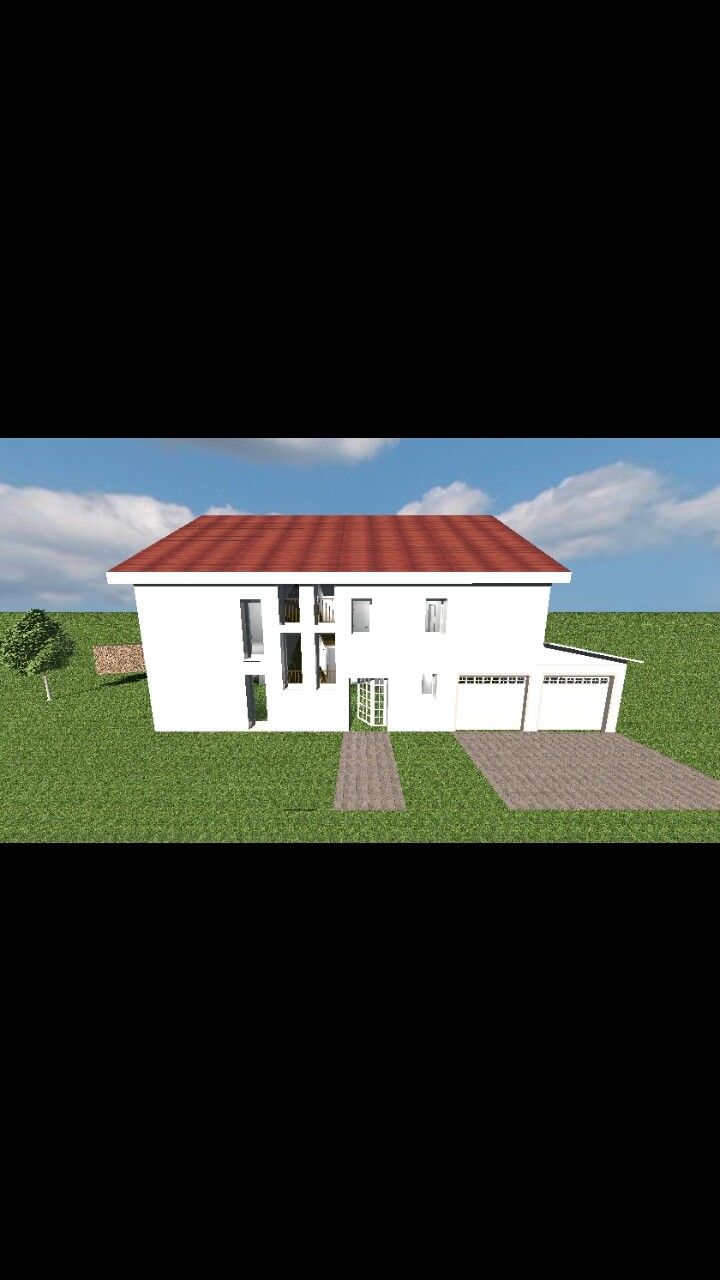
We are planning to start building our single-family home next year. Currently, we are working on the floor plan, have tried several versions, and are quite satisfied with what we have so far.
I would appreciate it if you could share your opinions and feedback on the floor plan.
Development plan / restrictions:
Plot size: 445 sqm (4789 sq ft)
Slope: no
Site coverage ratio: 0.35
Floor area ratio: 0.7
Number of parking spaces: 2
Number of floors: 2 full stories plus attic conversion later
Roof style: gable roof
Maximum height: eaves height 6.5 m (21 ft 4 in) on the street side
Heating: geothermal
Personal budget limit: 400,000
Client requirements:
No basement
Number of occupants: 2 adults and 3 children
Open kitchen with sliding door
Double garage
The attic will initially be used instead of a basement.
It will also house the heating system and utility room with washing machine and dryer.
Since our family plan is not yet final, an additional children's room could be added in the attic in the future.
I am also not a fan of having many pieces of furniture, but I do appreciate the space under the stairs. However, in my opinion, items stored there should be located where they are actually needed. I don’t have dishes that are only used twice a year, but placemats, candles, and similar items should be easily accessible. Kitchen cabinets could be helpful for this. That said, storing everything under the stairs quickly reaches the capacity of that space, even if it is 1.80 meters (5 ft 11 in) high. Things have to be placed somewhere, maybe on a shelf along the edge or further toward the front. The space is therefore strictly limited—I know this because we have our wardrobe under a staircase.
If you are not a fan of single or small pieces of furniture but cannot do without them, you plan the rooms so that there is a corner behind the doors where a cabinet can be placed without being particularly obtrusive or noticeable. Alternatively, you design a partition wall so that you don’t constantly trip over a dresser or sideboard later on. Or you plan a niche where a built-in cabinet fits. This could be done here, for example, between the kitchen and hallway, but I wouldn’t do it because, in my opinion, a door needs to be there. Otherwise, I don’t see these common planning strategies being used at all—rather the opposite.
I have already mentioned how the dining/living area looks or feels. I don’t see any place for a sideboard there at all. The view is very cluttered and chaotic due to the openings on the side of the partition wall as well as the side openings like the door and windows.
@kaho674
Regarding the covered pipes: maybe this is fixed in the regional building code?!? In Lower Saxony (NDS), it is prohibited to place floor slabs over pipes in case something needs to be repaired later. Our situation would also not allow this kind of boundary construction because the garages have living space above, but this is probably correct here; otherwise, the planning would be pointless. I just hope everything has been confirmed in writing by the building authority.
If you are not a fan of single or small pieces of furniture but cannot do without them, you plan the rooms so that there is a corner behind the doors where a cabinet can be placed without being particularly obtrusive or noticeable. Alternatively, you design a partition wall so that you don’t constantly trip over a dresser or sideboard later on. Or you plan a niche where a built-in cabinet fits. This could be done here, for example, between the kitchen and hallway, but I wouldn’t do it because, in my opinion, a door needs to be there. Otherwise, I don’t see these common planning strategies being used at all—rather the opposite.
I have already mentioned how the dining/living area looks or feels. I don’t see any place for a sideboard there at all. The view is very cluttered and chaotic due to the openings on the side of the partition wall as well as the side openings like the door and windows.
@kaho674
Regarding the covered pipes: maybe this is fixed in the regional building code?!? In Lower Saxony (NDS), it is prohibited to place floor slabs over pipes in case something needs to be repaired later. Our situation would also not allow this kind of boundary construction because the garages have living space above, but this is probably correct here; otherwise, the planning would be pointless. I just hope everything has been confirmed in writing by the building authority.
D
derpikniker3 Nov 2018 09:56The 160m² (1,722 sq ft) is based on the financing. We are getting a very favorable loan for this. Without it, we couldn’t afford the house. It is also not specified in the zoning plan / building permit. It’s a “special case” in RLP.
By the pipes, do you mean the supply and waste lines? That depends a lot on the utility provider. Around here, I have heard everything from “the entire house needs to be redesigned for this” to “we ran the pipes completely underneath the house.” One of the local contractors said that routing the pipes under the garage is not a problem. He has done that before. In the worst case, I might have to swap the toilet with the utility room. That would be a disaster for my partner.
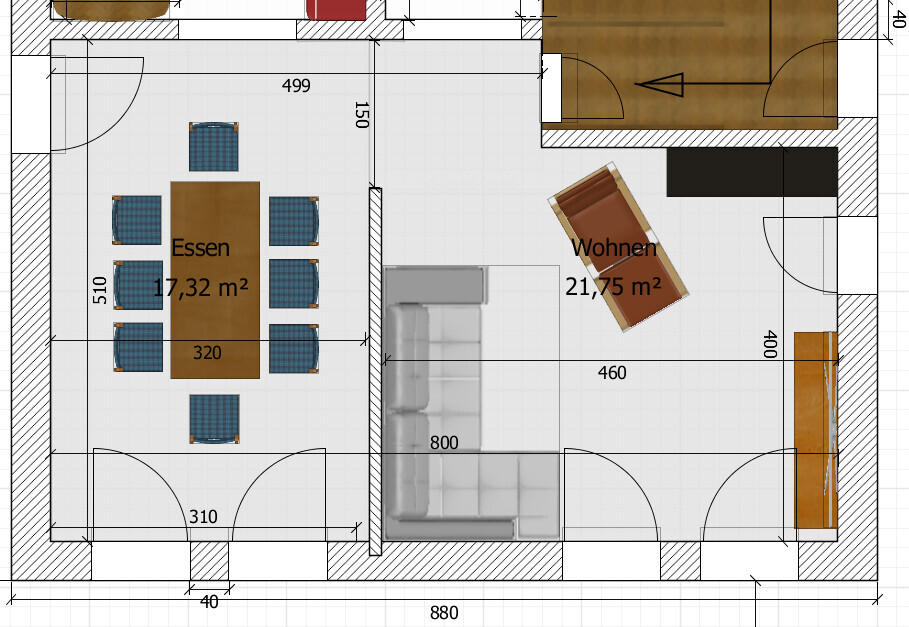
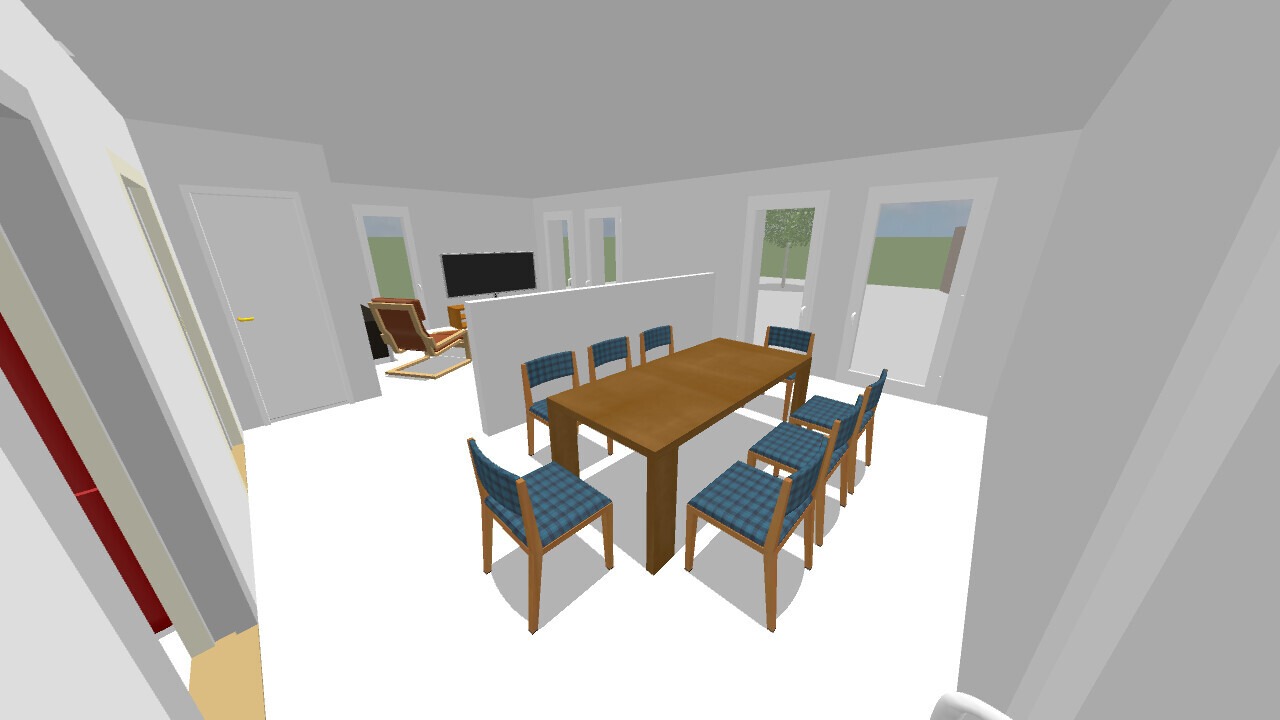
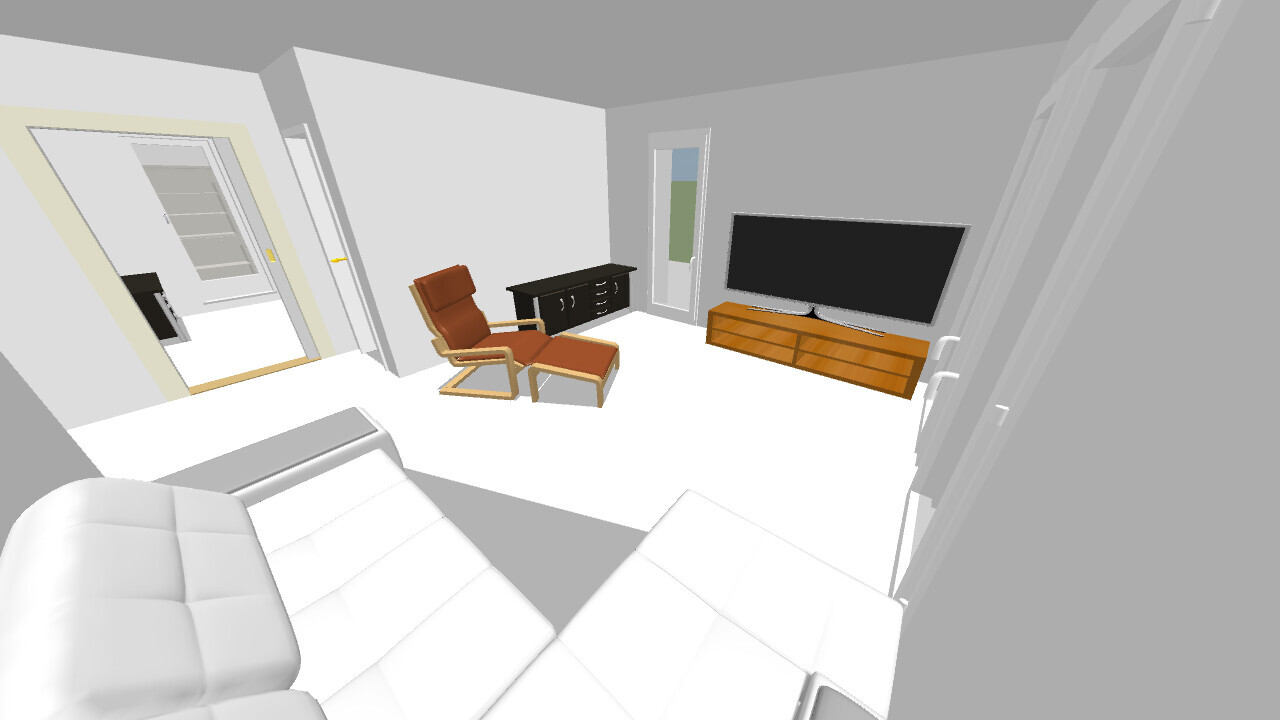
Regarding the living room setup: There are a few conditions here. I’m not very interested in watching TV but rather in the view. Therefore, it is essential for me that the recliner chair faces south. Also, I don’t like sitting with my back to a window or a passage. That’s just a personal quirk. However, this limits the orientation of the couch and TV to east-west or west-east. Additionally, the view to the southwest is blocked by the gabion. This makes planning the living room quite tricky. The limited space on the ground floor adds to the challenge. The wall in the living room is, as mentioned, not mandatory as long as it works structurally. My initial idea was to build a sliding wall about 120cm (4 feet) high with a sideboard on each side. I could then connect it to a floor outlet and slide it into the living room or dining room depending on space needs. Something like the “room divider” in the picture, but sliding and half-height. However, my partner thinks it’s a bad idea.
I am not allowed to publish the architect’s plans. There is an NDA. Briefly, the main points are:
- Much smaller living/dining area
- Kitchen of 7.8m² (84 sq ft) serving as a passage to the living/dining area
- An additional room on the ground floor, two children’s rooms in the attic
- No further expansion options for family planning
- No pantry, no utility room, no double garage
- But laundry room upstairs and lots of window area
I have attached an alternative for the living room layout. What do you think?


By the pipes, do you mean the supply and waste lines? That depends a lot on the utility provider. Around here, I have heard everything from “the entire house needs to be redesigned for this” to “we ran the pipes completely underneath the house.” One of the local contractors said that routing the pipes under the garage is not a problem. He has done that before. In the worst case, I might have to swap the toilet with the utility room. That would be a disaster for my partner.
Regarding the living room setup: There are a few conditions here. I’m not very interested in watching TV but rather in the view. Therefore, it is essential for me that the recliner chair faces south. Also, I don’t like sitting with my back to a window or a passage. That’s just a personal quirk. However, this limits the orientation of the couch and TV to east-west or west-east. Additionally, the view to the southwest is blocked by the gabion. This makes planning the living room quite tricky. The limited space on the ground floor adds to the challenge. The wall in the living room is, as mentioned, not mandatory as long as it works structurally. My initial idea was to build a sliding wall about 120cm (4 feet) high with a sideboard on each side. I could then connect it to a floor outlet and slide it into the living room or dining room depending on space needs. Something like the “room divider” in the picture, but sliding and half-height. However, my partner thinks it’s a bad idea.
I am not allowed to publish the architect’s plans. There is an NDA. Briefly, the main points are:
- Much smaller living/dining area
- Kitchen of 7.8m² (84 sq ft) serving as a passage to the living/dining area
- An additional room on the ground floor, two children’s rooms in the attic
- No further expansion options for family planning
- No pantry, no utility room, no double garage
- But laundry room upstairs and lots of window area
I have attached an alternative for the living room layout. What do you think?
What I don’t understand is... somewhere you wrote that the partition wall between the dining and living area is required for the structural support. How is a 120 cm (47 inch) high wall supposed to fulfill that?
derpikniker schrieb:
My first idea was to build a sliding wall 120 cm (47 inch) high with a sideboard on each side
D
derpikniker3 Nov 2018 10:21kbt09 schrieb:
What I don’t understand… somewhere you wrote that the partition wall between the dining and living areas is required for structural reasons. How can a 120 cm (47 inches) high wall fulfill that? The wall in the living room is, as mentioned, not mandatory as long as the structural engineer agrees. We don’t have the structural calculations yet. If the engineer says it’s possible, we will omit the wall, make it movable, or only half-height.
D
derpikniker3 Nov 2018 10:59ypg schrieb:
Movable, half-height... what advantage do you expect from that? We currently have a sofa placed in the middle of the room and the TV squeezed into a corner because of a lack of wall space. I want to avoid that in the new house.
With a half-height movable solution, I can create about 3.2m (10.5 feet) of usable space in both the living room and dining room for items like a sofa, bench, sideboard, TV, etc. This way, the sense of space in the 40m² (430 sq ft) area won’t be lost.
Similar topics