
ᐅ Single-family house on a south-facing slope with a basement living area
Created on: 7 Jan 2020 22:08
F
freakbettyF
freakbetty7 Jan 2020 22:08Hello everyone,
We would like to hear your opinions, assessments, and suggestions regarding our planning.
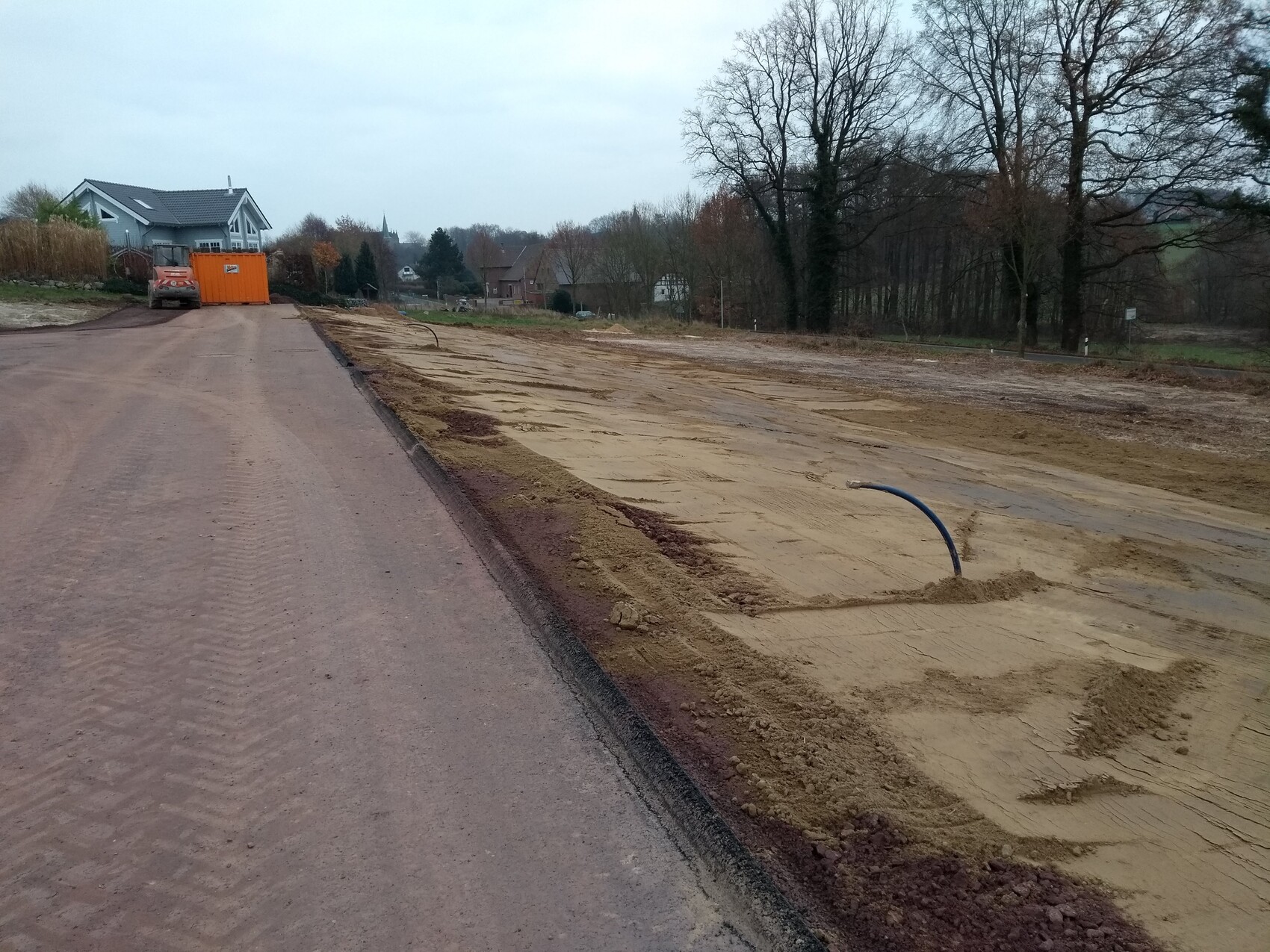
We want to build a turnkey single-family house for the four of us on our plot with a south-facing slope (the residential area in the eastern Osnabrück region is also known from other threads here). When we ask general contractors, they usually propose a design based on a filled plot with a “standard single-family house” (without a slope). We would rather avoid this. The slope is not utilized, and due to regulations such as roof pitch (max 35°) and eave height (max 3.5 m (11 ft 6 in)), this results in roof slopes with a lot of space below the 2 m (6 ft 6 in) line.
So, we developed a draft ourselves that we believe takes into account both the site conditions and our personal wishes. However, since we are not building professionals, we are now uncertain whether this solution is good or if it could or should be improved. Therefore, we hope for your support. Or should we just go to an architect right away?
Zoning Plan / Restrictions
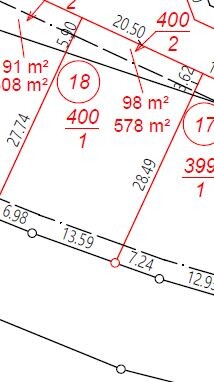
Plot size: 676 m² (20.5 m (67 ft) x approx. 33 m (108 ft))
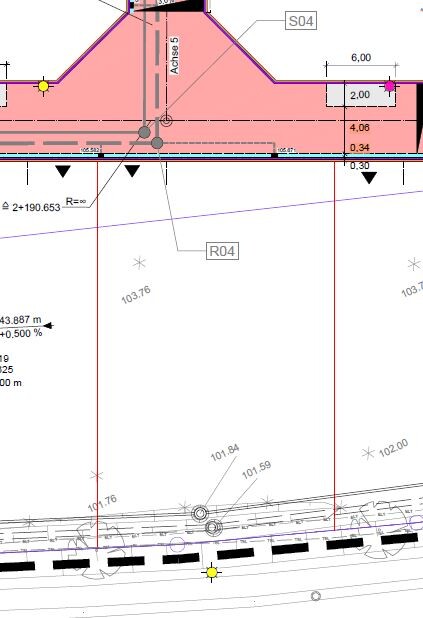
Slope: South-facing slope, approx. 4 m (13 ft) drop from north (street) to south (garden)
Floor area ratio (FAR): 0.4
Built-up area ratio (plot coverage): 0.5
Building lines and boundaries: 3 m (10 ft) setback on the north side, 20 m (66 ft) from the south side to the district road
Edge building
Number of parking spaces: no requirements
Number of floors: max. 2 full stories
Roof types: gable, hip, and shed roof, roof pitch between 28° and 35°
Architectural style: -
Orientation: -
Maximum height/limits: eave height max. 3.50 m (11 ft 6 in) above finished ground floor level, maximum ridge height 8.50 m (28 ft) above finished ground floor level
Other requirements: Noise exposure category IV, sound insulation for ground-floor outdoor living areas on the south side
Client Requirements
Architectural style, roof type, building type: preferably gable roof, if it fits better also hip or shed roof, ground floor plus living basement
Basement, floors: living basement (below ground level) plus ground floor, attic not developed
Number of occupants, ages: 4 persons (39, 37, 9, and 4 years old)
Room requirements ground floor, upper floor: open-plan area (living, dining, kitchen), 2 children’s rooms, parents’ bedroom, office/guest room, storage room. Originally planned for about 150 m² (1,615 sq ft) living space, but current self-design is now larger
Office use: family use or home office? Home office
Annual overnight guests: 5
Open or closed architecture: open
Conservative or modern design: modern
Open kitchen, kitchen island: absolutely necessary
Number of dining seats: minimum 6
Fireplace: no
Music/stereo wall: no
Balcony, roof terrace: would prefer not to have a balcony, roof terrace results from ground-level access to outside
Garage, carport: for two cars
Garden for vegetables, greenhouse: no
Other requests/special features/daily routine, also reasons why certain things should or should not be included
House Design
Who created the design:
- Planner from a construction company entered the do-it-yourself draft into their program
What do you particularly like? Why?
Open-plan living area facing south, living area at street level (no stairs for groceries or guests), children have their “own” area. Separation of ground floor and basement could be considered in old age.
What do you not like? Why?
Technical rooms (utility room, housekeeping room) next to children’s room, relatively large hallway areas, utility room too large, perhaps missing some windows in the draft (e.g. living room on east side, ground floor bathroom to the north for better outside view?)
Price estimate according to architect/planner: 337,000 €
Personal price limit for house including equipment: 350,000 €
Preferred heating technology: gas or air-to-water heat pump and controlled residential ventilation
If you had to give up something, which details/expansions
- Could you do without: equipment room under the terrace, possibly elevated terrace or L-shaped retaining walls and fill for the terrace?
- Could not do without: kitchen island
Why is the design the way it is? For example:
Standard design from the planner?
Which wishes were implemented by the architect?
A mix of many examples from various magazines…
What do you think makes it especially good or bad?
The design came about because in all our previous experiences with balconies and terraces, we never used the balcony. An elevated terrace on the south side would darken the rooms in the basement. Therefore, the idea with the terrace on the side. A staggered building structure where, for example, the roof terrace is built on the basement on the south side would probably exceed the budget.
In the basement, we want direct access from the utility room to the garden (for hanging laundry outside, etc.), which is why the hallway extends to the south, and it also ensures enough daylight in the hallway/staircase area.
The children’s rooms should be as equal as possible and at least 15 m² (160 sq ft) each.
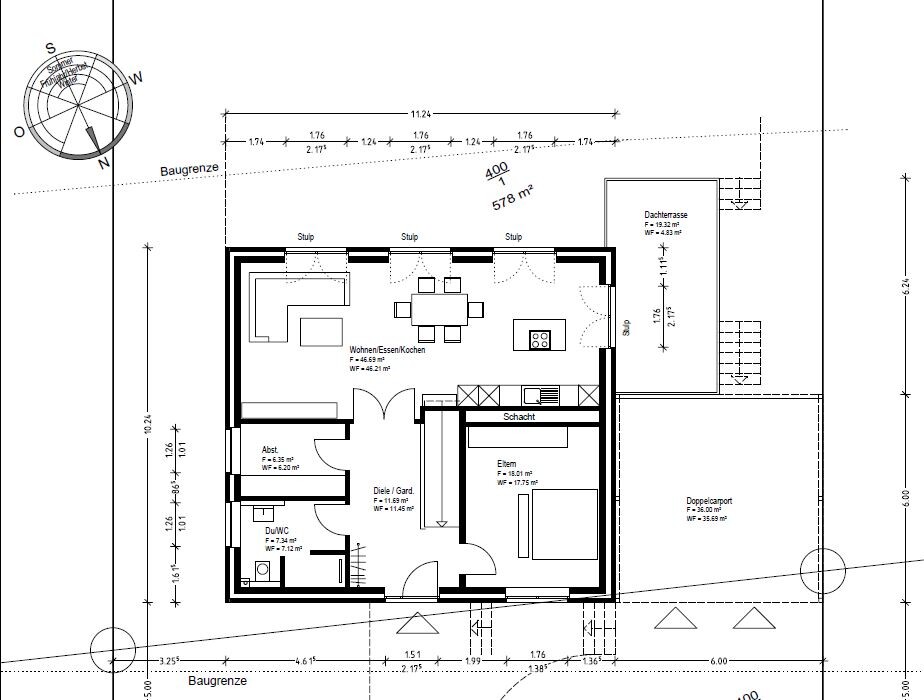
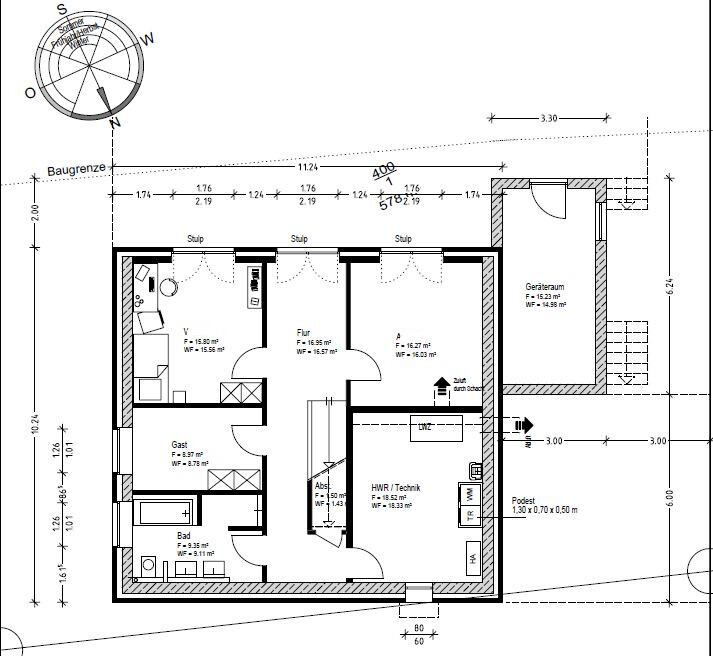
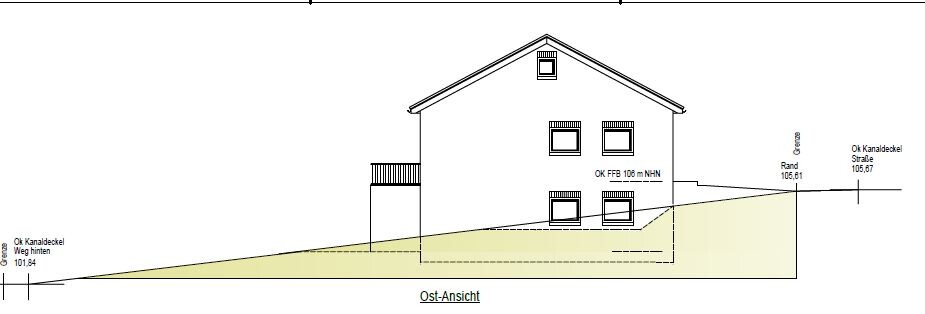
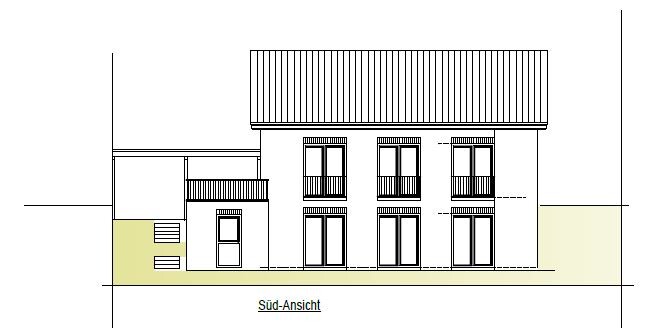
We would like to hear your opinions, assessments, and suggestions regarding our planning.
We want to build a turnkey single-family house for the four of us on our plot with a south-facing slope (the residential area in the eastern Osnabrück region is also known from other threads here). When we ask general contractors, they usually propose a design based on a filled plot with a “standard single-family house” (without a slope). We would rather avoid this. The slope is not utilized, and due to regulations such as roof pitch (max 35°) and eave height (max 3.5 m (11 ft 6 in)), this results in roof slopes with a lot of space below the 2 m (6 ft 6 in) line.
So, we developed a draft ourselves that we believe takes into account both the site conditions and our personal wishes. However, since we are not building professionals, we are now uncertain whether this solution is good or if it could or should be improved. Therefore, we hope for your support. Or should we just go to an architect right away?
Zoning Plan / Restrictions
Plot size: 676 m² (20.5 m (67 ft) x approx. 33 m (108 ft))
Slope: South-facing slope, approx. 4 m (13 ft) drop from north (street) to south (garden)
Floor area ratio (FAR): 0.4
Built-up area ratio (plot coverage): 0.5
Building lines and boundaries: 3 m (10 ft) setback on the north side, 20 m (66 ft) from the south side to the district road
Edge building
Number of parking spaces: no requirements
Number of floors: max. 2 full stories
Roof types: gable, hip, and shed roof, roof pitch between 28° and 35°
Architectural style: -
Orientation: -
Maximum height/limits: eave height max. 3.50 m (11 ft 6 in) above finished ground floor level, maximum ridge height 8.50 m (28 ft) above finished ground floor level
Other requirements: Noise exposure category IV, sound insulation for ground-floor outdoor living areas on the south side
Client Requirements
Architectural style, roof type, building type: preferably gable roof, if it fits better also hip or shed roof, ground floor plus living basement
Basement, floors: living basement (below ground level) plus ground floor, attic not developed
Number of occupants, ages: 4 persons (39, 37, 9, and 4 years old)
Room requirements ground floor, upper floor: open-plan area (living, dining, kitchen), 2 children’s rooms, parents’ bedroom, office/guest room, storage room. Originally planned for about 150 m² (1,615 sq ft) living space, but current self-design is now larger
Office use: family use or home office? Home office
Annual overnight guests: 5
Open or closed architecture: open
Conservative or modern design: modern
Open kitchen, kitchen island: absolutely necessary
Number of dining seats: minimum 6
Fireplace: no
Music/stereo wall: no
Balcony, roof terrace: would prefer not to have a balcony, roof terrace results from ground-level access to outside
Garage, carport: for two cars
Garden for vegetables, greenhouse: no
Other requests/special features/daily routine, also reasons why certain things should or should not be included
House Design
Who created the design:
- Planner from a construction company entered the do-it-yourself draft into their program
What do you particularly like? Why?
Open-plan living area facing south, living area at street level (no stairs for groceries or guests), children have their “own” area. Separation of ground floor and basement could be considered in old age.
What do you not like? Why?
Technical rooms (utility room, housekeeping room) next to children’s room, relatively large hallway areas, utility room too large, perhaps missing some windows in the draft (e.g. living room on east side, ground floor bathroom to the north for better outside view?)
Price estimate according to architect/planner: 337,000 €
Personal price limit for house including equipment: 350,000 €
Preferred heating technology: gas or air-to-water heat pump and controlled residential ventilation
If you had to give up something, which details/expansions
- Could you do without: equipment room under the terrace, possibly elevated terrace or L-shaped retaining walls and fill for the terrace?
- Could not do without: kitchen island
Why is the design the way it is? For example:
Standard design from the planner?
Which wishes were implemented by the architect?
A mix of many examples from various magazines…
What do you think makes it especially good or bad?
The design came about because in all our previous experiences with balconies and terraces, we never used the balcony. An elevated terrace on the south side would darken the rooms in the basement. Therefore, the idea with the terrace on the side. A staggered building structure where, for example, the roof terrace is built on the basement on the south side would probably exceed the budget.
In the basement, we want direct access from the utility room to the garden (for hanging laundry outside, etc.), which is why the hallway extends to the south, and it also ensures enough daylight in the hallway/staircase area.
The children’s rooms should be as equal as possible and at least 15 m² (160 sq ft) each.
A compliment: everything is included in the thread opening, even the north arrow!!
Once again, it shows how easily the slope of the land can be misleading. From the photo, I would never have guessed that the gradient is 4.00m (13 feet). It’s good that you specified the height.
The design is clear and good!
Have you considered swapping the floors, with living areas downstairs and bedrooms upstairs? Do you have a view from above?
The open-plan area looks a bit cramped but has 46m² (495 square feet) and presumably ceiling height up to the roof, right? The kitchen island seems too small for me; have you thought about rotating and enlarging the island? Also the dining table?
The sofa is currently placed by the window; have you tried positioning it against the partition wall leading to the storage room to better separate the open space?
Do you need such a large shaft? Your contractors are probably grateful for it?
Once again, it shows how easily the slope of the land can be misleading. From the photo, I would never have guessed that the gradient is 4.00m (13 feet). It’s good that you specified the height.
The design is clear and good!
Have you considered swapping the floors, with living areas downstairs and bedrooms upstairs? Do you have a view from above?
The open-plan area looks a bit cramped but has 46m² (495 square feet) and presumably ceiling height up to the roof, right? The kitchen island seems too small for me; have you thought about rotating and enlarging the island? Also the dining table?
The sofa is currently placed by the window; have you tried positioning it against the partition wall leading to the storage room to better separate the open space?
Do you need such a large shaft? Your contractors are probably grateful for it?

Solveigh schrieb:
Do you need this large shaft, What is it actually used for?
https://www.instagram.com/11antgmxde/
https://www.linkedin.com/company/bauen-jetzt/
F
freakbetty8 Jan 2020 21:01Solveigh schrieb:
Have you ever considered swapping the floors, living downstairs and sleeping upstairs? Do you have a view from upstairs? We decided against living downstairs and sleeping upstairs because every visit or grocery shopping trip would require going down a whole floor. Although access to the garden/terrace would be easier that way.
Solveigh schrieb:
The open-plan space looks a bit cramped, but it has 46m² (495 sq ft) and presumably a ceiling height up to the roof, right? The kitchen island seems too small for me; have you considered rotating and enlarging it? Also the dining table? We don’t have an open ceiling up to the roof. So far, the plan is to install a closed wooden beam ceiling (the house is basically a bungalow with a basement). Upstairs would be additional (unheated) storage space accessible via a pull-down attic ladder (located in the hallway on the ground floor).
Yes, the arrangement of the sofa, dining table, and island is not optimal as it is, but fortunately it is quite easy to change. Thanks for the suggestion!
Solveigh schrieb:
Do you really need such a large shaft? Your builders must be glad about that, right? The shaft was an idea from the general contractor’s draftsman. We had not discussed it beforehand. It is intended to accommodate pipes such as supply air and exhaust air for the controlled ventilation system, flue pipe for the gas boiler, connections for photovoltaics, etc. In that size, it is probably not strictly necessary. But it was drawn across the entire width to avoid a “kink” in the wall. We also thought about possibly integrating a laundry chute to the utility room.
Quickly:
I noticed that you have to walk past the front door directly from the bedroom to the bathroom. I personally don’t like that arrangement, even with our guest toilet. In your case, it would be a bit uncomfortable to pass through in your underwear.
The kitchen is also too small for me. There is hardly any space for the dining table.
Try to draw your furniture to scale.
I would flip the entire house plan and then swap the living room with the kitchen again, so the proportions work better and the kitchen on top of the garage can have the terrace. However, just like now, the terrace window will interfere with the optimal kitchen layout.
A pity: the ground floor feels spacious, but the upper floor is still quite tight.
I noticed that you have to walk past the front door directly from the bedroom to the bathroom. I personally don’t like that arrangement, even with our guest toilet. In your case, it would be a bit uncomfortable to pass through in your underwear.
The kitchen is also too small for me. There is hardly any space for the dining table.
Try to draw your furniture to scale.
I would flip the entire house plan and then swap the living room with the kitchen again, so the proportions work better and the kitchen on top of the garage can have the terrace. However, just like now, the terrace window will interfere with the optimal kitchen layout.
A pity: the ground floor feels spacious, but the upper floor is still quite tight.
Similar topics