
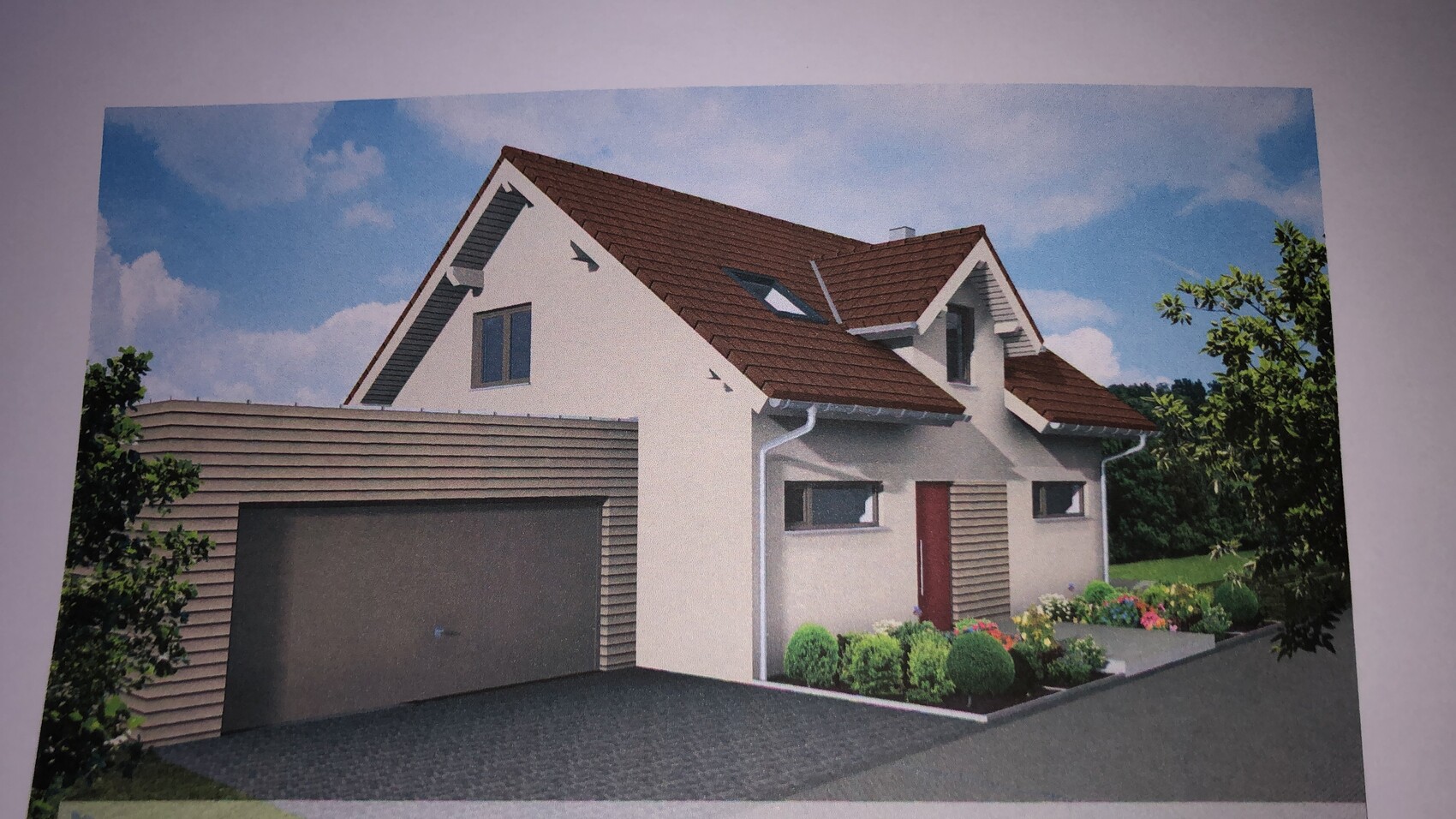
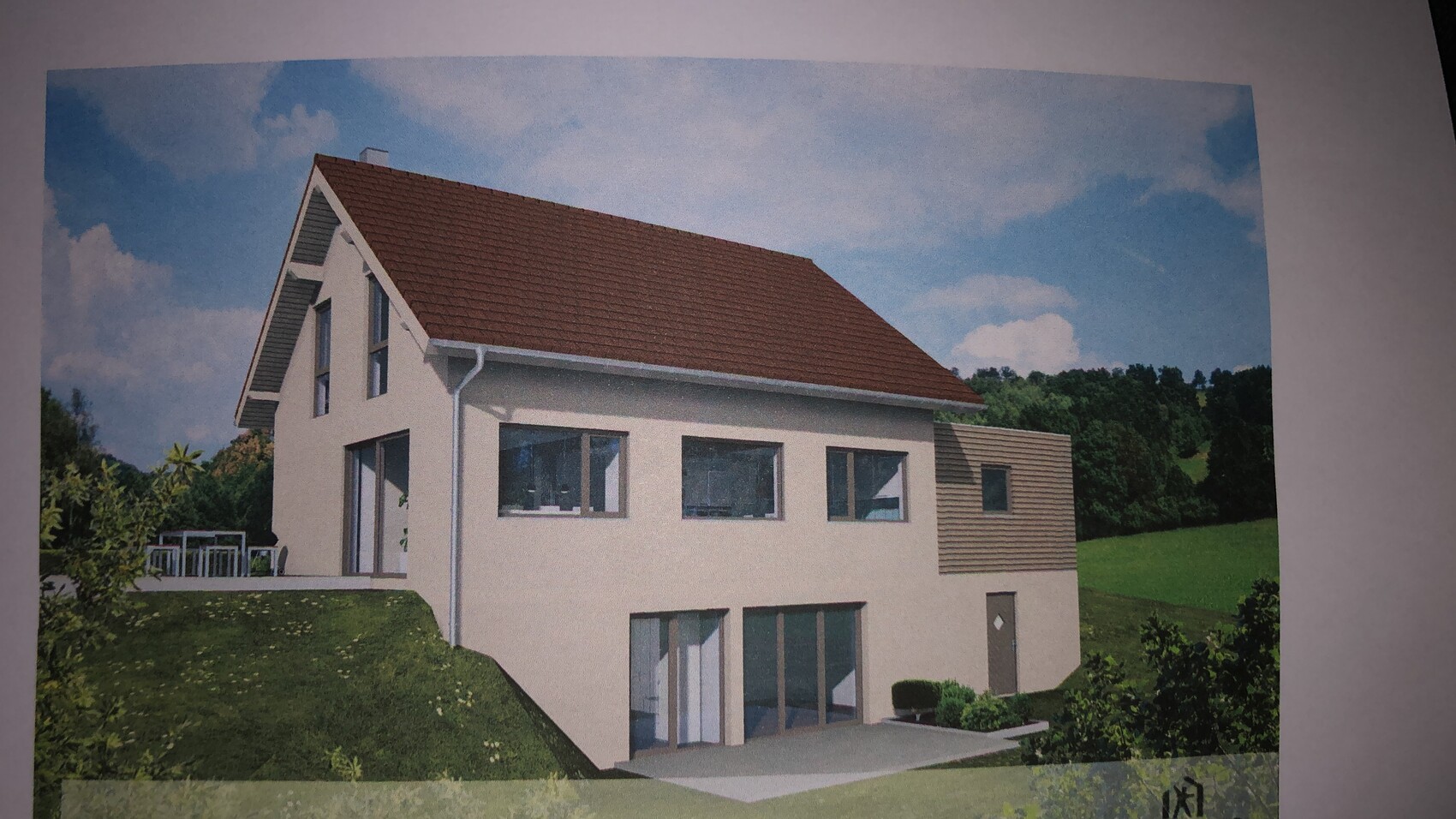
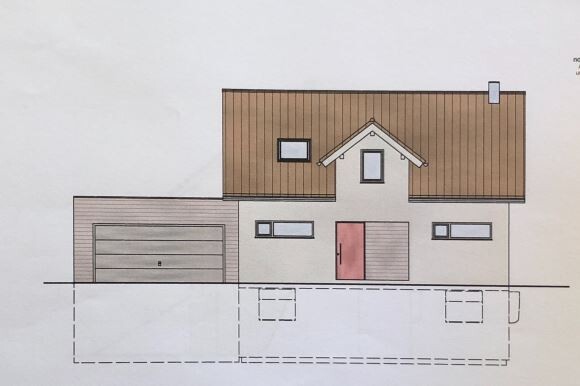
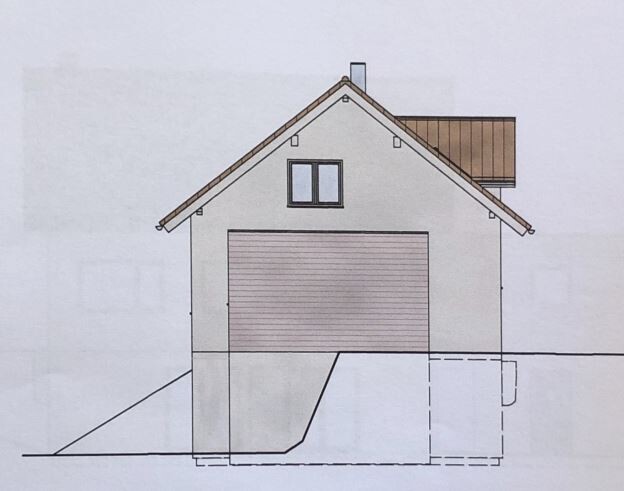
ᐅ Single-family home on a south-facing slope, floor plan approximately 160 m², including basement and garage
Created on: 31 May 2021 22:42
R
r19freak
Hello everyone, I would like to share with you an initial draft from the architect and ask for your feedback and opinions.
Zoning Plan/Restrictions
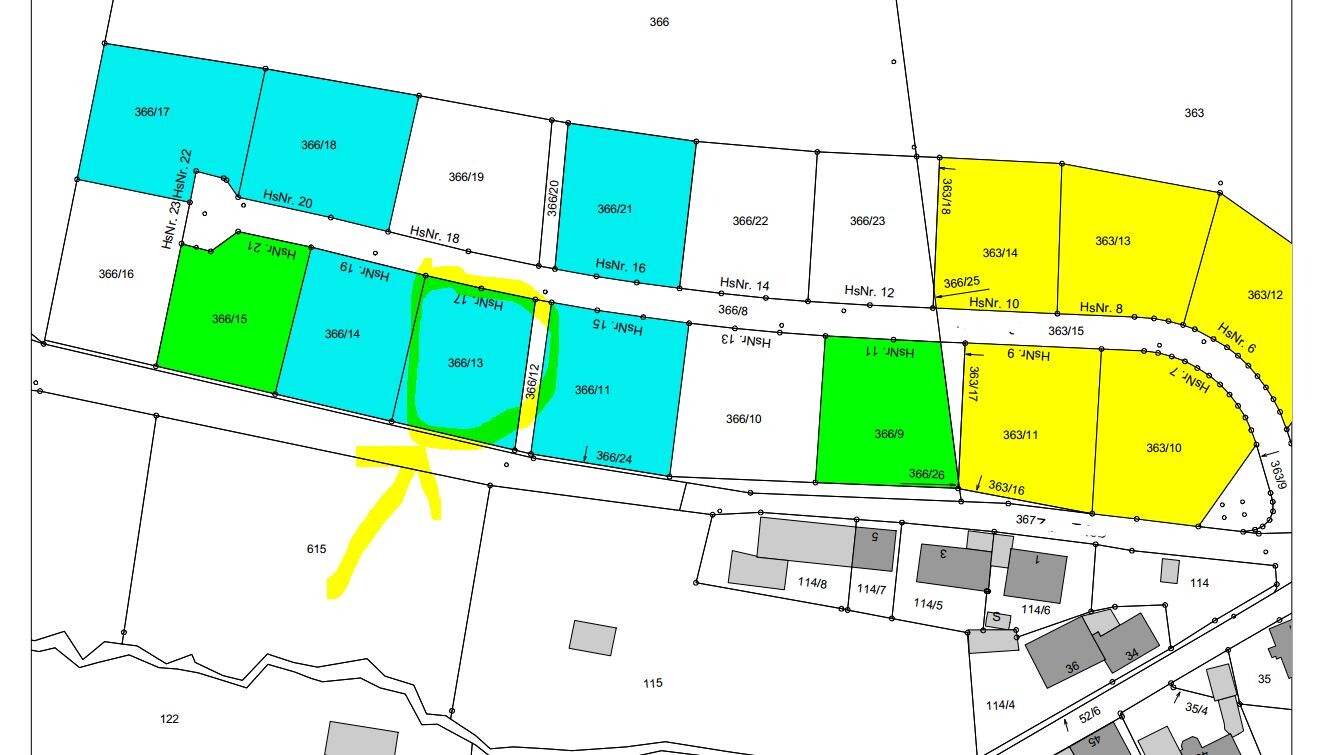
Plot size: 870m² (9369 sq ft)
Slope: south-facing slope
Floor area ratio (FAR): 0.4
Building floor area ratio (FAR): 0.8
Knee wall height: max. 0.75m (2.5 ft)
Building window, building line and boundary
Edge development
Number of parking spaces: 2 + 2 in front
Number of floors: 2
Roof style: gable roof
Architectural style:
Orientation: garden facing south
Maximum heights/limitations
Other requirements
Homeowners’ Requirements
Architectural style: classical
Solid wood house with wooden cladding on the upper floor
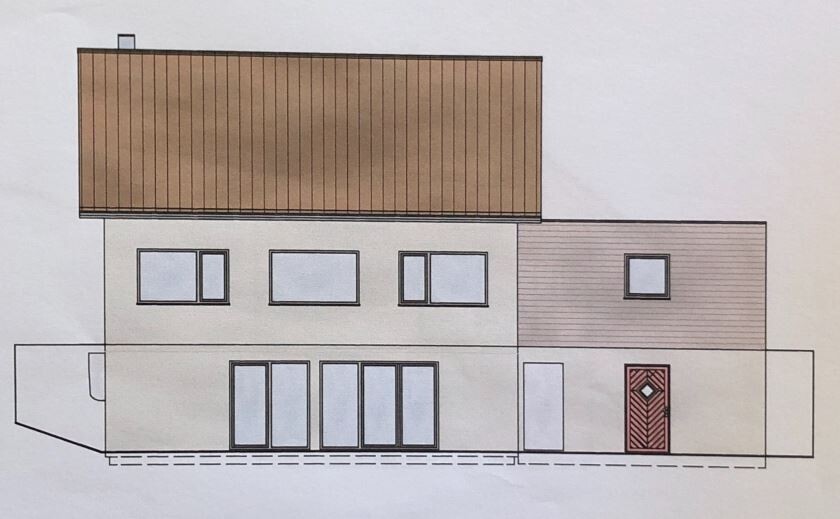
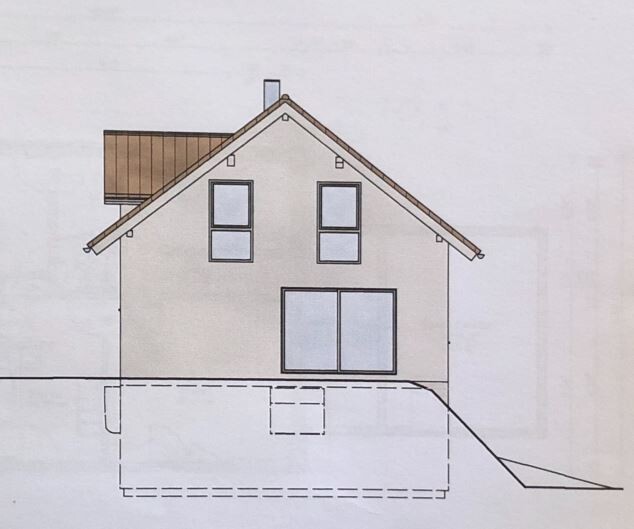
Roof style: gable roof with about 34°, open roof slope, no attic!
Building type
Basement: with basement
Number of floors: 1.5
Number of occupants: 2 adults (38, 39) + 1 child (2) + possibly another child
Space needs on ground floor, upper floor, basement:
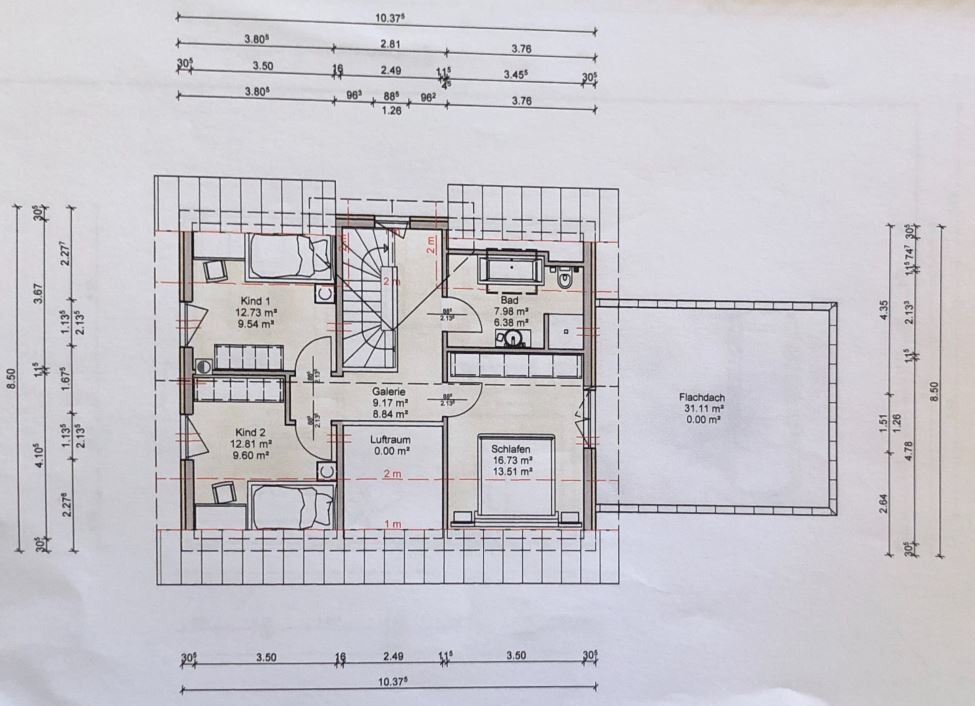
The upper floor is a retreat area for the family, the two children’s rooms can optionally be combined if there is only one child. The parents’ bedroom and bathroom do not have to be particularly large.
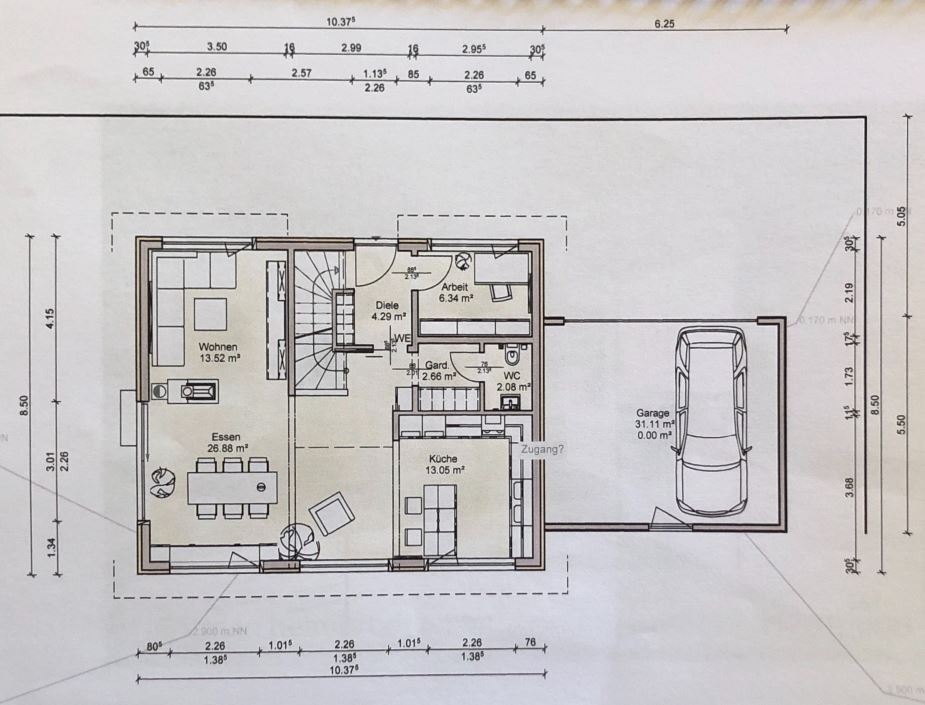
On the ground floor, a home office (for self-employment) is very important. The focus is on the kitchen and dining area with views of the south-facing slope. The living room should be somewhat separated but does not need to be a separate room. The staircase area should be open, since the main heating will be from a stove. Cooking will happen regularly.
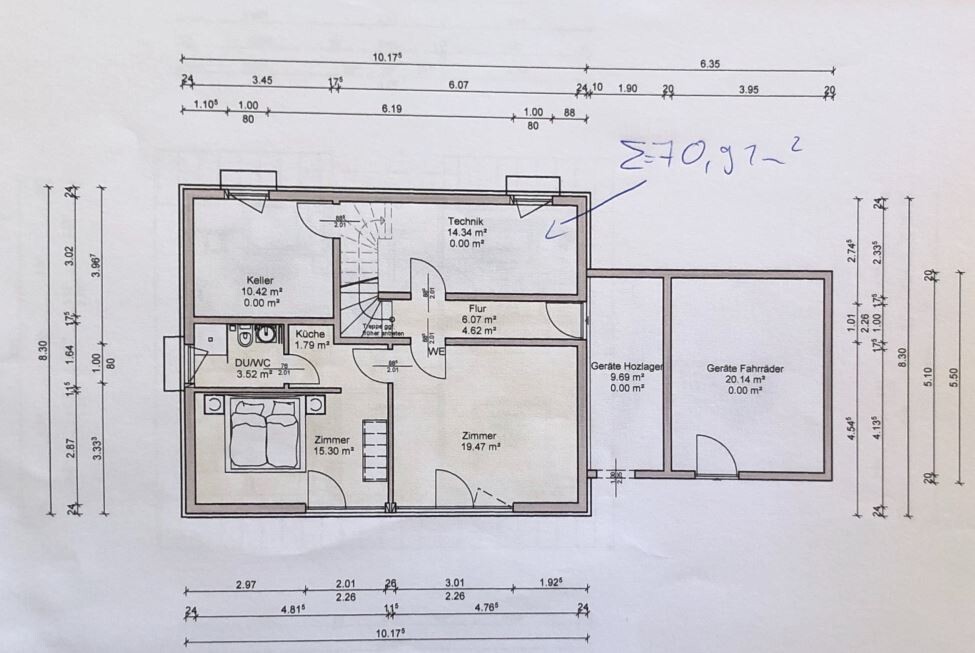
The basement should represent a second living unit initially for KFW 55 funding. Here is the guest area and a large gym.
Office: yes
Guests per year: 20. Family members do not live on site but visit often
Open architecture
Conservative construction method
Open kitchen, cooking island: yes
Number of dining seats: 6–8
Fireplace: yes, masonry stove
Music/stereo wall: no
Balcony, roof terrace: terrace on the west side
Garage: double garage
Further wishes/special features/daily routine, also reasons why certain things should or should not be included
House Design
Planner:
- Architect
What do you particularly like? Why?
We really like the upper floor.
Open living/dining area with large windows facing the garden since it’s not overlooked.
The basement offers enough space for technical installations and storage.
The basement garage has space for garden tools and a workbench.
South-facing roof is well suited for photovoltaic panels.
What do you not like? Why?
Cost estimate per architect/planner: 450,000
Personal price limit for the house including equipment: 550,000 (furniture is available except bathroom and kitchen). Lots of DIY work planned for interior finishing.
Preferred heating technology: water-circulated masonry stove, buffer tank with heating element, large photovoltaic system, wall heating
If you have to give up on certain details or expansions
You could give up: open space, bathtub
You cannot give up: office, garage, basement
Why has the design turned out the way it has? For example:
Which wishes were implemented by the architect? Yes
The challenge is in the ecological and sustainable timber construction and the budget.
What do you think makes it particularly good or bad?
What is the most important/fundamental question about the floor plan, summarized in 130 characters?
Is the living area sufficient? Does the floor plan work well in daily life?
Is the staircase placement suitable? Is the hallway/entrance area large enough?
What do you think about the windows in general?
 Attachments
Zoning Plan/Restrictions
Plot size: 870m² (9369 sq ft)
Slope: south-facing slope
Floor area ratio (FAR): 0.4
Building floor area ratio (FAR): 0.8
Knee wall height: max. 0.75m (2.5 ft)
Building window, building line and boundary
Edge development
Number of parking spaces: 2 + 2 in front
Number of floors: 2
Roof style: gable roof
Architectural style:
Orientation: garden facing south
Maximum heights/limitations
Other requirements
Homeowners’ Requirements
Architectural style: classical
Solid wood house with wooden cladding on the upper floor
Roof style: gable roof with about 34°, open roof slope, no attic!
Building type
Basement: with basement
Number of floors: 1.5
Number of occupants: 2 adults (38, 39) + 1 child (2) + possibly another child
Space needs on ground floor, upper floor, basement:
The upper floor is a retreat area for the family, the two children’s rooms can optionally be combined if there is only one child. The parents’ bedroom and bathroom do not have to be particularly large.
On the ground floor, a home office (for self-employment) is very important. The focus is on the kitchen and dining area with views of the south-facing slope. The living room should be somewhat separated but does not need to be a separate room. The staircase area should be open, since the main heating will be from a stove. Cooking will happen regularly.
The basement should represent a second living unit initially for KFW 55 funding. Here is the guest area and a large gym.
Office: yes
Guests per year: 20. Family members do not live on site but visit often
Open architecture
Conservative construction method
Open kitchen, cooking island: yes
Number of dining seats: 6–8
Fireplace: yes, masonry stove
Music/stereo wall: no
Balcony, roof terrace: terrace on the west side
Garage: double garage
Further wishes/special features/daily routine, also reasons why certain things should or should not be included
House Design
Planner:
- Architect
What do you particularly like? Why?
We really like the upper floor.
Open living/dining area with large windows facing the garden since it’s not overlooked.
The basement offers enough space for technical installations and storage.
The basement garage has space for garden tools and a workbench.
South-facing roof is well suited for photovoltaic panels.
What do you not like? Why?
Cost estimate per architect/planner: 450,000
Personal price limit for the house including equipment: 550,000 (furniture is available except bathroom and kitchen). Lots of DIY work planned for interior finishing.
Preferred heating technology: water-circulated masonry stove, buffer tank with heating element, large photovoltaic system, wall heating
If you have to give up on certain details or expansions
You could give up: open space, bathtub
You cannot give up: office, garage, basement
Why has the design turned out the way it has? For example:
Which wishes were implemented by the architect? Yes
The challenge is in the ecological and sustainable timber construction and the budget.
What do you think makes it particularly good or bad?
What is the most important/fundamental question about the floor plan, summarized in 130 characters?
Is the living area sufficient? Does the floor plan work well in daily life?
Is the staircase placement suitable? Is the hallway/entrance area large enough?
What do you think about the windows in general?
Hello 🙂
Why is the basement absolutely necessary? It seems there is a granny flat or secondary apartment. Would you like to share more details about that?
Given the current price increases, I find the architect’s cost estimate for a basement with living space and a hillside location optimistic.
Why is the basement absolutely necessary? It seems there is a granny flat or secondary apartment. Would you like to share more details about that?
Given the current price increases, I find the architect’s cost estimate for a basement with living space and a hillside location optimistic.
H
hampshire1 Jun 2021 08:39r19freak schrieb:
The daylight planning in the office has also caught our attention. That could be solved with a bigger window, or where do you see this room? Yes, larger windows bring light into the study. I’m not familiar with how the study will be used. For occasionally opening mail, doing taxes, and sporadic hours of working from home, the study is fine for me. As a regularly used workspace, it wouldn’t be suitable. If I spend a large part of my life in a room, I want it to be comfortable – with good light and a nice view.
r19freak schrieb:
What do you mean by the all-purpose room? Where do you see wasted space? Here, the term “all-purpose room” refers to a living area that combines (at minimum) cooking, dining, and living functions. The area between the kitchen and dining table is purely a passageway and relatively large for such limited use – I consider that wasted space. I also don’t see any aesthetic benefit from this area with the opening to the upper level.
r19freak schrieb:
The gallery is primarily to get the warmth from the stove upstairs. The idea of directing heat from the stove upstairs is physically understandable. However, the positioning and type of stove are crucial in such considerations – and I don’t see a conceptual integration here. In the end, you get the drawbacks of a noisy upper floor, without any significant aesthetic or thermal benefit, and you pay with expensive floor area that would be better used in a more compact building.
r19freak schrieb:
We also talked a lot about garden access. We believe it is easy to get down from the terrace on the west side with the right stairs in the terrain. I’m fine with garden access from the living area on the ground floor. Attractive rooms with great potential for living space will be created downstairs. I think this potential is underused, even if a guest is moved into a “generous side area.”
Given your site location, the idea comes to me that a central entrance could lead to a gallery, from which you can see the living area below – which would have double-height ceilings everywhere except the kitchen. A free, straight staircase would lead up and down in this open space (no stairwell). The study would be located above the kitchen, with a small guest room and wardrobe. Upstairs would be the bedrooms and children’s rooms, and in the basement behind the living space, technical rooms and a cold storage pantry. This layout would give me a much better living experience and daily enjoyment of a “wow effect” in the house. The study would be a true living space, far enough from the main activity but still well placed. Of course, such a concept also has some impractical aspects – for example, groceries might have long distances to the kitchen/pantry, and the route from the bedroom to the breakfast table involves two staircases.
If having an office is important because of self-employment and you spend a lot of time there, consider placing it in the basement. You could possibly combine it with a guest area.
The 6 sqm (65 sq ft) office on the ground floor isn’t really ideal.
Otherwise, as others have already mentioned, it’s a pity that the access to the garden from the basement isn’t better utilized. Personally, I would (and will) set up the bedrooms in the basement. The office, guest room, and gym can then be upstairs. This way, you won’t have any issues with sound transmission due to the open atrium. I wouldn’t place a child’s bedroom directly adjacent to the open atrium next to the dining room.
The 6 sqm (65 sq ft) office on the ground floor isn’t really ideal.
Otherwise, as others have already mentioned, it’s a pity that the access to the garden from the basement isn’t better utilized. Personally, I would (and will) set up the bedrooms in the basement. The office, guest room, and gym can then be upstairs. This way, you won’t have any issues with sound transmission due to the open atrium. I wouldn’t place a child’s bedroom directly adjacent to the open atrium next to the dining room.
r19freak schrieb:
We really like the upper floor.You’ll have to explain that to us in more detail (I’m speaking for everyone here)!r19freak schrieb:
The upper floor is the family’s retreat.So everyone goes into their own “cage” there.Sorry, but if I already have very limited external dimensions, an open void space has absolutely no place in a small “house” like this. The entire design seems completely botched to me.
How do the bicycles get down to the basement?
I see too many question marks here!
By the way: a garage length of 5.50 meters (18 feet) on the outside is too short.
 Schimi17911 Jun 2021 08:46
r19freak schrieb:
...
What do you mean by a captain’s house?
..."A captain’s house is recognized by its gable occupying one third of the front facade, located in the middle of the house."Similar topics