
ᐅ Single-family house, 200 m², constructed in an L-shape with a 45° angle
Created on: 25 Feb 2020 07:00
K
Kerstili
Hello
I would like to share our nearly finished floor plan and immediately ask for your opinions.
What would you change or do differently?
I appreciate any tips, suggestions, or advice...
Thank you very much in advance to everyone.
Development plan/restrictions
Plot size: 1580m² (0.39 acres)
Terrain: slight slope towards the street
Site coverage ratio
Floor area ratio
Building envelope, building line, and boundary:
Edge development
Number of parking spaces
Number of floors: two full stories
Roof type: gable roof
Architectural style
Orientation
Maximum heights/limits
Other requirements
Owners’ requirements
Style, roof type, building type: gable roof, angled building design
Basement, floors: two full stories with basement
Number of occupants, ages: 2 adults (early 30s) and 2 young children (1 and 4 years old)
Space requirements on the ground floor: living/dining area, kitchen, WC and shower, office (possibly a bedroom later), pantry
Upper floor: 2 children’s rooms, master bedroom, sewing room, bathroom
Office: family use or home office? Family use
Number of guest stays per year
Open or closed architecture: rather open
Conservative or modern building style: conventional
Open kitchen, kitchen island
Number of dining seats
Fireplace: yes
Music/stereo wall: no
Balcony, roof terrace: no
Garage, carport: double garage
Utility garden, greenhouse:
Additional wishes/particulars/daily routine, including reasons why certain features should or should not be included
House design
Who created the plan:
- Do-it-yourself
What do you especially like? Why? Many windows for light
What do you not like? Why?
Price estimate according to architect/designer:
Personal price limit for the house, including fixtures and fittings:
Preferred heating system: air-source heat pump
If you have to give up some details or expansions:
- Which can you do without:
- Which can you not do without:
Why is the design like it is now? For example:
Angled building design for view and noise protection from the street
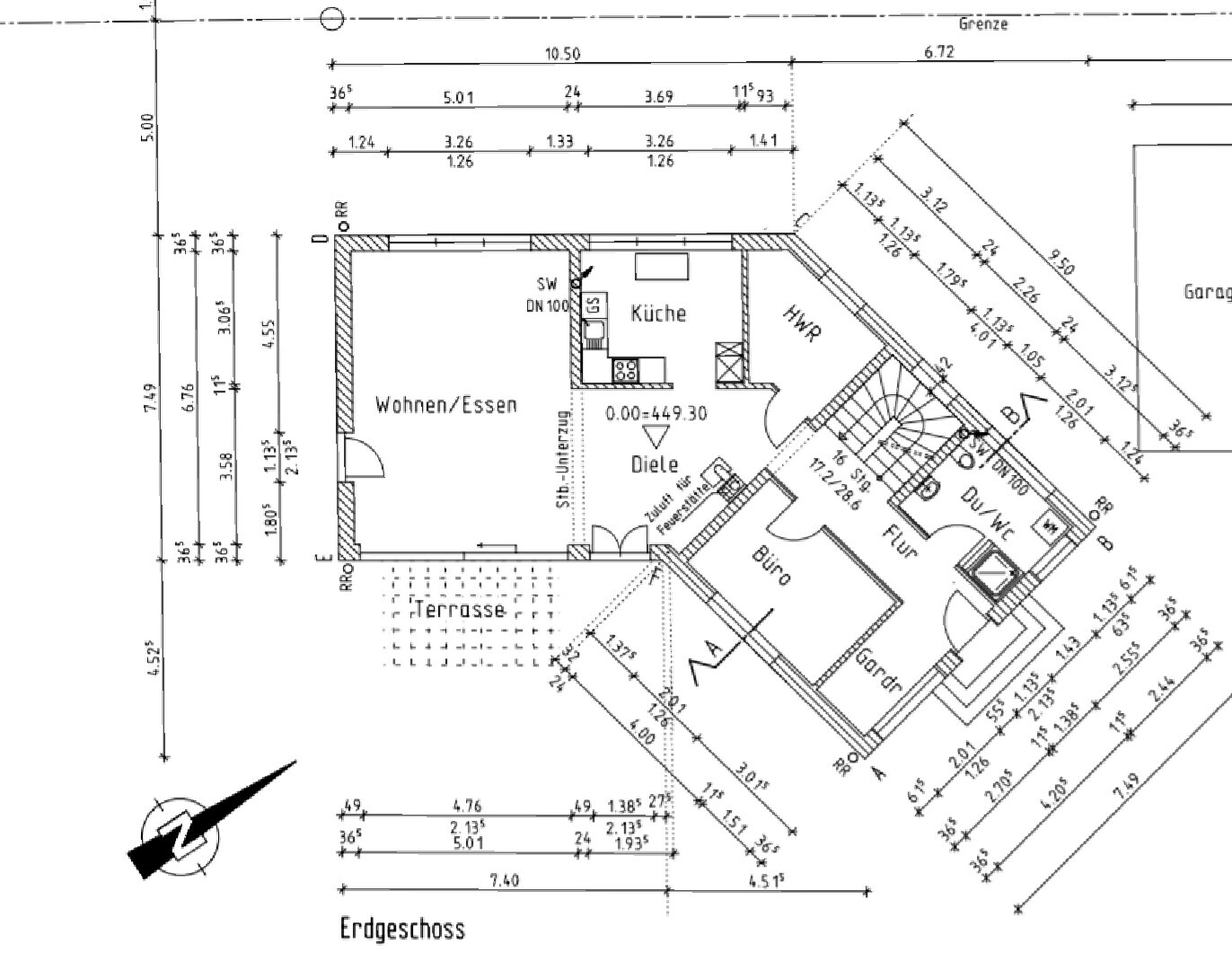
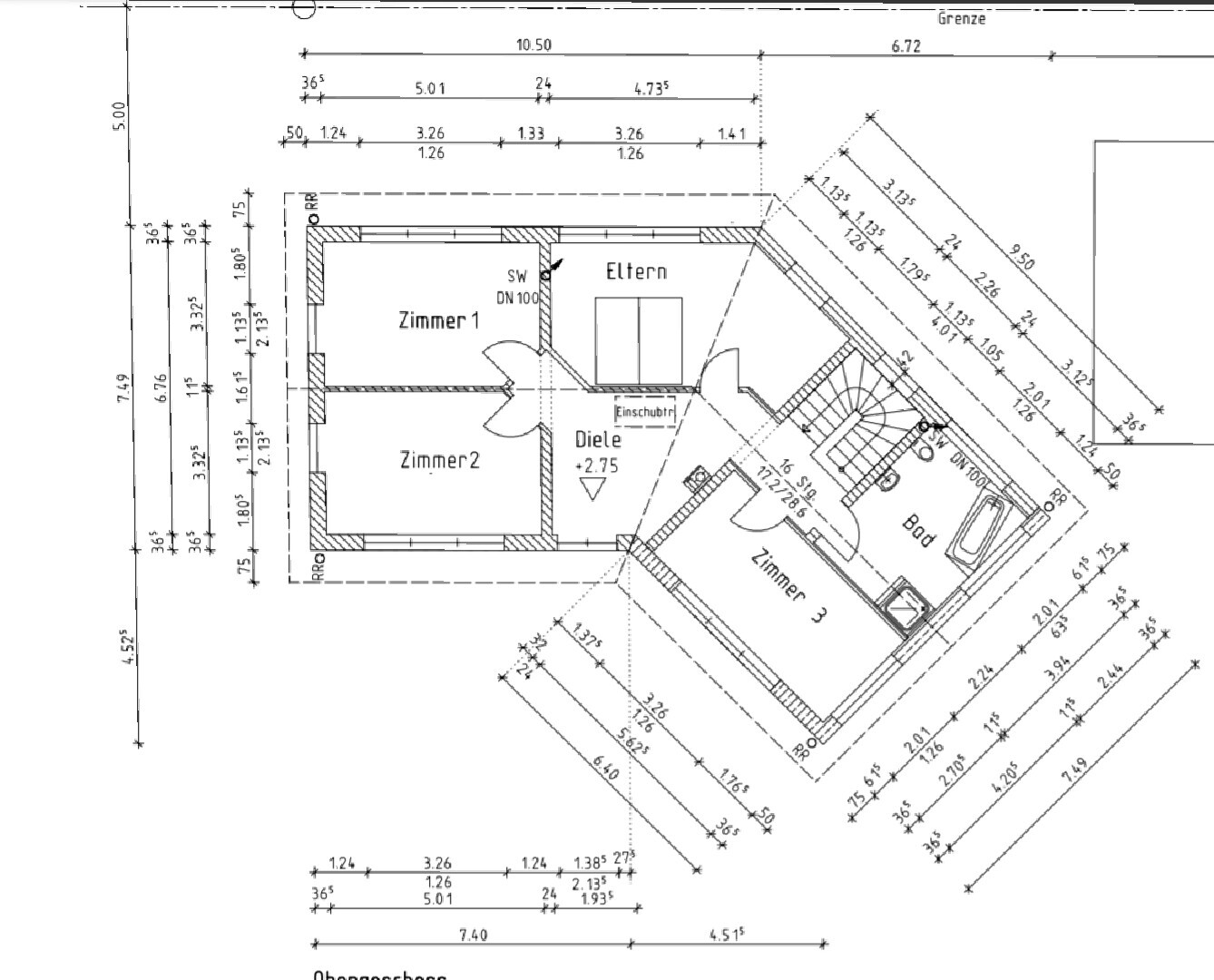
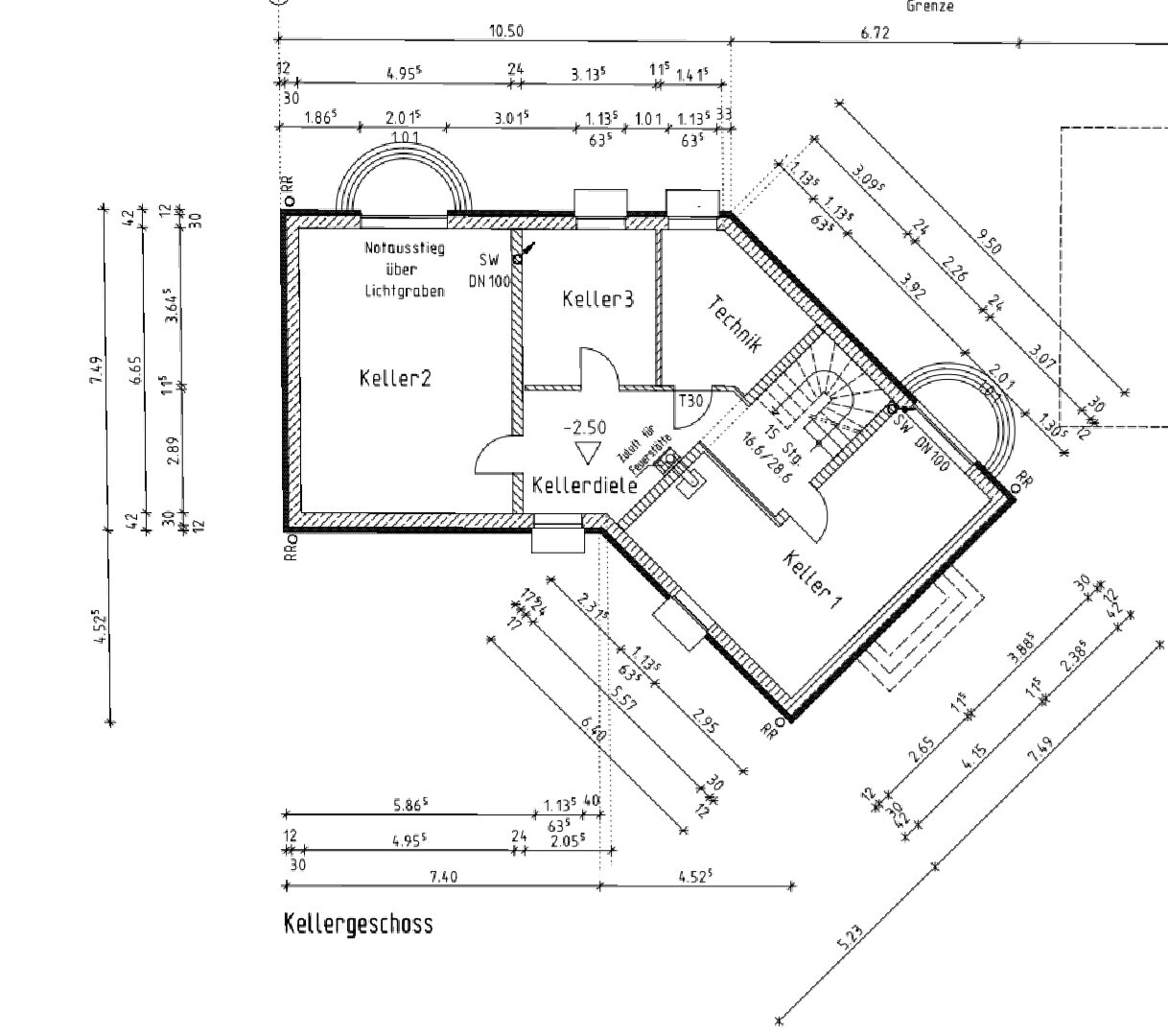
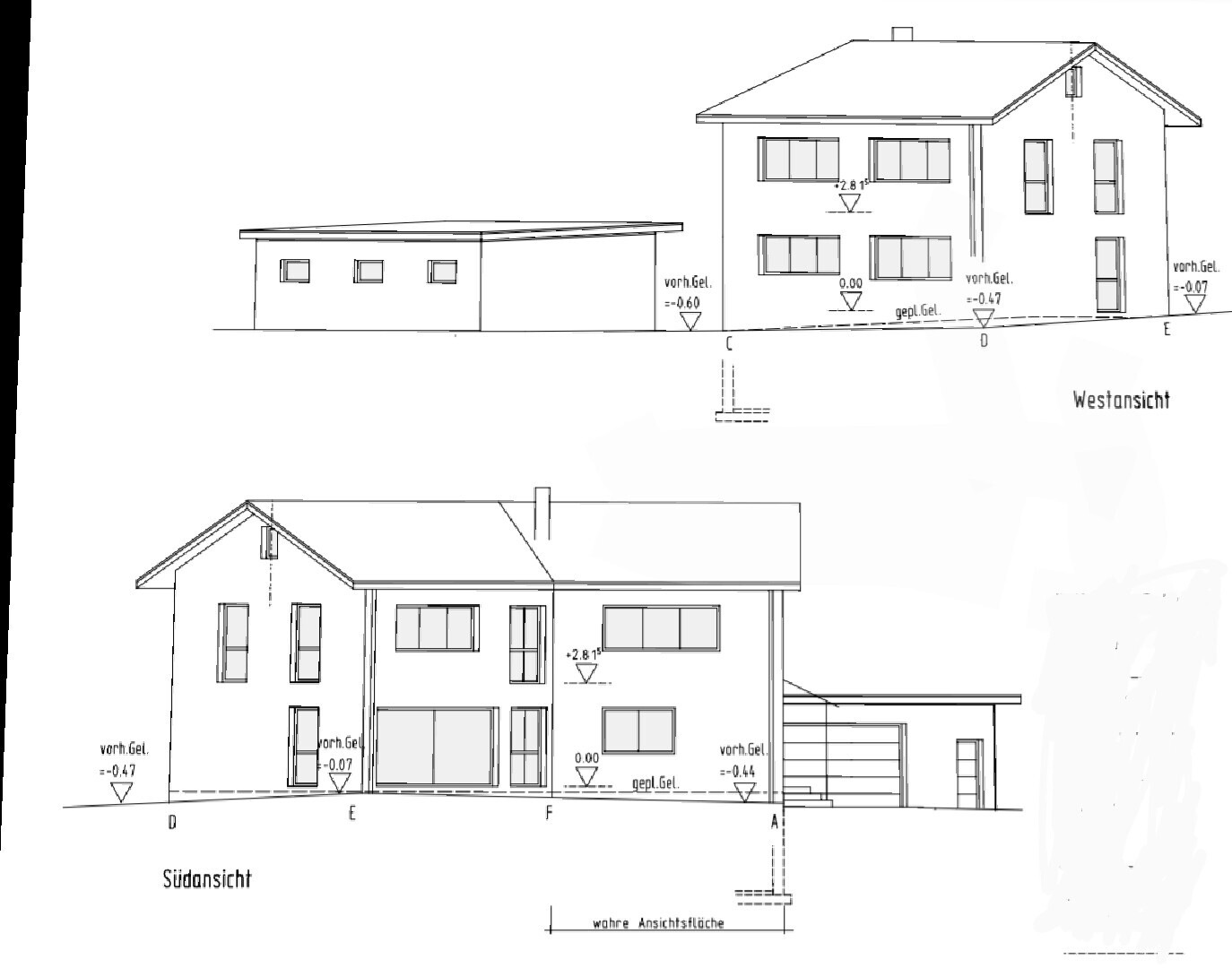

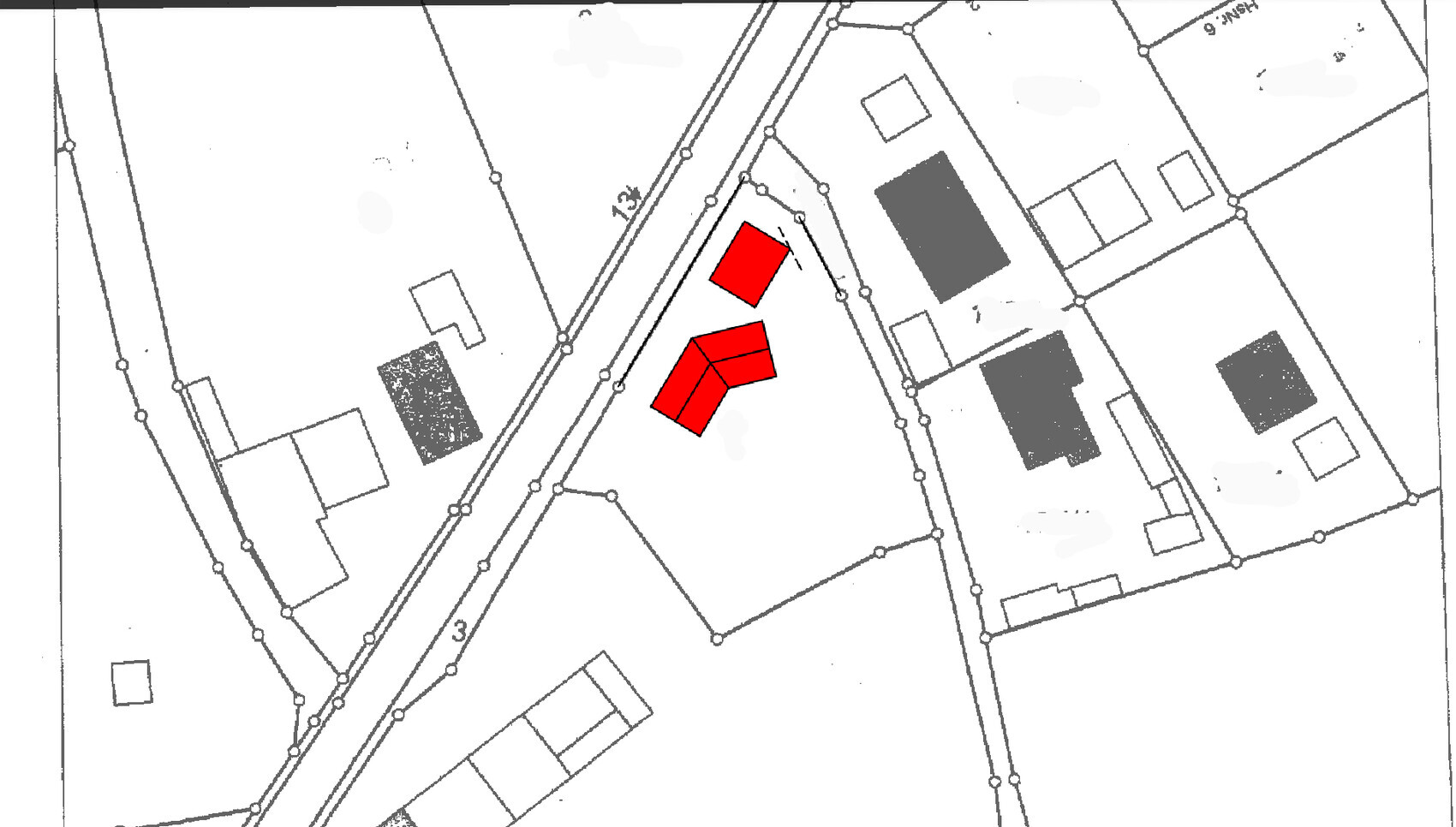
I would like to share our nearly finished floor plan and immediately ask for your opinions.
What would you change or do differently?
I appreciate any tips, suggestions, or advice...
Thank you very much in advance to everyone.
Development plan/restrictions
Plot size: 1580m² (0.39 acres)
Terrain: slight slope towards the street
Site coverage ratio
Floor area ratio
Building envelope, building line, and boundary:
Edge development
Number of parking spaces
Number of floors: two full stories
Roof type: gable roof
Architectural style
Orientation
Maximum heights/limits
Other requirements
Owners’ requirements
Style, roof type, building type: gable roof, angled building design
Basement, floors: two full stories with basement
Number of occupants, ages: 2 adults (early 30s) and 2 young children (1 and 4 years old)
Space requirements on the ground floor: living/dining area, kitchen, WC and shower, office (possibly a bedroom later), pantry
Upper floor: 2 children’s rooms, master bedroom, sewing room, bathroom
Office: family use or home office? Family use
Number of guest stays per year
Open or closed architecture: rather open
Conservative or modern building style: conventional
Open kitchen, kitchen island
Number of dining seats
Fireplace: yes
Music/stereo wall: no
Balcony, roof terrace: no
Garage, carport: double garage
Utility garden, greenhouse:
Additional wishes/particulars/daily routine, including reasons why certain features should or should not be included
House design
Who created the plan:
- Do-it-yourself
What do you especially like? Why? Many windows for light
What do you not like? Why?
Price estimate according to architect/designer:
Personal price limit for the house, including fixtures and fittings:
Preferred heating system: air-source heat pump
If you have to give up some details or expansions:
- Which can you do without:
- Which can you not do without:
Why is the design like it is now? For example:
Angled building design for view and noise protection from the street
Climbee schrieb:
Oh man, can you please stop the bickering here? Take it to private messages.
As I said, I don’t like the design at all, neither visually nor functionally. But obviously, you really want this unusual (and cost-increasing) building shape. So just a few general thoughts from me:
- I don’t consider the cost estimates you have for a house like this to be realistic; the figure starting with 7, as mentioned here several times, is probably more accurate. If you can live with that, fine. Otherwise, I strongly recommend a conventional house (rectangular shape) with a pitched roof. With a lot of effort, you might reach a figure starting with 5 – but certainly not with the planned construction. You should be aware of that. If that’s okay for you, then
- If I choose such an unusual shape, I would make it the center of my house – the “wow” factor. Meaning: this corner is the centerpiece, it’s where my main living space is. If I’m investing a lot because I like it so much, I want to enjoy it. That’s where the main living area belongs. I would imagine a very individual kitchen/dining/living area there, but if the kitchen is to be separate, then the living area should be there, open and spacious towards the garden. I could even imagine an opening in the roof structure, so it’s visible, with a gallery or something similar. That would make it impactful and meaningful. Right now the feature that makes this house unique is shyly hidden away in a hallway.
- Logically, the entrance should not be there but where the kitchen is placed (in one of the two side wings, which one doesn’t matter). I also prefer the kitchen facing the garden. You’ll be grilling in summer, sitting outside, living outdoors. Running a marathon to the kitchen for every glass of water, beer, or salt shaker is inconvenient. But if someone absolutely wants the kitchen facing the street, that’s their choice. I’ve noticed quite often that there are many designs where homeowners basically plan their personal fitness studio by default. Fine by me!
- If upstairs the (open?) living area splits the house into two parts anyway, I would make one side for the parents, including the sewing room and a bathroom for the parents. The other side would have both children’s bedrooms and a small bathroom for them as well. Children’s rooms should open to the garden. If space allows, include a small utility room for laundry, very practical (speaking from experience). How big does the sewing room need to be? Wouldn’t it make sense to have it near the utility room? Because when I sew, I also need my ironing board – and you also need that if you have laundry. Makes sense to plan both close together – just a thought.
- Exterior views: I find them terribly plain and boring. As I said: I would place the living area centrally and open it completely to the garden with glass. Towards the street, keep windows restrained (possibly higher window bands). The building’s shape is unique – if the exterior views don’t match that, it looks like it was intended but not well done.
- Consider what makes sense, where you can shorten routes (because you don’t want to walk unnecessary distances for the next 30 years), and don’t assume “we already have it like that, so it’s okay.” “It’s okay” would be too little for me personally for a house costing over half a million. I would aim for the optimum. In my opinion, this design is still miles away from that.
- One last note about the closed kitchen: if that’s what you want, fine, but listen to the opinions, especially of mothers with small kids – they usually find it very convenient to keep an eye on the little ones playing in the main living area while they’re busy in the kitchen. What advantages do you see for a closed kitchen, or why are you so against a room that combines everything (cooking/dining/living)? I’m not trying to impose anything, but think it over. We have no kids, but an open plan, and I love it. I don’t want to be locked away in the kitchen while cooking with my partner relaxing alone in the living room. This way we always stay connected; I can send him to the basement if I need something or ask him to handle the drinks, etc. I find it practical *g* and when guests are over, I’m never isolated in the kitchen while still preparing something.
Just chew on that.What you write is very helpful, and I will think more deeply about it. About the kitchen, I wanted to add that the wall between the kitchen and the hallway (where the dining area is supposed to be) will be only half-height, allowing views towards the dining area and terrace. I also like having my privacy in the kitchen and don’t want everything fully open.
The utility room will be used more as a pantry for food, cleaning supplies, drinks, and a freezer.
We plan to put the washing machine in the shower/toilet area; it’s probably not very attractive but most practical for us. We don’t have a dryer and won’t be getting one; the utility room is too small for hanging laundry anyway.
Climbee schrieb:
I’m completely with you, but that will probably stretch the budget even further.
So far, I’m still waiting for confirmation that costs around €7,000,000 (about $7,400,000) are even feasible — but apart from insisting on the kink, I haven’t heard any approval yet.
I’ll say it again: with the kink, it won’t come in under €700,000 (about $740,000) — no matter how much people complain.
I fully agree with Hampshire: designing the house shape to fit the plot is appealing, but it then requires a suitable garden design, which also costs money.
Is all this actually possible?
No one here wants to give concrete advice or suggestions while keeping in mind that it probably won’t be affordable anyway.
So once again, here’s a very direct question: the kink is to remain — can you afford that?
Forget the cost estimates, there is enough expertise here and it has been said MULTIPLE times that the 7 will be the final figure.
Is that workable for you?
If you still don’t believe it, go to a local carpenter and simply get a price estimate for the roof truss. Maybe that will help you understand... Sorry, I wasn’t fully aware that you were waiting for approval.
Yes, it is financially feasible.
hampshire schrieb:
I took another look at the bend in relation to the plot – it would be consistent if the bend reflected the angle of the property boundaries and, together with the landscaping, helped create a courtyard atmosphere.I’m having a hard time picturing that right now ops:One reason we would position the house this way is to have views of the greenery from the terrace and dining area rather than the neighbors, and also to avoid facing the living room too much towards the neighbors (the small living room garden door was originally intended to be a large window).
Budget
It is not our place to question where the money comes from. We can and should only point out if the budget clearly falls short or, as in this case, if additional costs in the six-figure range are expected on top.
I like the bungalow with the Y-shape. The sloped walls were used as a design element inside. In the floor plan presented here, practically every possible disadvantage has been created.
I would have made the floor plan smaller. Why not move the sewing room and the office downstairs to the basement?
It is not our place to question where the money comes from. We can and should only point out if the budget clearly falls short or, as in this case, if additional costs in the six-figure range are expected on top.
I like the bungalow with the Y-shape. The sloped walls were used as a design element inside. In the floor plan presented here, practically every possible disadvantage has been created.
I would have made the floor plan smaller. Why not move the sewing room and the office downstairs to the basement?
haydee schrieb:
Budget
It’s not our place to question where the money comes from. We can and should only point out if the budget is clearly insufficient or, as in this case, if six-figure additional costs are involved.
I like the bungalow with the Y shape. The slanted walls were used as a design feature inside. This current floor plan seems to create almost every possible disadvantage.
I would have reduced the floor plan size. Why not move the sewing room and the office down to the basement? Hmm, true, at least one room could go to the basement.
Do you think reducing the size would work with an angled layout? Wouldn’t it look worse then?
No idea. But it’s true that the appearance resembles a building that has been remodeled several times. Maybe instead of a full story, use a taller knee wall or dig the basement fully into the ground so that the ground floor is level with the outside. A flatter design would suit the building better.
It’s a huge house, but it doesn’t have to look like a multi-family dwelling.
Try implementing Climbee’s suggestions.
It’s a huge house, but it doesn’t have to look like a multi-family dwelling.
Try implementing Climbee’s suggestions.
Similar topics