
ᐅ Single-Family Home Built in 2004 – Renovation Plan / Solar Power and More
Created on: 22 Jun 2022 21:33
A
Acetone1424
Hello friends,
I own a single-family house that was built/occupied in 2004 (I was not involved in the construction back then). Now we want to make some changes/improvements regarding the energy performance of the house. So far, we have a Viessmann gas heating system from 2004.
I was thinking about replacing the gas heating with an air-to-water heat pump and powering it with a photovoltaic system (at least in theory—I have no real idea how this would work in practice for us). So I asked an energy consultant to come by and make some recommendations. Most of the suggestions make sense to me (though I’m a layperson and can only follow them superficially). I would appreciate it if you could take a look at the plan here and leave any comments you might have.
If you have any ideas on how I could share the PDF files here better than converting them into a million JPGs, I would be thankful (from what I understand, this forum discourages linking to external sites), especially since I can only attach 10 files?
My thoughts on the plan are as follows:
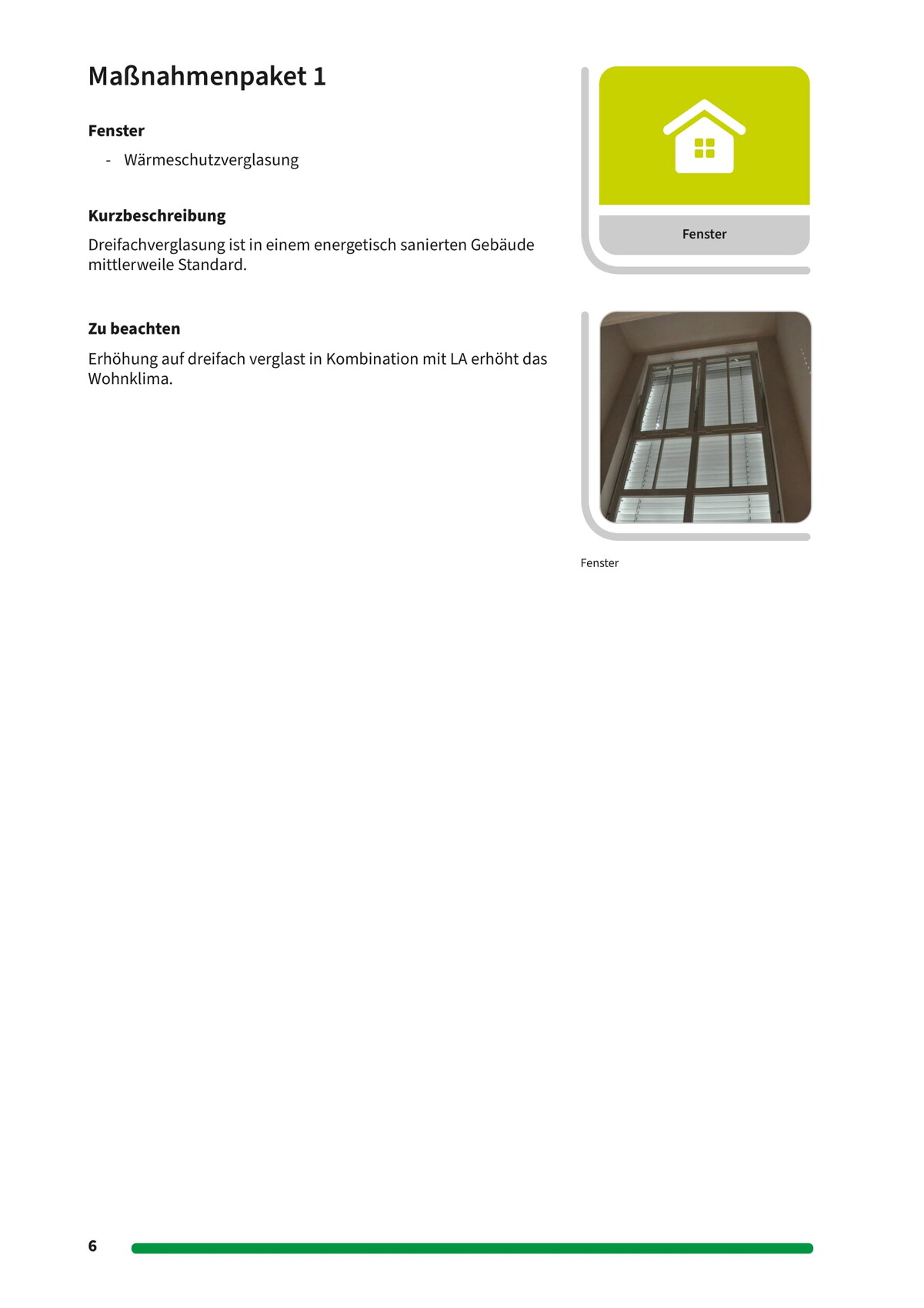
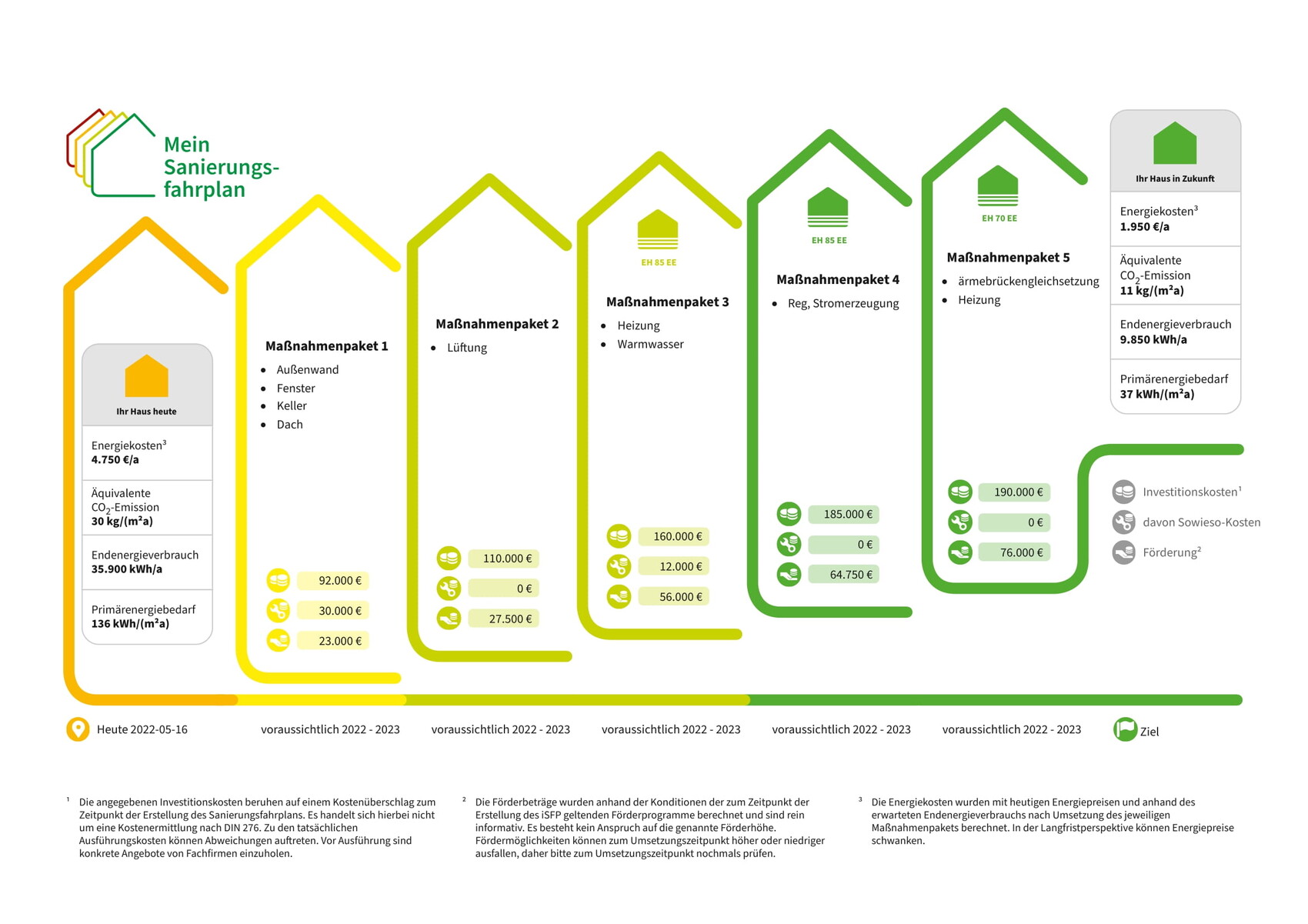
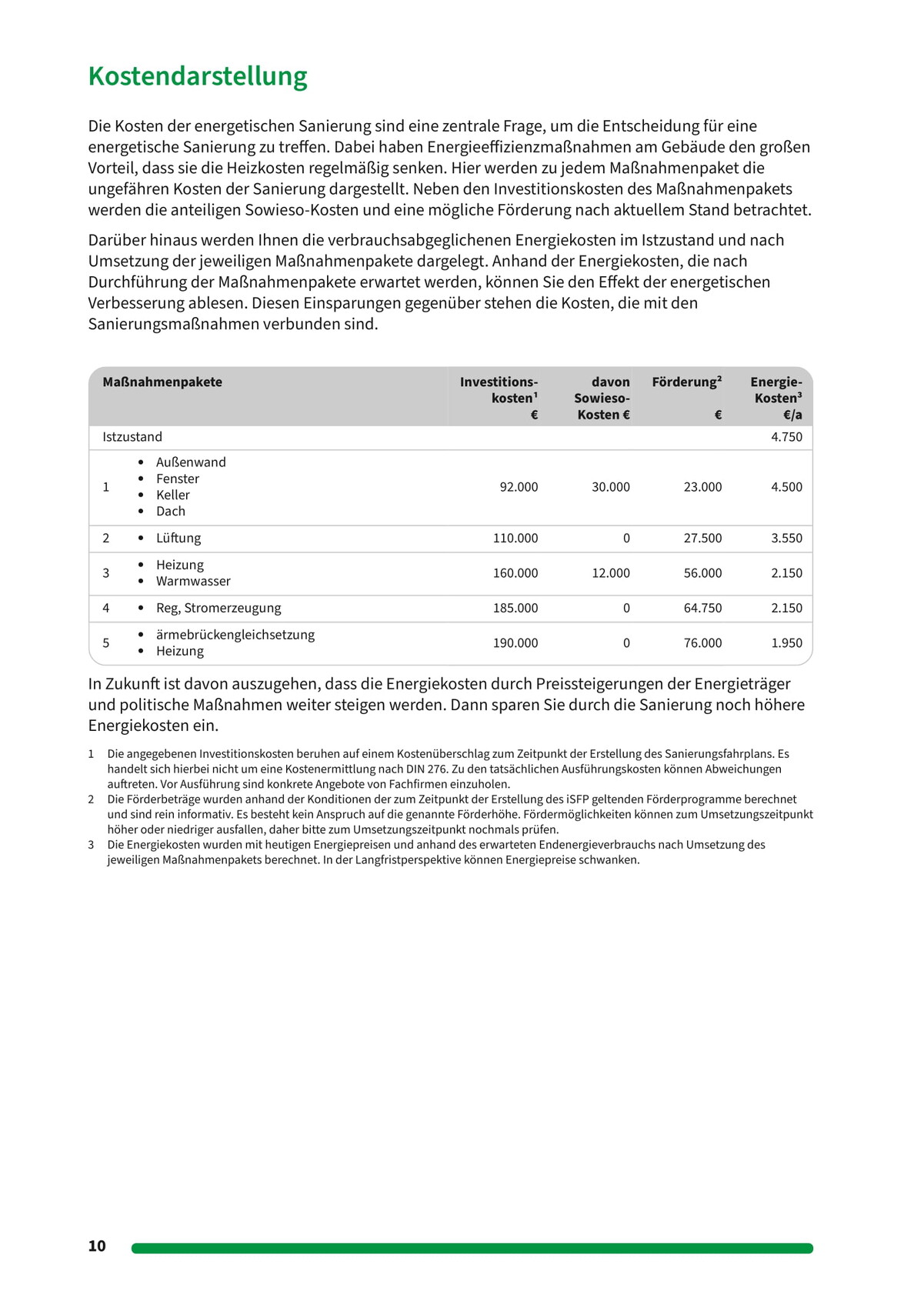
Package 1 is very expensive (maybe no insulated glazing? Are the current windows okay?) especially compared to the savings (I’m aware this might be a wrong assumption on my part). Otherwise, I would have agreed to everything.

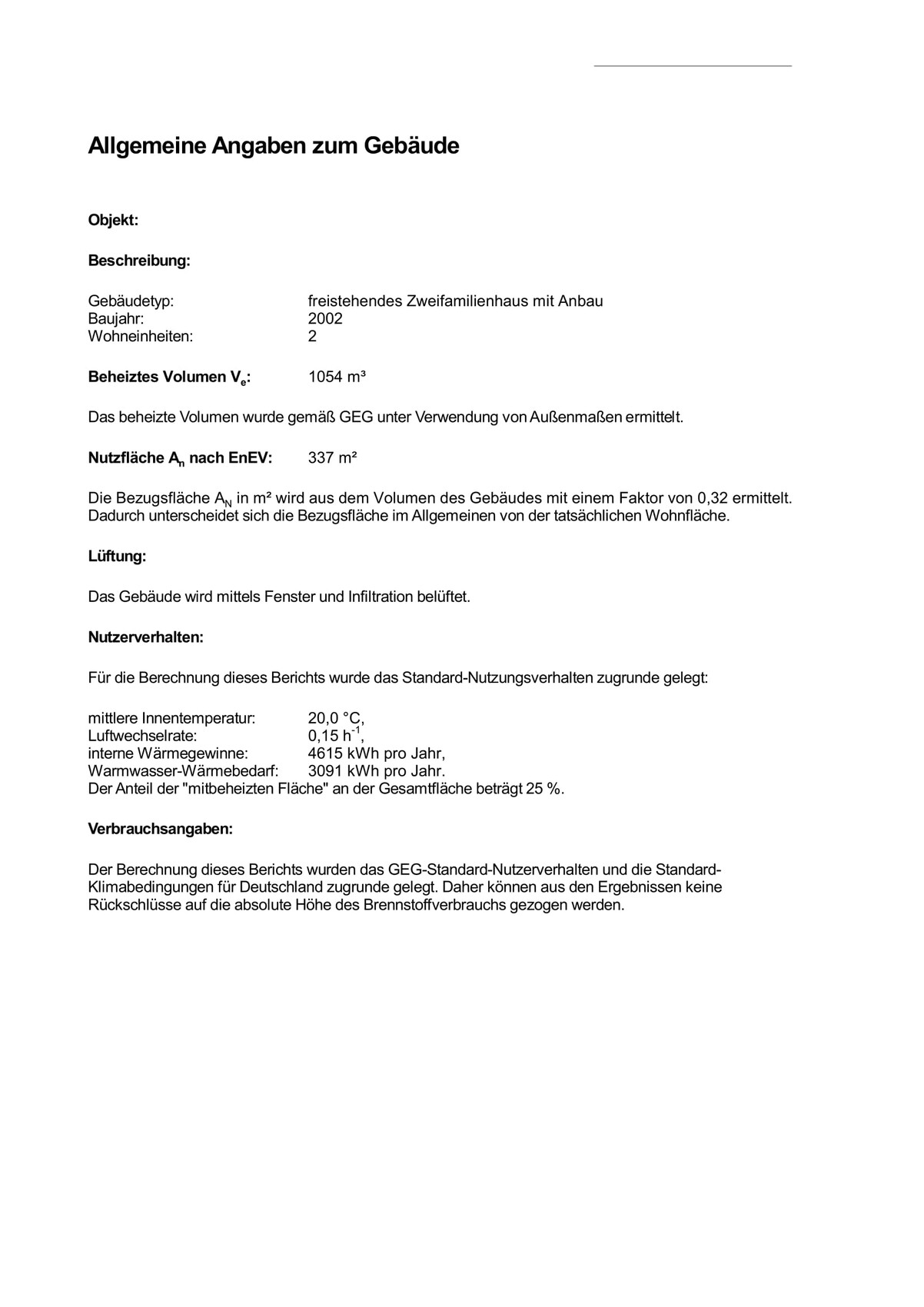
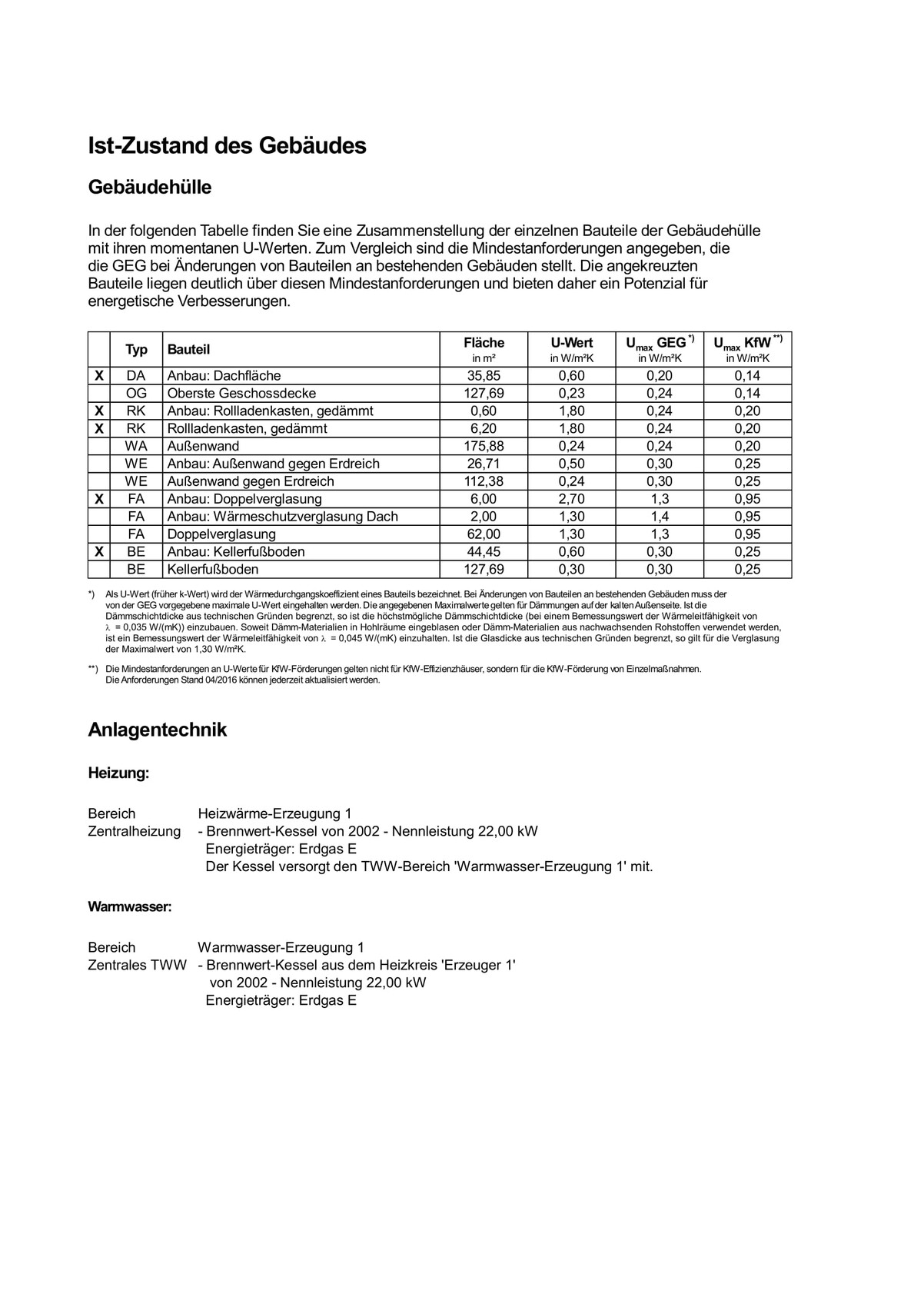
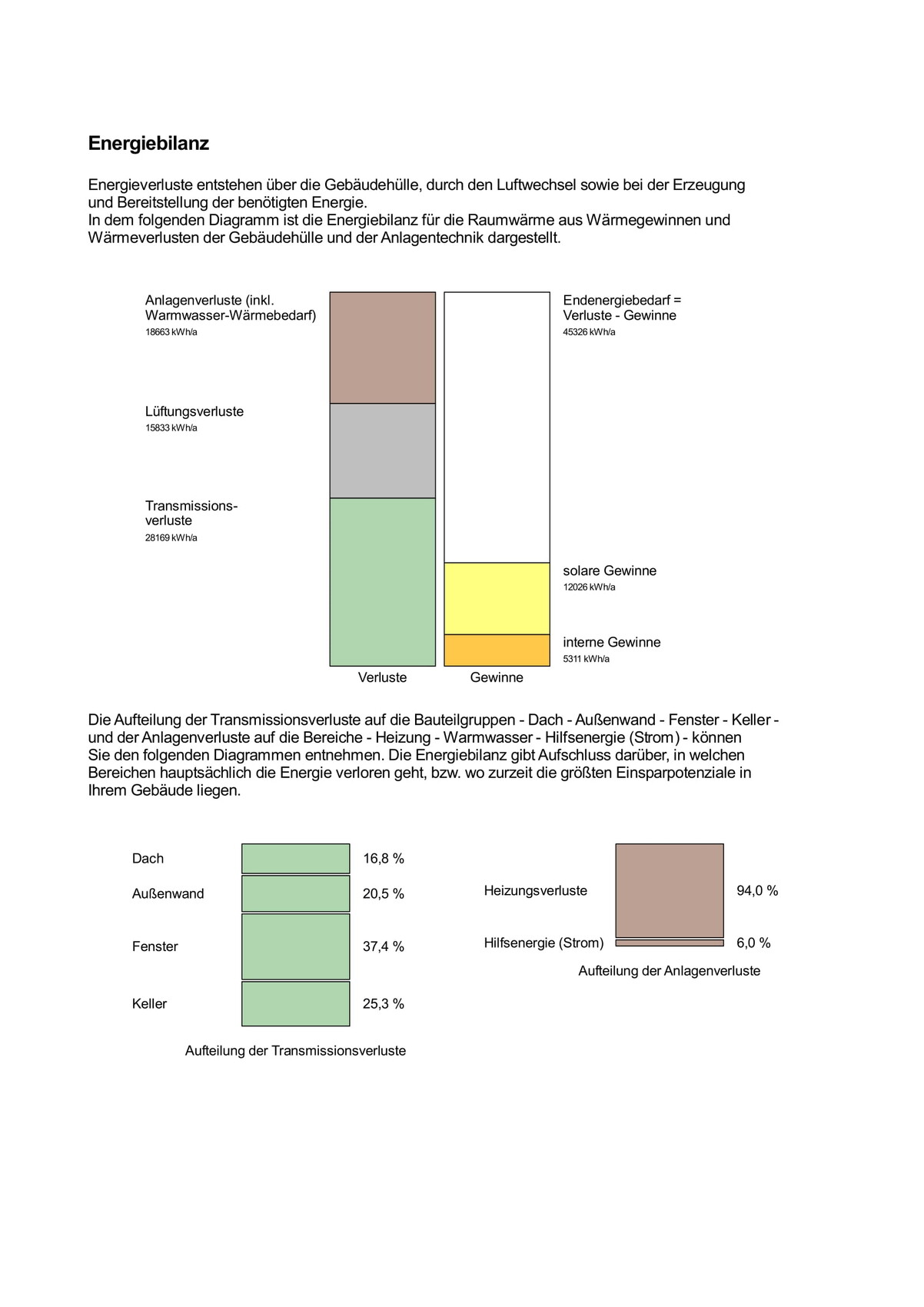
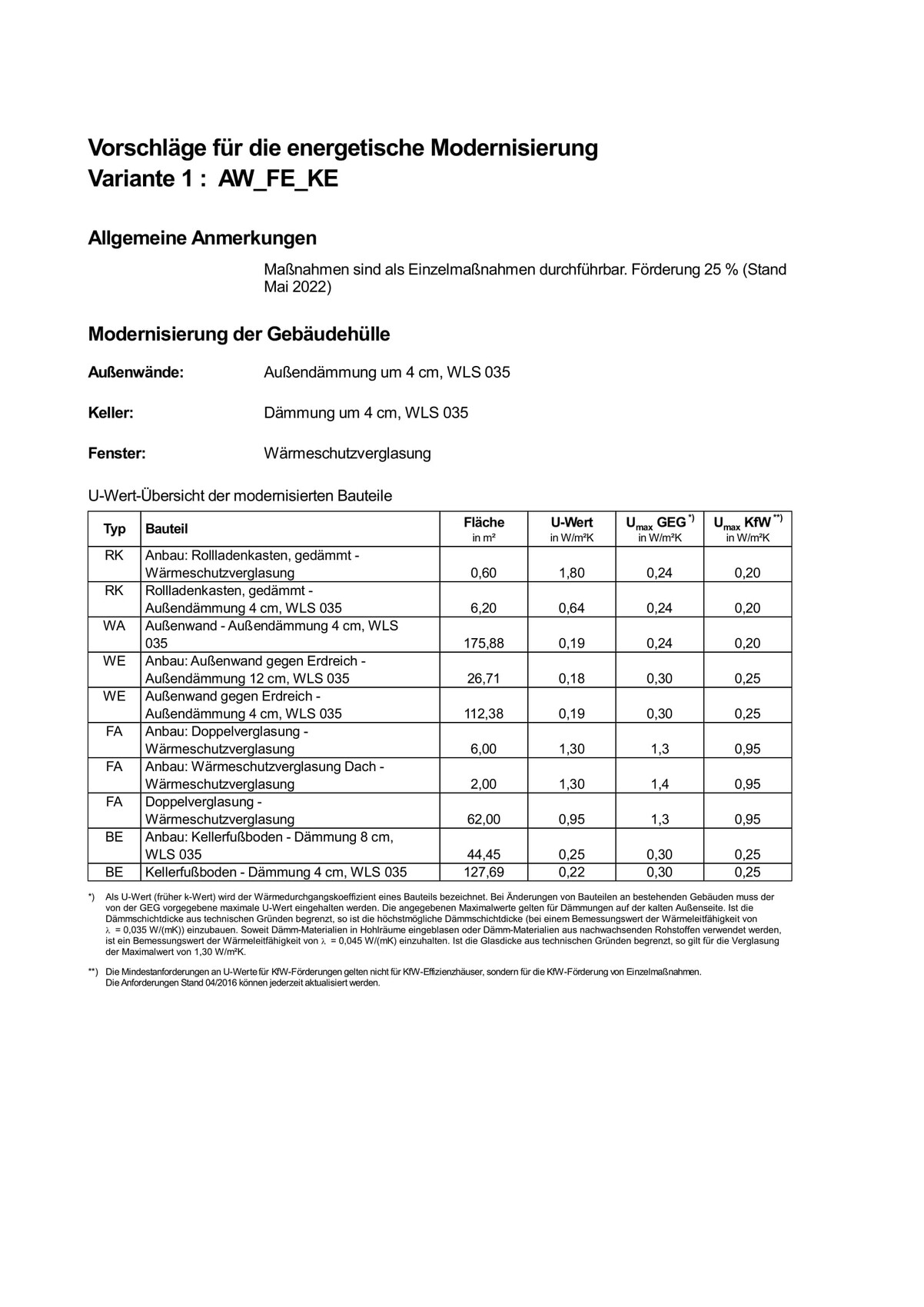
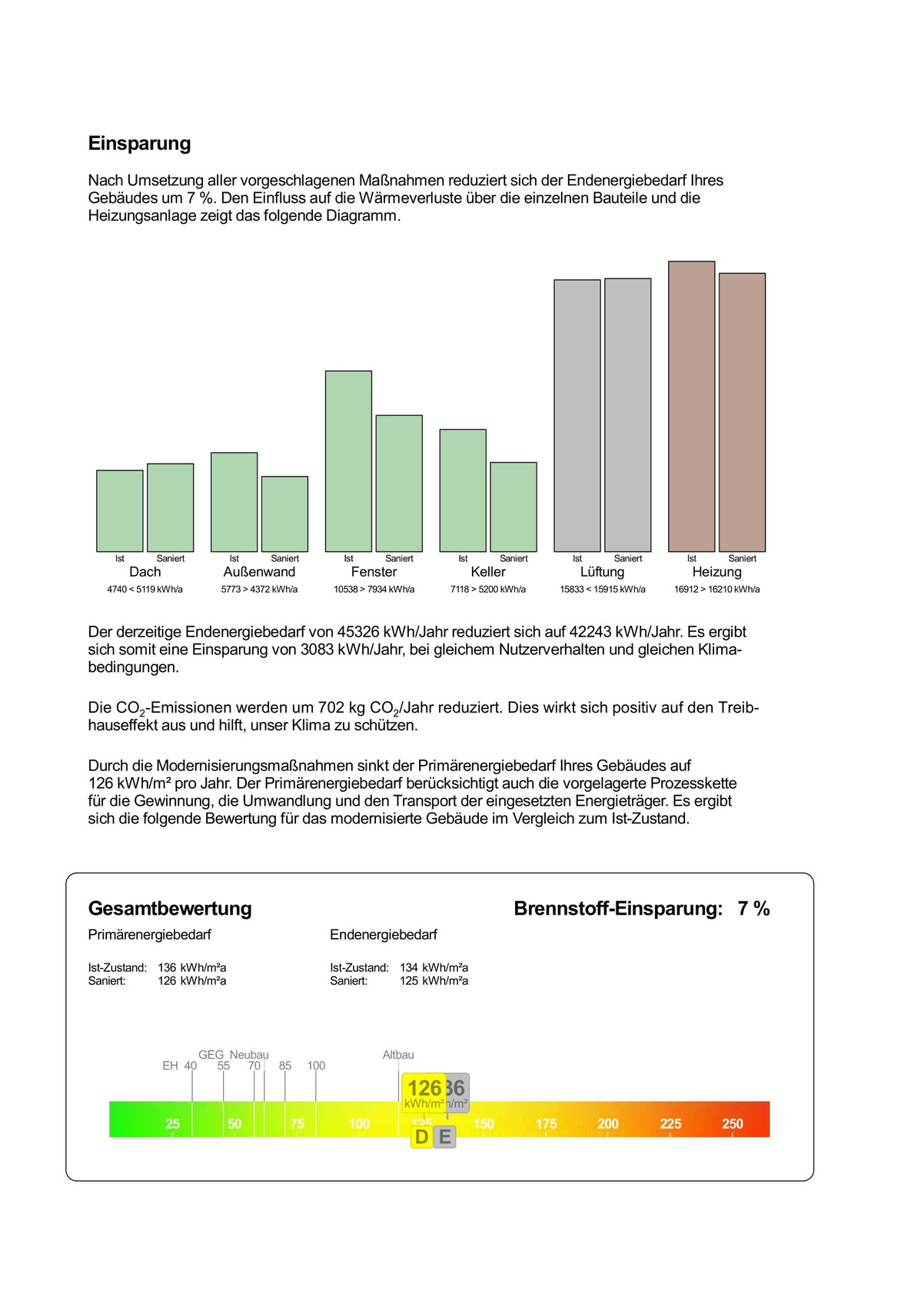
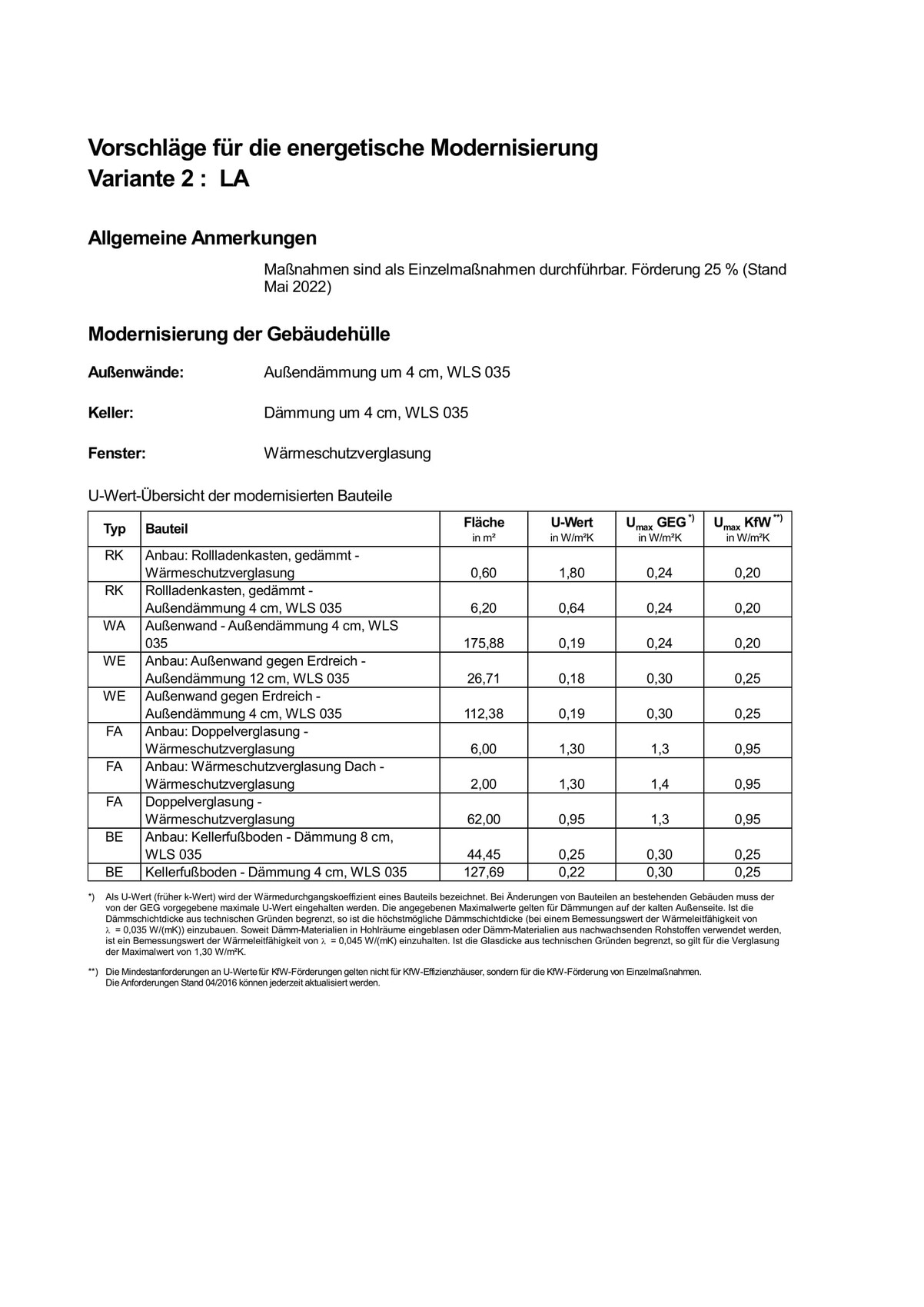

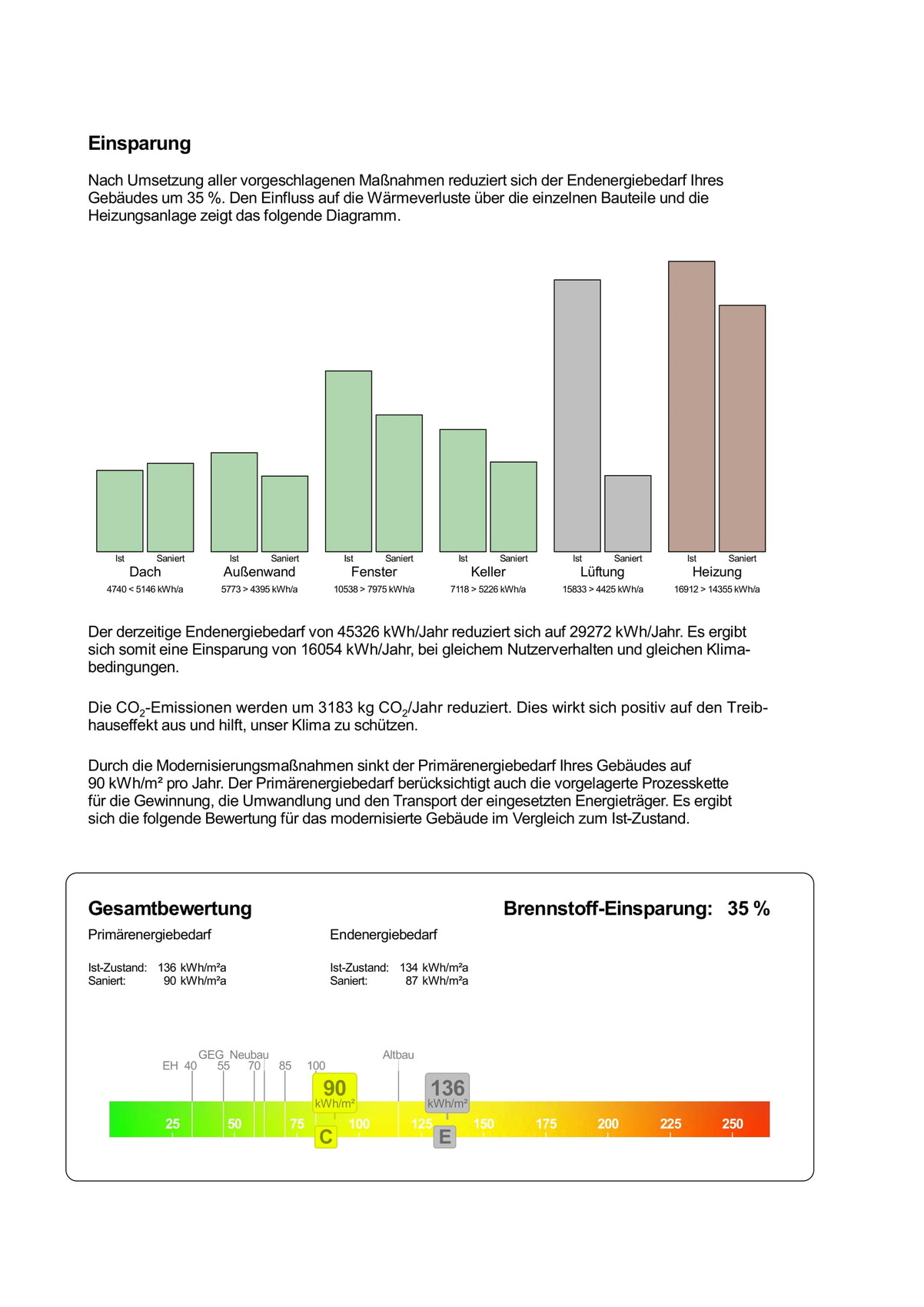
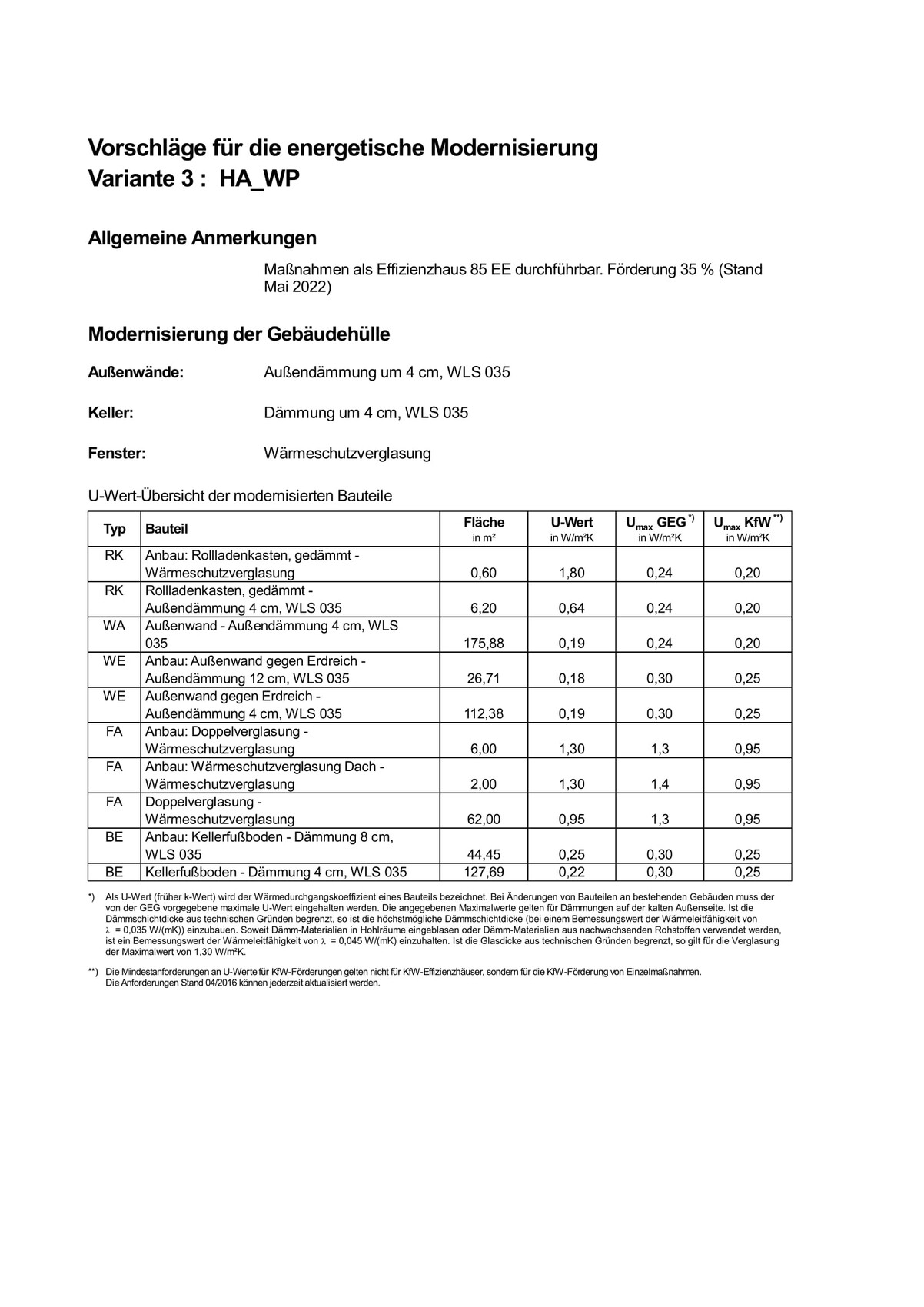
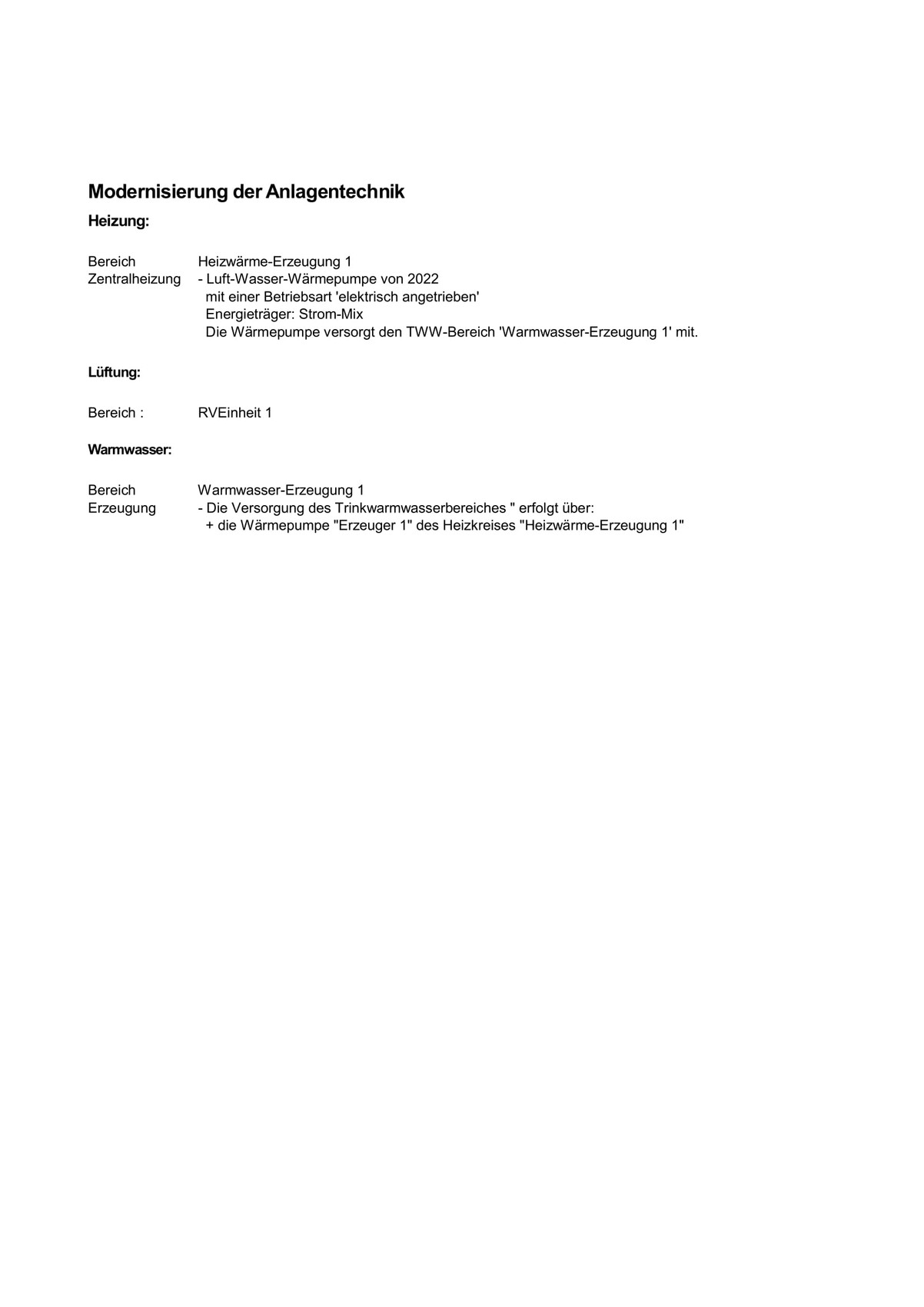
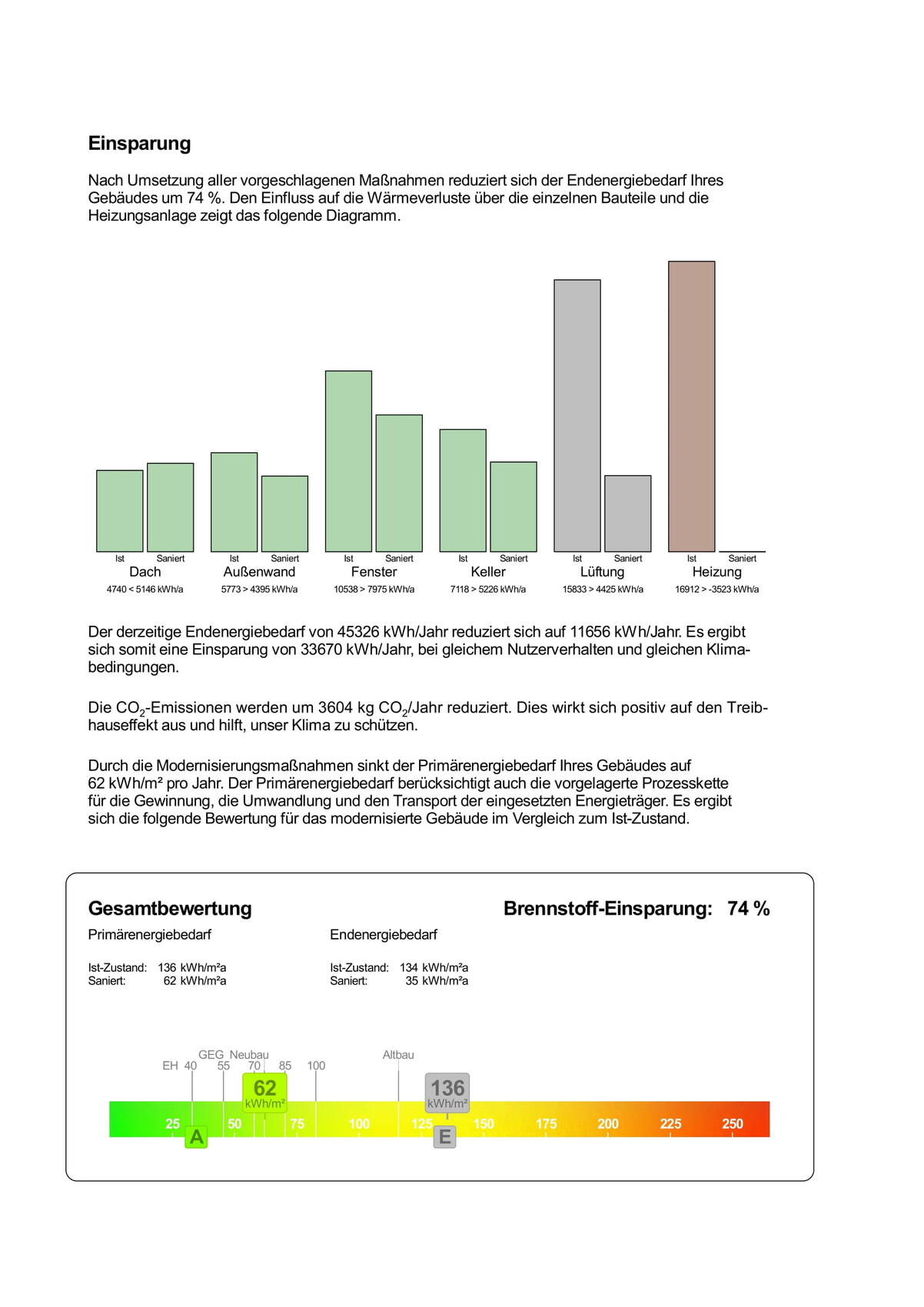
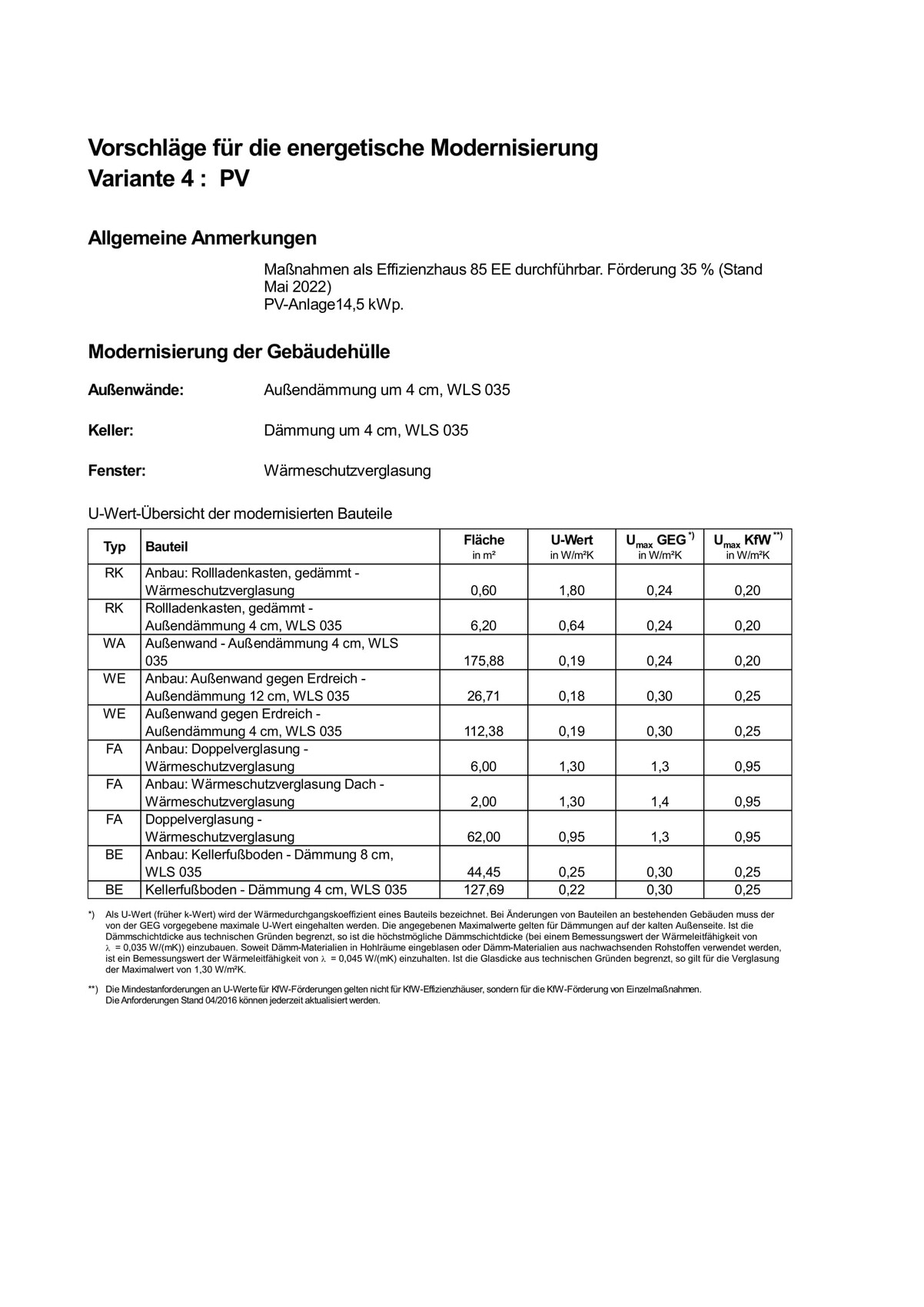
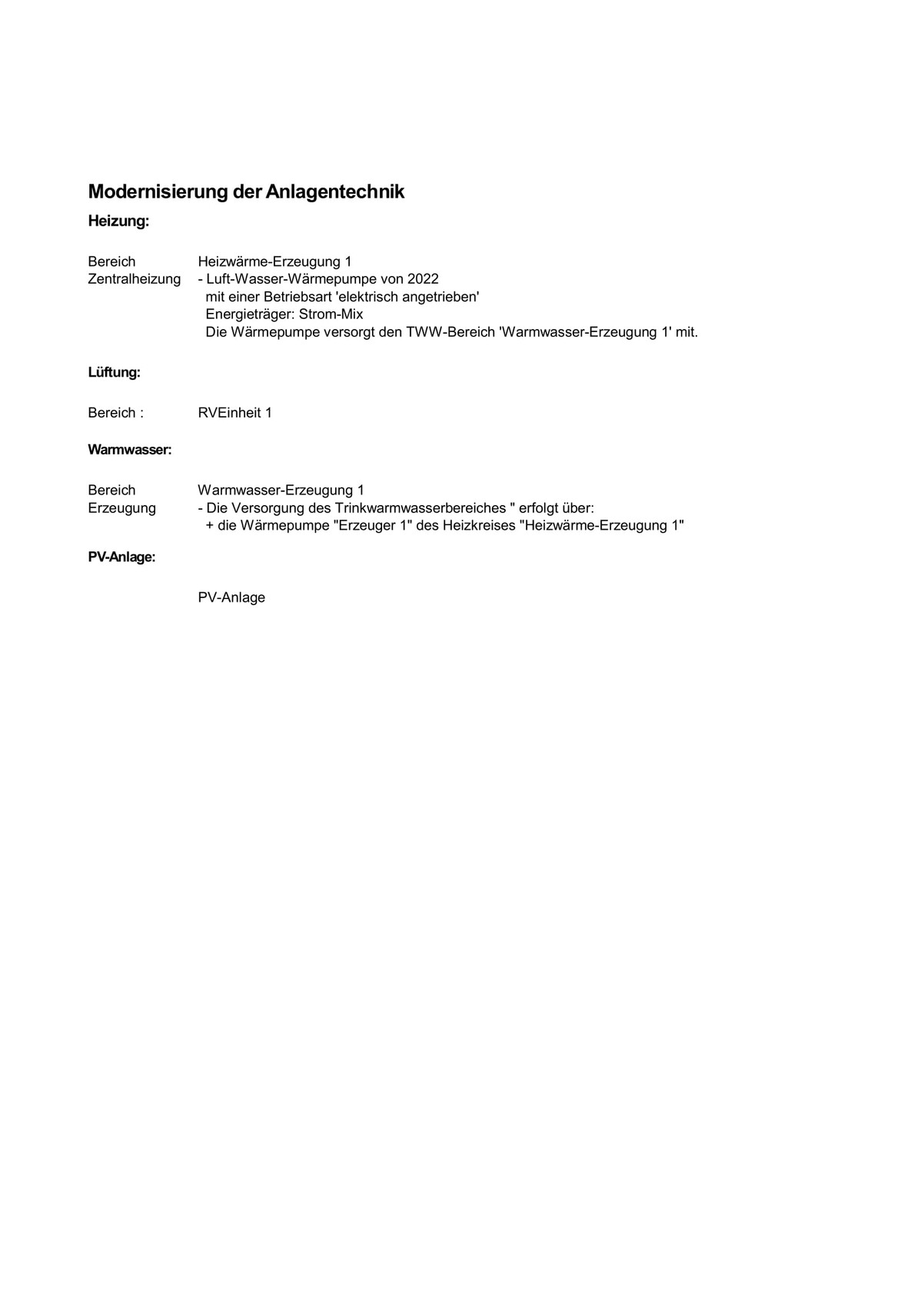
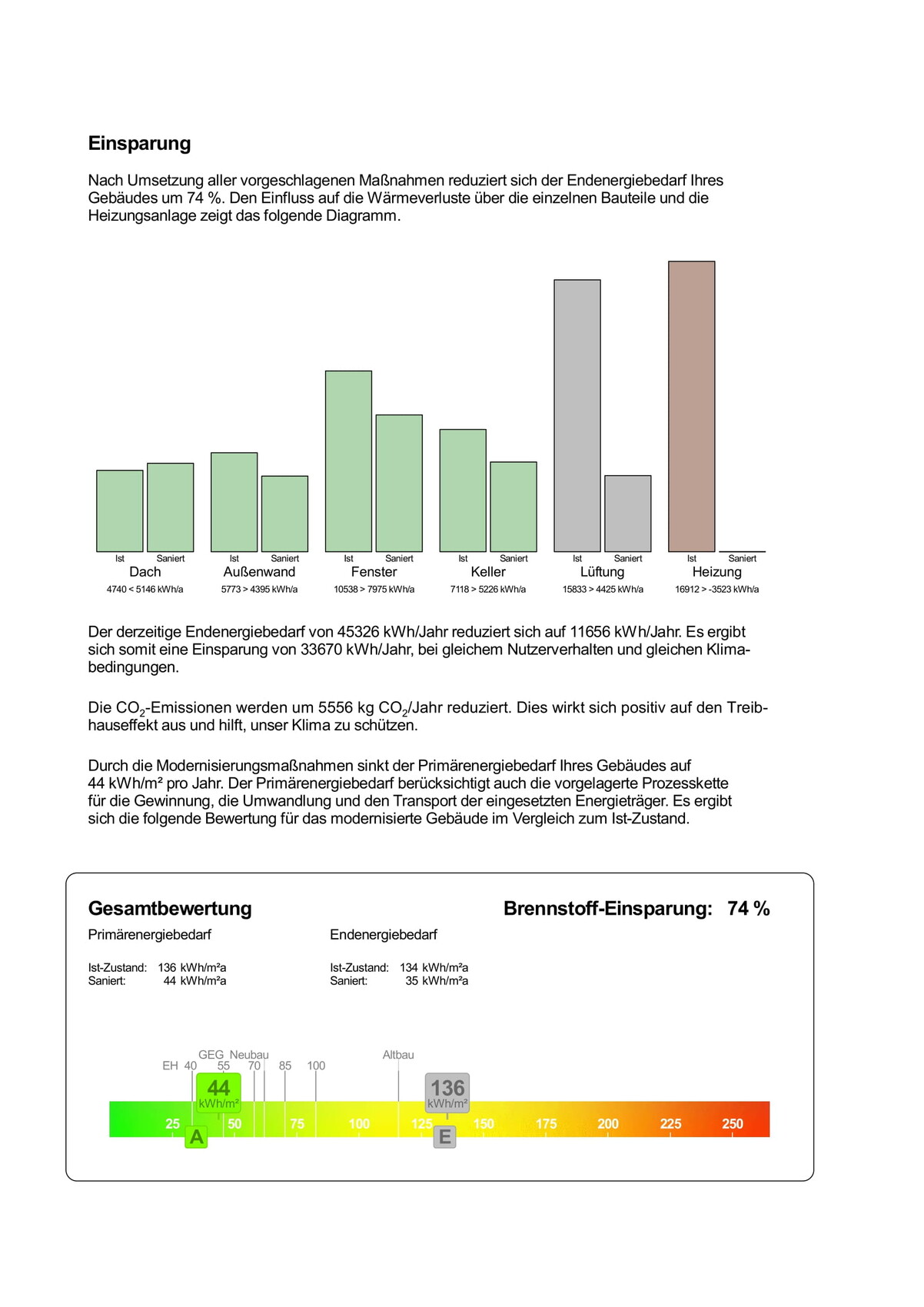
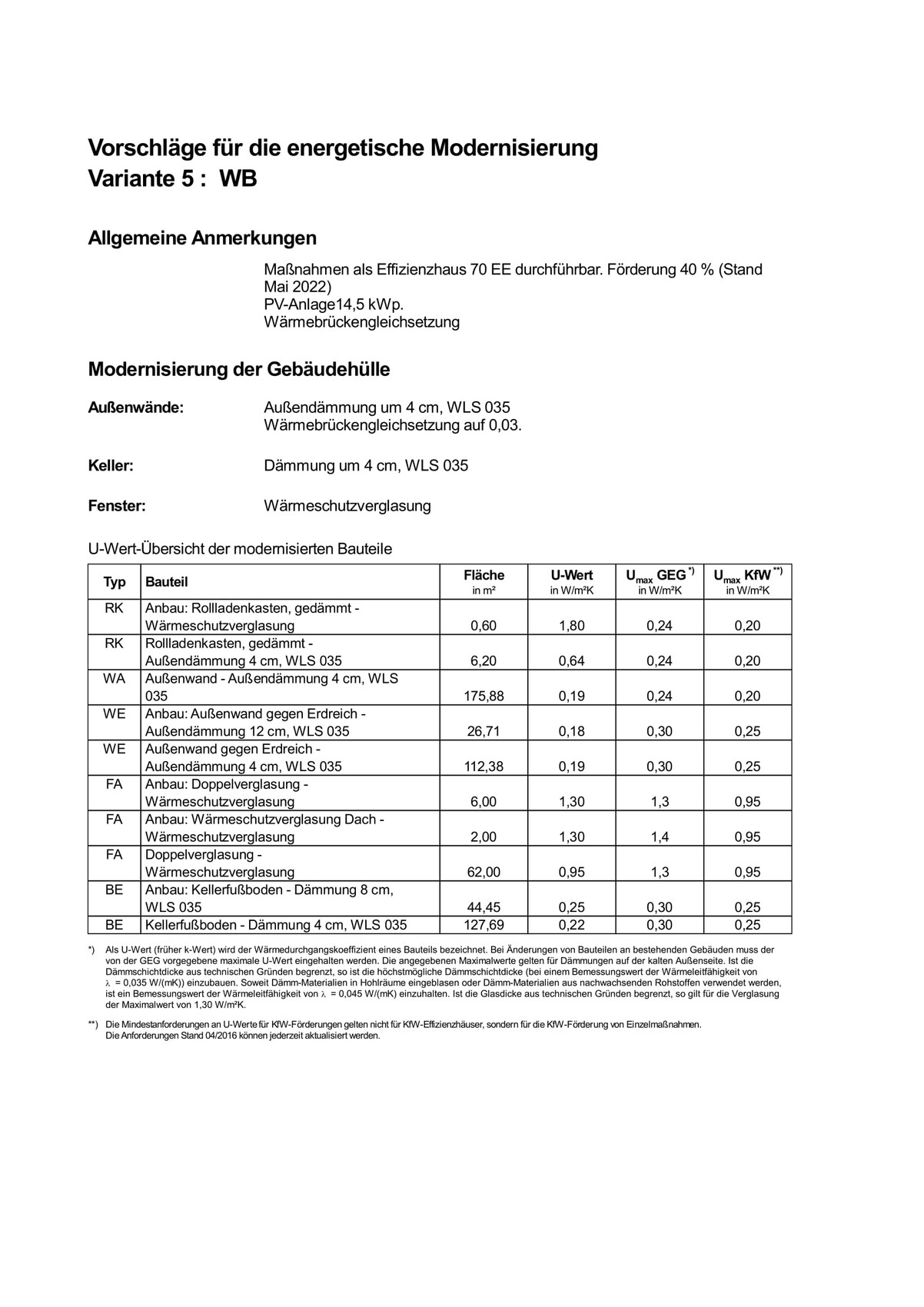
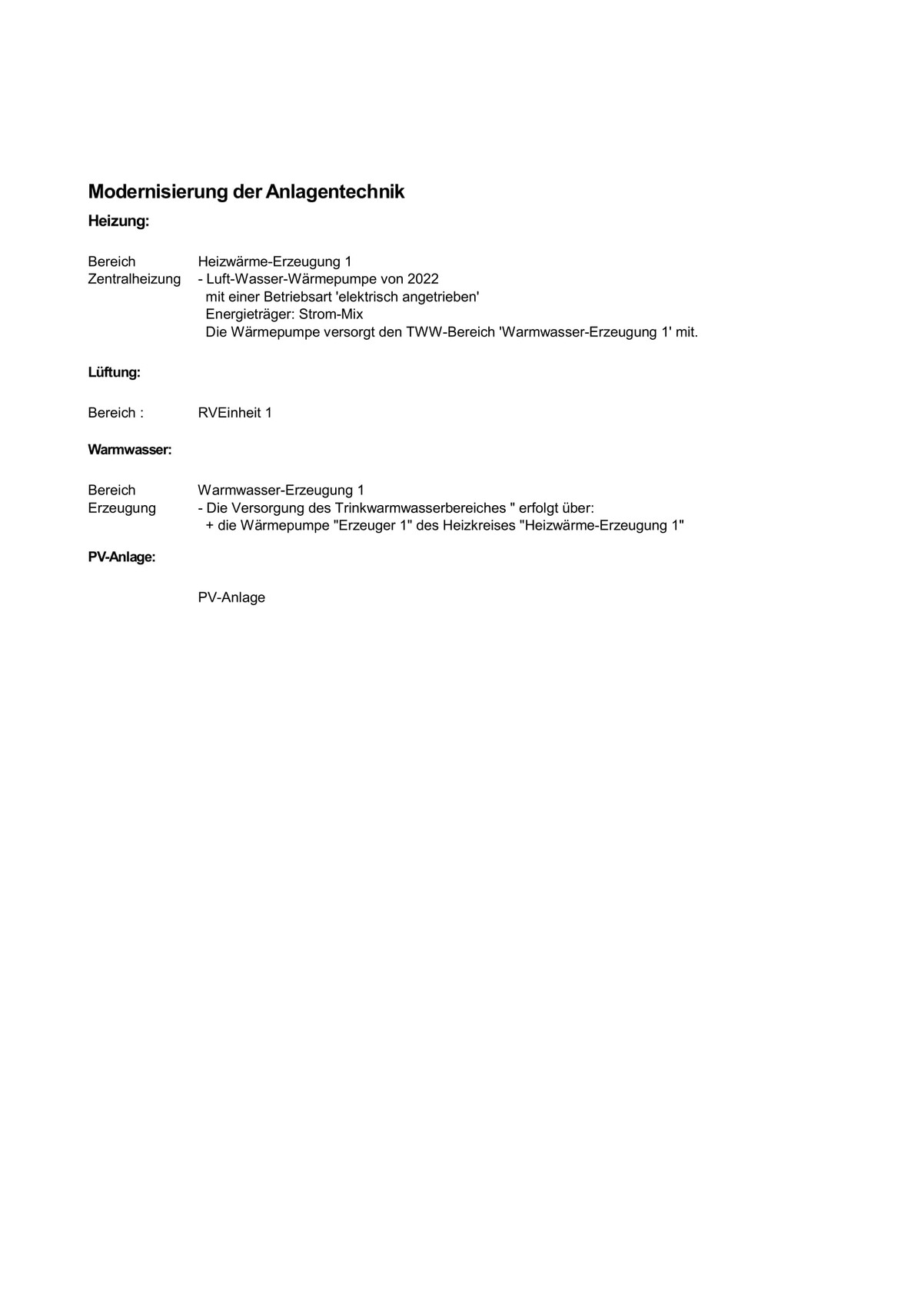
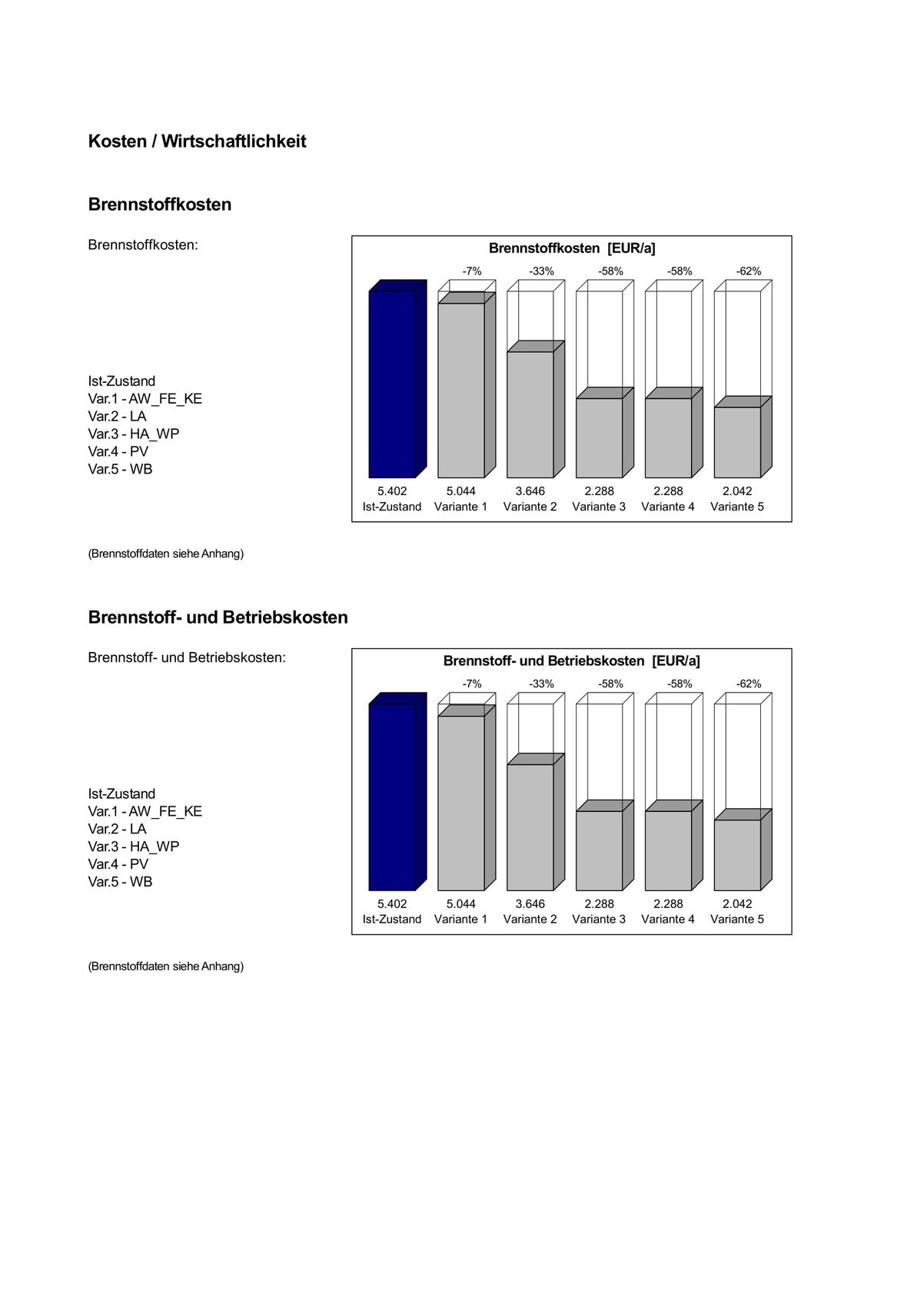
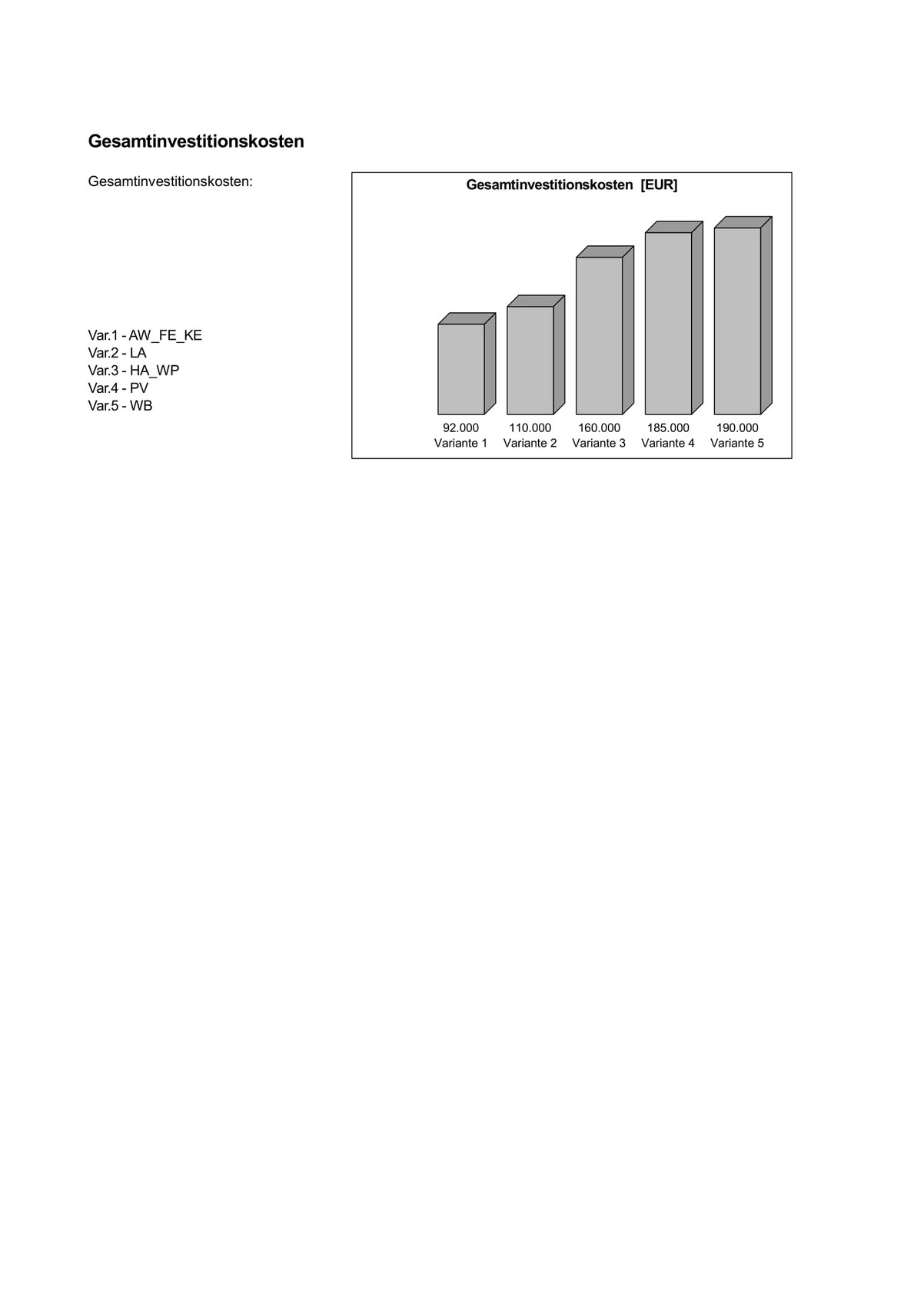
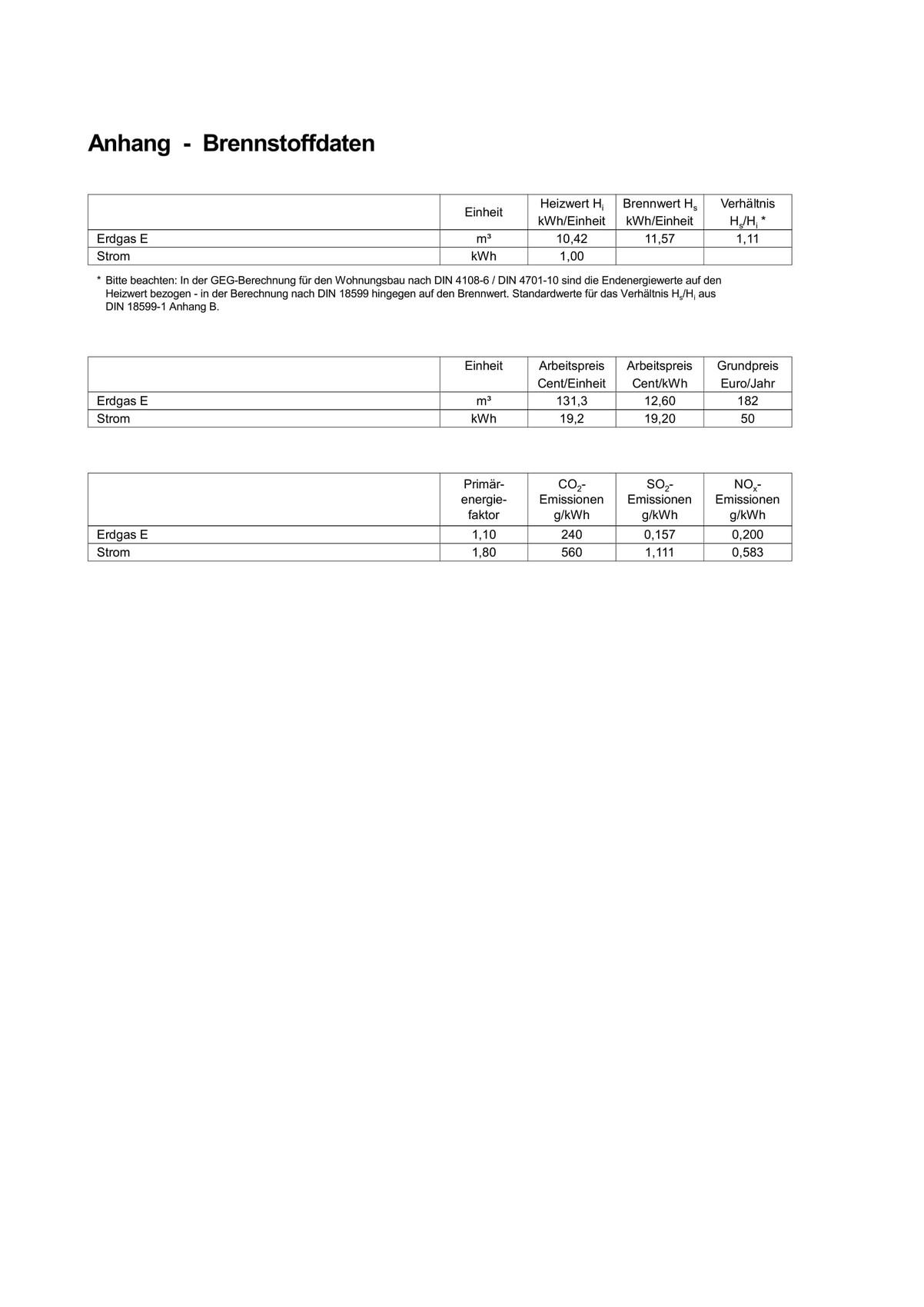

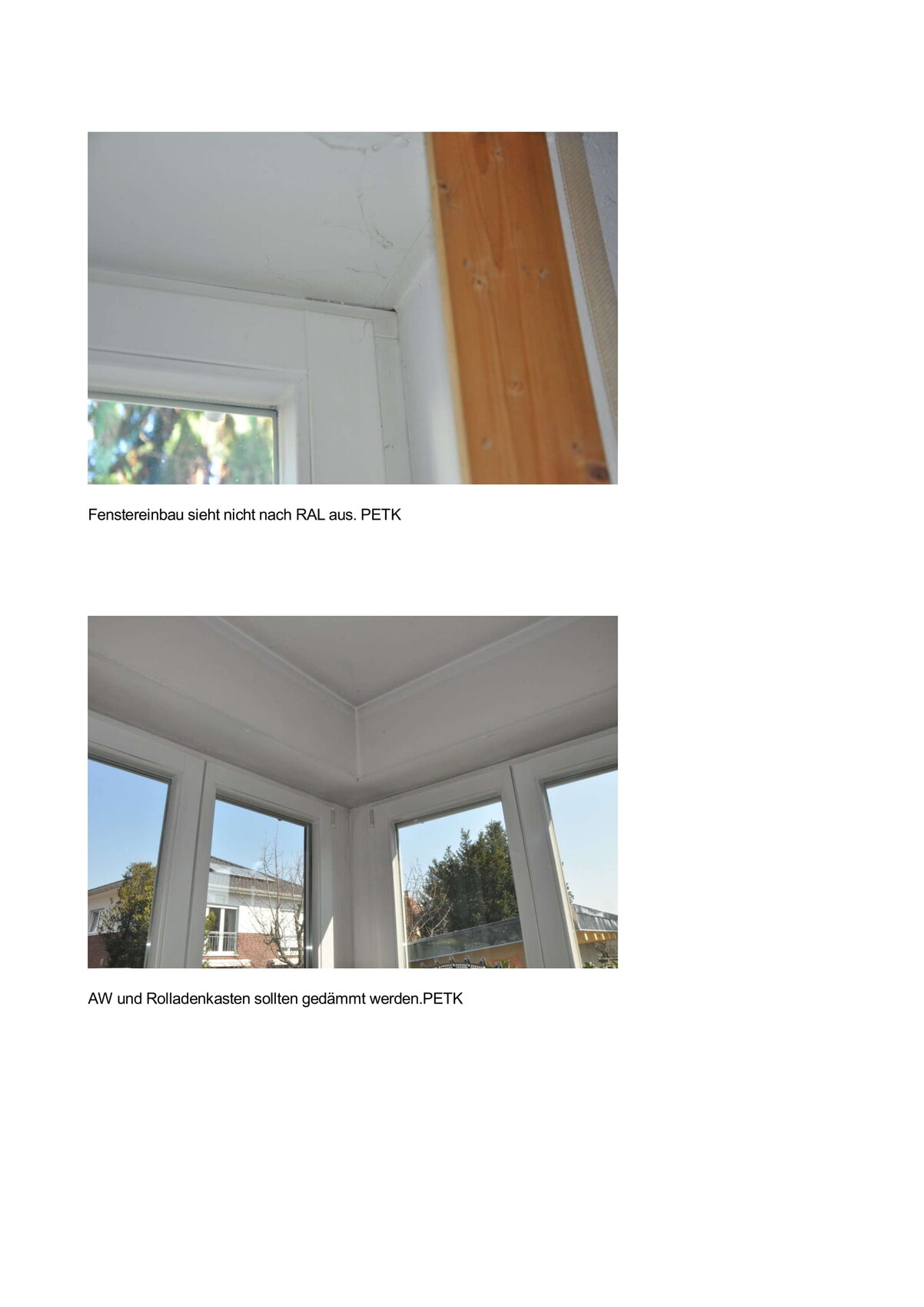
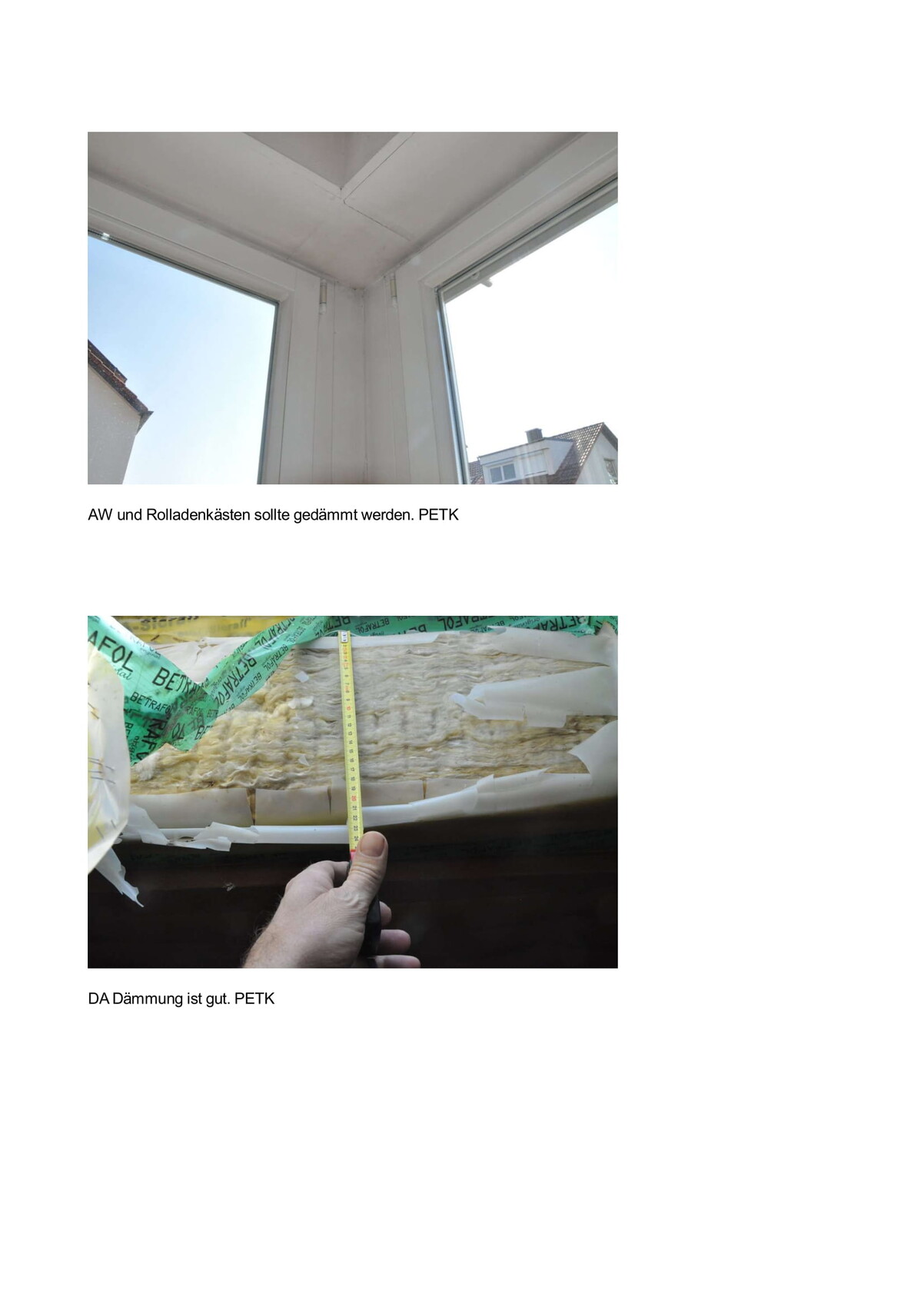
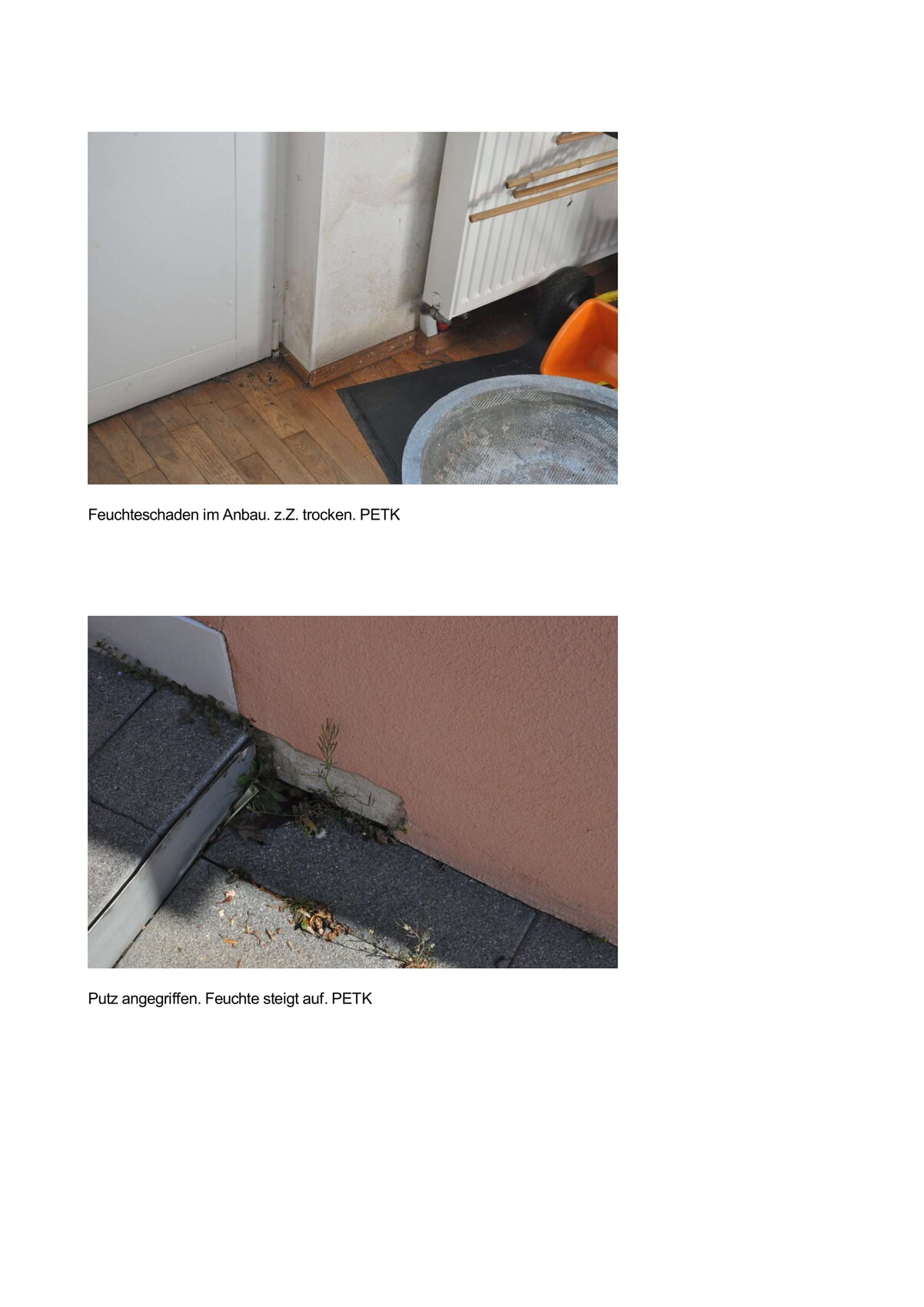
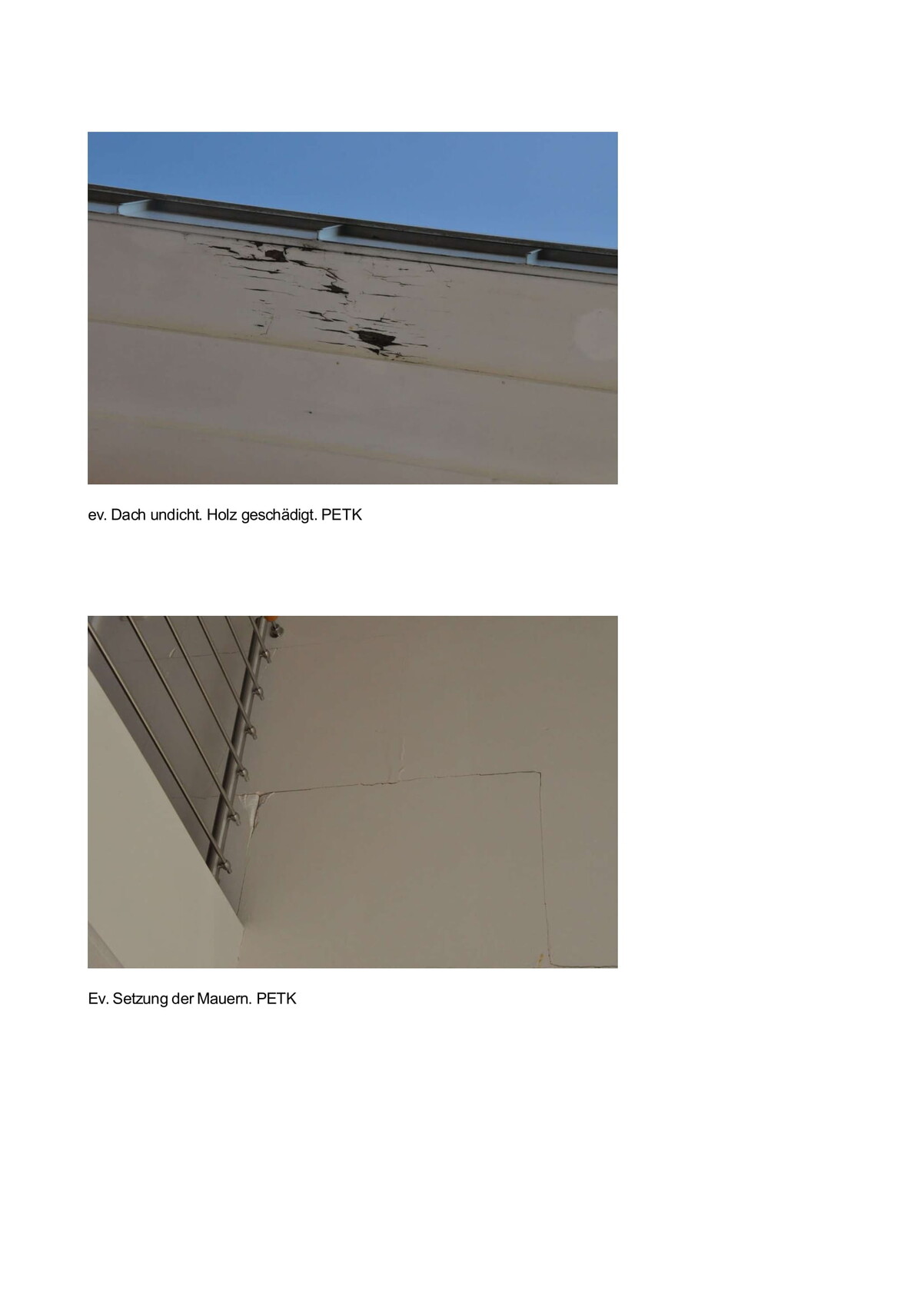



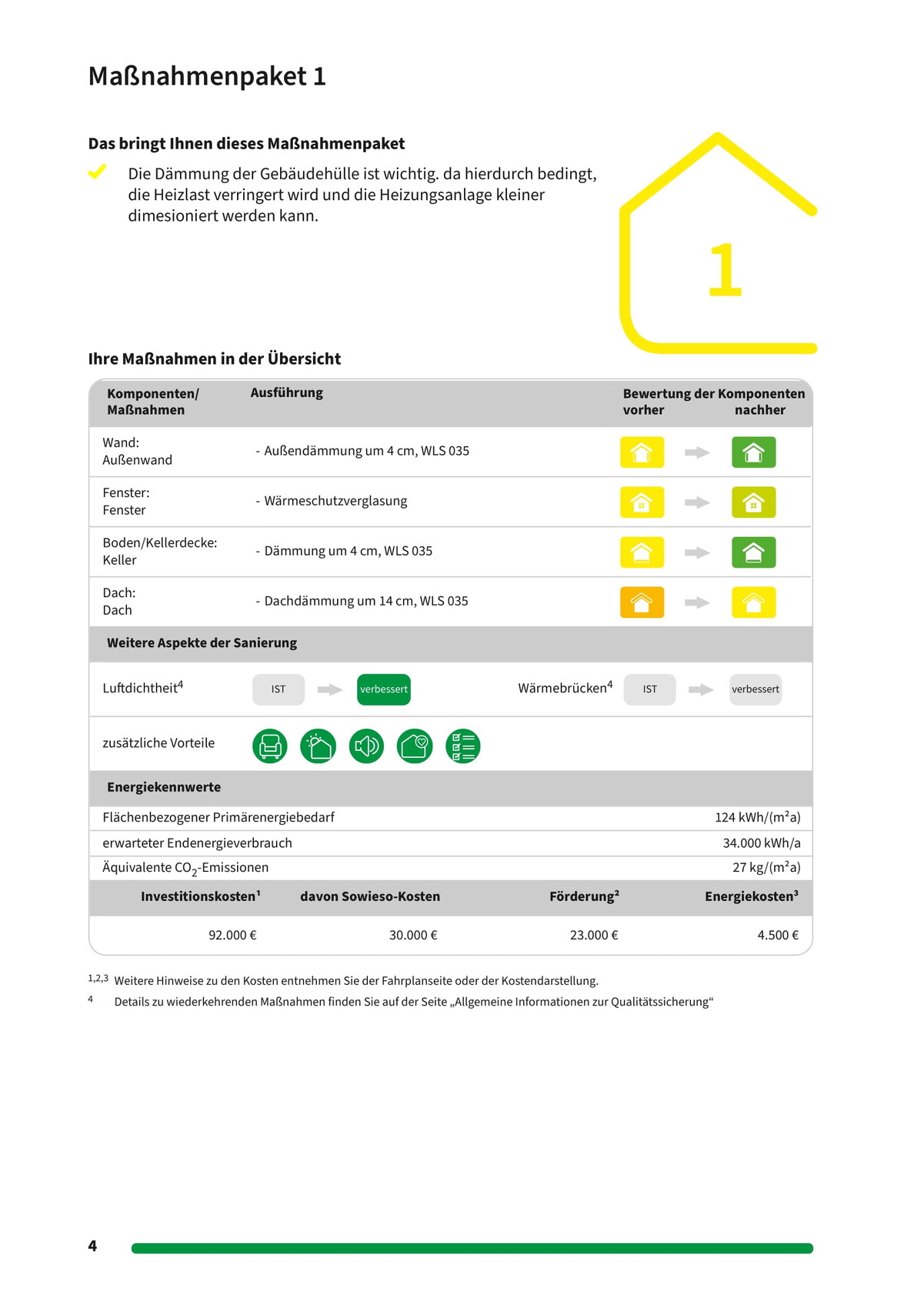




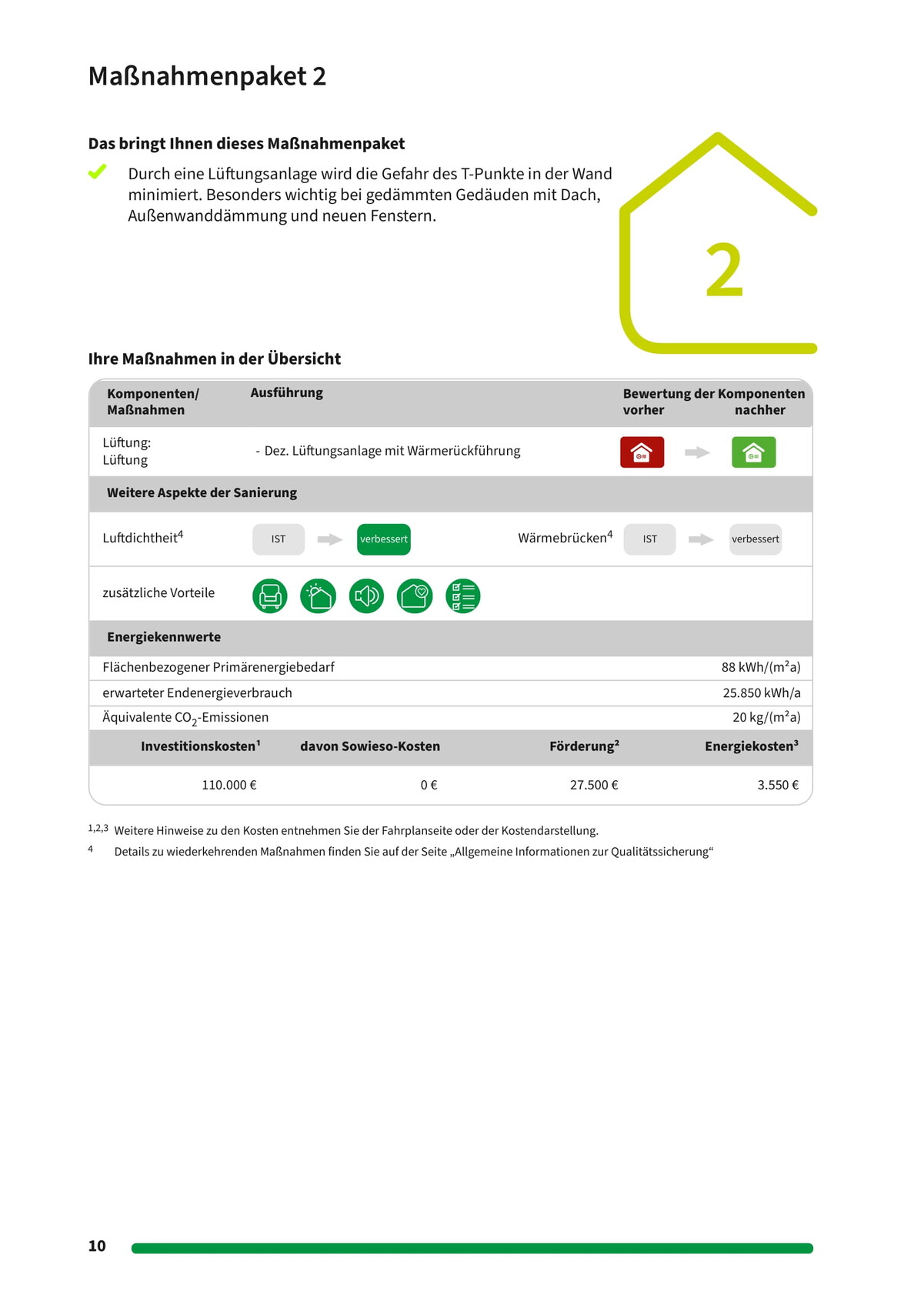

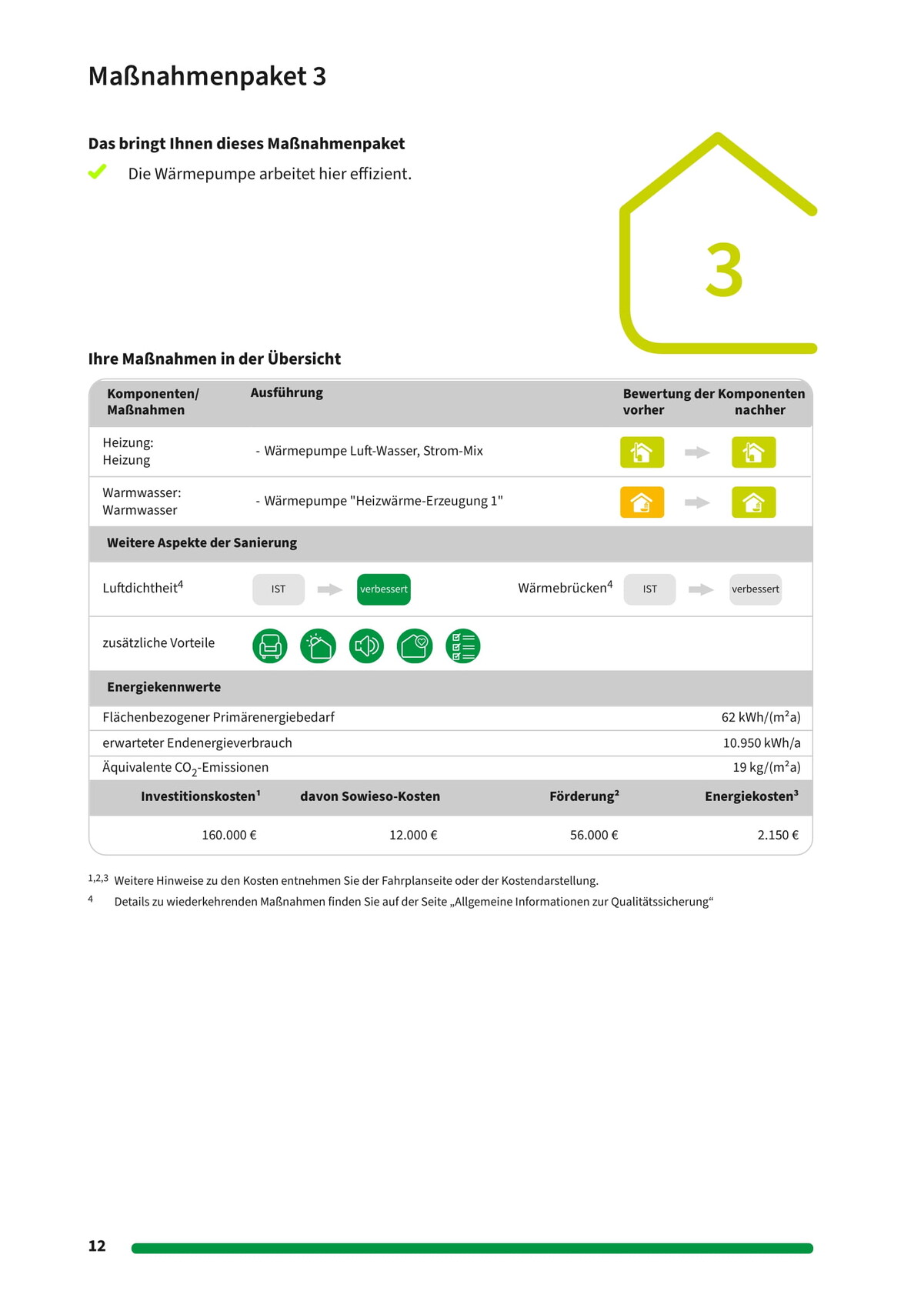



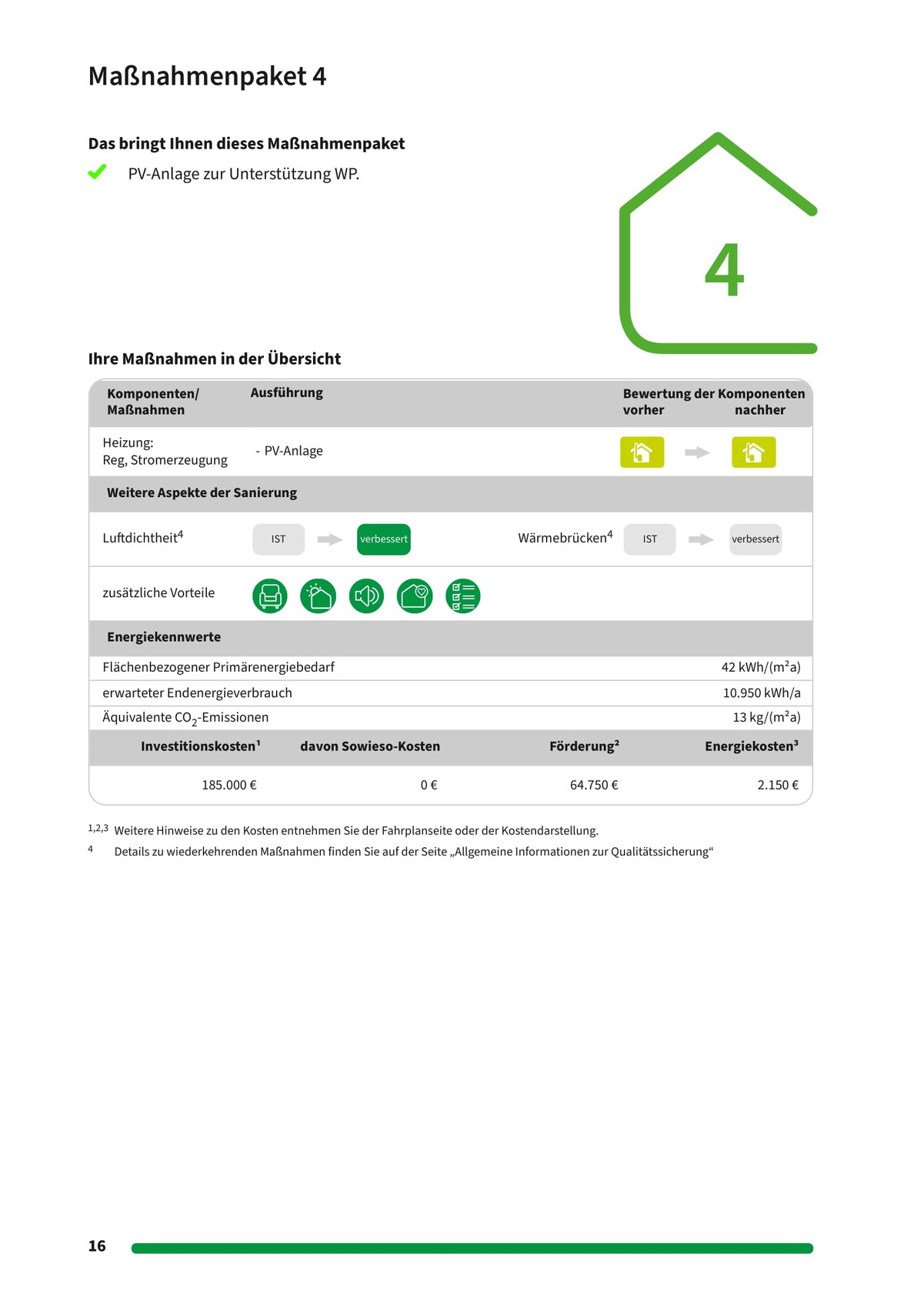

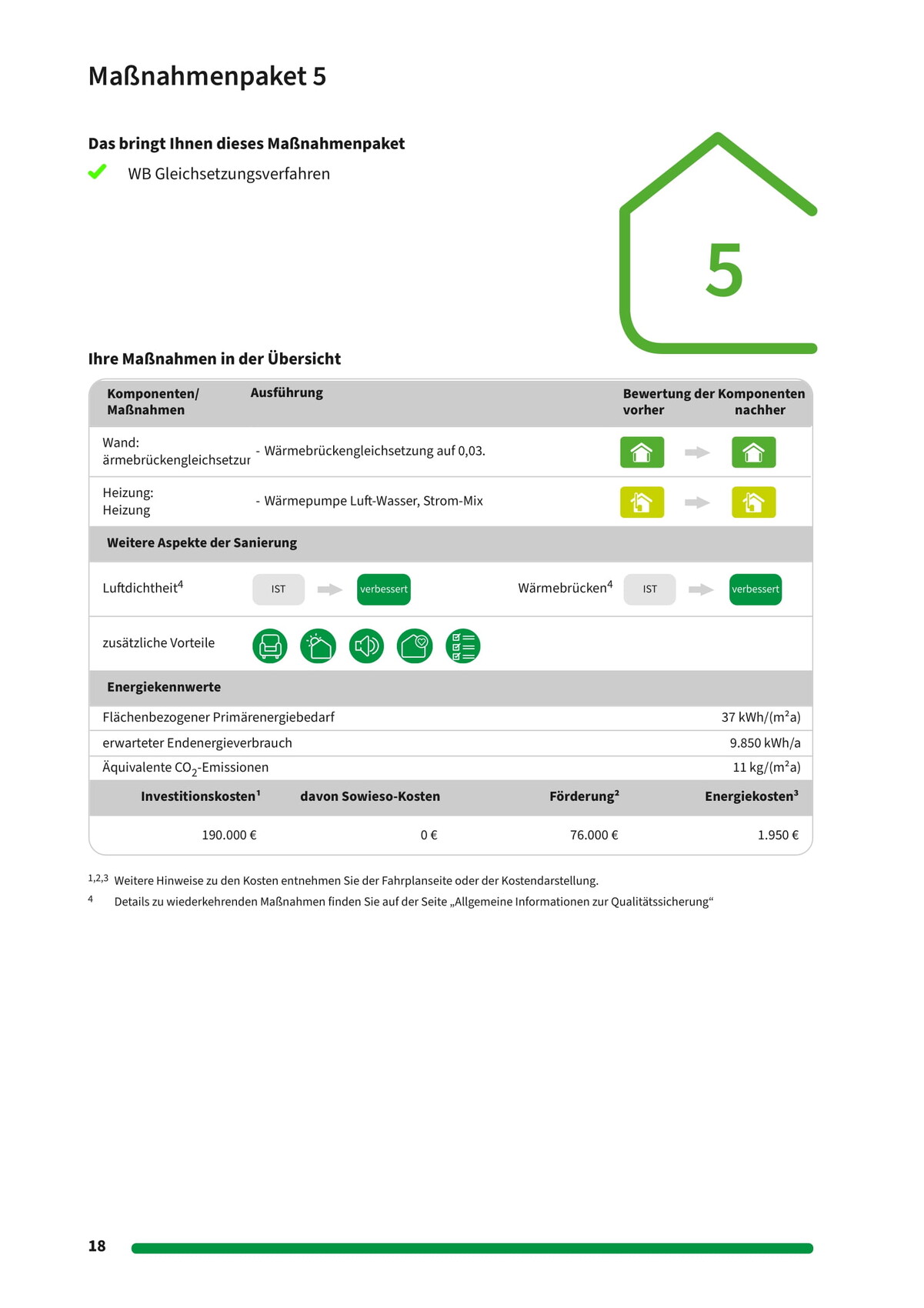







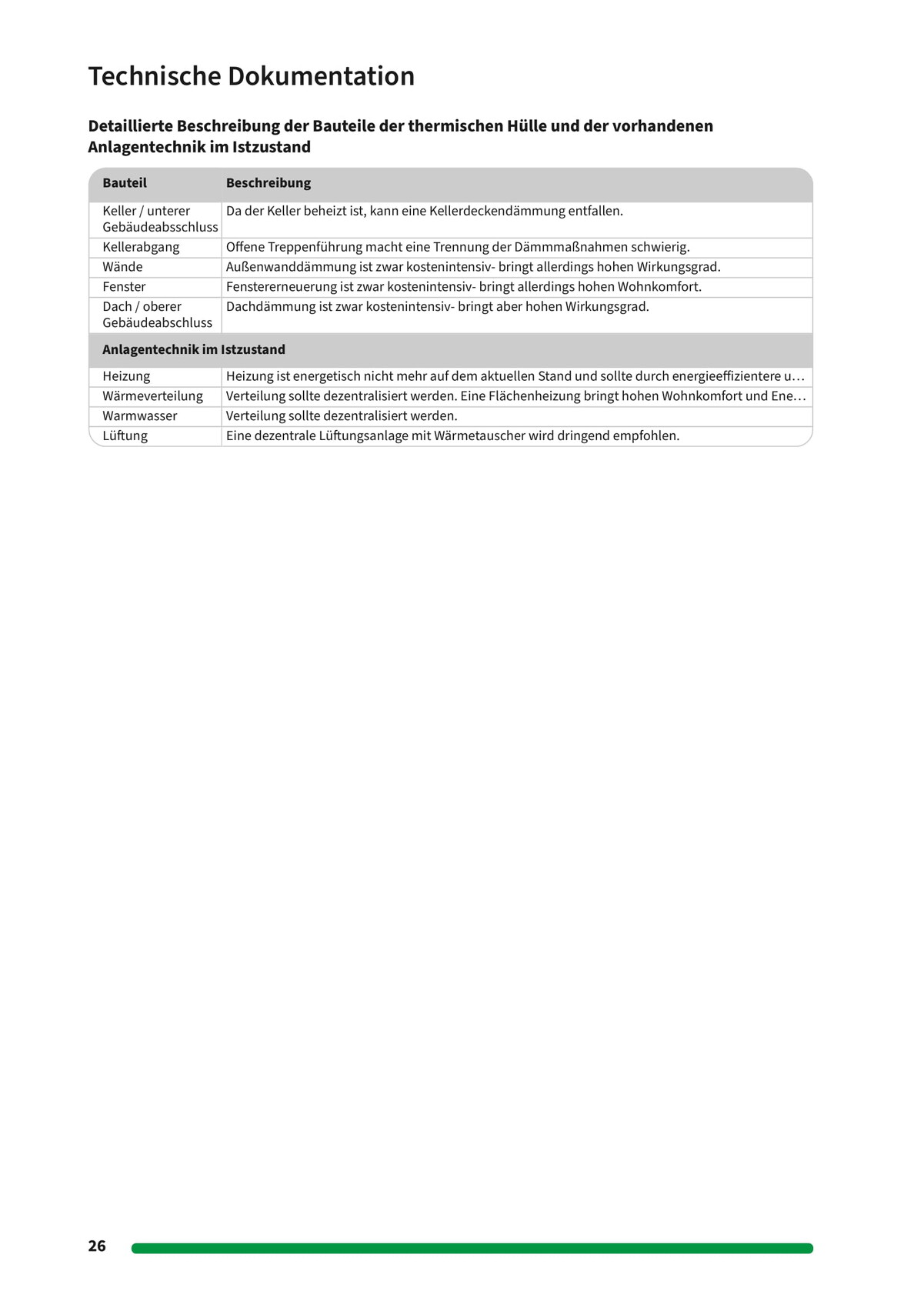


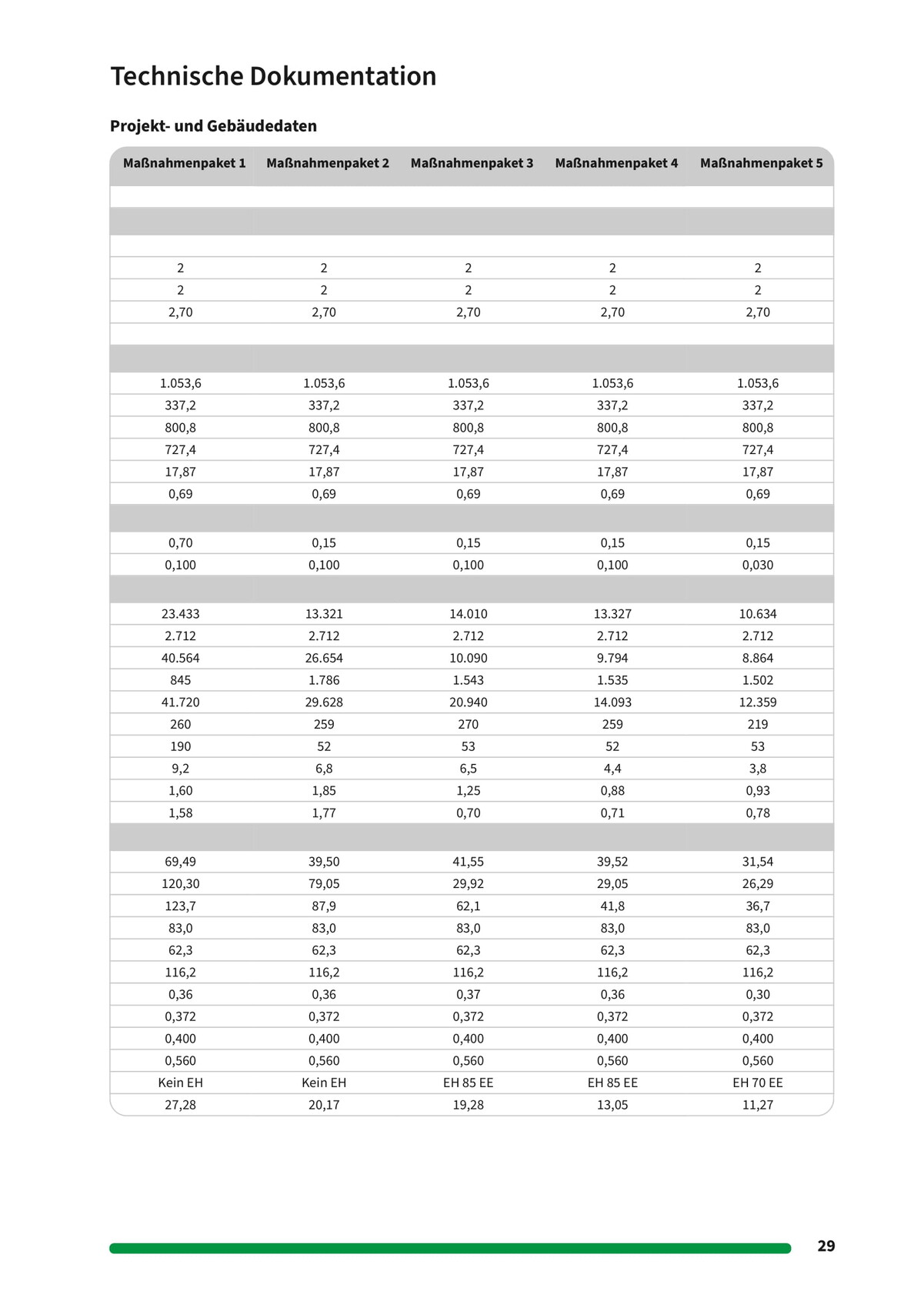
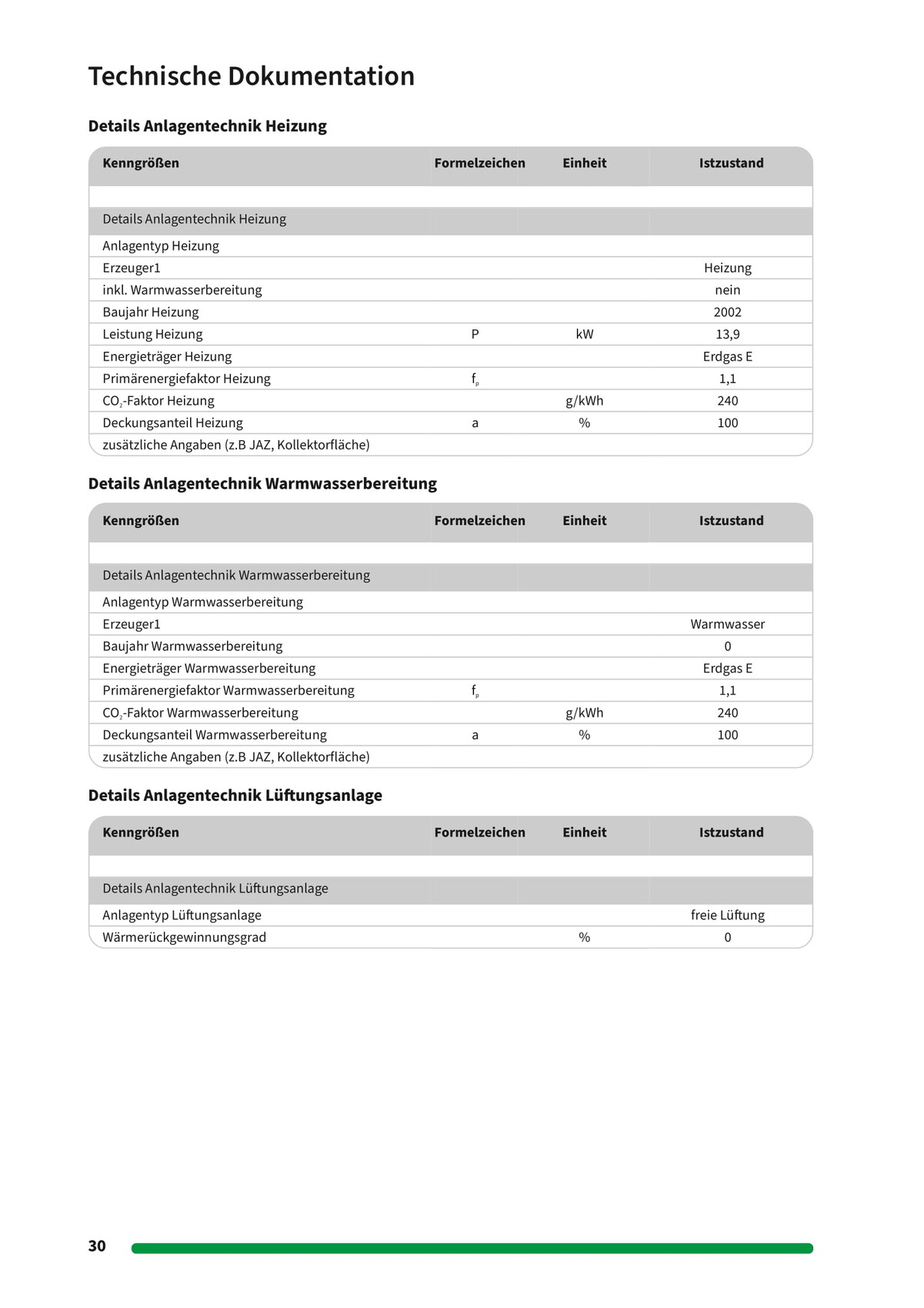
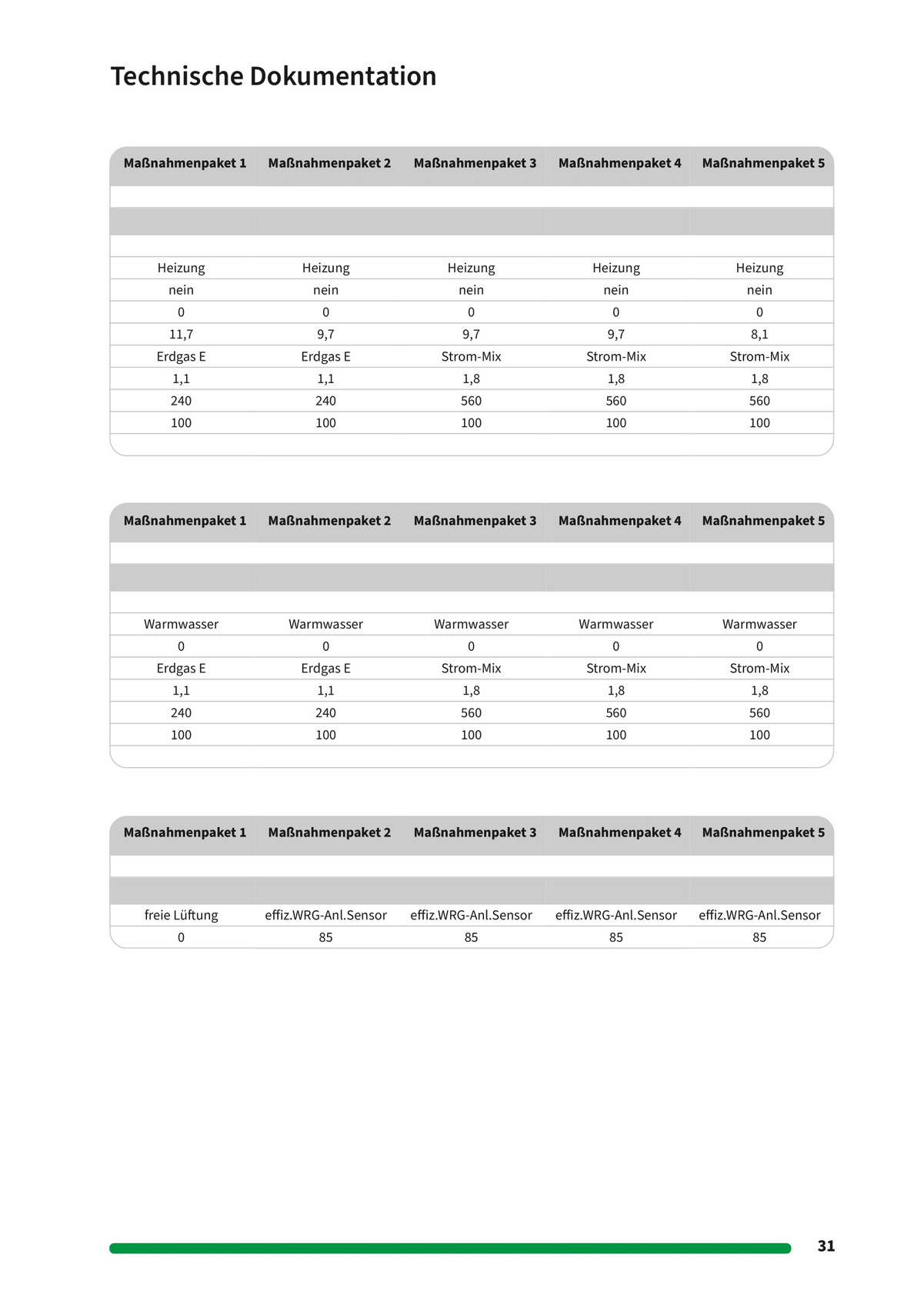
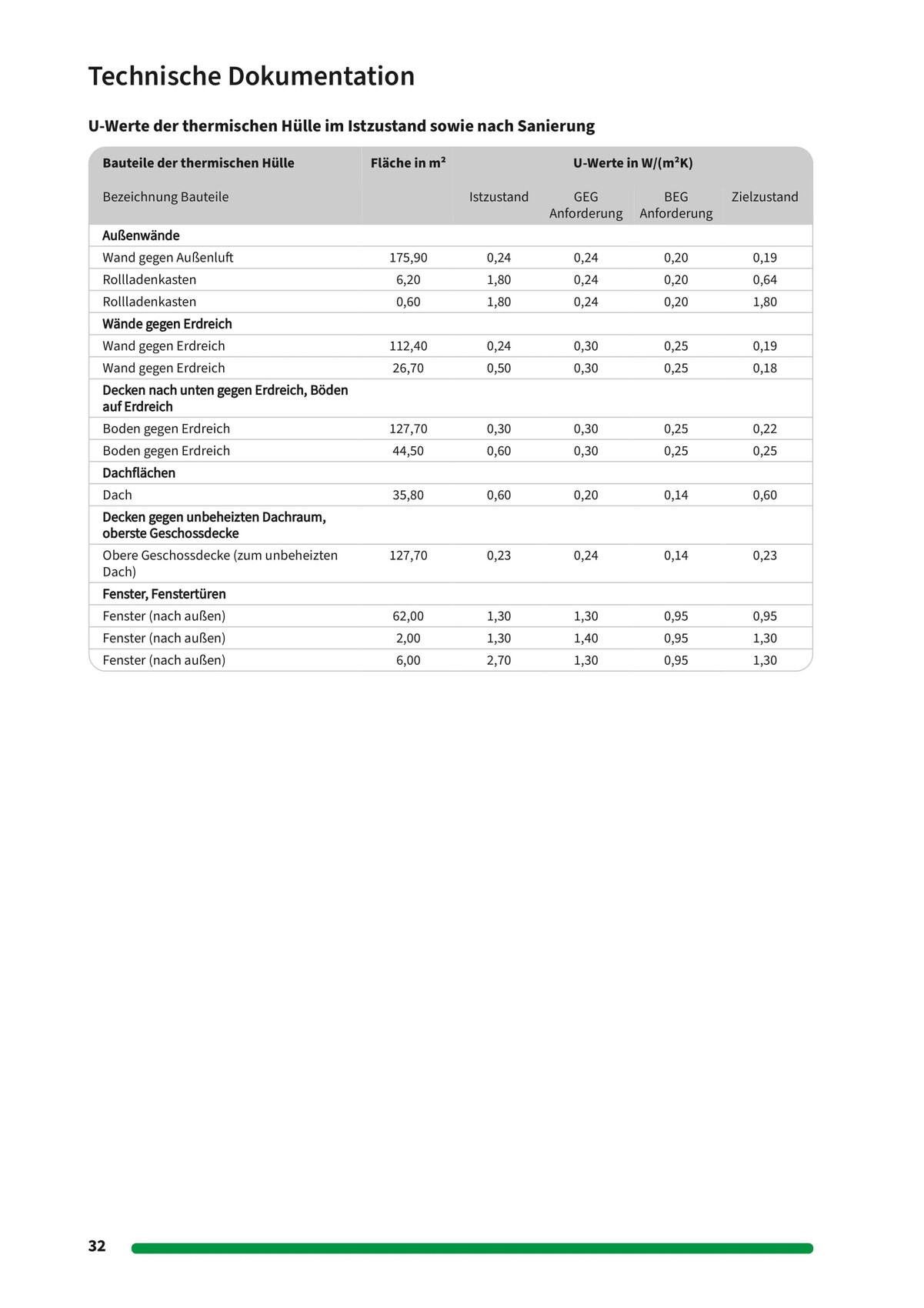
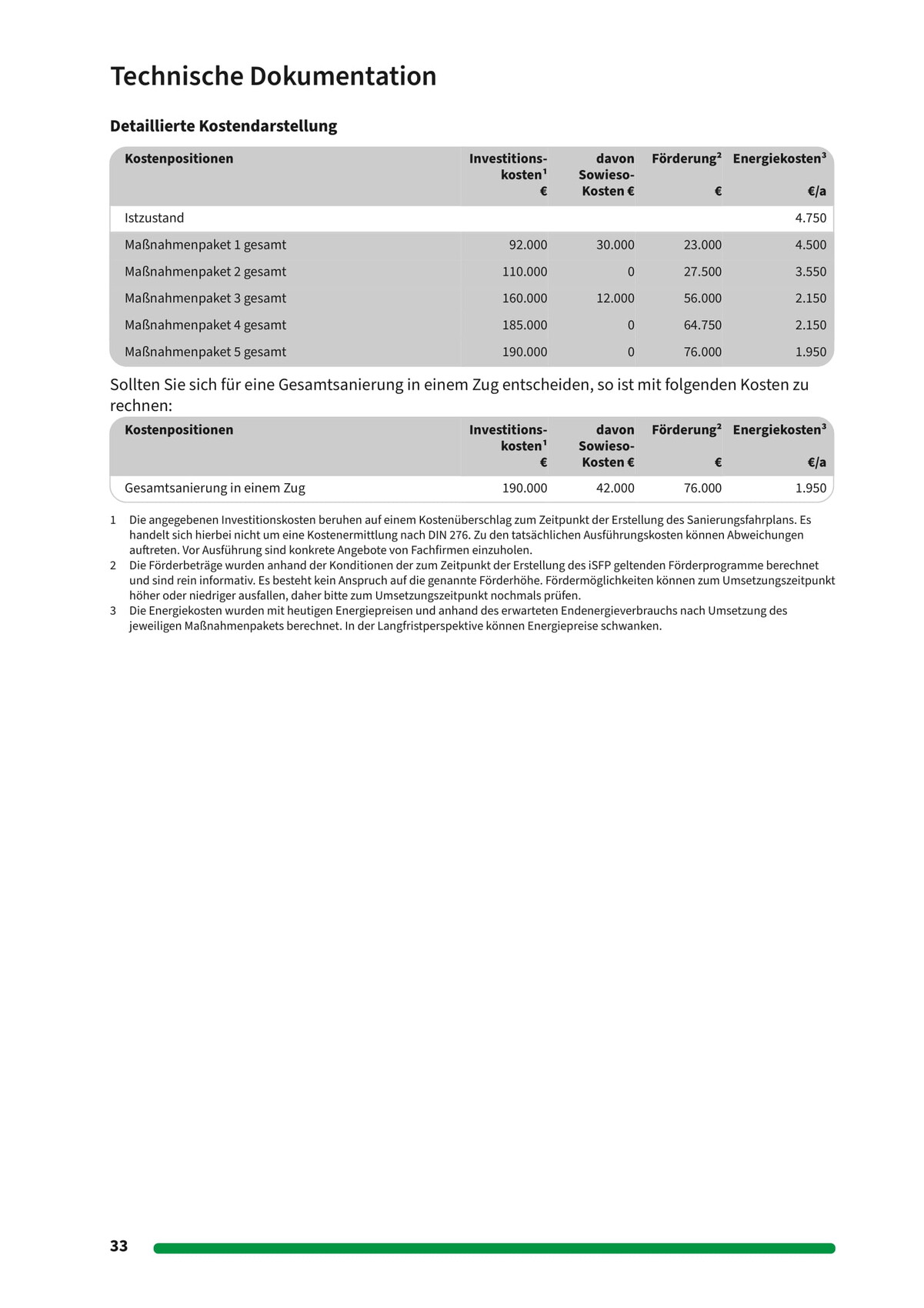




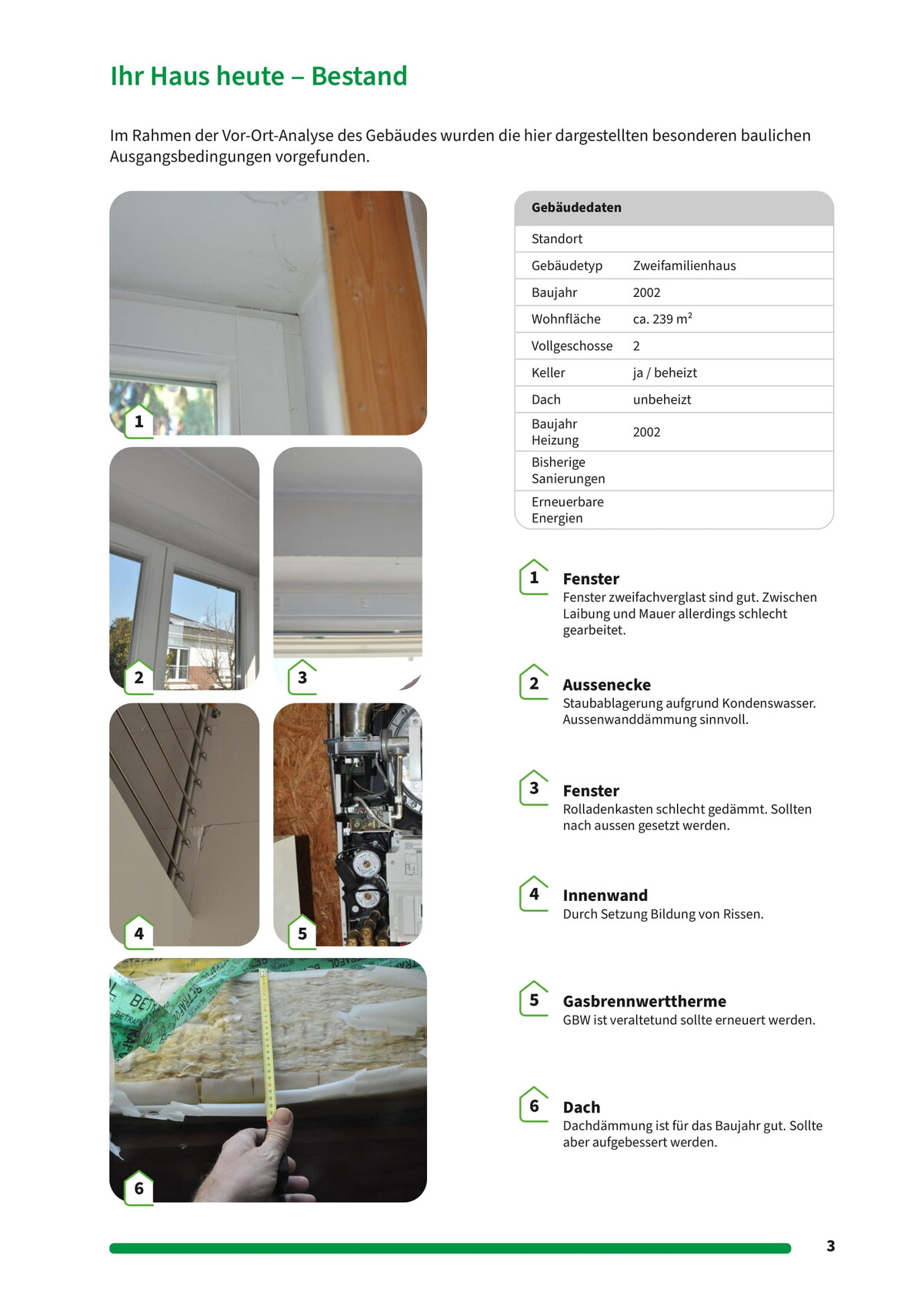




I own a single-family house that was built/occupied in 2004 (I was not involved in the construction back then). Now we want to make some changes/improvements regarding the energy performance of the house. So far, we have a Viessmann gas heating system from 2004.
I was thinking about replacing the gas heating with an air-to-water heat pump and powering it with a photovoltaic system (at least in theory—I have no real idea how this would work in practice for us). So I asked an energy consultant to come by and make some recommendations. Most of the suggestions make sense to me (though I’m a layperson and can only follow them superficially). I would appreciate it if you could take a look at the plan here and leave any comments you might have.
If you have any ideas on how I could share the PDF files here better than converting them into a million JPGs, I would be thankful (from what I understand, this forum discourages linking to external sites), especially since I can only attach 10 files?
My thoughts on the plan are as follows:
Package 1 is very expensive (maybe no insulated glazing? Are the current windows okay?) especially compared to the savings (I’m aware this might be a wrong assumption on my part). Otherwise, I would have agreed to everything.
A
Acetone142422 Jun 2022 22:21driver55 schrieb:
If you don’t know where to put your money, you can certainly do something. Otherwise, it’s just like carrying water to the stream... Hmm, do you mean it’s pointless because the money we save is negligible compared to the investment costs?
(which is actually a valid point I hadn’t really considered until now, although it’s obvious)
The heating system has been acting up repeatedly for years (usually it’s some kind of fault -> restart then it works fine, if not a technician comes and then it’s quiet again for a while). I think sooner or later it will give out.
Nida35a schrieb:
A house from 2004 is modern,
first move in and pay the heating costs.
If the heating becomes a money pit, reconsider.
Houses from 2004 aren’t being torn down en masse because of energy efficiency; they are still inhabited. Yes, I need to check what we have paid for heating so far. I know our rate is quite reasonable because it combines several large contracts (including a warehouse, etc.), which actually speaks against photovoltaic.
kbt09 schrieb:
@Acetone1424 ... what do you think when people read this?
If there are various options, it would be more useful to create one post per variant with a summary here and the detailed documents attached if needed... but this is already quite demanding. 😕 Yes, honestly, I had it planned differently; I only realized at the end of writing that only JPGs were allowed, and then I thought of it this way. If the moderators approve, I will share the Google Drive link for the respective PDFs here (if a moderator happens to read this).
Ysop*** schrieb:
Hello 🙂
May I ask what the reason is for energetically upgrading a building that isn’t that old yet? On what basis were the investment costs calculated? Prices are quite high these days.
Regards The heating system frequently causes problems, and there are various defects in the house that are annoying (damaged plaster).
Of course, both would be cheaper and easier to replace individually, but since you’re already at it...
“Being a bit more modern” is also a consideration, but I don’t think it makes financial sense at all.
Deliverer schrieb:
Sorry, but no one will read all that.
Basic approach:
1: Cover all roofs with photovoltaic panels.
2: Renovate if there are any issues.
3: BEFORE the heating system breaks down, develop a solid plan on how to quickly switch to a heat pump in case of an emergency. Once that plan is set, you can switch earlier at any time. The kids will thank you. Is it a consideration to keep the boiler (even though it often breaks/has faults) and heat mostly with a heat pump, only turning on the gas boiler in winter?
The energy consultant’s argument was that it doesn’t help to install just photovoltaic and a heat pump if all the energy is lost through windows, etc. That’s exactly the point where I can’t make a convincing argument.
Acetone1424 schrieb:
Various defects in the house Acetone1424 schrieb:
Have you considered keeping the gas boiler (even if it often breaks down or has faults) and heating mostly with the heat pump, only using the gas boiler occasionally in winter? Maybe you should just fix the defects that could cause problems with the facade.
Acetone1424 schrieb:
If the moderators approve, I will share the Google Drive link for the relevant PDFs here (in case a mod reads this) PDFs probably won’t be reviewed either, because the necessary issues might not be recognized by non-experts. The pictures and numbers alone don’t provide enough information.
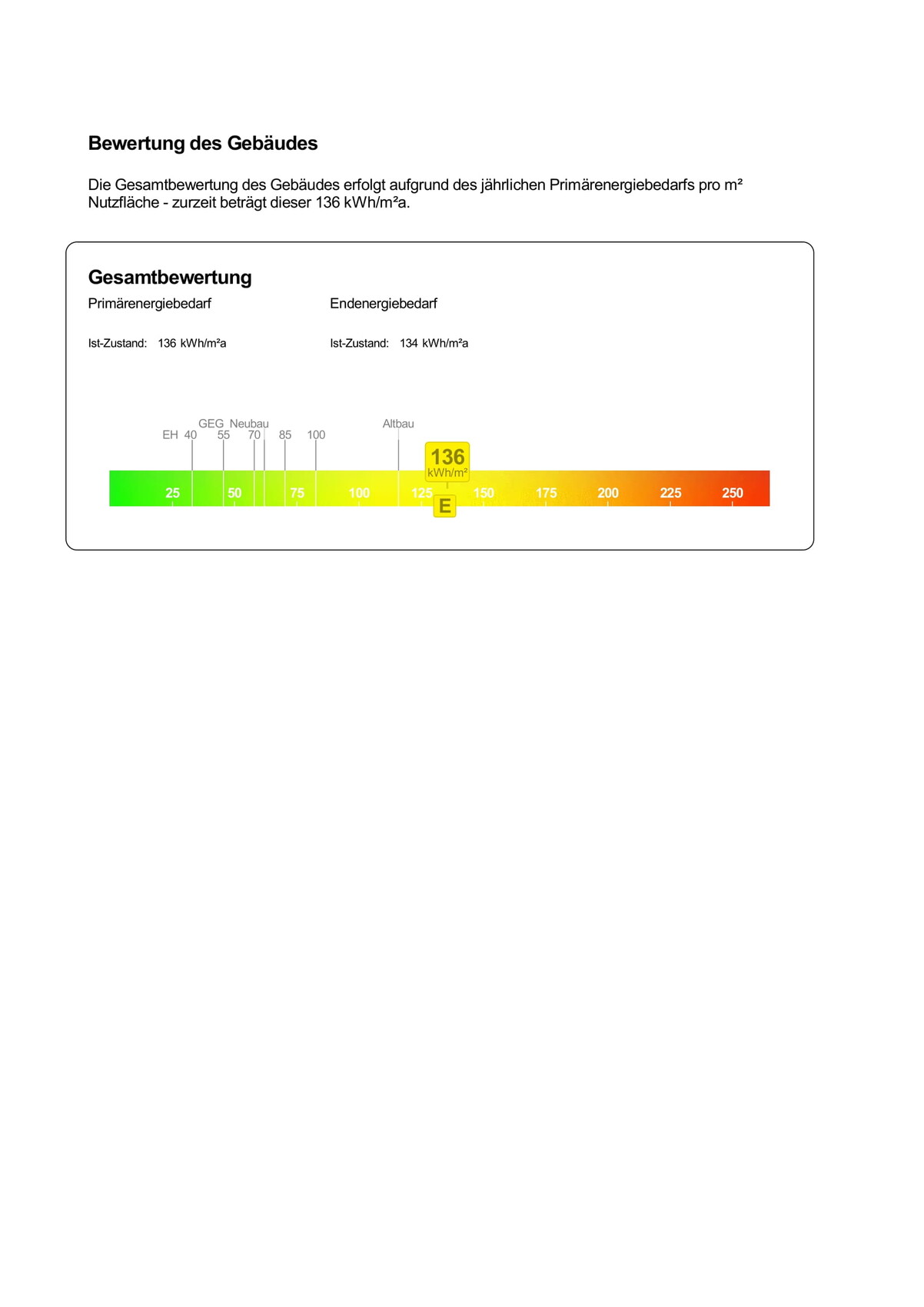
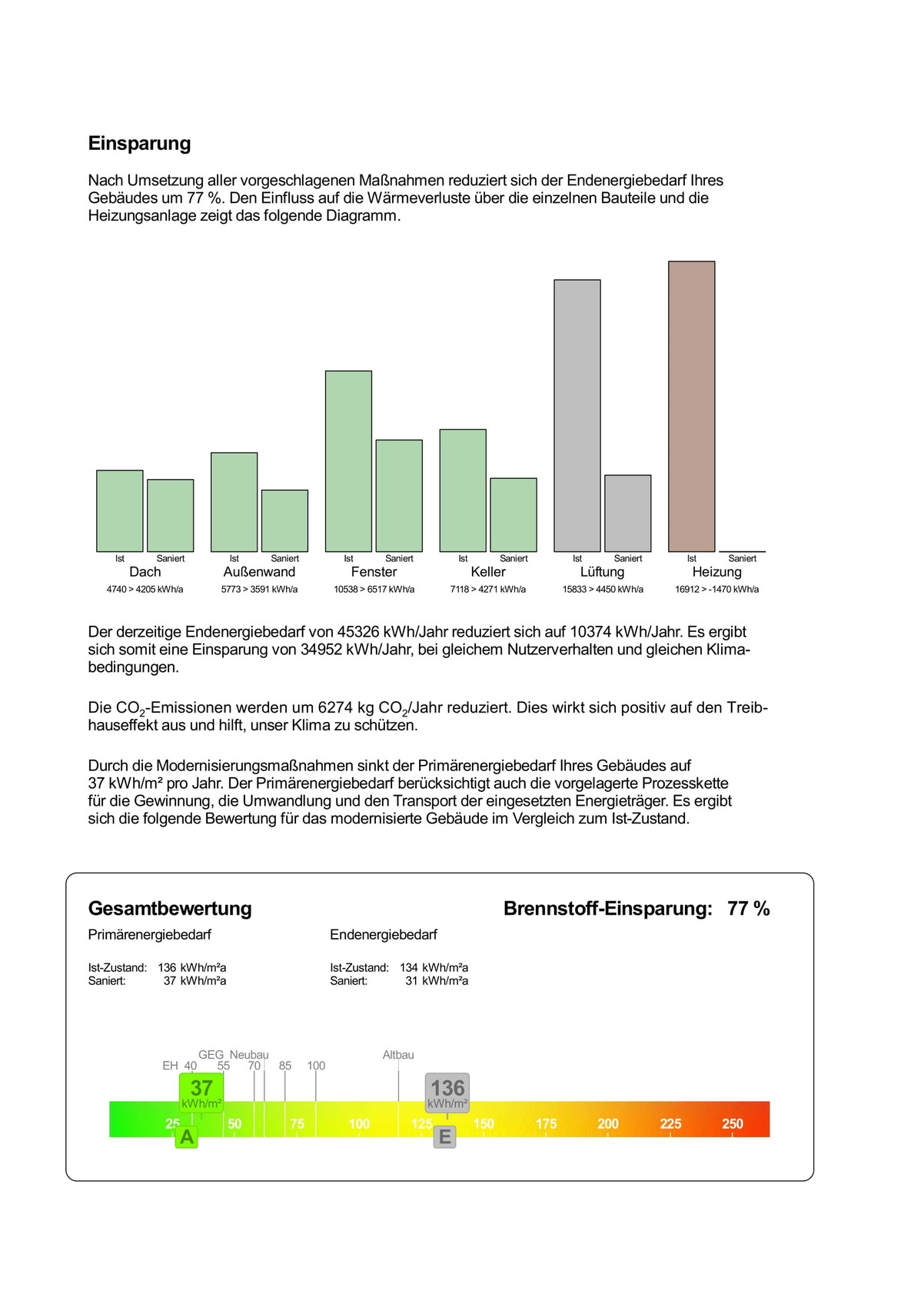
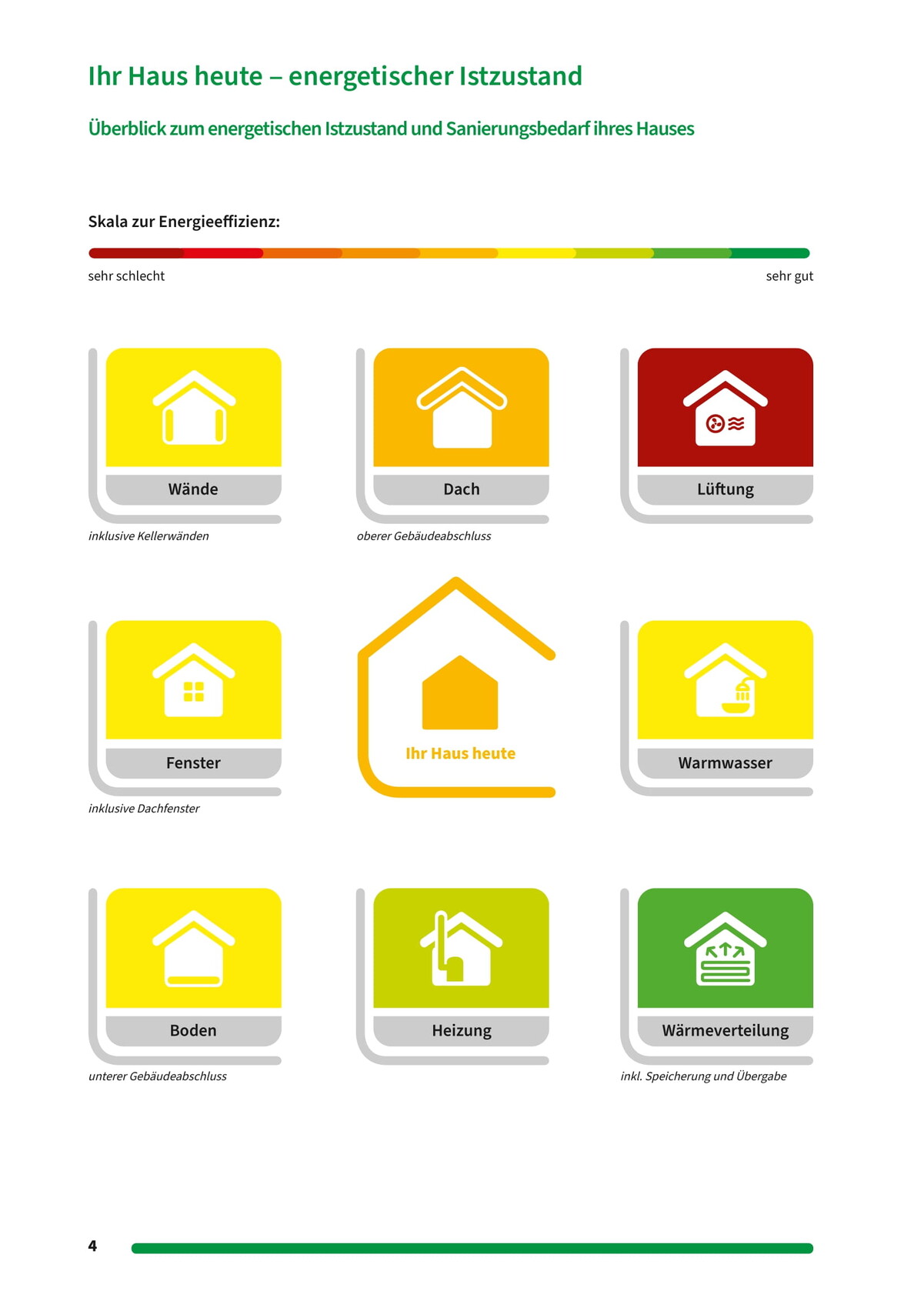
Your house has an energy rating of E; I would suggest consulting an expert to find out what changes you could make over the next 10 years, such as windows or roof insulation. The heating system is unstable but functional, so no action is needed there.
Acetone1424 schrieb:
The heating system regularly causes problems, and there are various defects in the house that are bothersome (damaged plaster).
Of course, it’s cheaper and easier if you replace them separately, but if you’re already at it...
Being “a bit more modern” is also an idea, but I don’t think it makes financial sense at all right now. But what exactly was the brief for the energy consultant? To maximize available subsidies for things you planned to do anyway? Or to create a sensible renovation plan for a relatively new house?
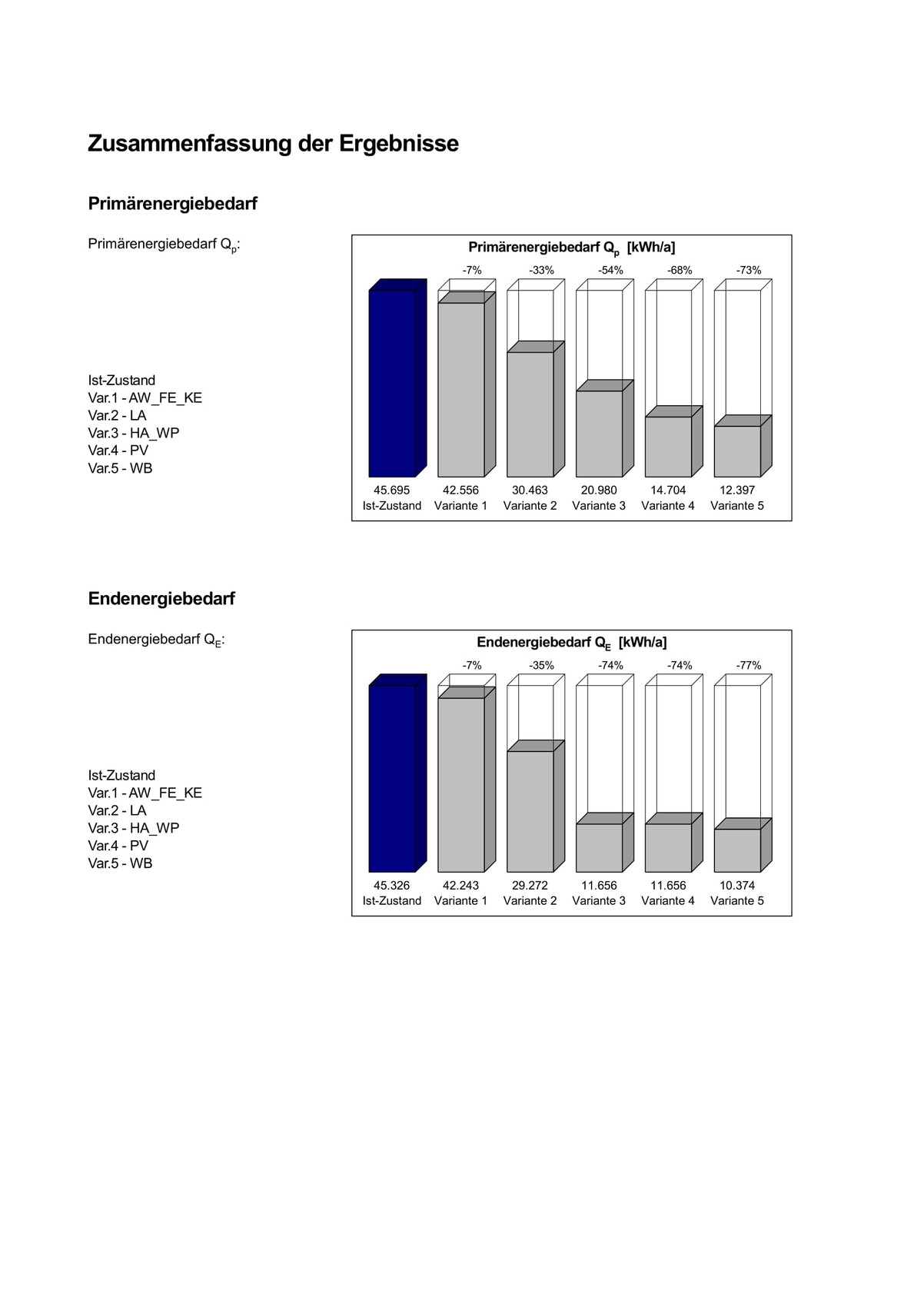
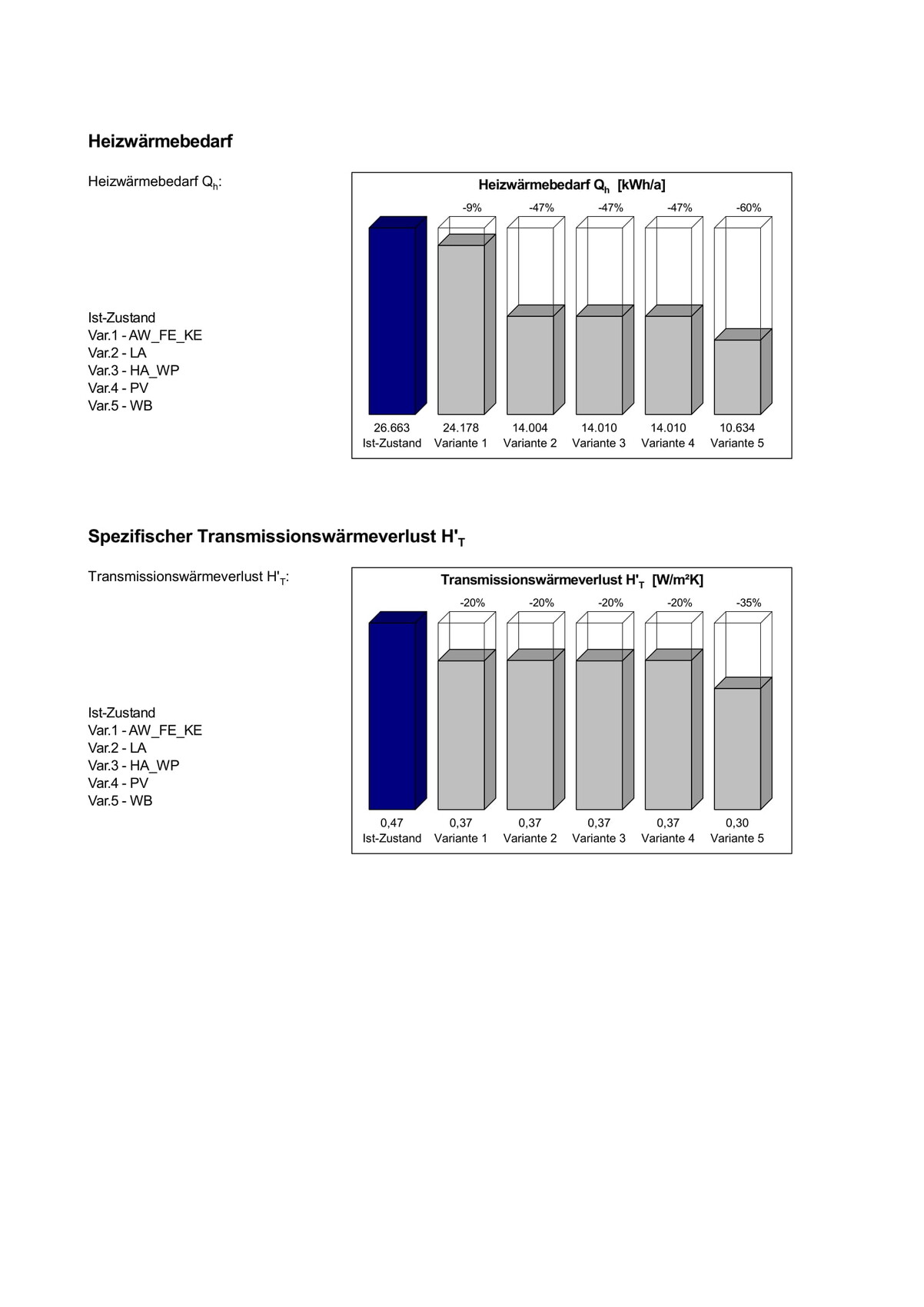
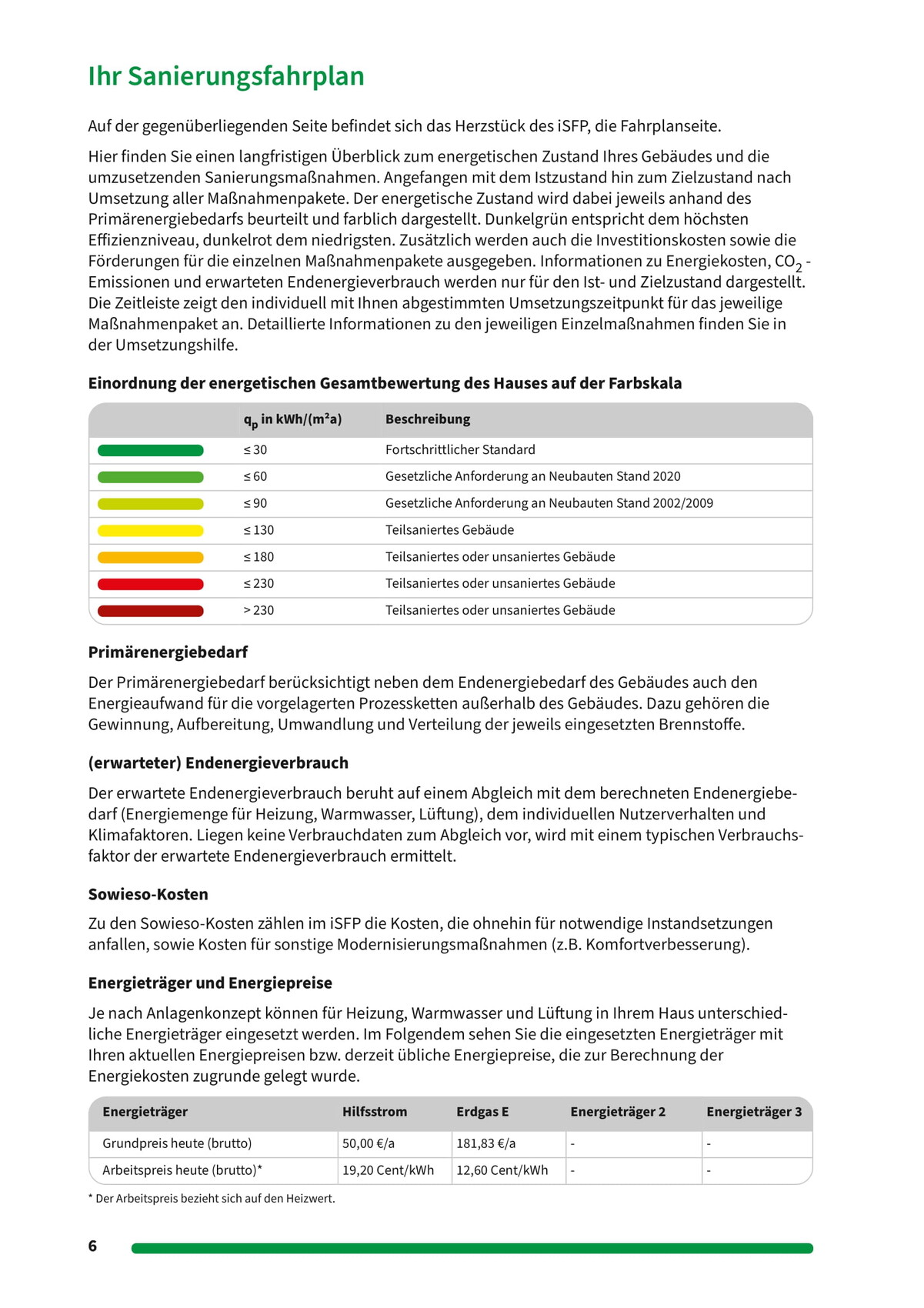
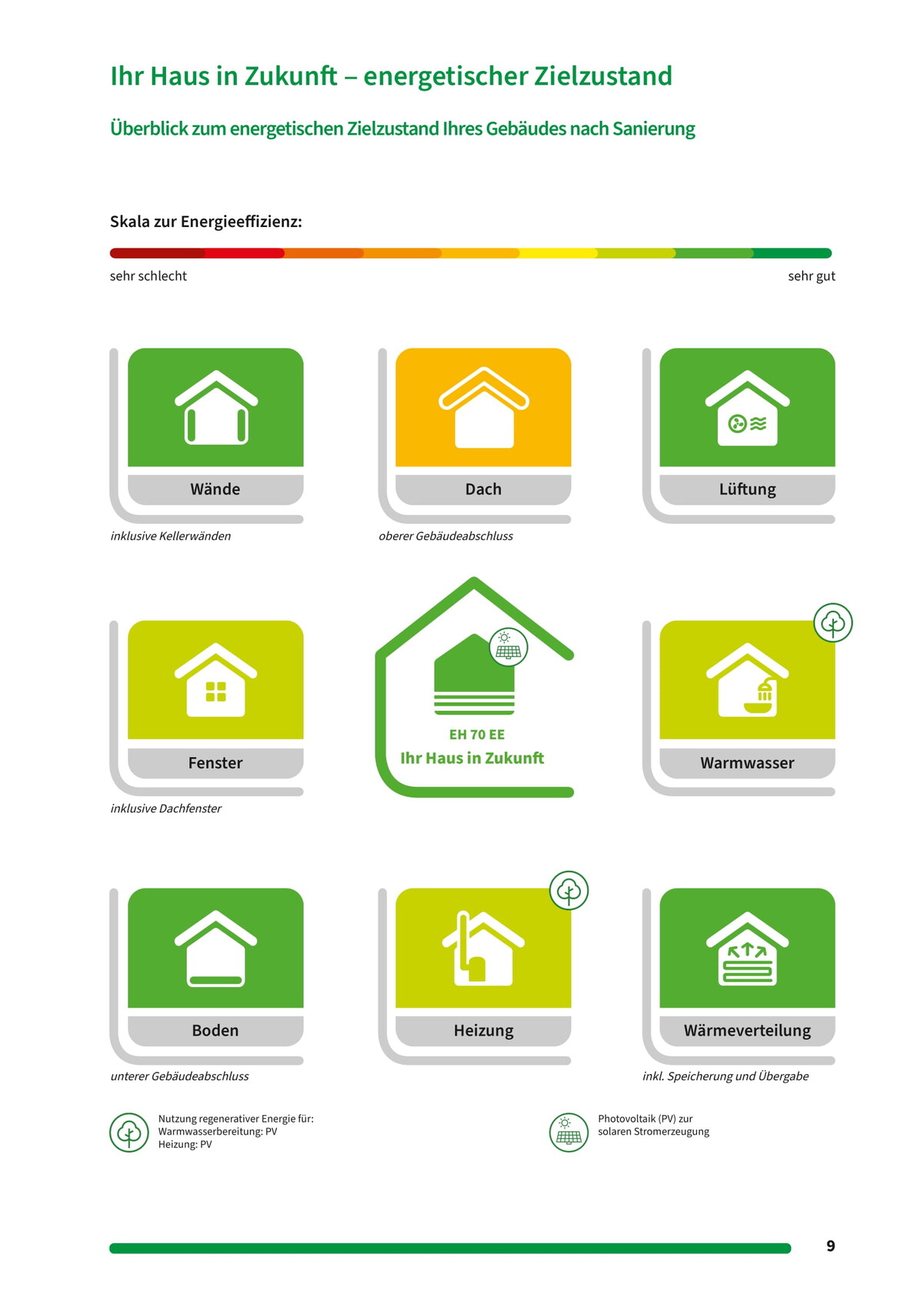
Please clearly list the packages of measures again and explain what you want to do and why. If I understand correctly, your house is currently energy class E, and with all five packages combined, it would only reach KfW 70 EE level. But you actually only want stage 1, right?
There’s quite a lot mentioned about an extension. Is it already built? Or is it still planned?
Will the entire windows be replaced, or just the glazing? How many of them are really damaged?
To be honest, I’m not really getting a clear picture of your plans. Make sure to ask the energy consultant how they calculated the investment costs.
A quick side question: 134 kWh/m² – is that normal for a house built in 2004? In our house from 1930 (with interior insulation on the ground floor, exterior insulation on one side, and two sides of an insulated mansard roof), we consume about the same amount per living area. 28,000 kWh for 200 m² (2,150 sq ft).
Or am I confusing something here?
Or am I confusing something here?

SoL schrieb:
Quick question from the side: 134kWh/m² – is that normal for a house built in 2004?Our old house from 1995 with 110m2 (1,184 sq ft) consumed about 70kWh/m² (6.5 kWh/sq ft). I would first use a thermal imaging camera to identify the weak points.
The first suspects for me would be dormers, extensions, knee walls, and roof insulation (which is often loose and with gaps, especially if installed on a Friday).
Only after that should you take action.
Similar topics