
ᐅ Single-family home, approximately 160 m², Bauhaus style; first design draft based on our requirements
Created on: 23 Aug 2019 22:03
N
Notstrom
Hello everyone,
we've been looking forward to this for a long time, and now we can finally share our first draft floor plan/design for discussion. We’re very curious to hear your feedback.
Those of you who have seen my thread before (https://www.hausbau-forum.de/threads/efh-Bauhausstil-Wohnfläche-180m-mit-Doppelgarage.31853/) know what to expect, and here comes the gem.
Development Plan / Restrictions
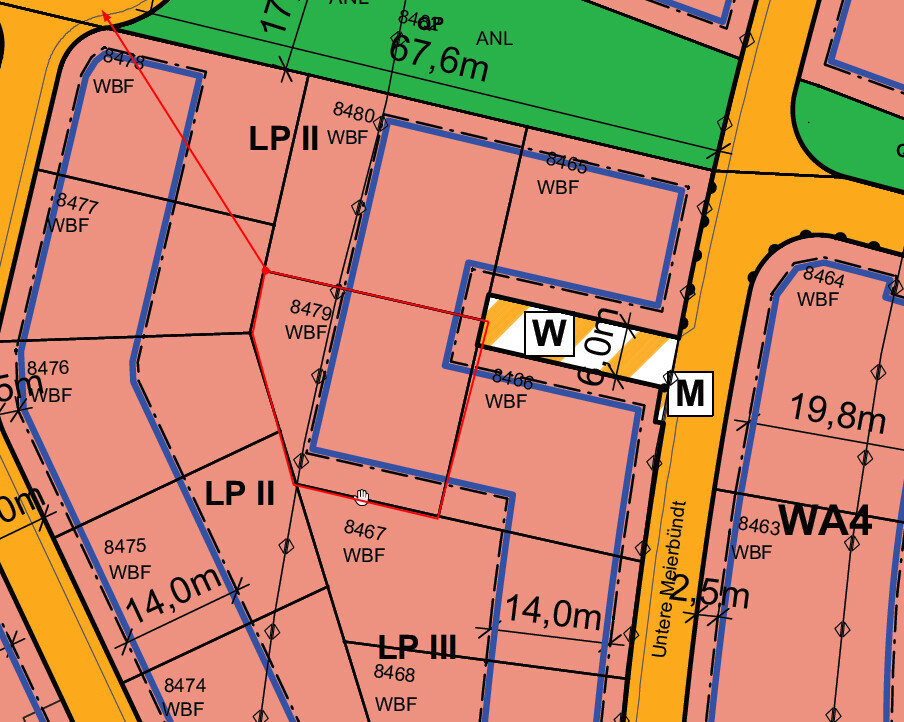
Plot size: 530m² (about 5,700 sq ft)
Slope: No
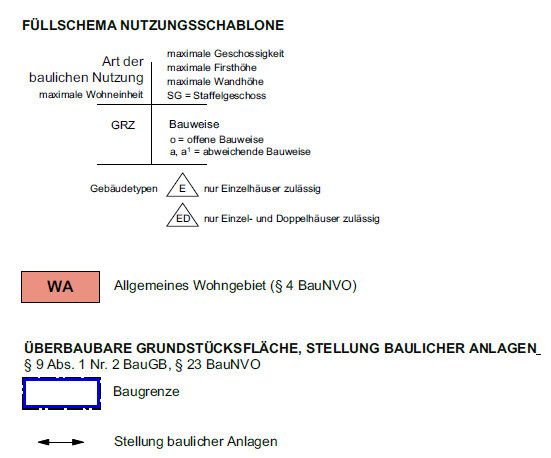
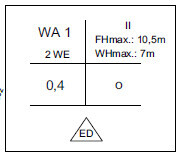
Site coverage ratio (Grundflächenzahl): see screenshot
Floor area ratio (Geschossflächenzahl): see screenshot
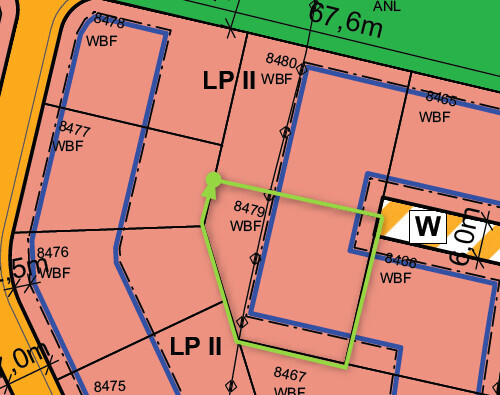
Building envelope, building line, and boundaries: see screenshot
Edge development: see screenshot
Number of parking spaces: double garage
Number of floors: 2
Roof style: flat roof
Architectural style: Bauhaus
Orientation
Maximum height/limitations
Other requirements
The green highlighted area represents our plot => Parcel 8479
Homeowner Requirements
Style, roof type, building type: Bauhaus style, flat roof
Basement, floors: Basement yes, ground floor, upper floor
Number of residents, ages: 3 people, potentially 4: 33, 30, 2 years old
Space requirements on ground and upper floors: Initially planned 180 m² (about 1,940 sq ft) on two stories, now reduced to 160 m² (about 1,720 sq ft) after feedback, with the ground floor slightly larger than the upper floor, around 75–85 m² (810–915 sq ft)
Office: Family use or home office? Yes, in the basement (guest room <-> office)
Overnight guests per year: Hard to say, probably about 10 times per year with 2–5 guests each time
Open or closed architecture: Rather open
Conservative or modern construction: Rather modern
Open kitchen, cooking island: Island
Number of dining spaces: 1
Fireplace: Yes
Music/sound system wall: Our soundbar is sufficient
Balcony, roof terrace: Maybe, undecided (Architect’s comment: How often do you really go out for a beer on the balcony/roof terrace instead of the nice terrace on the ground floor?)
Garage, carport: Double garage, possibly single garage with carport
Kitchen garden, greenhouse: Small but nice (a few tomatoes, cucumbers, zucchinis…)
House Design
Planning by: Architect
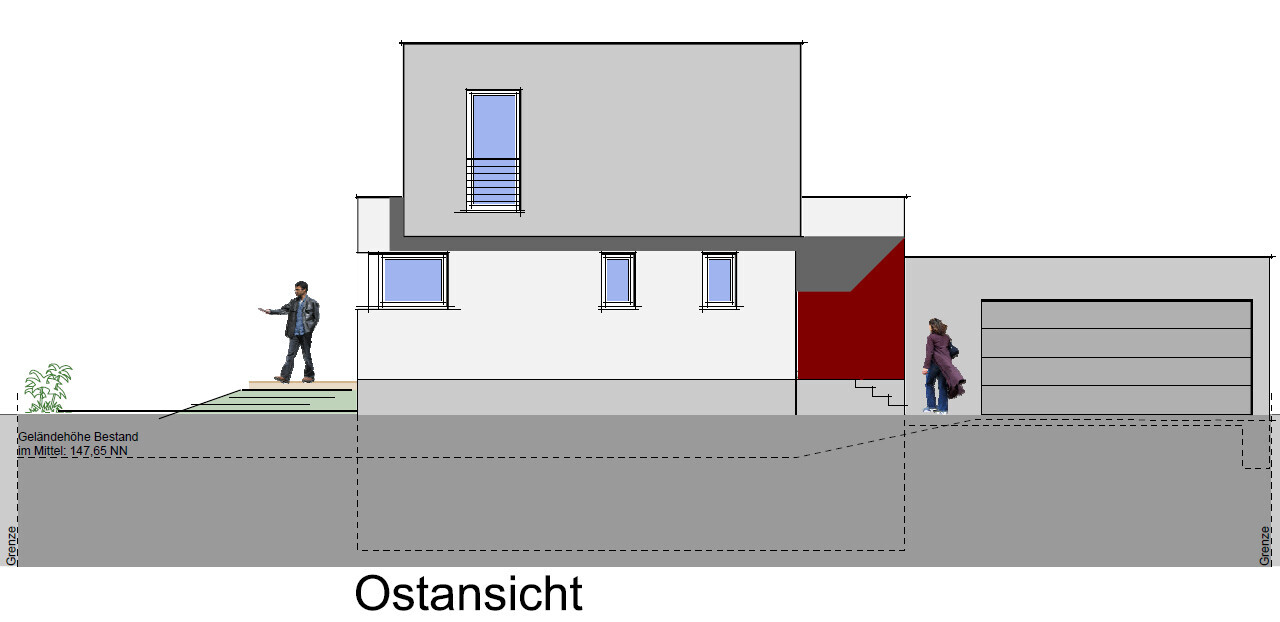
What do you particularly like? Why? We like the architecture with the two offset rectangles, though we wonder if the extra cost (no price estimate yet) justifies this. We believe it is structurally more challenging than a simple "cube."
What don’t you like? Why? The size of the bedroom/walk-in closet/children’s room. It feels like the bedroom is missing 2–5 m² (about 20–55 sq ft), as is the second children’s room.
Price estimate according to architect/planner: The initial draft was around 550,000 EUR
Personal price limit for the house, including fixtures: 620,000 EUR
Preferred heating technology: Indifferent, but tendency toward heat pump.
If you had to give up something, which details/finishes
- You can give up: the current shape (nice but a cube would also do)
- You cannot give up: space
Why is the design the way it is now? For example:
Standard design from the planner? This is the second design resulting from last week’s discussion with us, and we find it very successful.
Which wishes were implemented by the architect? Absolutely, plus the idea he had to move the kitchen during development. The guest room has now moved to the basement, allowing more space on the ground floor (beforehand, it felt quite cramped and “squeezed”).
What makes it especially good or bad in your opinion? The architecture
...and now I’ll leave you alone with our house
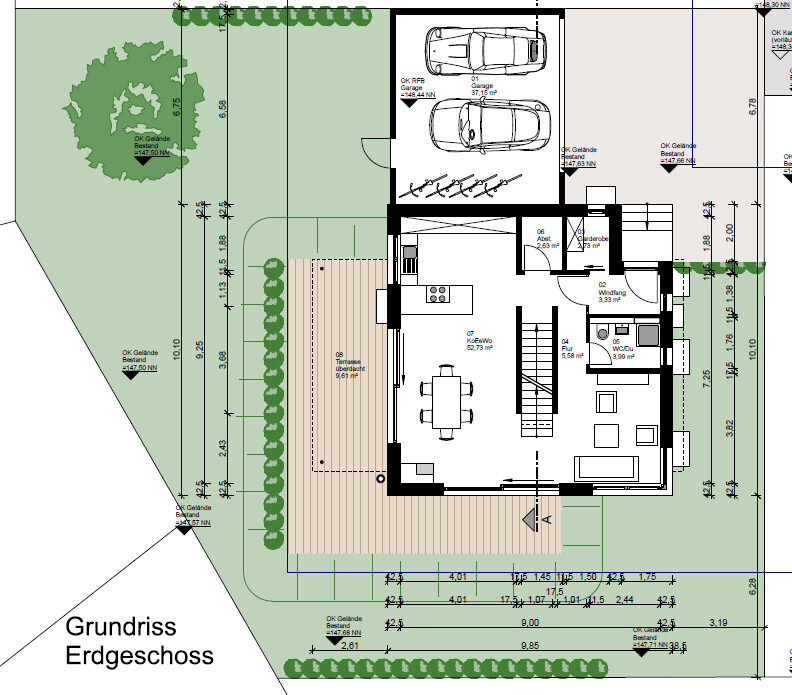
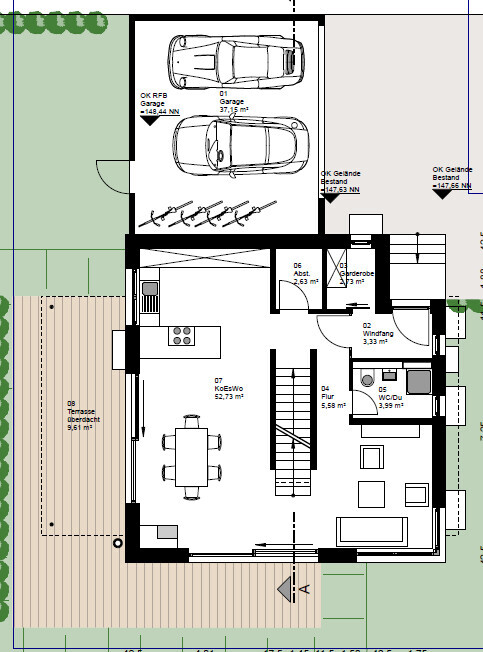
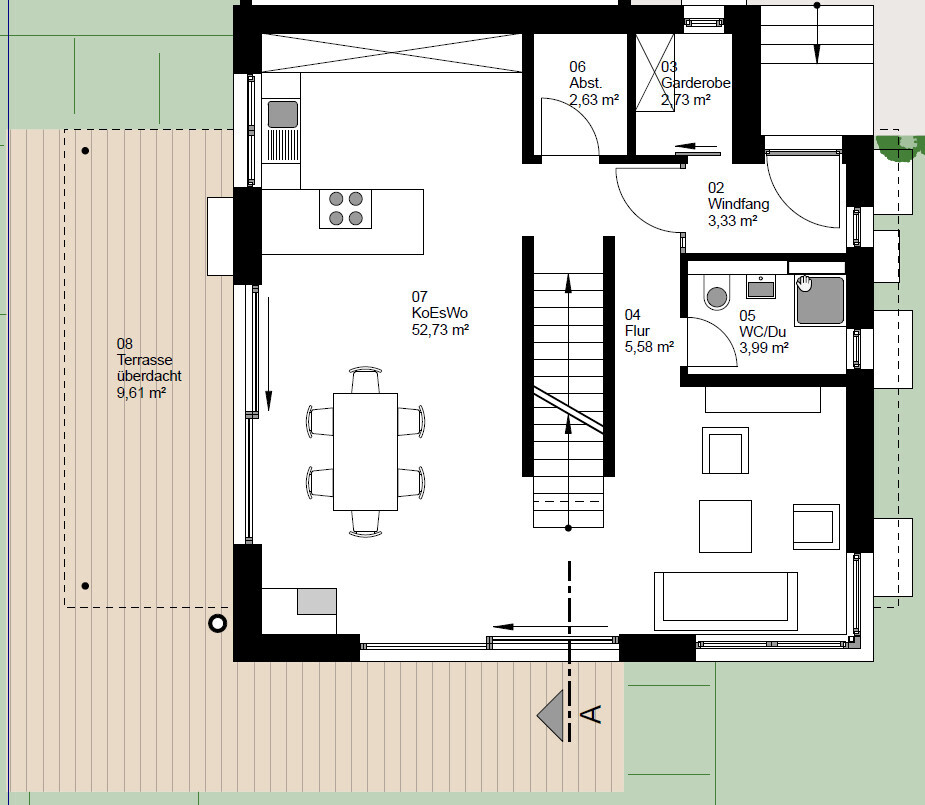
Upper floor plan:
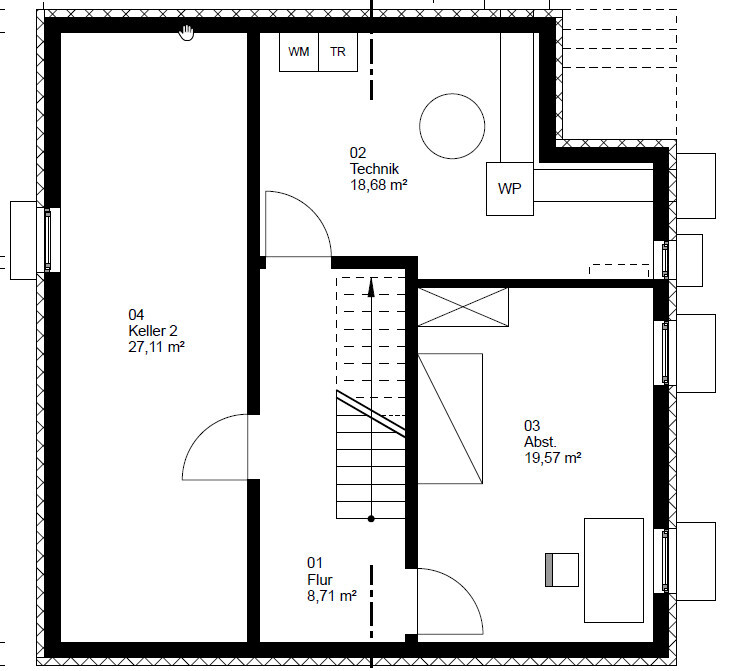
Basement:
we've been looking forward to this for a long time, and now we can finally share our first draft floor plan/design for discussion. We’re very curious to hear your feedback.
Those of you who have seen my thread before (https://www.hausbau-forum.de/threads/efh-Bauhausstil-Wohnfläche-180m-mit-Doppelgarage.31853/) know what to expect, and here comes the gem.
Development Plan / Restrictions
Plot size: 530m² (about 5,700 sq ft)
Slope: No
Site coverage ratio (Grundflächenzahl): see screenshot
Floor area ratio (Geschossflächenzahl): see screenshot
Building envelope, building line, and boundaries: see screenshot
Edge development: see screenshot
Number of parking spaces: double garage
Number of floors: 2
Roof style: flat roof
Architectural style: Bauhaus
Orientation
Maximum height/limitations
Other requirements
The green highlighted area represents our plot => Parcel 8479
Homeowner Requirements
Style, roof type, building type: Bauhaus style, flat roof
Basement, floors: Basement yes, ground floor, upper floor
Number of residents, ages: 3 people, potentially 4: 33, 30, 2 years old
Space requirements on ground and upper floors: Initially planned 180 m² (about 1,940 sq ft) on two stories, now reduced to 160 m² (about 1,720 sq ft) after feedback, with the ground floor slightly larger than the upper floor, around 75–85 m² (810–915 sq ft)
Office: Family use or home office? Yes, in the basement (guest room <-> office)
Overnight guests per year: Hard to say, probably about 10 times per year with 2–5 guests each time
Open or closed architecture: Rather open
Conservative or modern construction: Rather modern
Open kitchen, cooking island: Island
Number of dining spaces: 1
Fireplace: Yes
Music/sound system wall: Our soundbar is sufficient
Balcony, roof terrace: Maybe, undecided (Architect’s comment: How often do you really go out for a beer on the balcony/roof terrace instead of the nice terrace on the ground floor?)
Garage, carport: Double garage, possibly single garage with carport
Kitchen garden, greenhouse: Small but nice (a few tomatoes, cucumbers, zucchinis…)
House Design
Planning by: Architect
What do you particularly like? Why? We like the architecture with the two offset rectangles, though we wonder if the extra cost (no price estimate yet) justifies this. We believe it is structurally more challenging than a simple "cube."
What don’t you like? Why? The size of the bedroom/walk-in closet/children’s room. It feels like the bedroom is missing 2–5 m² (about 20–55 sq ft), as is the second children’s room.
Price estimate according to architect/planner: The initial draft was around 550,000 EUR
Personal price limit for the house, including fixtures: 620,000 EUR
Preferred heating technology: Indifferent, but tendency toward heat pump.
If you had to give up something, which details/finishes
- You can give up: the current shape (nice but a cube would also do)
- You cannot give up: space
Why is the design the way it is now? For example:
Standard design from the planner? This is the second design resulting from last week’s discussion with us, and we find it very successful.
Which wishes were implemented by the architect? Absolutely, plus the idea he had to move the kitchen during development. The guest room has now moved to the basement, allowing more space on the ground floor (beforehand, it felt quite cramped and “squeezed”).
What makes it especially good or bad in your opinion? The architecture
...and now I’ll leave you alone with our house
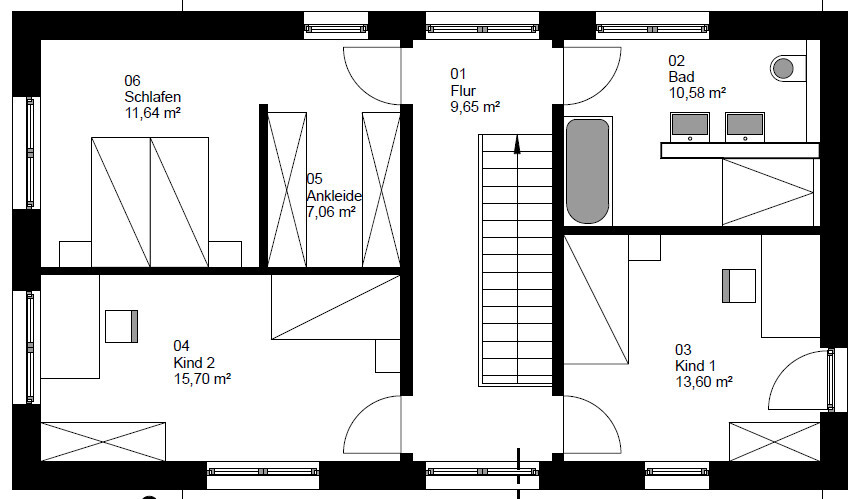
Upper floor plan:
Basement:
Notstrom schrieb:
That’s quite an interesting post. You like them but wouldn’t want one yourself. May I ask why? What I notice is that these designs strongly influence the room layouts or can make them difficult to arrange. That happens: you don’t have to want everything you find appealing. I like the cube style – but since I had a terrace years before a two-story house, I know I don’t want that anymore. The house then feels like it’s looming over you. With an overhang, it would feel the same to me. But some people are more sensitive to that than others.
Notstrom schrieb:
If we rotated the living room unit 90 degrees, it would be in the middle of the hallway. That would be odd, right, or am I mistaken? I have no idea what you consider a hallway. Basically, your living room is a living hallway.
Notstrom schrieb:
What do you mean by the “impossible furnishing” in the bathroom? That when entering the bathroom you face the toilet directly? For example, even the bathtub offers no calming effect. And that’s where you want to relax.
Notstrom schrieb:
We don’t understand. Can you give us some examples here? I wouldn’t plan a children’s room under 3 meters (10 feet) in new construction. At least not if there are only two. With three children’s rooms, you have to compromise, but with a conventional number of rooms some dimensions should be correct.
The walk-in closet is too narrow. With two wardrobes, the passage left is only 75cm (30 inches)... The dressing room is effectively only 5 square meters (54 square feet) large...
I said I like the design. But I no longer have children at home. So you should focus more on my criticism than on the word “like.”
Fact is: the location of the staircase ruins quite a bit. It reduces spaciousness (okay, cozy living rooms are often desired), but that isn’t the case here. Rather the opposite. For me, that is the biggest disadvantage.
Maybe the staircase should be rotated 90 degrees clockwise and the living room and kitchen swapped. In my opinion, that would make more sense regarding the entrance.

Maybe it would be best to simply close off the hallway to the living room.
However, the staircase also takes up a lot of square meters... The kitchen/dining area is too long, and other rooms suffer as a result. 10 sqm (108 sq ft) for four people, where the toilet area conflicts with an adjacent washbasin, or vice versa... is not ideal.
However, the staircase also takes up a lot of square meters... The kitchen/dining area is too long, and other rooms suffer as a result. 10 sqm (108 sq ft) for four people, where the toilet area conflicts with an adjacent washbasin, or vice versa... is not ideal.

Notstrom schrieb:
We’re eagerly awaiting your feedback! Well.
kaho674 schrieb:
I get the feeling the architect is desperately trying to be original from the outside. I usually find that ends up looking unoriginal. And so on. Unfortunately, there’s not much left to add; most of my criticism has already been expressed here.
I see the twisting of the floors as a failed attempt to distract from the fact that the design lacks anything endearing. Is this really an architect behind this concept? I ask because it occasionally happens that someone values the dining area more than the living area—but architecturally, in terms of the “body language of spaces,” there really is no living room here, only a visitor’s waiting area (waiting for who or what?) at the end of the corridor: vestibule, restroom, waiting room. What’s missing is a reception desk.
Then, the house is placed on an artificial mound—now explained as groundwater-related—but does that not also apply to the garage (and the basement)? Besides the odd appearance (with the twisting it adds one layer of plasticity too many) this still feels like something from northern Germany (Frisian), or in the context of southern Baden and the style often seen at some hardware stores, a little crazy.
To summarize: floor plans whose reasoning behind “why like this and not differently” is incomprehensible # poor craftsmanship in spatial arrangement # mismatched floors arranged as if this was fashionable in Paris # topped off with a topography similar to overdrawn eyebrows.
Sorry, this looks not only like “civil engineer instead of architect,” but also provincial pretentiousness.
My main reason for advising a complete restart, however, is not this zero overlap with my personal taste—that alone would not be an objective reason—but rather a very simple, yet even more devastating realization:
If you place a straight, one-flight staircase in the center—something that inevitably gives it dominance—then it is not just a cosmetic issue but a fundamental problem if its direction is wrong. That means you can’t just rotate it as you please; this requires a complete reengineering.
https://www.instagram.com/11antgmxde/
https://www.linkedin.com/company/bauen-jetzt/
Good morning,
First of all, thank you very much for the detailed feedback. I will review it thoroughly this evening and pass it on to the architect. There is still hope for the "cube design." Since this is quite disappointing for the architect and us: Can you recommend floor plans or houses in Bauhaus style that you would say, "Wow! This is the benchmark"?
Thanks and best regards
First of all, thank you very much for the detailed feedback. I will review it thoroughly this evening and pass it on to the architect. There is still hope for the "cube design." Since this is quite disappointing for the architect and us: Can you recommend floor plans or houses in Bauhaus style that you would say, "Wow! This is the benchmark"?
Thanks and best regards
There is basically nothing wrong with building something other than the typical box-shaped house and incorporating projections, recesses, etc. However, in this case, the design is not very successful either on the outside or the inside.
You can break up the box shape in many ways. Using different materials on the facade, recesses, or a small roof terrace. Accents with modern, light-colored bricks. Or a box-shaped house with a kind of bay window on the upper floor, clad in aluminum composite panels, which makes it more interesting again. It looks less technical when combined with wood and a lighter shade of gray instead of anthracite. And so on.
In North Rhine-Westphalia, I could name you 2-3 housing developments where you could find inspiration. Where are you from?
You can break up the box shape in many ways. Using different materials on the facade, recesses, or a small roof terrace. Accents with modern, light-colored bricks. Or a box-shaped house with a kind of bay window on the upper floor, clad in aluminum composite panels, which makes it more interesting again. It looks less technical when combined with wood and a lighter shade of gray instead of anthracite. And so on.
In North Rhine-Westphalia, I could name you 2-3 housing developments where you could find inspiration. Where are you from?
Similar topics