
ᐅ Single-family house, 2 stories without a basement – floor plan, costs, feasibility?
Created on: 8 Jul 2014 21:13
M
macpet
Hello Forum,
After a long time of debating whether it makes sense to start a thread without owning land yet, I decided to go ahead and open it. You can’t start early enough. And once the right plot is found, the process might move a bit faster.
A brief introduction: We are a family with two children (daughter, 3 years old; son, 3 months old). We currently live in a small terraced house over three floors with a basement plus an attic accessed by a hatch, a single garage, and a parking space. 125 m² (1,345 sq ft) of living space plus 30 m² (323 sq ft) garden, of which 14 m² (151 sq ft) is paved terrace. This home will serve as our contribution towards the new house. We also have a building savings plan. The budget of 450,000 € all in should not be exceeded, but more details are in the cost overview attached.
Now, about our ideas for the new home.
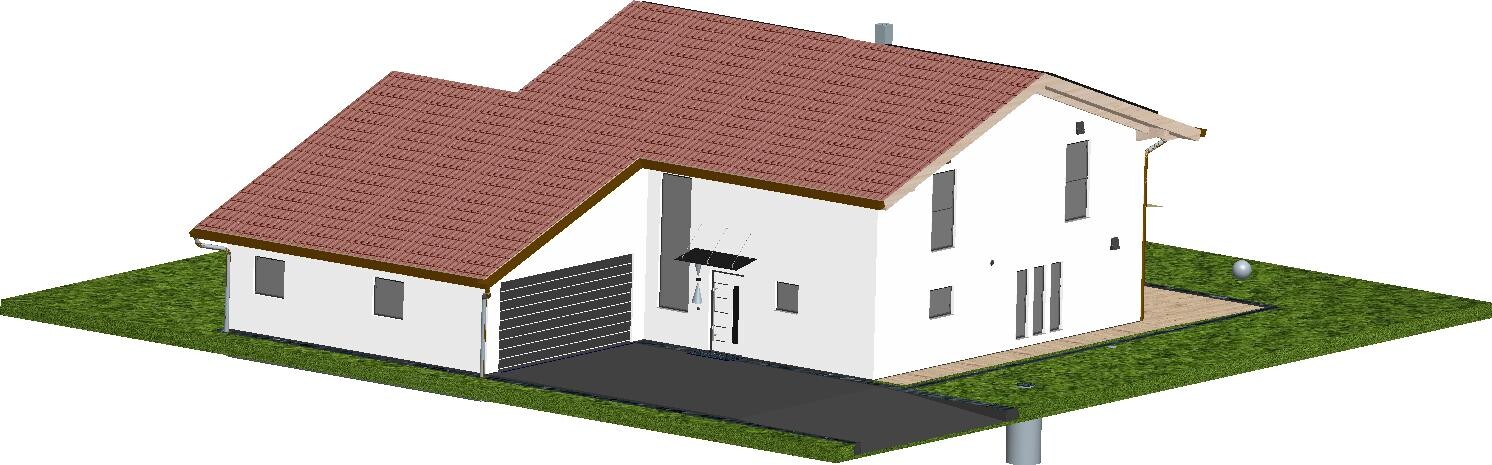
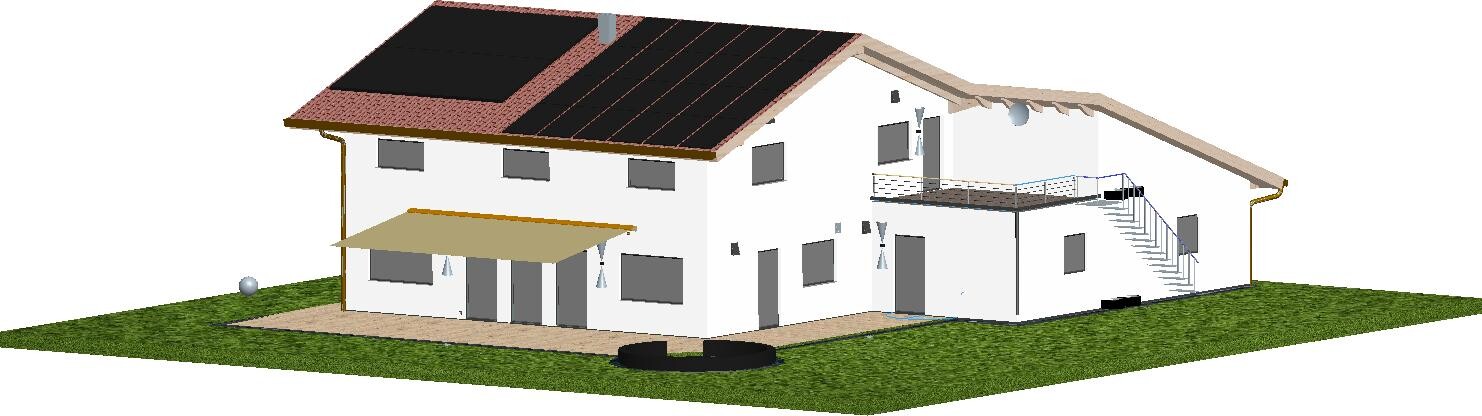
It should be a house with a simple cubic form, no basement.
I will recover the costs of the basement with a larger footprint and a big garage.
The pantry and the utility/heating room are located on the north side, considered the cold side.
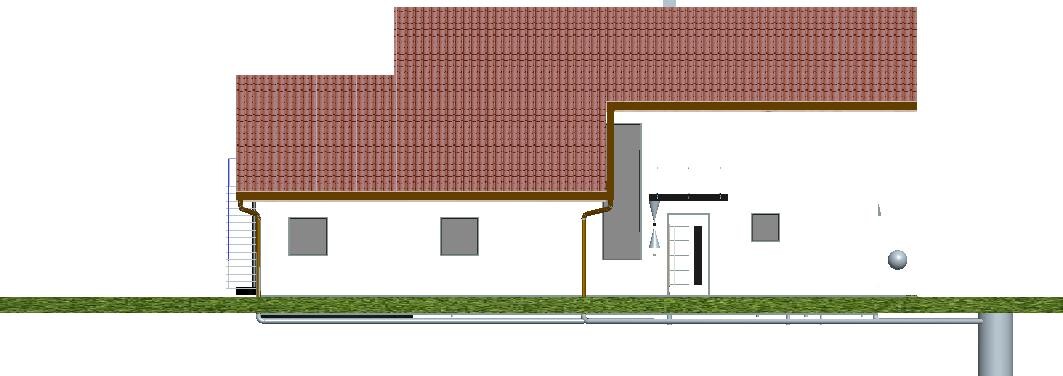
The garage is also positioned on the north side, at the corner.
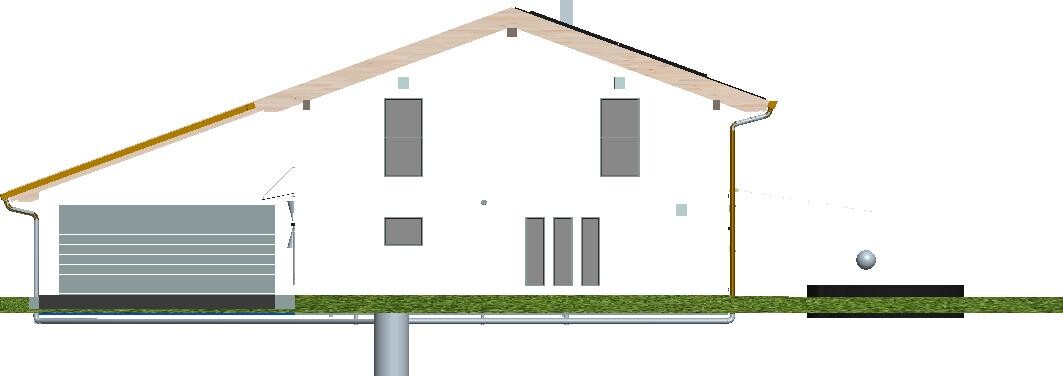
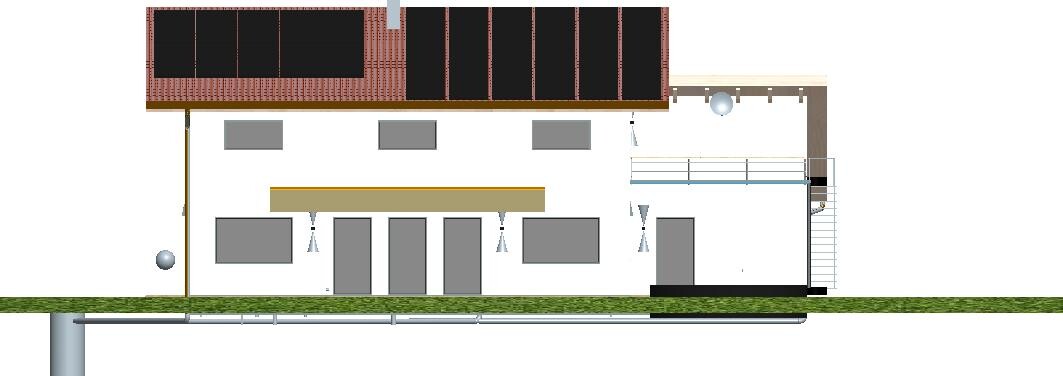
There should be no skylights, but many fixed windows.
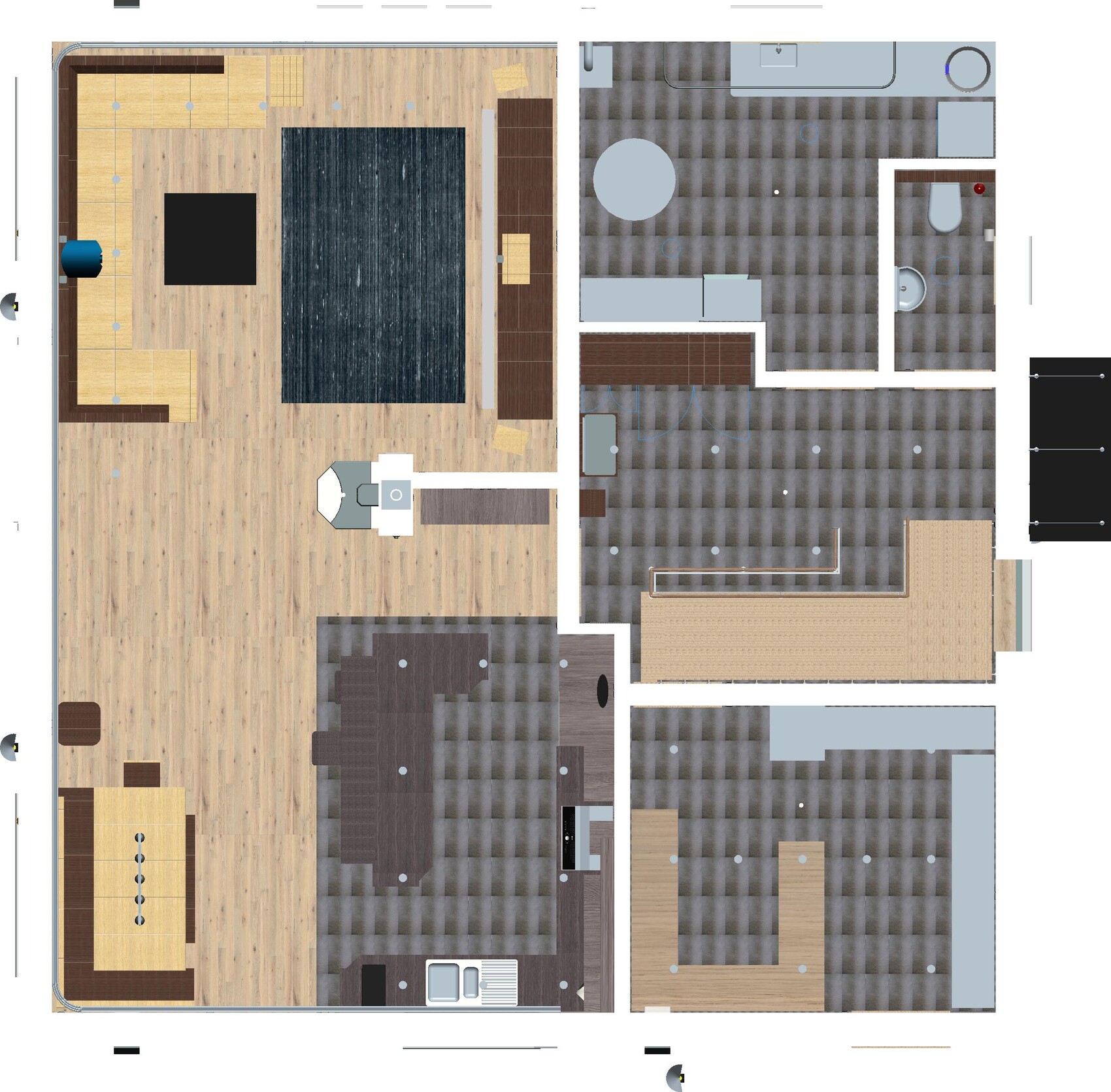
The staircase should be accessible without entering the living area so that the children can reach their rooms later without disturbance.
It should be possible to enter the house via the garage without going outside.
The front door will be on the north side.
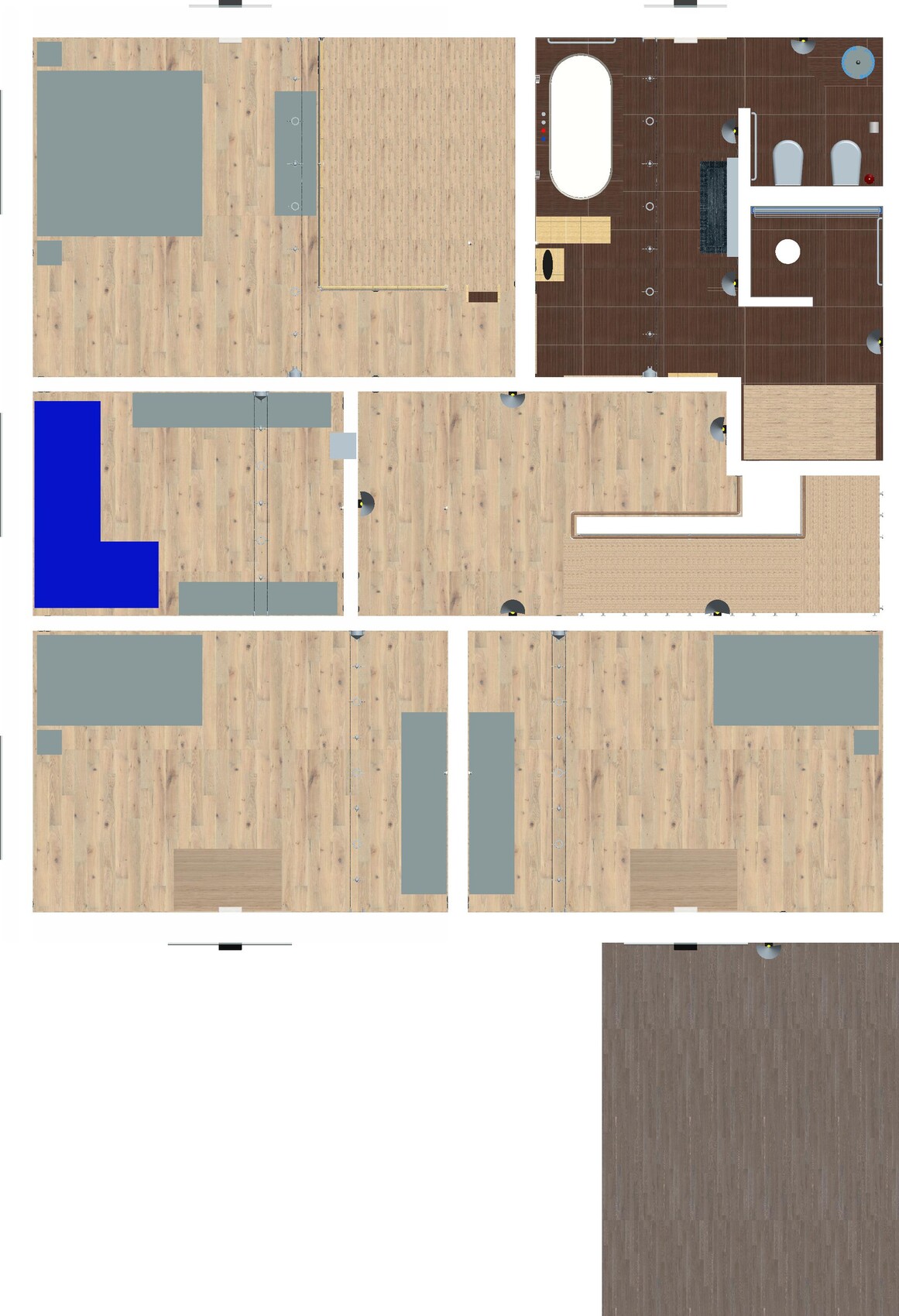
There should be two children’s bedrooms arranged apart from the bathroom and master bedroom.
Also, the bathroom should be separated from the children’s rooms to minimize noise.
The bathroom should have a bathtub, toilet, bidet, shower, double washbasin, and an infrared cabin.
Everything should be usable without disturbing others, which is why there is just one bathroom and no separate children’s bathroom that might be unused after the kids move out but still needs cleaning. So one person can shower, another can use the toilet, someone else can be in the infrared cabin, and so on.
All combinations are possible and implemented.
Even practical details like toilet placement near a window or enough light for the different tasks have been considered. The infrared cabin, for example, needs no light because it has internal lighting.
The laundry room, where the washer and dryer stand, should be separated from the living and sleeping areas.
There should be a laundry chute connected to the bathroom, so dirty laundry is neatly stored and dries best in the heating room. Many place washer and dryer upstairs, but where to store and dry laundry then?
So, a large heating room that also functions as a drying room.
Short distances for all utility lines were a goal as well, which is why the heating room is located directly under the bathroom.
The open kitchen is designed with a double L-shape, something I haven’t seen before but find very practical on the plan. You can go from the garage to the pantry with groceries, then take the rest into the kitchen and put the first items directly in the fridge. From the kitchen, you can access the terrace again via the open L—either to the herb garden or to the shady side in the afternoon for coffee.
The two legs of the L are about 1.3 m (4.3 ft) apart so that two or three people can cook without getting under each other’s feet but also without having to walk too far.
The hallway on the ground floor is also not too small and can be accessed directly from the front door or garage, so you can change shoes immediately. You don’t have to walk across the stairway path and risk carrying gravel up the wooden stairs.
The upstairs floors will be mostly oak wood, except the bathroom, which will have tiles. Perhaps the walk-in closet will have a carpet?
The basement is tiled except for the living area in the lounge; the kitchen will definitely be tiled.
Visually, I would prefer wood flooring in the entire living area, but practically that’s not feasible, not even with a Berbel extraction hood. The last 12 years have shown this.
It very much depends on cooking habits. If you only eat there or make occasional coffee, then wood flooring in the kitchen would work.
You can invest a lot of time in the floor plan decisions, but I think it’s worth it.
The staircase also requires careful planning and isn’t always easy to position with all the given dimensions.
Lighting shouldn’t be too sparse, and probably some glass doors will be needed.
I have also avoided large sliding doors in the living room because of the cost.
In the last 12 years, we managed well with our 1 m (3.3 ft) wide terrace door. The rest of the equipment is stored in the big garage.
The window arrangement should also create a harmonious exterior look; I’m a fan of symmetry, even if that’s “the art of the unwise.”
I included a central ventilation system initially but ended up going with a decentralized ventilation system.
You can really overthink or make it complicated here as well.
A wooden house without any ventilation system likely wouldn’t work, while with brick construction it might, but that’s a personal feeling.
I welcome any advice here too, just like for any other part of the planning.
A pellet stove should also be installed in the living area with a water connection.
I made it a load-bearing wall because I see the biggest challenge regarding the structural support of the ceiling above. This wall could also be concrete, as it’s an interior wall—possibly with a steel beam extending outward from the wall. Unfortunately, that’s just a gut feeling at this point.
All sockets, network connections, lights, switches, etc. are already planned.
The lighting upstairs is designed with a pull-cord system, so the visible roof structure can be built at the same cost as a standard roof frame. The electrical setup is also more affordable with this solution, and power consumption is manageable. If more lamps are needed later, simply add them to the system. The selection is huge, from spotlights to ring lights.
The only drawback is that the lamps require occasional dusting.
I could go on about the placement of trash bins, pellets, and so on. I’ve been working on the plans for a while now and hope you notice something I might have missed.
Please share your opinions openly. After all, you only build once, and it’s impossible to do everything perfectly. But if you don’t mess up the major points, you can at least sleep well. Decisions like building without a basement can’t be undone, so everyone needs to decide for themselves.
This is my first post, and I hope it will be enriched for a long time and something useful will come out of it.
Some of my colleagues have built over the last five years using various construction methods, and I’ve witnessed the price increases with a heavy heart. However, exhibitors at trade fairs have repeatedly encouraged me that construction prices will return to a normal level.
It’s nice if you can do some tasks yourself, even simple ones. Labor is the costly part of today’s houses.
Thanks in advance for your replies, critiques, and opinions.
So now I have described the situation a bit and will try to upload some pictures and tables to get many opinions. I will add more images gradually, but this is the start.
After a long time of debating whether it makes sense to start a thread without owning land yet, I decided to go ahead and open it. You can’t start early enough. And once the right plot is found, the process might move a bit faster.
A brief introduction: We are a family with two children (daughter, 3 years old; son, 3 months old). We currently live in a small terraced house over three floors with a basement plus an attic accessed by a hatch, a single garage, and a parking space. 125 m² (1,345 sq ft) of living space plus 30 m² (323 sq ft) garden, of which 14 m² (151 sq ft) is paved terrace. This home will serve as our contribution towards the new house. We also have a building savings plan. The budget of 450,000 € all in should not be exceeded, but more details are in the cost overview attached.
Now, about our ideas for the new home.
It should be a house with a simple cubic form, no basement.
I will recover the costs of the basement with a larger footprint and a big garage.
The pantry and the utility/heating room are located on the north side, considered the cold side.
The garage is also positioned on the north side, at the corner.
There should be no skylights, but many fixed windows.
The staircase should be accessible without entering the living area so that the children can reach their rooms later without disturbance.
It should be possible to enter the house via the garage without going outside.
The front door will be on the north side.
There should be two children’s bedrooms arranged apart from the bathroom and master bedroom.
Also, the bathroom should be separated from the children’s rooms to minimize noise.
The bathroom should have a bathtub, toilet, bidet, shower, double washbasin, and an infrared cabin.
Everything should be usable without disturbing others, which is why there is just one bathroom and no separate children’s bathroom that might be unused after the kids move out but still needs cleaning. So one person can shower, another can use the toilet, someone else can be in the infrared cabin, and so on.
All combinations are possible and implemented.
Even practical details like toilet placement near a window or enough light for the different tasks have been considered. The infrared cabin, for example, needs no light because it has internal lighting.
The laundry room, where the washer and dryer stand, should be separated from the living and sleeping areas.
There should be a laundry chute connected to the bathroom, so dirty laundry is neatly stored and dries best in the heating room. Many place washer and dryer upstairs, but where to store and dry laundry then?
So, a large heating room that also functions as a drying room.
Short distances for all utility lines were a goal as well, which is why the heating room is located directly under the bathroom.
The open kitchen is designed with a double L-shape, something I haven’t seen before but find very practical on the plan. You can go from the garage to the pantry with groceries, then take the rest into the kitchen and put the first items directly in the fridge. From the kitchen, you can access the terrace again via the open L—either to the herb garden or to the shady side in the afternoon for coffee.
The two legs of the L are about 1.3 m (4.3 ft) apart so that two or three people can cook without getting under each other’s feet but also without having to walk too far.
The hallway on the ground floor is also not too small and can be accessed directly from the front door or garage, so you can change shoes immediately. You don’t have to walk across the stairway path and risk carrying gravel up the wooden stairs.
The upstairs floors will be mostly oak wood, except the bathroom, which will have tiles. Perhaps the walk-in closet will have a carpet?
The basement is tiled except for the living area in the lounge; the kitchen will definitely be tiled.
Visually, I would prefer wood flooring in the entire living area, but practically that’s not feasible, not even with a Berbel extraction hood. The last 12 years have shown this.
It very much depends on cooking habits. If you only eat there or make occasional coffee, then wood flooring in the kitchen would work.
You can invest a lot of time in the floor plan decisions, but I think it’s worth it.
The staircase also requires careful planning and isn’t always easy to position with all the given dimensions.
Lighting shouldn’t be too sparse, and probably some glass doors will be needed.
I have also avoided large sliding doors in the living room because of the cost.
In the last 12 years, we managed well with our 1 m (3.3 ft) wide terrace door. The rest of the equipment is stored in the big garage.
The window arrangement should also create a harmonious exterior look; I’m a fan of symmetry, even if that’s “the art of the unwise.”
I included a central ventilation system initially but ended up going with a decentralized ventilation system.
You can really overthink or make it complicated here as well.
A wooden house without any ventilation system likely wouldn’t work, while with brick construction it might, but that’s a personal feeling.
I welcome any advice here too, just like for any other part of the planning.
A pellet stove should also be installed in the living area with a water connection.
I made it a load-bearing wall because I see the biggest challenge regarding the structural support of the ceiling above. This wall could also be concrete, as it’s an interior wall—possibly with a steel beam extending outward from the wall. Unfortunately, that’s just a gut feeling at this point.
All sockets, network connections, lights, switches, etc. are already planned.
The lighting upstairs is designed with a pull-cord system, so the visible roof structure can be built at the same cost as a standard roof frame. The electrical setup is also more affordable with this solution, and power consumption is manageable. If more lamps are needed later, simply add them to the system. The selection is huge, from spotlights to ring lights.
The only drawback is that the lamps require occasional dusting.
I could go on about the placement of trash bins, pellets, and so on. I’ve been working on the plans for a while now and hope you notice something I might have missed.
Please share your opinions openly. After all, you only build once, and it’s impossible to do everything perfectly. But if you don’t mess up the major points, you can at least sleep well. Decisions like building without a basement can’t be undone, so everyone needs to decide for themselves.
This is my first post, and I hope it will be enriched for a long time and something useful will come out of it.
Some of my colleagues have built over the last five years using various construction methods, and I’ve witnessed the price increases with a heavy heart. However, exhibitors at trade fairs have repeatedly encouraged me that construction prices will return to a normal level.
It’s nice if you can do some tasks yourself, even simple ones. Labor is the costly part of today’s houses.
Thanks in advance for your replies, critiques, and opinions.
So now I have described the situation a bit and will try to upload some pictures and tables to get many opinions. I will add more images gradually, but this is the start.
B
Bauherren20149 Jul 2014 14:31@klblb: I was just wondering the same thing.
Regarding the cost estimate, I can only share my own layman’s experience. I think most of the figures might be roughly in the right range (no guarantee), but a few things caught my attention:
1. What exactly is included in the €3,000 for the items listed as roof terrace/garage/railing/tiles/external stairs? What is that supposed to cover?
2. I find the surveyor fees quite optimistic. Just as a comparison: We paid about €1,000 for rough/fine surveying and cadastral surveying (which is required here), plus an additional €650 for the site plan needed for the building permit.
3. Speaking of that topic: What about the costs for the building permit or planning permission? Fees that the local authorities may require, such as waiver of pre-emption rights or assignment of the house number (e.g., in new development areas)?
4. What about costs for the geotechnical report or heating load calculation? Those can easily run into the thousands.
5. What about earthworks?
I am not going to comment on the floor plan, as there are professionals for that and some parts are quite subjective. Otherwise, I also think you might be moving a bit too fast and getting caught up in details already. As long as you don’t own a plot yet, your planning is almost worthless. Having a rough idea of what the house might look like is fine, but the rest will develop with the plot. The house must be adapted to your land, and often there is also a local development plan that you have to follow. In the end, you might start from scratch again because your “dream plot” may not allow you to build exactly what you want now, or because the orientation of the plot makes a different layout more sensible. First focus on acquiring a plot, then consult a professional – an architect or a reputable general contractor.
Regarding the cost estimate, I can only share my own layman’s experience. I think most of the figures might be roughly in the right range (no guarantee), but a few things caught my attention:
1. What exactly is included in the €3,000 for the items listed as roof terrace/garage/railing/tiles/external stairs? What is that supposed to cover?
2. I find the surveyor fees quite optimistic. Just as a comparison: We paid about €1,000 for rough/fine surveying and cadastral surveying (which is required here), plus an additional €650 for the site plan needed for the building permit.
3. Speaking of that topic: What about the costs for the building permit or planning permission? Fees that the local authorities may require, such as waiver of pre-emption rights or assignment of the house number (e.g., in new development areas)?
4. What about costs for the geotechnical report or heating load calculation? Those can easily run into the thousands.
5. What about earthworks?
I am not going to comment on the floor plan, as there are professionals for that and some parts are quite subjective. Otherwise, I also think you might be moving a bit too fast and getting caught up in details already. As long as you don’t own a plot yet, your planning is almost worthless. Having a rough idea of what the house might look like is fine, but the rest will develop with the plot. The house must be adapted to your land, and often there is also a local development plan that you have to follow. In the end, you might start from scratch again because your “dream plot” may not allow you to build exactly what you want now, or because the orientation of the plot makes a different layout more sensible. First focus on acquiring a plot, then consult a professional – an architect or a reputable general contractor.
B
Bauherren20149 Jul 2014 14:40I have taken another look at your sections and floor plans:
When you mention the roof terrace... do you really mean the entire structure that leads down from the upper floor to the ground floor? I am open to being corrected, but €3,000 seems unrealistically low to me.
For example, we paid nearly €1,800 (including tax) just for our exterior basement staircase (a precast concrete staircase with 13 steps) – without any railing, without stair coverings – let alone tiles and the roof terrace.
When you mention the roof terrace... do you really mean the entire structure that leads down from the upper floor to the ground floor? I am open to being corrected, but €3,000 seems unrealistically low to me.
For example, we paid nearly €1,800 (including tax) just for our exterior basement staircase (a precast concrete staircase with 13 steps) – without any railing, without stair coverings – let alone tiles and the roof terrace.

Hello Wanderdüne,
Your point about the plot is probably correct, which is why I started my post exactly with the first two sentences. I obtained the regulations from the surrounding municipalities and found many plots with exactly this kind of layout.
We currently own our home, so it’s not as urgent for us as it is for some others when it comes to building. And if we don’t find a suitable place, we will stay where we are and make some modifications so that there is enough room for the children and parents.
I don’t find the time aspect too bad. One person paints, another spends their whole life building a model railway, the next one gets annoyed about everything, and so on. Everyone has time and how they use it doesn’t really matter. Everything is finite, and if it doesn’t help, it also doesn’t hurt.
If it turns out that I should rather consult an architect, then at least they will have a rough idea of what we want and need to fit in. For an investment of nearly half a million euros, you can’t be too prepared. That’s just my personal feeling, though. How long do people consider what kind of car to buy, and the investment there is not comparable.
Your point about the plot is probably correct, which is why I started my post exactly with the first two sentences. I obtained the regulations from the surrounding municipalities and found many plots with exactly this kind of layout.
We currently own our home, so it’s not as urgent for us as it is for some others when it comes to building. And if we don’t find a suitable place, we will stay where we are and make some modifications so that there is enough room for the children and parents.
I don’t find the time aspect too bad. One person paints, another spends their whole life building a model railway, the next one gets annoyed about everything, and so on. Everyone has time and how they use it doesn’t really matter. Everything is finite, and if it doesn’t help, it also doesn’t hurt.
If it turns out that I should rather consult an architect, then at least they will have a rough idea of what we want and need to fit in. For an investment of nearly half a million euros, you can’t be too prepared. That’s just my personal feeling, though. How long do people consider what kind of car to buy, and the investment there is not comparable.
Hello homebuilders 2014,
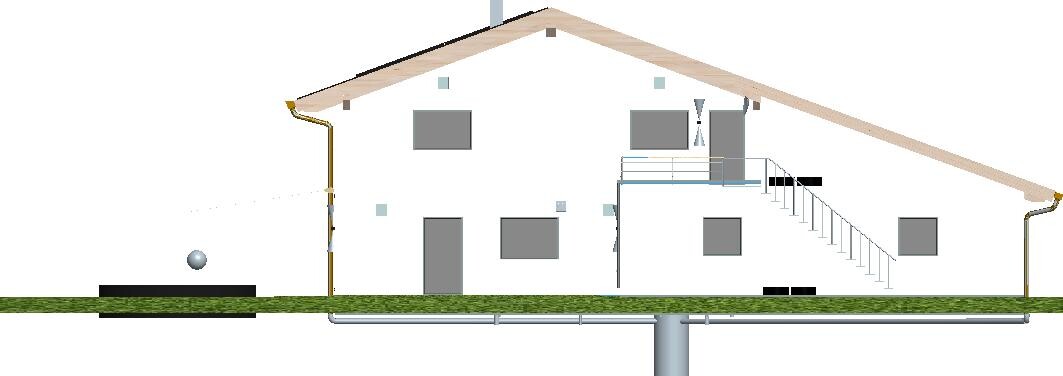
the roof terrace only includes the railing, tiles, and the steel outdoor staircase about 75cm (30 inches) wide. No objects are meant to be carried up or down here. It is just a way for the children to go up and down. This developed naturally over the roof, and having a recessed area or however you want to call it did not appeal to me on other houses. The other costs are included in the structural shell of the house and garage. The ceiling does not even have to be concrete; it can also be made of wood. Otherwise, €3000 would really be far too little.
the roof terrace only includes the railing, tiles, and the steel outdoor staircase about 75cm (30 inches) wide. No objects are meant to be carried up or down here. It is just a way for the children to go up and down. This developed naturally over the roof, and having a recessed area or however you want to call it did not appeal to me on other houses. The other costs are included in the structural shell of the house and garage. The ceiling does not even have to be concrete; it can also be made of wood. Otherwise, €3000 would really be far too little.
B
Bauherren20149 Jul 2014 15:01Okay, I understand that. I’m not sure if that budget item will be enough, but at least it sounds more plausible.
Regarding the planning: I completely get where you’re coming from. We also spent a lot of time beforehand clarifying what we want and what we don’t. However, with such a detailed floor plan already, I feel like you might be focusing too much on details when some basic aspects are still missing. Many people then make the mistake of sticking too rigidly to what they’ve put on paper (or into the computer) and are unwilling to consider new or possibly better ideas.
Regarding the planning: I completely get where you’re coming from. We also spent a lot of time beforehand clarifying what we want and what we don’t. However, with such a detailed floor plan already, I feel like you might be focusing too much on details when some basic aspects are still missing. Many people then make the mistake of sticking too rigidly to what they’ve put on paper (or into the computer) and are unwilling to consider new or possibly better ideas.
Hello 2014 home builders,
What amount should I roughly include for items 2, 3, and 4?
For item 5, I already included the costs in the concrete slab and noted that it covers all work underneath the slab. If this is still too low, I will adjust it as well. However, €15,000 (about $16,000) is already a significant amount.
As of now, we plan to build with a local construction company using solid construction methods. They are neighbors of one of my relatives.
They quoted me approximately €330 (about $350) per cubic meter for the house and €200 (about $210) per cubic meter for the garage.
However, understandably, they are not interested in evaluating anything without having access to the building plot first.
Their time is valuable, after all.
What amount should I roughly include for items 2, 3, and 4?
For item 5, I already included the costs in the concrete slab and noted that it covers all work underneath the slab. If this is still too low, I will adjust it as well. However, €15,000 (about $16,000) is already a significant amount.
As of now, we plan to build with a local construction company using solid construction methods. They are neighbors of one of my relatives.
They quoted me approximately €330 (about $350) per cubic meter for the house and €200 (about $210) per cubic meter for the garage.
However, understandably, they are not interested in evaluating anything without having access to the building plot first.
Their time is valuable, after all.
Similar topics