
ᐅ Single-family house (2 floors + finished basement + converted attic), approximately 200 sqm – modifications
Created on: 20 Oct 2019 21:50
G
grericht
Hello,
We are currently working with an architect on the design of our single-family home. Since we have three children, the house should accommodate several future scenarios. These include:
Plot:
Since the plot already has a building, and we want to keep the rear building (it is fully shaded by the apartment building, is in reasonable condition, and might provide future expansion potential—at least suitable for workshops and storage), and since the plot is not very large, we decided on a tall house with a small footprint.
About the house
We have already developed a fairly comfortable floor plan with our chosen architect. Our biggest concern is accidentally planning a wall or something else 5 cm (2 inches) too far to the left or right and then being unable to fit our furniture. I would appreciate it if you would be interested in looking over the current design and giving feedback.
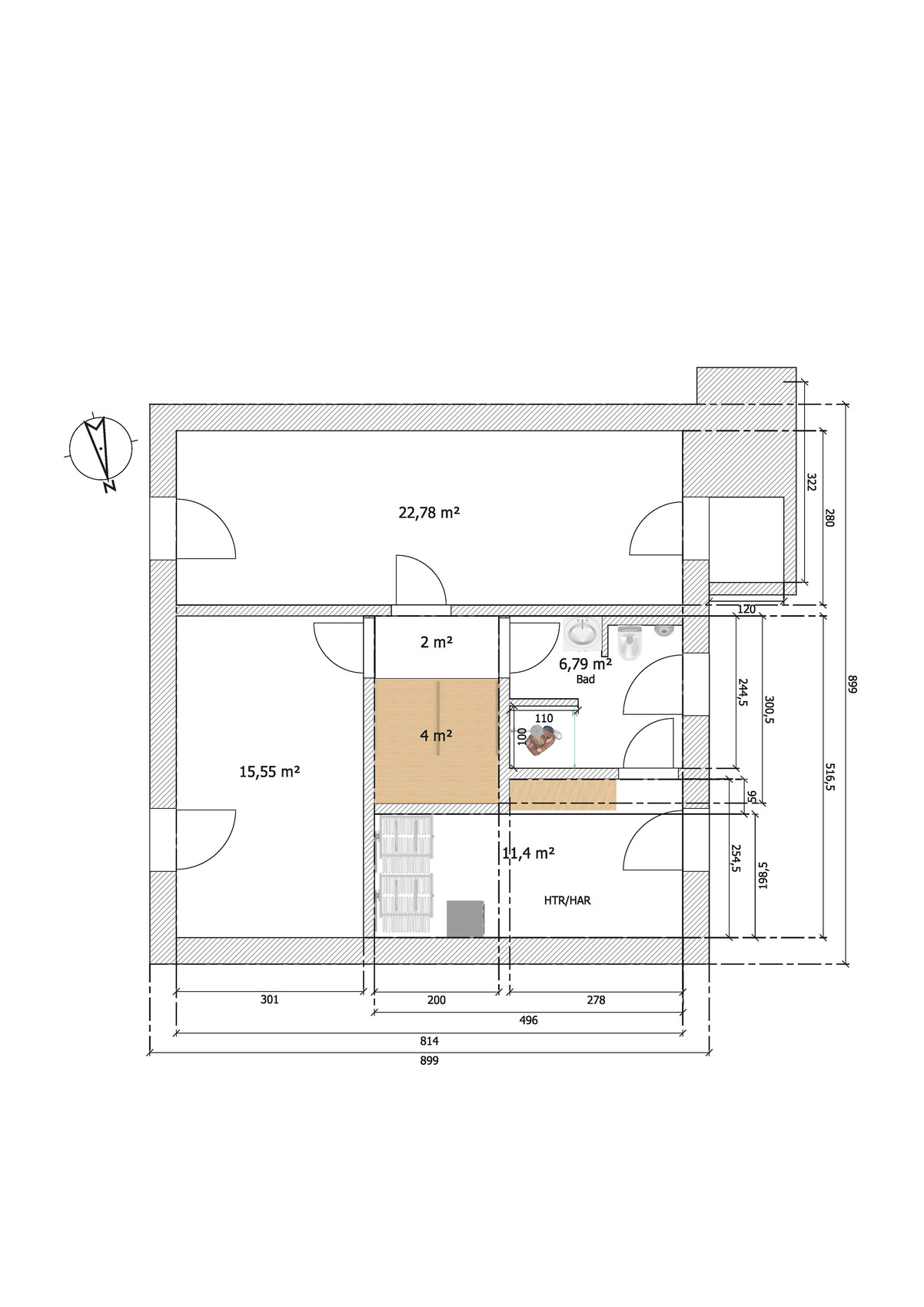
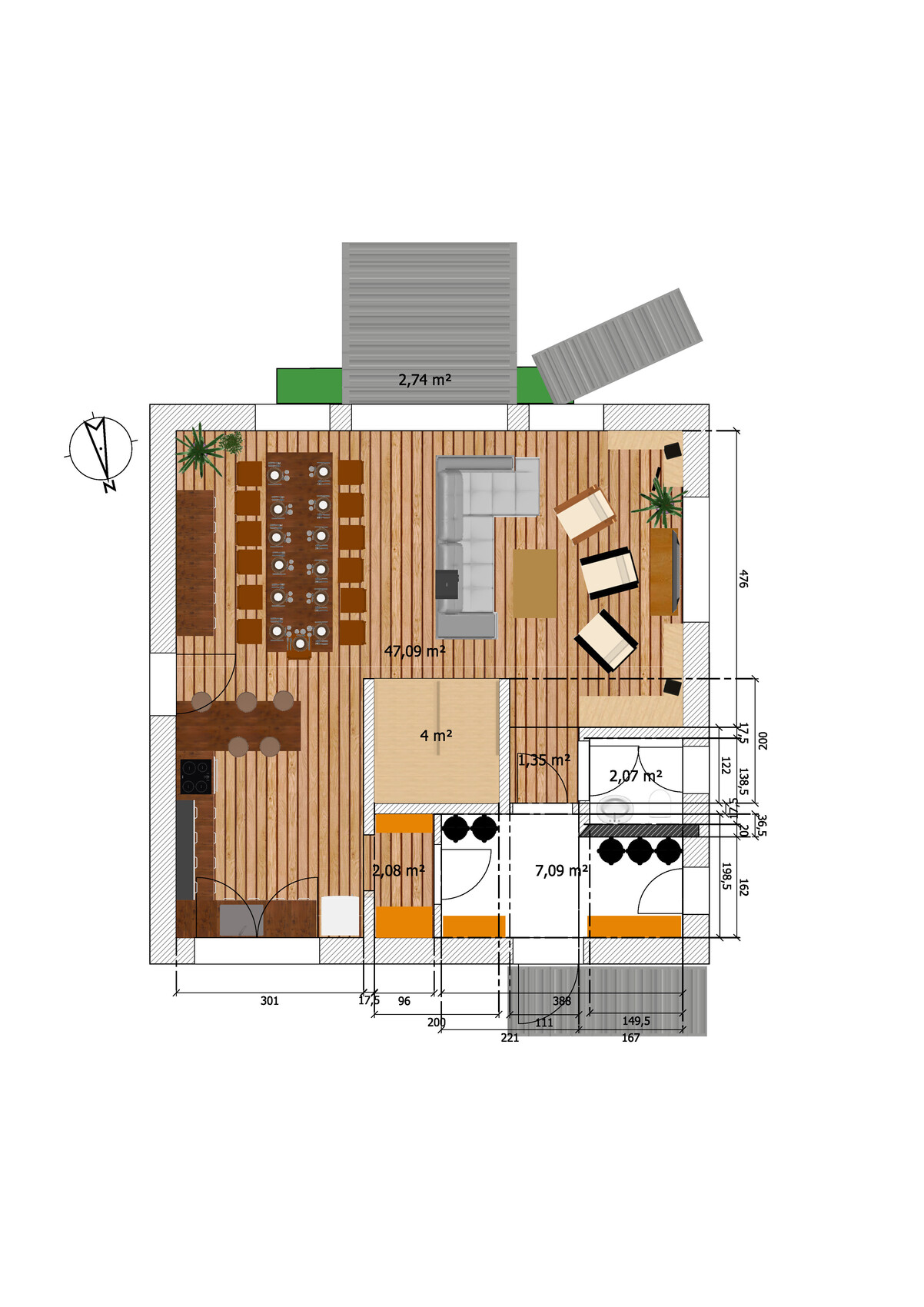
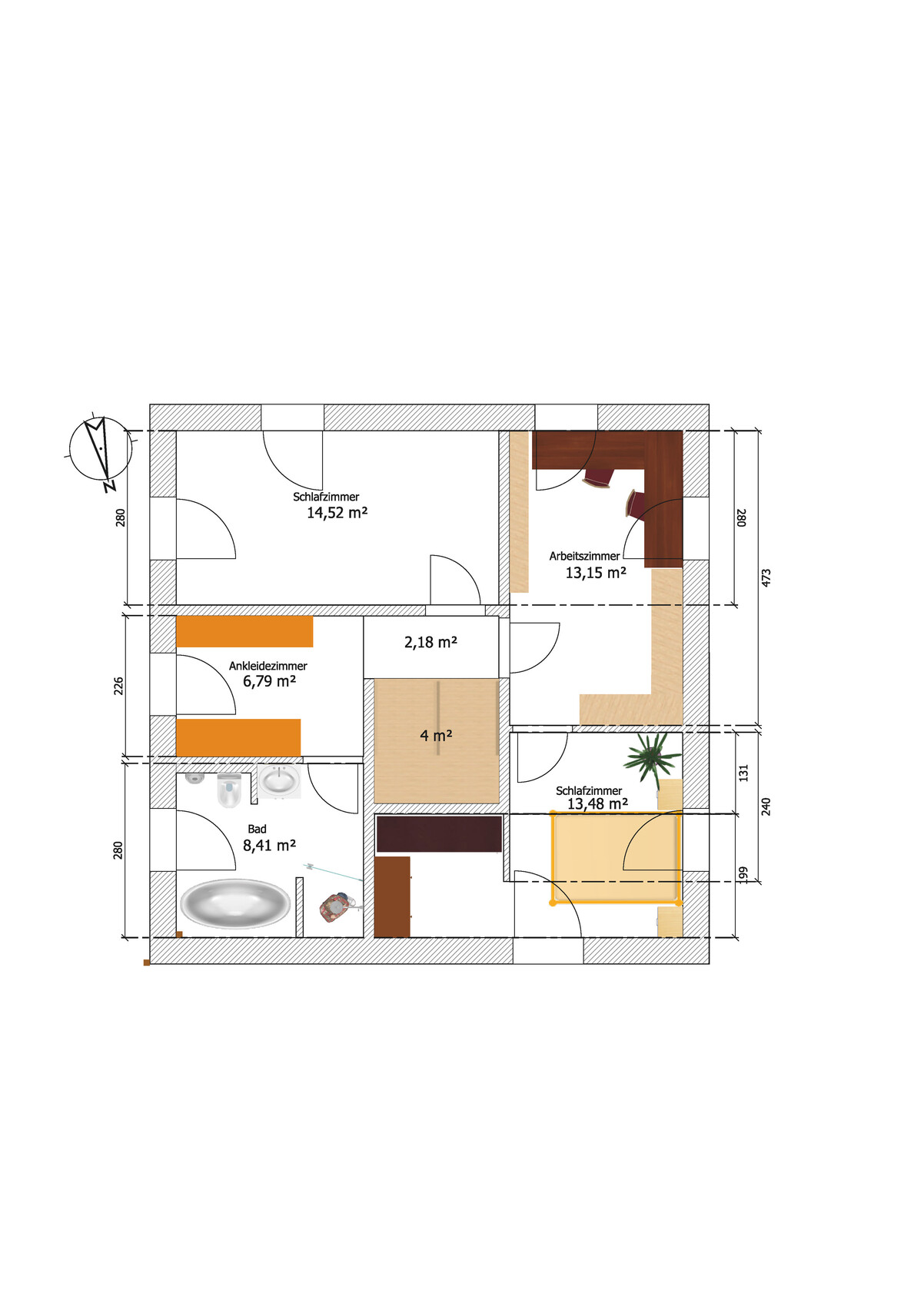
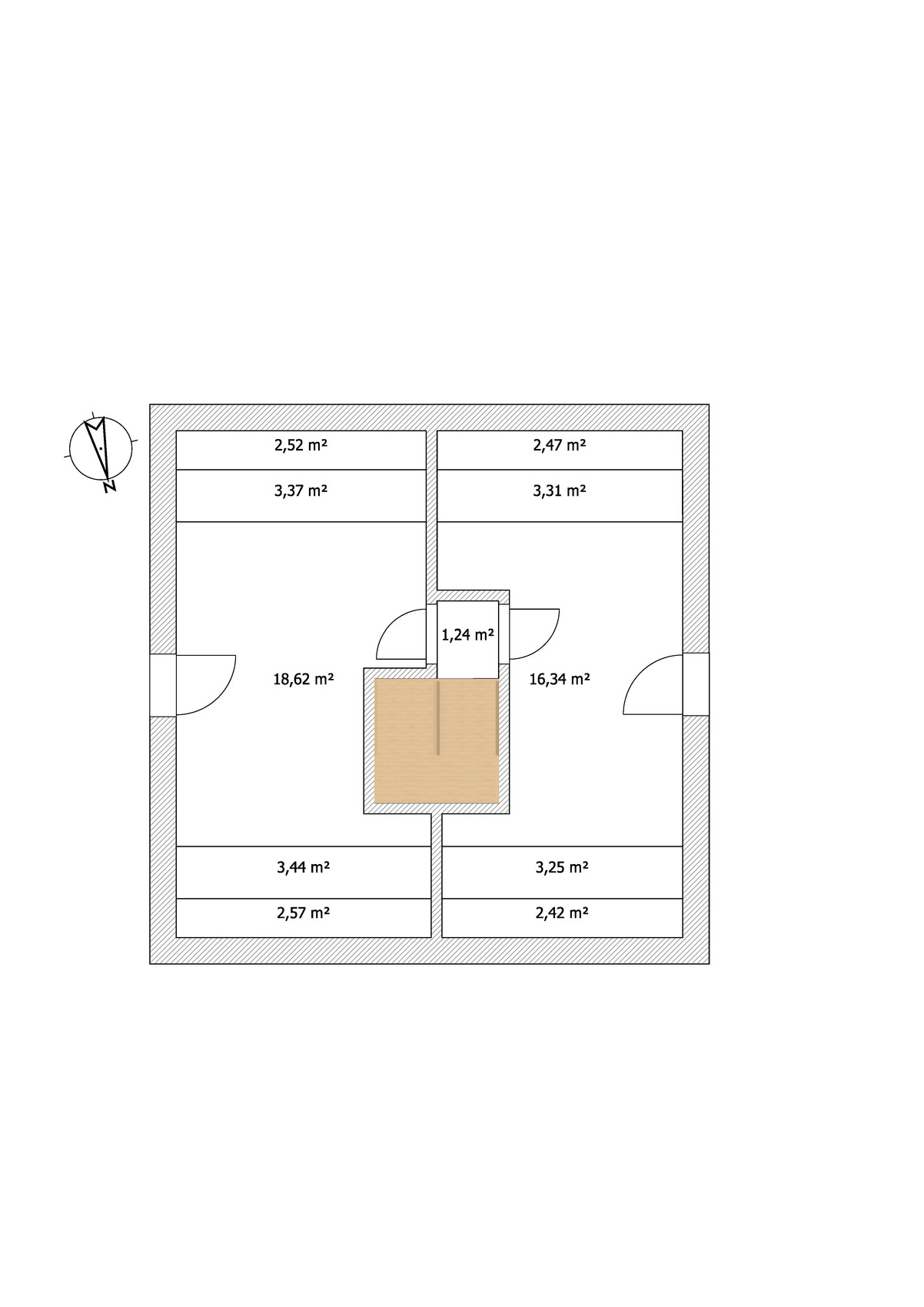
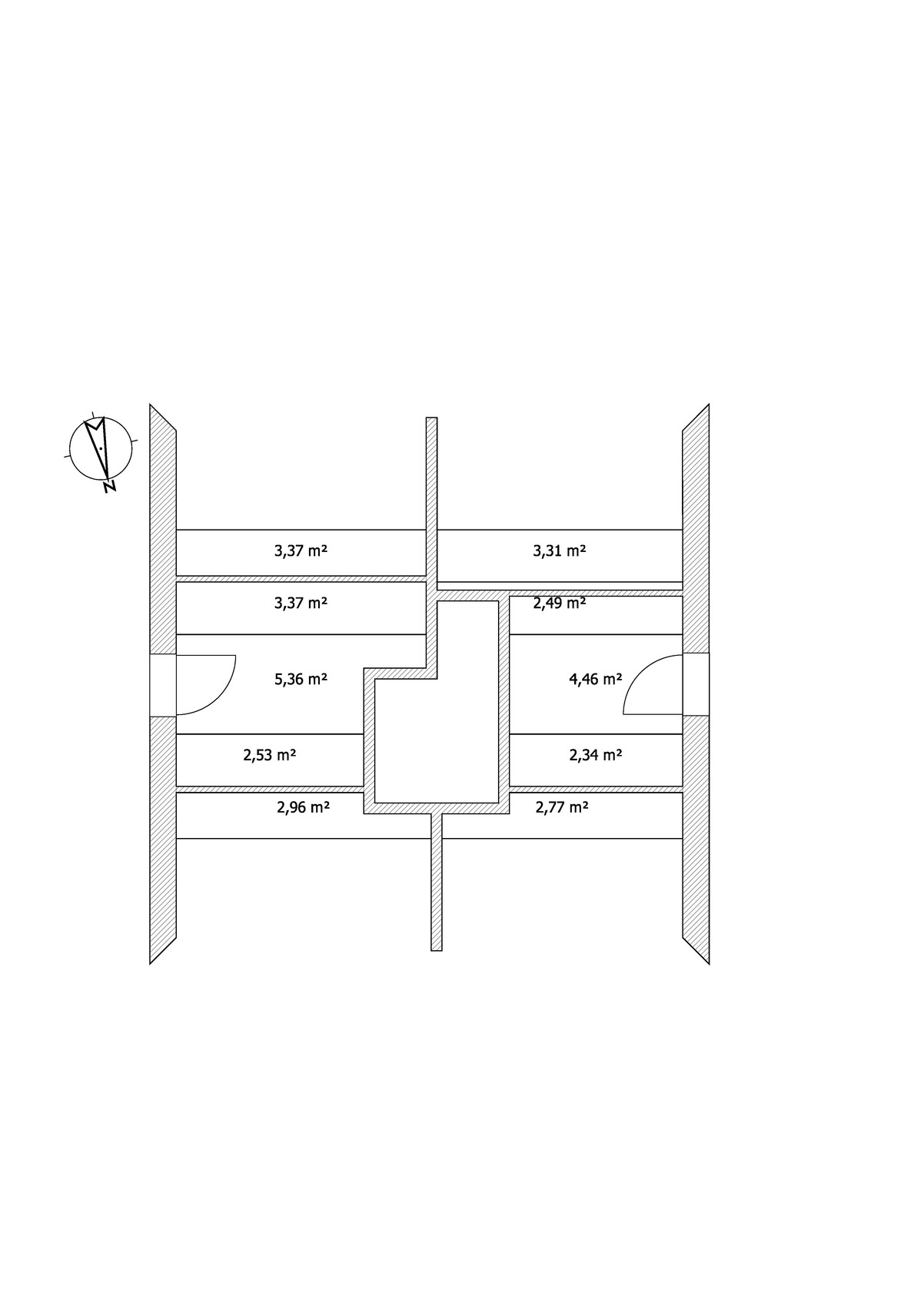
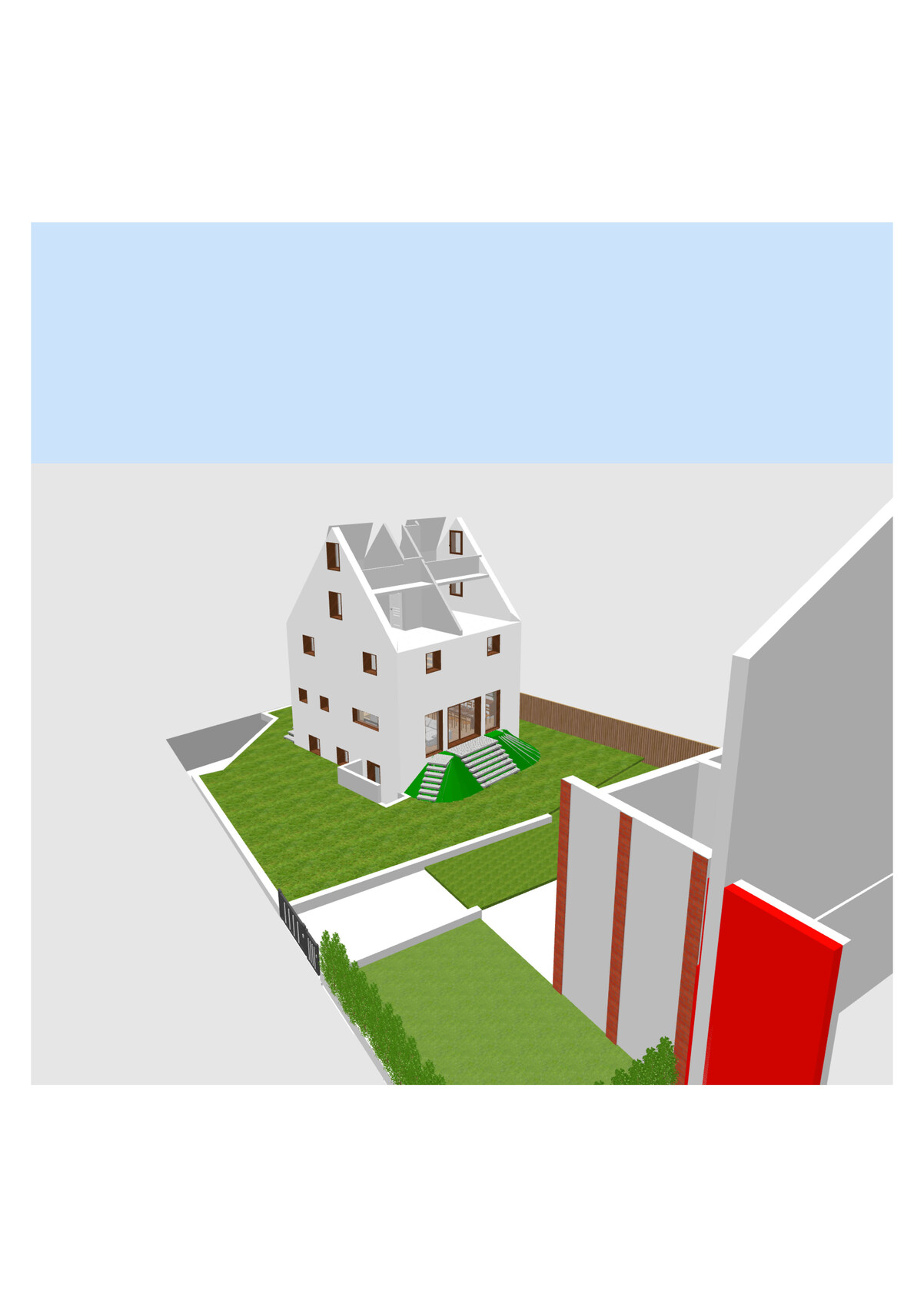
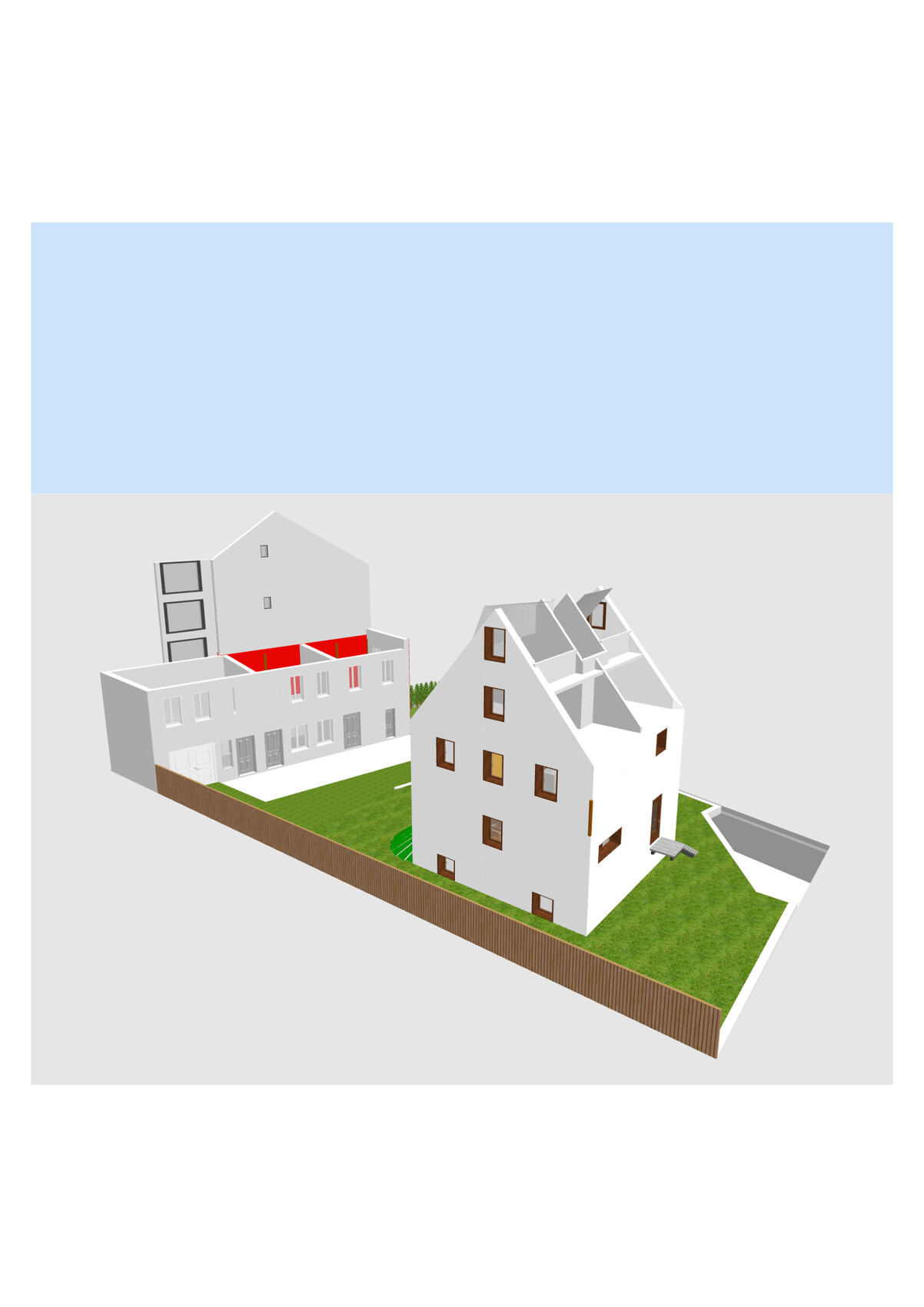
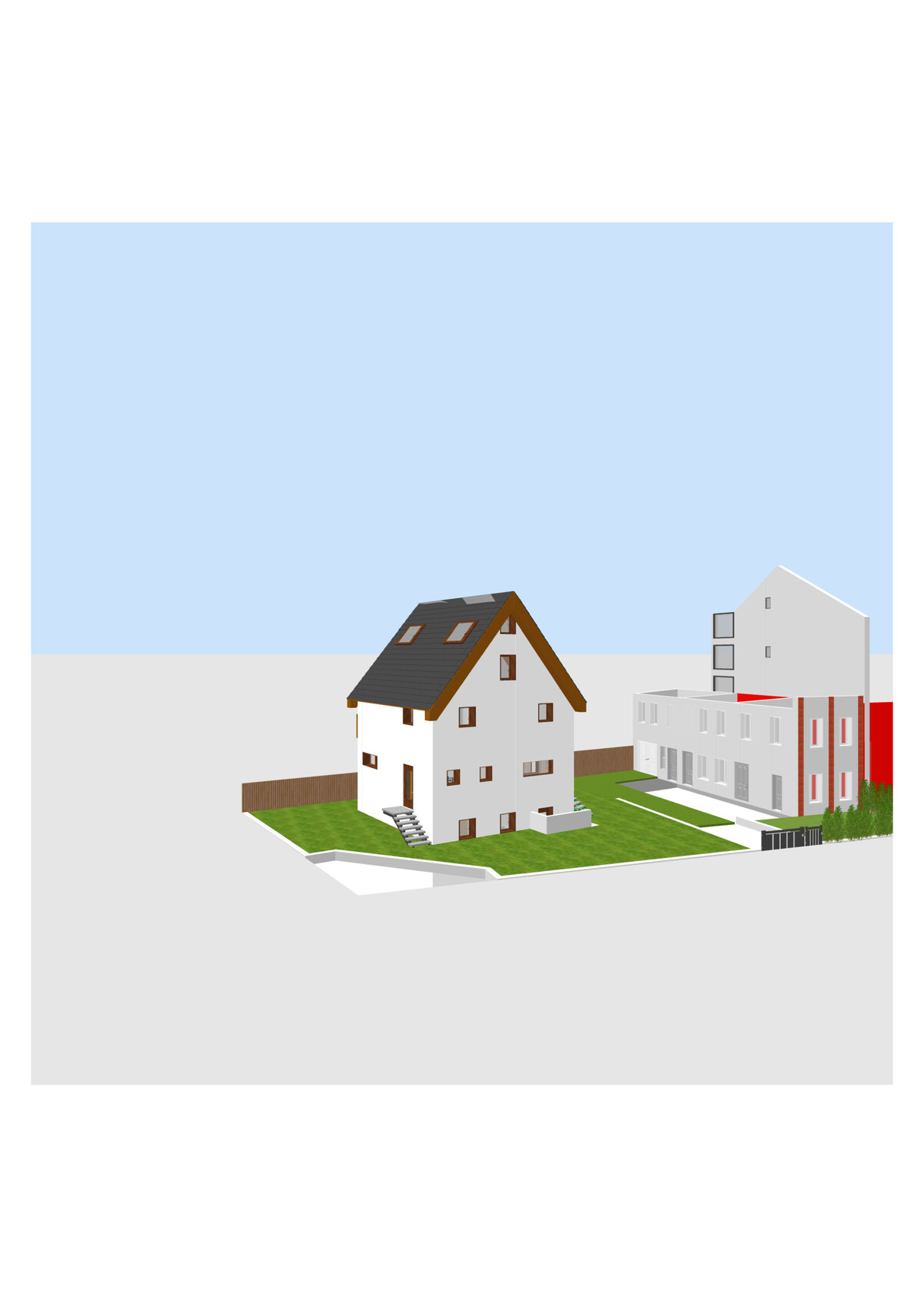
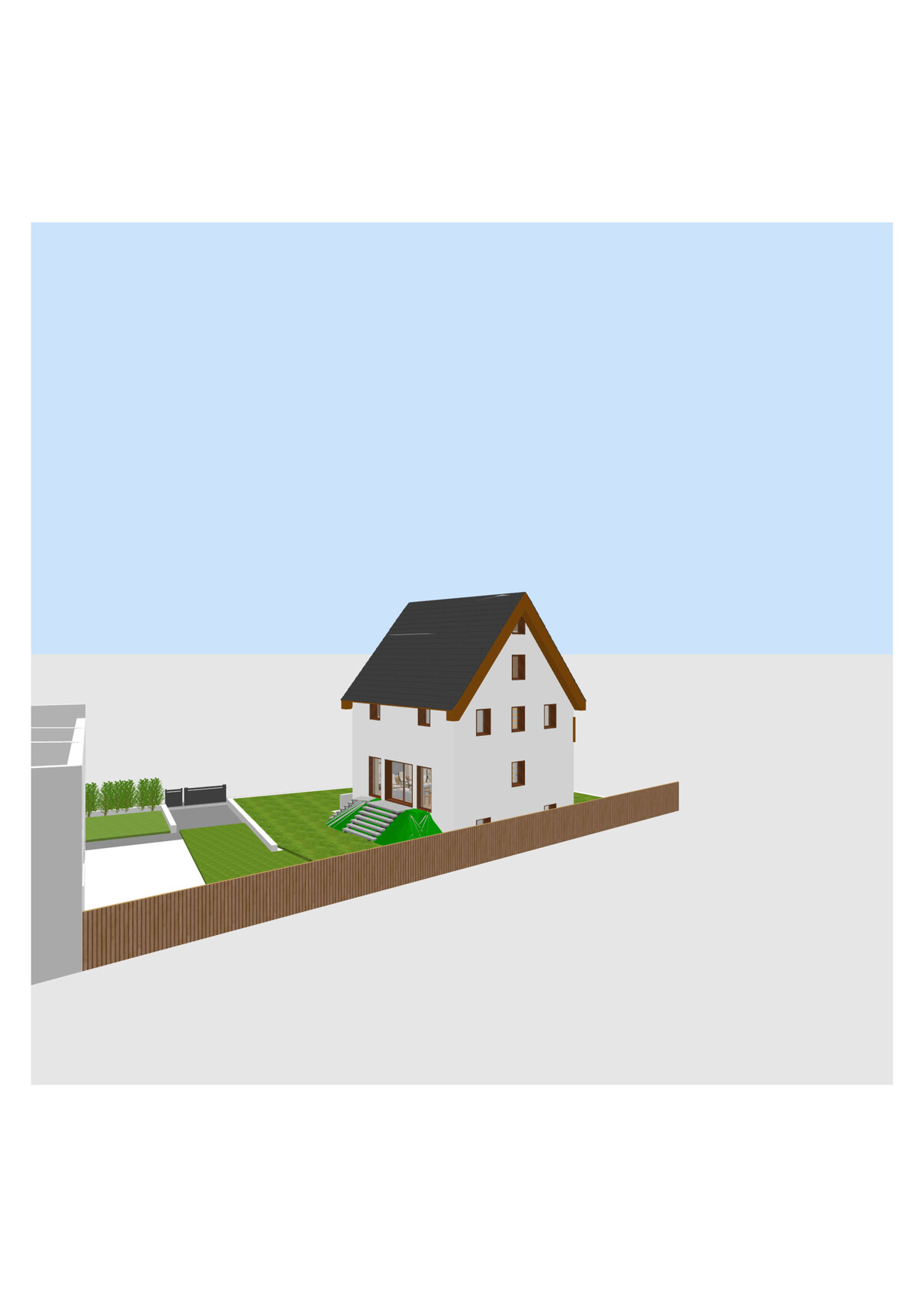
We are currently working with an architect on the design of our single-family home. Since we have three children, the house should accommodate several future scenarios. These include:
- Enough space for everyone
- At some point, the children will move out, and we will downsize to the living basement while renting out the rest
- One or two children might continue living with us (multi-generational living) – possibly in the basement with a separate entrance
- Possibly one child even starts a family in the house, and we move to the basement
Plot:
- 710 sqm (8,000 sq ft) close to the city center
- To the south is our rear building (two stories) attached to a 3.5-story apartment building (boundary development)
- To the north and west are the streets (a corner plot)
- Behind to the west is a large green plot with a single-family house
- To the north beyond the street are apartment buildings
- To the east there is a narrow parking lot followed by a green recreational garden area
- We have to keep a 6 m (20 ft) setback to the streets and the usual 3 m (10 ft) to the parking lot
Since the plot already has a building, and we want to keep the rear building (it is fully shaded by the apartment building, is in reasonable condition, and might provide future expansion potential—at least suitable for workshops and storage), and since the plot is not very large, we decided on a tall house with a small footprint.
About the house
- Eder XP9 or 10 (timber frame) in 42.5 or 49 cm (17 or 19 inches) thickness
- Living basement (150 cm (5 ft) below ground / 100 cm (3 ft) above ground) – if affordable (this allows for the utility room in the basement and more space on the ground floor for a large open-plan living/dining/kitchen area as the main living space)
- Knee wall either 150 cm (5 ft) or, if not much more expensive, a dormer wall above the full upper floor (both options allow the roof space to be used for two rooms; with the dormer, these rooms are very large and could even accommodate an attic instead of bunk beds)
- 50-degree roof pitch (for solar energy efficiency in winter)
- The basement should be designed to eventually allow for a small separate living unit
- Both bathrooms should have a standing toilet or urinal
- We definitely want a windbreak/entry vestibule
- The terrace should be raised with fill
- Underfloor heating with geothermal energy
- Solar energy planned for the future
We have already developed a fairly comfortable floor plan with our chosen architect. Our biggest concern is accidentally planning a wall or something else 5 cm (2 inches) too far to the left or right and then being unable to fit our furniture. I would appreciate it if you would be interested in looking over the current design and giving feedback.
I sat down again to review some of our old drafts. I recalled the one we took to the architect three months ago (which was later modified to move the staircase to the center so it could be built as a full staircase up to the attic without hitting the sloping roof; the idea was also to build the staircase out of concrete throughout the house and separate it more easily with added walls and doors – although that never really worked out. Now, the idea of separating the house is no longer relevant).
I have adjusted it somewhat to fit the stair dimensions recommended here (at least, I tried to). The result is the attached plan. The entrance area/wardrobe/windbreak and guest toilet are still quite problematic. The wardrobe is actually too small and narrow for my taste (if shoes hang on one side and clothes on the other), and the small corner would serve as a little wall closet for hanging items. The guest toilet is also borderline too small.
The rest of the layout is as we originally wanted. The staircase leading from the basement is shown. At the bottom step (bottom of the plan), it can be double-wound, allowing it to be longer. This might even make it possible to push the upstairs staircase further back.
For the stairs going up, I imagined not placing it straight above with a winding first step, but rather as currently drawn for the basement stairs, extending the first step all the way to the guest toilet door and then running straight at the top.
The attic stairs would then be shifted a bit further up the plan, with just a normal winding first step.
Is that clear?
What are your thoughts on this floor plan?
With this, the basement can have four roughly equally sized rooms without any rooms serving as passageways.
On the upper and attic floors, there is practically full flexibility. If we want the walk-in closet, the plan can remain as is, and the bedroom wouldn’t need access through the office (which doesn't bother us—by the way, that is purely a home office for the parents, since there were comments about going through that room to do homework in the bedroom. No homework will be done there.) If we want the office as a passage room to the bedroom and want to remove the walk-in closet, the floor plan just needs to be mirrored from left to right.
In the attic (if the attic is built without sloping walls, i.e., the roof is placed on top), there would be enough space for a second bathroom with a shower.
We also considered the ground floor layout with a small utility/technical room if the wall to the living room is moved and the equipment is placed in a small room next to the bathroom. That could even allow us to forgo the basement, although we do not want that.
EDIT: The wall separating the staircase from the living room is more like a railing about 1 meter (3 feet) high. That should help to visually separate the living room a bit. However, someone coming up from the basement will probably do so quite rarely.
A window would also be installed in the staircase area.
Unfortunately, we never found a good place for a pantry in this plan, but we wouldn’t miss it that much.
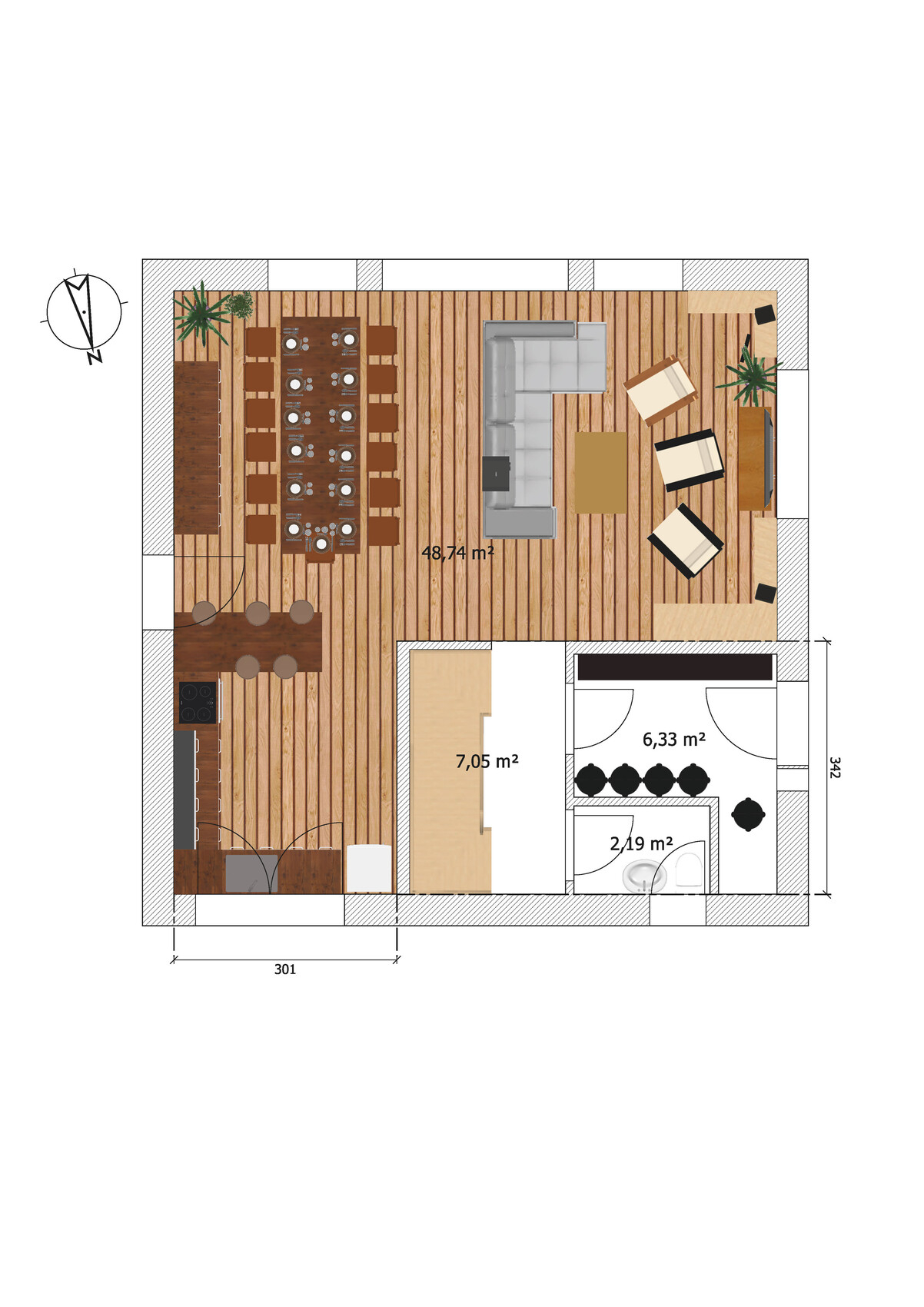
I have adjusted it somewhat to fit the stair dimensions recommended here (at least, I tried to). The result is the attached plan. The entrance area/wardrobe/windbreak and guest toilet are still quite problematic. The wardrobe is actually too small and narrow for my taste (if shoes hang on one side and clothes on the other), and the small corner would serve as a little wall closet for hanging items. The guest toilet is also borderline too small.
The rest of the layout is as we originally wanted. The staircase leading from the basement is shown. At the bottom step (bottom of the plan), it can be double-wound, allowing it to be longer. This might even make it possible to push the upstairs staircase further back.
For the stairs going up, I imagined not placing it straight above with a winding first step, but rather as currently drawn for the basement stairs, extending the first step all the way to the guest toilet door and then running straight at the top.
The attic stairs would then be shifted a bit further up the plan, with just a normal winding first step.
Is that clear?
What are your thoughts on this floor plan?
With this, the basement can have four roughly equally sized rooms without any rooms serving as passageways.
On the upper and attic floors, there is practically full flexibility. If we want the walk-in closet, the plan can remain as is, and the bedroom wouldn’t need access through the office (which doesn't bother us—by the way, that is purely a home office for the parents, since there were comments about going through that room to do homework in the bedroom. No homework will be done there.) If we want the office as a passage room to the bedroom and want to remove the walk-in closet, the floor plan just needs to be mirrored from left to right.
In the attic (if the attic is built without sloping walls, i.e., the roof is placed on top), there would be enough space for a second bathroom with a shower.
We also considered the ground floor layout with a small utility/technical room if the wall to the living room is moved and the equipment is placed in a small room next to the bathroom. That could even allow us to forgo the basement, although we do not want that.
EDIT: The wall separating the staircase from the living room is more like a railing about 1 meter (3 feet) high. That should help to visually separate the living room a bit. However, someone coming up from the basement will probably do so quite rarely.
A window would also be installed in the staircase area.
Unfortunately, we never found a good place for a pantry in this plan, but we wouldn’t miss it that much.
Altai schrieb:
What hasn’t been mentioned yet, or maybe I missed it... you still have the rear building. Are you not planning to include it in your considerations? Will it just remain empty for now? That’s not good for the property; it should at least be partially heated. Maybe it could be used as a holiday or guest apartment? Or for large family gatherings, so you don’t have to fit a table for 20 people into the main house? Do you need an office?
If you’re planning “for later,” perhaps for a child to live on the property... keep that building in mind—and scale your “main house” down to the size you really need now! ...
Or reconsider an overall concept, how to integrate the existing building. The square meters of living space are there and paid for (except for possible alterations or renovations). I already mentioned this back on page 3. It’s a pity there was no response then, and only now, six pages later, the decision is “we don’t want to.”
The rear building is there, and instead of squeezing the new house onto the lot, you should really think about a combined design approach. A property with a rear building isn’t ordinary, so it makes sense to consider unconventional solutions.
Altai schrieb:
I already wrote this on page 3. It’s a pity there was no response at that time, and only now, six pages later, do people say "we don't want to."
The rear house is simply there; instead of trying to squeeze the new house onto the plot, one should really consider a unified design concept. A property with a rear house is not standard, so it makes sense to think outside the box. Hello Altai. I read your comment on page 3 and I believe I responded briefly there. So here are a few more words:
We bought the plot almost two years ago because we really liked the location and especially the rear house. But we were quite naive and purchased it (at a reasonable price) without a thorough inspection.
Financially, we were quickly advised against converting it into living space. Additionally, part of the building used to be a stable, and a fairly high/unhealthy nitrate contamination in the walls is expected.
The most important point, however, is that it has no basement and offers two floors, each about 4.5*~16m (15ft*~52ft) interior dimensions. Within the house, there are only two non-load-bearing but important stiffening walls that effectively divide the building into three sections (these walls exist on both floors).
Without requiring a building permit/planning permission, we don’t see any way to convert this rear house into a livable space for a family of five. Especially since the stable (one third of the ground floor) would be excluded from living space. However, we won’t get that building permit/planning permission in the long term! The property situation is complicated. Two thirds of the rear wall of the house is a party wall/shared wall with the neighbor’s house. There are no boundary markers, but according to my measurements, this wall stands exactly on the property line, and on two thirds, our roof is attached only to this wall. There is no separate wall of our own! The big problem: this wall has three openings/windows. One is bricked up inside our house and two are above that. These openings seem to have been included during construction without being part of the original building permit/planning approval. I also believe that in 1902/1903 this would not have been allowed. Today, it’s a definite no-go and basically prevents making the house habitable because the fire wall has unauthorized openings. Our goal is to have the neighboring property owner close these openings. However, this is a real estate company. I think this would be a lengthy and probably legally complex process. This would likely prevent us from moving in by 2021 at the latest (the original goal was 2020). We probably wouldn’t even get a building permit/planning permission, and, if this isn’t resolved by 2020, we wouldn’t be able to apply for the government’s homebuilding grant (worth around 36,000 euros). Furthermore, even with an extension (if it remains small), we would run out of storage space and expandable living options.
Therefore, the option emerged to build a new house and cover the roof of the rear house without needing a permit/planning permission. The rear house can certainly play a role in the new build. We think it’s worth considering and find the “courtyard/garden character” between the houses quite attractive.
We are very open to other suggestions and ideas!
The important thing for us is to still have sunny land, which is why we consider it reasonable to keep the new build small and to push it as far north on the plot as possible.
That’s actually not an option for us. For 15,000, we can insulate the roof and cover it nicely, securing it in the process. It has now been completely gutted (which I did last year alongside the removal of three 20m (65 ft) birch trees and five 15m (49 ft) spruce trees).
We are already using the garage/stable, and the rest can serve as expansion space, storage, or for small projects... It could be used eventually.
Demolition would only create costs for us (demolition and construction debris), with 75 sqm (807 sq ft) of floor space that is shaded all year round, and on a third of it, we would have to build privacy screens in two directions.
What are the reasons for considering demolition?
We are already using the garage/stable, and the rest can serve as expansion space, storage, or for small projects... It could be used eventually.
Demolition would only create costs for us (demolition and construction debris), with 75 sqm (807 sq ft) of floor space that is shaded all year round, and on a third of it, we would have to build privacy screens in two directions.
What are the reasons for considering demolition?
@grericht, thank you very much for your detailed explanation. This certainly sheds new light on the situation.
Setting aside the other issues, why would an extension not be eligible for a building permit/planning permission?
However, you don’t need to keep the rear building as a reserve for any purpose if creating living space there is going to be difficult anyway. I also understand that the tall neighboring building on the boundary casts a lot of shadow. In that respect, a demolition probably wouldn’t provide much benefit—except perhaps freeing up space for parking or similar uses (I don’t have the site plan in front of me).
Setting aside the other issues, why would an extension not be eligible for a building permit/planning permission?
However, you don’t need to keep the rear building as a reserve for any purpose if creating living space there is going to be difficult anyway. I also understand that the tall neighboring building on the boundary casts a lot of shadow. In that respect, a demolition probably wouldn’t provide much benefit—except perhaps freeing up space for parking or similar uses (I don’t have the site plan in front of me).
Similar topics