
M
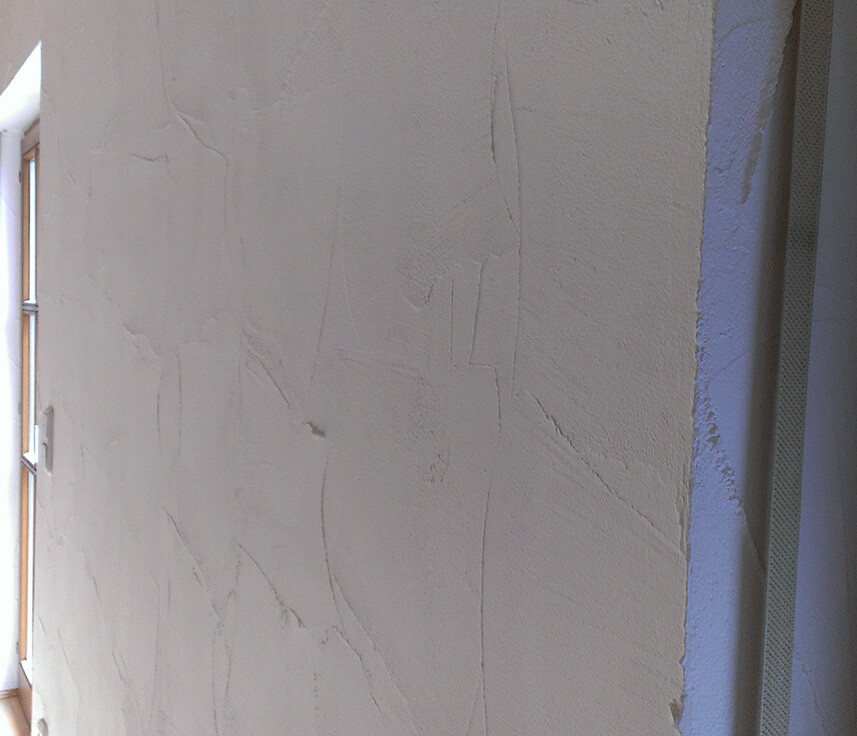
meisterlampe7 Sep 2014 11:54Is it possible to smooth a rough plaster like the one shown in the picture using a long-neck sander? Or is a different tool needed for this, or is it even feasible at all?
Thank you!
Thank you!
Depending on the type of plaster, if it is gypsum-based, you can scratch it with your fingernail and therefore easily sand it down. Otherwise, you will likely need a concrete grinder. However, this tool smooths the plaster less and rather removes it completely.
Gypsum plaster (which I call "pickelputz") can also be easily smoothed using a rasp or an aerated concrete / external wall insulation system (EWI) sanding board. It produces much less dust, and the dust falls directly to the ground instead of swirling around in the air.
Gypsum plaster (which I call "pickelputz") can also be easily smoothed using a rasp or an aerated concrete / external wall insulation system (EWI) sanding board. It produces much less dust, and the dust falls directly to the ground instead of swirling around in the air.
M
meisterlampe8 Sep 2014 08:48Well, I don’t think you can scratch it with a fingernail, but I would need to try again.
So if it’s not gypsum plaster, sanding it smooth looks unlikely, did I understand that correctly?
I just don’t want to have to replaster it.
So if it’s not gypsum plaster, sanding it smooth looks unlikely, did I understand that correctly?
I just don’t want to have to replaster it.
I would suggest trying to chip off the plaster at one spot as a test. If it’s that hard, you can definitely still remove it with a concrete grinder (the tool costs about 100-120 euros new), which is not more work than sanding. The concrete grinder also sands down the surface, but you really have to be careful to work evenly; otherwise, the surface becomes very uneven. That’s why I thought completely removing it might be easier. However, you would have to re-plaster afterward.
Another option is to use an electric scraper just to work on the ridges. That should be possible but will probably take some time. You need the attachment for hard materials (there’s also one for soft materials, which is flexible and tends to get damaged quickly on hard surfaces).
These rotary sanders likely won’t work if the plaster is very hard (so, not gypsum).
Other alternatives: skim coating, although that will require a lot of filler. Or attaching gypsum fiberboards over the plaster with adhesive; but that means you’ll need new surface treatment again (filling, priming, decorative plaster or wallpaper). The decorative plaster can be easily rolled on with a paint roller, so that’s a straightforward DIY option.
I’d probably try the concrete grinder if gypsum boards are not an option. It depends on the surface area.
Another option is to use an electric scraper just to work on the ridges. That should be possible but will probably take some time. You need the attachment for hard materials (there’s also one for soft materials, which is flexible and tends to get damaged quickly on hard surfaces).
These rotary sanders likely won’t work if the plaster is very hard (so, not gypsum).
Other alternatives: skim coating, although that will require a lot of filler. Or attaching gypsum fiberboards over the plaster with adhesive; but that means you’ll need new surface treatment again (filling, priming, decorative plaster or wallpaper). The decorative plaster can be easily rolled on with a paint roller, so that’s a straightforward DIY option.
I’d probably try the concrete grinder if gypsum boards are not an option. It depends on the surface area.
M
meisterlampe8 Sep 2014 12:01Ok, thanks. So filling it with joint compound is not an option, nor is putting plasterboard over it again.
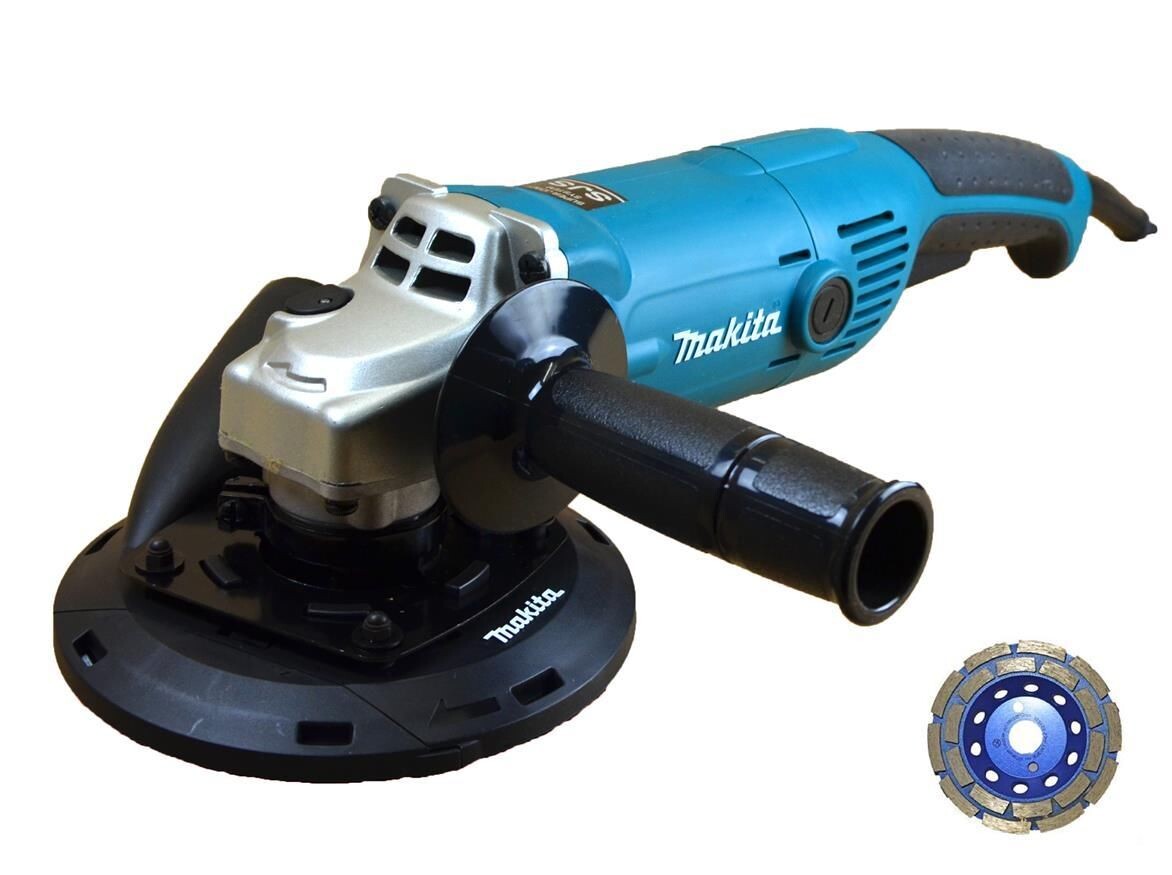
A concrete grinder would be something like the one shown in the attachment?
A concrete grinder would be something like the one shown in the attachment?
Similar topics